


FW
India’s share in global cotton yarn exports declines 23 per cent: Crisil
As per a new Crisil Research report, lack of FTAs and increased competition led to 23 per cent decline in India's share in global exports of cotton yarn in calendar year 2020 (CY2020) from 29 per cent in CY2015. Meanwhile, India’s share in readymade garments (RMG) stagnated at 3-4 per cent over the past decade. In cotton yarn, India lost market share over the past decade to Vietnam and China while it maintained its share in RMG even as global trade in the segment contracted.
The reduction in export incentives pushed Indian textiles players further to the brink in 2020. Crisil Research does not expect any significant improvement in incentives with the launch of the Remission of Duties and Taxes on Export Products (RoDTEP) scheme. However, the recently announced PLI scheme for man-made fibres (MMF) and technical textiles is expected to improve the potential of MMF-based RMG exports where India's share has been weak. The scheme may help the sector enhance its export share over the medium to long term.
Mulburry back in black as profits rise
Despite sales declining by 23 per cent to £115 million in the year upto March 27, British handbag and accessories brand Mulberry returned to profit during the pandemic year. As per a Women’s Wear Daily report, the brand’s profit during the period totaled £4.6 million, compared to last year’s loss of £47.9 million, reflecting growth in Asia-based and digital sales. The company also eschewed markdowns in the period, which boosted profit margins, and made a series of economies, including layoffs during lockdown.
The brand’s underlying profit before tax rose to £5.9 million compared with a loss before tax £14.2 million in the previous year. The group’s revenue during the period to date has increased by 45 per cent while retail revenue increased by 30 per cent due to a strong recovery in the UK and continuing growth in Asia,
During the 12-month period, Mulberry’s international retail sales rose 4 per cent to £33.8 million, compared with the previous year’s £32.4 million. Sales in Asia Pacific grew by 36 per cent, driven by ongoing development in the region, while China retail sales were up by 81 per cent, and South Korea retail rose by 36 per cent.
During the 12-month period, the company also launched its Made To Last Manifesto with a commitment to transform the business to “a regenerative and circular model, encompassing the entire supply chain, from field to wardrobe” by 2030. It also helped the COVID-19 relief cause by making PPE gowns and providing meals to people in need.
Indorama Synthetics India reports Rs 14.22 crore loss in Q1 FY21-22
For Q1 FY 2021-22 that ended June 30, 2021, Indorama Synthetics India reported a loss of Rs 14.22 crore as against a net profit of Rs 128.65 crore recorded during the quarter ended March 31, 2021. The company’s total income during the period declined to Rs 695.31 crore down from Rs 835.93 crores in the previous quarter ended March 31, 2021.
It reported EPS of Rs0.54 for the period ended June 30, 2021 as compared to Rs.4.93 for the period ended March 31, 2021. On a yearly basis, Indonrama Synthetics posted a net profit of Rs 14,22 crore during as against net loss of Rs 77.63 crore during the period ended June 30, 2020. The company reported total income of Rs.695.31 crores during the period ended June 30, 2021 as compared to Rs.120.28 crore during the period ended June 30, 2020.
The company reported EPS of Rs.0.54 for the period ended June 30, 2021 as compared to Rs.(2.97) for the period ended June 30, 2020.
Finance Ministry refuses to remove duty on cotton imports
India’s Finance Ministry has refused to remove 10 per cent duty on cotton imports saying it benefits domestic producers. However, garment manufacturers argue the 10 cent duty on cotton imports makes export of high-quality clothing uncompetitive in the international market, reports United News of India. Amit Sethi, Joint Managing Director, Orient Fashions alleges, the duty makes import of high-quality cotton from Australia and America expensive. This makes India uncompetitive in the international high-end clothing market, he adds.
As per finance minister Nirmala Sitharaman, the decision to impose duty on imports of cotton has been taken to benefit domestic cotton farmers which in turn would help in higher domestic value addition and reduce import dependence. Garment exporters would not be affected as exporters may avail benefit of schemes like advance authorization, duty drawback, EoU, SEZ etc. Further, RoSCTL scheme for garment and made-ups has also been extended till March 2024. Further incentives under various schemes are also being provided to the garment sector, she added.
Sustainability, personalization, key for luxury brands success in Asia Pacific
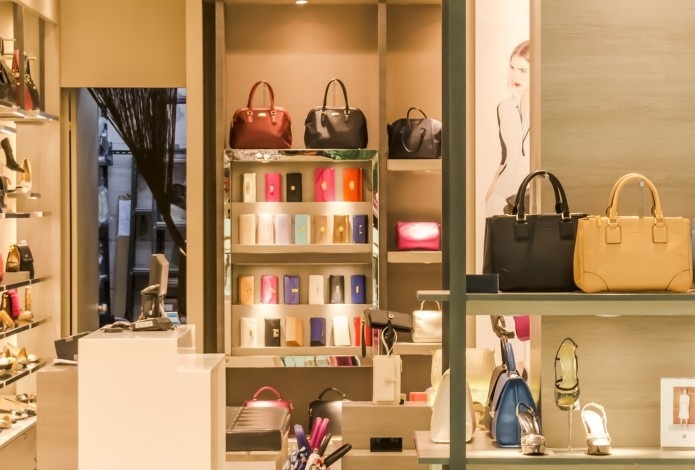
For the last few years, Asia Pacific region has been making significant contributions to global luxury fashion business. Though global market for personal luxury goods shrunk 15 per cent in 2020, Asia Pacific’s share increased from 32 per cent in 2019 to 37 per cent in 2020, reports Euromonitor International.
China to lead Asia Pacific’s personal luxury goods market
The future outlook for personal luxury goods market in Asia Pacific remains favorable with sales likely to increase 10 per cent CAGR from 2020-25. The market is likely to account for 40 per cent of the global personal luxury market by 2025. China leads followed by Taiwan, Japan and Hong Kong. The country benefits from spending by affluent and middle class consumers in mainland China where luxury sales are likely to return to pre-pandemic levels by 2021-end. China’s share in all personal luxury sales in the Asia Pacific region is likely to rise to 41 per cent by 2025 from 36 per cent in 2020.
Popular characters attract millennials
Luxury brands are increasingly adopting popular characters, from pop art to Japanese Manga to attract young consumers. They are also entering innovative and unique collaborations to engage with these new set of consumers. Euromonitor International’s The Voice of the Consumer: Lifestyles Survey, 2021 shows, these brands have so far attracted 62 per cent millennial and Gen Z consumers to try new products and 47 per cent of Gen Z and millennials to engage with brands for product innovation. In 2020, Loewe and Gucci launched cross-over editions of Japanese characters managa. These collections helped both brands attract young customers, especially in China and Japan.
The importance of localization
Rising importance of Asia Pacific in the global personal luxury goods market has increased the importance of localization amongst brands. They need to establish a deeper connect with local luxury consumers to enhance brand value in the post-pandemic world. They need to study their consumers’ needs to drive sales. Around 43 per cent respondents to the Euromonitor’s Voice of the Consumer: Lifestyles Survey, affirmed they prefer to shop from brands that upload their values. These customers opine, brands need to align their universal equity with the cultural or societal values of the local market.
Sustainability a strong driver
For the last few years, pre-loved luxury goods market in Asia Pacific has been growing exponentially. This growth further accelerated during COVID-19. The market is being driven by the three values: sustainability, affordability and collectability. Since the onset of COVID-19, Asia Pacific consumers have been showing greater interest in sustainability. Key opinion leaders and opinion consumers are opting to shop in vintage stores, driving growth in vintage luxury goods market. Online vintage luxury site, Vestiaire Collective has collaborated with luxury groups including Kering to sell a 5 per cent stake in the company to the brand.
All about premium, exclusive experiences
So far, luxury brands have stayed away from digital sales channel as they fear it may compromise their exclusivity. However, with the pandemic, they have adopted an omnichannel strategy to increase accessibility and maintain exclusivity. This helps brands integrate across online and offline channels to connect with consumers. Consumers in Asia Pacific value their connections with brands and exclusive shopping experiences much more than global consumers, says Euromonitor’s Digital Consumer Survey in 2021.
To survive and grow in post-pandemic era, luxury brands in Asia Pacific need to keep tab on emerging trends. They need to focus on providing premium and exclusive luxury experience to customers by focusing on sustainability and digitization besides ensuring high-level of personalization in their offerings.
Pandemic reinvents fashion e-commerce as e-tailers become more efficient
 Following the outbreak of COVID-19, fashion retailers were forced to accelerate their e-commerce strategies overnight to restrict dwindling sales. Around 27 fashion companies filed for bankruptcy during from April 2020. They had to also move their stocks to shippable locations as digital purchases increased almost 160 per cent, as per an Accenture estimate.
A report by the Edited shows, to reduce the value of deadstock by 38.7 per cent, retailers introduced new shipping strategies such as ‘Buy Online Pickup In Store’ (BOPIS), ‘Buy Online Return In Store’ (BORIS) and curbside strategies from April 2020 to April 2021. They also reduced the number of products in each category to restrict the accumulation of unsold stock. Shipping time reduced 21.4 per cent as they concentrated on best-selling items.
Comfort dominates apparel and footwear choices
A McKinsey & Co report published in August 2020 indicated, the pandemic curbed consumers spending on categories such as apparel, footwear, home furnishings, skincare and makeup. Their expenditure on groceries, home entertainment and household supplies increased during the period.
The rise in work from home saw many brands switch to casualwear, benefitting retailers of sleepwear, activewear and loungewear. Comfort became the defining fashion trend during the period as demand for women’s flat shoes increased by 7 per cent while that of heeled shoes declined by 23 per cent from April 2020 to April 2021. Retailers also reported 32 per cent Y-o-Y growth in demand for hoodies during the period while demand for blazers reduced by 19 per cent from April 2020 to April 2021.
Luxury prices remain resilient
To offset pandemic induced losses, brands planned to realign their pricing strategies. For instance, Victoria Beckham planned to merge main collection with more affordable diffusion brand besides lowering prices of dresses by 40 per cent. Similarly, Forever Unique aims to shift focus to lifestyle products and drop its average price tag to approx $100 against the earlier $130.
However, luxury brands remained immune to this price drop. Their average prices increased by almost 13 per cent from April 2020 to April 2021. Categories which recorded most price hikes include jewelry, outerwear and handbags. Chanel recently hiked its handbag price by 15 per cent indicating a continuation of this trend in future.
Unsold stock leads to increased discounting
To clear unsold stock and improve liquidity, retailers increased discount levels on online platforms. The average discounting percentage of retailers in US increased to 65 per cent in March 2020 while in UK it reached 54 per cent. This impacted the profitability leading to 8 per cent reduction in depth of weekly discounts.
Sustainability key to survival
With increased vaccinations and lifting of curbs, retailers are once again embracing pre-pandemic categories. As per Retail Intelligence by Edited, demand for swimwear and blazers is back to 2019 levels. Stores are reopening especially in the UK where the total like-for-like sales increased 39.9 per cent during the week ending June 27.
The pandemic has taught fashion retailers to run their online operations more efficiently. Retailers have also learned to manage their inventories and monitor discounts on these platforms. Whether they are able to sustain this learning remains to be seen.
Eurojersey launches new lingerie collection AW 2022/23
Sensitive® Fabrics by Eurojersey has launched a AW 2022/23 Lingerie collection titled Relax that combines sex appeal with comfort thanks to vibrant colours, decisive prints and light fabrics.
Laces, audacious details, romantic flowers on the garments are accentuated by reassuring pastel shades, powdery and delicate nuances. The fabrics used in this collection offer breathability, freshness and lightness, dressing as if with a second skin.
Delicate and comfortable, these fabrics dry rapidly and have a three-dimensional elasticity for a perfect wearability. They adapt to the body, making every piece of underclothing elegant, even the most structured ones.
Eurojersey SpA manufactures and sells warp-knit fabrics. The company’s fabrics are used in underwear, swimwear, sportswear, and ready to wear applications. It sells its products through branch offices and local agents in Italy and internationally. The company was founded in 1960 and is headquartered in Caronno Pertusella, Italy. Eurojersey S.p.A operates as a subsidiary of Carvico Spa.
Devan Chemicals incorporates new technology in garments of UK and Belgium athletes
Textile finishing expert, Devan Chemicals, has been supporting high performance sport in the UK and Belgium with its ‘cool comfort technology’ Moov&Cool.
Working alongside the English Institute for Sport (EIS) and Sally Cowan the technology is being applied to garments with the aim of improving the thermal comfort of elite athletes. Moov&Cool consists of a multi-functional polymer technology that proposes to absorb heat during performance and improve the moisture management properties of the fabric. The treatment has been designed to simultaneously react to sweat build up and heat emission.
In Belgium, Devan has been involved in the Gold2Gold project carried out by Sport Vlaanderen. Gold2Gold is a unique collaboration between sports, government and the industry to prepare Belgian athletes to perform better in hot environments during world-level championships.
Accelerating Circularity releases report on US trials of commercial textile-to-textile systems
Accelerating Circularity, Inc has released a report on US trials of commercial scale textile-to-textile systems. Titled, ‘Putting Textiles to Good Use,’ the report concisely presents the rationale and goals for the trials, including ambitious content minimums of 40 per cent recycled blends and 20 per cent post-consumer inputs for all trials. In response to stakeholder demand, the report also lays out the role, benefits, and responsibilities of each prospective participant.
The group proposes specific trials targeting post-industrial and post-consumer feedstocks, mechanical and chemical recycling technologies, recycled cotton, polyester, and manmade cellulosic fibers, and several finished product categories.
These serve as a starting point for Trial Partner collaboration within the project that will generate multiple circular textile products at mass retail scale. Brand and retail partners have the option to buy-in at several stages in the process to maximize the potential for the circular fibers to be plugged into existing commercial supply chains. Several major brands and supply chain partners – including those on Accelerating Circularity’s US Steering Committee -- have already opted into the project.
AATCC urges buyers to purchase products through website and authorized dealers
AATCC directly supports products purchased through its website or order team. Authorized resellers also provide genuine AATCC products. Product support, however, should be directed to the reseller who will work with AATCC to resolve any concerns. Buyers can also review the AATCC Buyers Guide located on the AATCC website.
According to the Trends in Trade in Counterfeit and Pirated Goods report issued by OECD.org, in the European Union alone, counterfeit trade represented 6.8 per cent of imports from non-EU countries. These figures do not include domestically produced counterfeit goods or pirated products distributed over the Internet.
Counterfeiting impacts most business sectors and is most pervasive in the textiles and consumer goods markets. Footwear, clothing, and leather goods account for the top three industries most hit. (OECD, 2019)
The criminality surrounding counterfeiting often funds other illegal activity, which frequently strengthens criminal organizations. The escalation of criminal activity creates cascading negative societal consequences.
Counterfeiters increasingly use new technologies and 3D printing to make it harder to spot fakes of quality control materials. They also use new processes to hijack well-known brands to get their products on established e-commerce sites.











