


FW
Hermes Q2 FY21 sales soar 127 per cent
Hermes’ Q2 FY2021 soared 127 per cent Y-o-Y and 33 per cent on a two year basis yearly basis. The brand‘s recurring operating income grew by 41 per cent to €1.722 million. Its net income reached €1.174 billion from €335 million a year earlier and €754 million in H1 2019.
The company’s H1 sales increased by 81 per cent at constant exchange rates compared to last year, and by 41 per cent compared to 2019. Wholesale activities improved by 46 per cent but remained penalized particularly by travel retail.
Hermes’ Asia sales excluding Japan rose by 87 per cent in H1 year-on-year and 70 per cent compared to 2019. They were driven by the strong performance in Greater China and the acceleration in sales in Singapore and Thailand. Its sales in the Americas grew by 115 per cent, with a Q2 acceleration being noted, and they rose 25 per cent over two years.
Japan sales increased by 59 per cent year-on-year and 22 per cent over two years while European sales excluding France rose by 52 per cent and were down only 3 per cent over two years. France sales increased by 35 per cent year-on-year, but declined by 16 per cent over two years.
Sales in Leather Goods and Saddlery segment rose by 63 per cent Year-on-Year and 25 per cent over two years while sales in the Ready-to-Wear and Accessories division, rose by 98 per cent over one year and 40 per cent over two,years. Silk and Textiles division’s sales rose by 72 per cent and 6 per cent, while Perfume and Beauty increased by 65 per cent on the year and 17 per cent over two years.
Loosing GSP will hamper Sri Lankan’s apparel exports, reduce profit margins
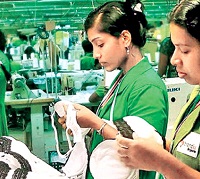 The European parliament’s recommendation to suspend Sri Lanka’s GSP+ status comes as a huge blow to the country’s apparel industry – which accounts for 47 per cent of the nation’s exports and 15 per cent of its industrial employment. As per a Daily News report, the Generalized System of Preferences or GSP, a preferential tariff system of the EU, helps Sri Lanka enhance export competitiveness in the apparel industry. The scheme also helps Sri Lanka create new jobs besides reducing the disparity between rural and urban incomes and increasing the participation of female employees in the workforce. It is a special incentive arrangement aimed at sustainable development and good governance in vulnerable, low and lower-middle income countries. The arrangement led to a reduction in custom duties to zero for EU countries in 2019.
Loss of GSP+ to make exports expensive
The loss of GSP+ status would make Sri Lankan exports to the EU 9.5 per cent more expensive than it is now. Already, Sri Lankan apparel is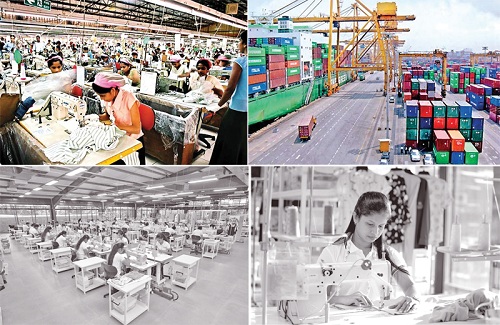 more “expensive” than its competitors. The loss would also threaten many small and medium enterprises exposing them to greater macro-economic vulnerability. Loss of GSP+ may also wipe out Sri Lanka’s razor thin profit margins in the apparel industry by making exports 9.5 per cent more expensive than its competitors.
Making Sri Lanka a self-reliant manufacturer
The Sri Lankan government has started negotiating with the EU to review its GSP+ facilities. It plans to highlight the progress made in implementing the conditions required to restore GSP+. Efforts to preserve trade agreements are likely to boost investors’ confidence in the Sri Lankan apparel industry. Sri Lanka will also benefit from growing technological prowess, ethical manufacturing, sourcing and sustainable manufacturing practices. Its apparels will become the preferred choice for customers in Europe, the United States, etc.
The Sri Lankan government needs to do everything in its capacity to restore the GSP+ benefits. This will provide it with sufficient time and resources to help to build and strengthen its apparel manufacturing capacities and make it self-reliant in this core market.
Pakistan knitwear export up 36 per cent
Pakistan’s knitwear export surged 36.57 per cent during 2020-21 over 2019-20. And it aims to increase its share to 20 per cent in 2021-22. The country’s earnings from knitwear exports are 25.83 per cent more than earnings from woven garment exports, 37.68 per cent more than exports of bed wear and 307 per cent more than exports of towel.
While Pakistan’s share in total world imports of knitwear is 1.83 per cent Bangladesh has 8.12 per cent share. About 30 per cent of small and medium units have closed in Pakistan in the last two years after the imposition of a 17 per cent sales tax.
Pakistan’s knitwear garment sector has topped the list of the textile groups for three years and it also provides the highest employment in the textile group. The country’s knitwear industry plays a vital role in value addition of the textile sector. There is a great potential of further development in this industry as there is substantial value addition in the form of knitwear apparel, sportswear, socks, gloves etc. Pakistan is diversifying knitwear products to bring more innovations and incentives to boost its exports. This sector has export potential despite remaining under pressure from its competitors mainly Bangladesh and the Far Eastern nations.
Telangana emerges India’s top cotton supplier
Telangana is India’s top supplier of cotton and the second biggest supplier of paddy. As a result, the state’s cotton purchase is nearly double that of Maharashtra, which stands second. In addition to the harvest acquired by individual businesses, the cotton crop was sold to the Cotton Corporation of India. Similarly, Telangana ranks second in paddy procurement. Punjab takes first place.
All crops are acquired from farmers at minimum support price as part of the Centre’s price support scheme, which is intended to eliminate intermediaries and help farmers. The procurement agency makes all payments to farmers for their produce straight into their bank accounts.
Telangana is in the process of formulating a textile and apparel policy that contemplates waiver of personal loans of handloom weavers. Fresh loans are proposed to be given at three per cent interest. Subsidies will be given for capital investment and purchase of equipment by entrepreneurs. Tax incentives and power subsidies are being examined. Some industrial parks will also be established in Telangana. Housing for workers and staff is proposed within the textile parks. The state has generated about Rs 73,000 crores in investments and created 2.56 lakh jobs. Telangana has achieved a year on year growth of 10.1 per cent in gross state domestic product.
Kering’s Q2 sales double riding on Gucci which recorded a sharp rise in sales
Sales of French luxury group Kering nearly doubled in the second quarter. Comparable revenues rose by 95 per cent in the three months to end-June compared with a year ago, and were 11 per cent higher than their pre-pandemic 2019 levels. Growth was driven by North America, where retail sales were up by more than 260 per cent, and Asia. Gucci sales grew by 86 per cent over the period and account for more than half of the group’s revenues and 76 per cent of its operating profit. Fashion label Gucci is the star at Kering.
Kering will continue to invest and support its brands in the second half of the year but this would not come at the expense of profitability. While returning to substantial profitability, and leveraging the desirability of its brands, Kering is stepping up the pace of its investments in brands and strategic initiatives, notably to enhance the exclusivity and control of distribution. Kering has reached 88 per cent traceability for key raw materials and aims to increase the share to 100 per cent by 2025.
Gucci is celebrating its centenary year, keeping the buzz around the brand high with events and new collections, including one presented in April where Gucci designs were crossed with silhouettes and logos by Balenciaga, another Kering brand.
Filatex increases polyester capacity
Filatex will increase polycondensation capacity by 50 TPD and set up additional manufacturing facilities for 120 TPD of polyester partially oriented yarn at its plant in Gujarat. The company is a manufacturer of polyester filament yarn and polypropylene filament yarn. Filatex currently has a polycondensation capacity of 1050 TPD at its plant. The polymer is used for manufacturing polyester chips, polyester POY, polyester FDY and polyester DTY.
Additionally, Filatex will replace two existing partially oriented yarn (POY) lines (144 ends) with two new POY lines (192 ends) along with replacing winders in one POY line with new winders. The company presently has a yarn manufacturing net capacity of 110 TPD at its plant at Dadra. This proposed project will increase the POY capacity of the plant by five TPD as well as improve the quality of the yarn produced.
Filatex is a game-changer when it comes to innovative products and the adoption of new technologies. The company has managed to maintain an edge over its competitors due to consistent product quality and low operating cost. It takes pride in its energy-efficient operations. Filatex has made rapid strides in exporting drawn textured yarn. Its present focus is on the polyester sector.
Century Textiles sells yarn and denim to Manjeet Cotton
Century Textiles has sold its yarn and denim units to Manjeet Cotton. The company received a consideration Rs 62 crores for both the units. Mumbai-based Century Textiles and Industries is active in textiles, viscose filament yarns, cement, and pulp and paper. In the textile business, Century has two revenue streams: cotton fabric and denim units. The company has a vertically integrated plant at Bharuch for manufacturing cotton fabrics. The cotton division of is one of the oldest players in India and manufactures a wide range of premium textiles and supplies to many international players, including Royale Linen, Ralph Lauren, DKNY, Belk and US Polo. Century Textiles’ financial metrics have declined, mainly due to its high debt.
Manjeet Cotton is a diversified group with investments in raw cotton ginning, spinning, renewable energy, real estate and education. Founded in 1982 it has grown to become the largest ginner of raw cotton in India, with 1250 DBRs and operations spread across all the eight cotton growing states in the country. The company has 26 captive ginning and pressing units with a production capacity of over 1600 MT per day (10,000 bales), covering almost five per cent of India’s cotton production, and having a dedicated supplier base of over 4,00,000 farmers.
China adds to ginning capacity as cotton prices rise
In recent years, China’s ginning capacity has risen fast, especially in 2020. The newly-added ginning capacity this year is due to delayed construction last year affected by the epidemic. Ginners may have higher enthusiasm to procure seed cotton this year as they have gained good profits last year, says a CCF Group report.
In addition to the expectations over high new seed cotton prices, market players also have certain expectations over the coming traditional buoyant season. Currently, cotton yarn inventory remains low as downstream traders and some end-users replenish stocks in advance. In short, Chinese cotton prices may continue rising amid the good fundamentals.
In the 2021-22 season, cotton planting areas in Xinjiang are expected to reduce slightly. Bad weather impacted the new cotton crop growing somewhat. In addition, cotton planting costs increased this year due to higher rents, fertilizer and water prices and the ginning capacity in Xinjiang continues to rise. Therefore, market players expect higher seed cotton prices in the 2021-22 season. The strong rise in cotton futures in July is mainly attributed to expectations over the high new seed cotton prices and the coming traditional buoyant season. The Central Bank of China cut the reserve requirement ratio by 50 basis points for all banks, effective from July 15, which brought a certain positive mood to the market.
Amritsar textile faces tough times as Covid hits business
The textile industry in Punjab’s Amritsar’s is grappling with the twin challenge of high raw material cost and low demand in the current Covid-hit market. The cost of textile manufacturing has increased considerably after yarn spinners and manufacturers of dyes and chemicals increased the prices of their products. On the other hand, a moderate demand for finished products in the market did not give them enough room to pass on the hike.
Over 1000 textile units in the district are engaged in manufacturing tweed, blazers, shawls, blankets, dress materials, suitings and shirtings. With a combined annual turnover of over Rs 10,000 crores, it offers employment to thousands of skilled and unskilled workers.
The hike in prices of yarn dyes and chemicals has prompted big domestic yarn spinners and manufacturers of these products to pass on the price rise to textile manufacturers. For instance, polyester cotton blended yarn before Covid-19 used to cost Rs 175 per kg and now it is Rs 250 per kg. Similarly, polyester filament yarn costs Rs 125 per kg and was priced at Rs 80.
Demand for textile products has been further affected by the rise in prices of final product due to increase in prices of input cost on its basic raw materials - yarns, dyes and chemicals.
Century Textiles net sales up 111 per cent this quarter
Net sales of Century Textiles grew 111 per cent during the quarter. Ebitda (earnings before interest, taxes, depreciation, and amortization) saw a substantial jump of 289 per cent. The manufacturing businesses, in particular, witnessed a strong turnaround on the back of continuous drive towards product innovation, customer centricity and better financial management.
The company had posted a consolidated net loss of Rs 36 crores in the first quarter. The pulp and paper business performed well in the quarter due to a strong demand from the tissue and board segments. The textile business saw a major turnaround supported by a strong demand in the bed linen segment. The real estate business posted a significant jump in collections along with a steady leasing income. The business is expected to accelerate between August to December this year, in both the domestic as well as the export markets.
The upcoming festive season is expected to introduce a new normal for the textile segment. However the short to medium-term outlook for the Indian paper industry appears to be volatile. The packaging board segment is likely to see sustained high demand going forward. An increase in tissue per capita consumption is expected due to rising health and hygiene awareness.











