


FW
Garware Technical Fibers’ Q1 FY2021-22 declines 39.99 per cent
Garware Technical Fibers net profit in Q1 FY2021-22 declined 39.99 per cent to Rs 31.93 crore from Rs 53.21 crore in Q4 FY2020-21. The company’s total income during the quarter declined by 26.96 per cent to 249.15 crore as compared to Rs.341.10 crore during Q4 FY2020-21 that ended March 31, 2021.
On a Year-on-Year basis, the company’s net profit increased by 80.6 per cent to Rs 31.93 crore from Rs 17.68 crore in Q1 FY2020-21. The company’s income grew by 52.01 per cent to 249.15 crore from Rs.163.90 crore in Q1FY2020-21.
The company’s EPS grew by 91.71 per cent to Rs.15.49 during the first quarter of FY2021-22 as compared to Rs.8.08 for the first quarter of FY2020-21.
Bangladesh to form a committee to fix yarn prices
Bangladesh plans to form a committee of representatives from four apex organizations of the textile and apparel sector to fix the maximum price of yarn in coordination with the international market. As per Dhaka Tribune, the country will not increase yarn prices before the committee is formed. At a meeting in Bangladesh, Mohammad Hatem, Vice President, BKMEA, revealed, arbitration committee will resolve all disputes amicably in the future. The meeting was attended by Farque Hassan, Managing Director and Tanvir Ahmed, Director, BGMEA.
Textile mill owners pointed out the rise of cotton prices in the international market had led to the hike of yarn price in the local market. However, their view was not accepted by apparel industry owners’ organization who said garment exports were hampered by rising price of yarn and purchase orders could not be taken, the country's spinning sector, along with apparels, would incur huge losses.
Hassan demanded 30-count yarn price be brought down immediately — keeping it consistent with the international market — to save the industry and keep the industry’s competitiveness and help it survive in this crucial time.
Improved R&D and production can boost China’s domestic apparel market

The worldwide ban on Xinjiang cotton has stoked patriotic fervor of Chinese consumers who are increasingly opting for domestic fashion brands over international labels. Chinese consumers are openly expressing their support to Xinjiang cotton, sending shares of textile and apparel companies traded in Shanghai and Shenzhen zooming higher, says Shanghai-based information provider Wind Info.
Patriotism fuels domestic sales
Patriotism is playing a big role in facilitating sales of domestic brands, especially those supporting domestic cotton, says Tang Xiaotang, a clothing and fashion industry analyst. Sportswear brands are experiencing an exponential rise in demand fuelled by consumers’ rising interest in healthy and casual wear. As per an English Eastday report, rise in demand for domestic brands has sent prices of their limited-edition sneakers soaring on online platforms.
The price rise may hit consumers' confidence in local brands and cripple their brands upgrade, say experts. Homegrown brands need to entice local consumers with a wide product variety, high quality and reasonable prices, say experts. Kong Xiangzhi, Professor, School of Agricultural Economics and Rural Development of Renmin, University of China says, the recent surge in domestic shopping may not necessarily translate into a higher share for domestic brands as consumers will continue to choose quality, style and cultural innovations. To gain more pricing power in the market, China needs to expand its domestic industrial chain and make it risk-resistant, adds Yang.
New standards for developing high-quality cotton
China is releasing its own version of Better Cotton Initiative standards. This helps it to promote a comprehensive set of principles for offering high-quality cotton products. The cotton program helps build China’s own national standards to develop higher quality cotton and digitize the entire industry, affirms Luo Yan, Secretary-General, Xinjiang Digital Cotton Research Center.
According to Luo, the proposed cotton program will improve the efficiency of cotton production in China through digitalization, low carbonization and high quality of cotton farming. For this, BCI aims to suspend its cooperation with licensed farmers in Xinjiang during the 2020-21 cotton season over allegations of forced labor in the region.
The world's second-largest cotton producer after India, China grows most of its cotton in Xinjiang, shows, data from China Grain Reserves Group. In 2020, the country exported textile and apparel products worth $291.22 billion, as per data from the General Administration of Customs. Most of these products were exported to Europe, the US and Southeast Asia.
Chinese brands to move up the chain
In future, China’s sportswear and apparel brands are expected to move up the industrial chain and expand in both local and overseas markets, avers Xie Xiaowen, Research Fellow, E-Commerce Research Center, Internet Economy Institute. Improving R&D and production skills will help these brands boost marketing operations, he adds.
Synthetic fibers, FDI’s can help Bangladesh regain lost position in global apparel market
 The second top apparel exporter in the world, Bangladesh has lost the coveted position to Vietnam recently. World Trade Organization figures show, over the last 10 years, Bangladesh’s share in global RMG exports increased only 7 per cent, while Vietnam’s share increased 11 per cent. As per a Textile Today report, last year, Vietnam exported apparels worth $29 billion while Bangladesh’s exports were worth $28 billion. Bangladesh lagged due to declining demand for cotton-based garments and surge in supply of manmade fiber garments across the world. Around 78 per cent of garments across the world are made from synthetic or man-made fibers. Vietnam is a leader in manmade fiber segment. It makes a variety of garments, amongst which synthetic garments are the most common.
Vietnam gains from US-China trade war
The US-China trade war has caused many apparel orders to shift away from China to other countries like Bangladesh, India, Myanmar and Vietnam has been the biggest beneficiary of this shift. The country has a large capacity to deliver the high-end products required by China. This integrated capacity also helped Vietnam curb export decline last year. Bangladesh recorded a staggering 15 per cent decline in apparel exports while Vietnam’s exports declined only 6 per cent last year.
FDI drop mars product development in Bangladesh
Bangladesh’s declining investments in the garment sector, and increased focus on the textile sector are also preventing the country from developing new products. On the other hand, Vietnam’s foreign investments in garment and textile sector increased to $1.5 billion in the first 11 months of 2019, reveals Vietnam Briefing. Around 60 per cent of these investments were received from Hong Kong. .Around $2.7 million investment came from China. In that year, Vietnam exported garments and textiles worth $39 billion. Among this, 70 per cent earning came from foreign companies who invested in the country.
However, Bangladesh hopes to boost exports again this year. In a few years’ time, Bangladesh will lose its least developed countries (LDC) status. It will no longer be able to avail duty-free facilities and face stiff competition in the EU and other big markets. To regain lost status, the country needs to boost production capacity particularly of synthetic garments with increased FDI from countries including China.
Multi-brand stores flourish in China as domestic demand rises
 China has emerged strong in the luxury fashion market. The country today, is redefining the world of luxury fashion with latest fashion trends influenced by extremely selective consumers. As Jing Daily report says, the luxury fashion industry in China has become more advanced due to the pandemic. It has emerged one of the most growing segments with demand being driven by domestic consumers.
Over the last decade, China has also witnessed a spurt in local independent multi-brand stores across the country. These stores help meet consumers’ need for new clothes and accessories, benefitting both foreign niche labels and new local brands. One reason for the growing popularity of these stores is higher brand awareness amongst Chinese consumers and a rise in domestic demand, says Mike Roberts, Former CEO, Green Room. Many of these stores are led by social media influencers whose fashion choices are blindly trusted by consumers.
An opportunity to regain lost consumers
The arrival of multi-brand stores in China is viewed as an excellent opportunity to attract lost consumers. As per latest Fund Business Intelligence survey,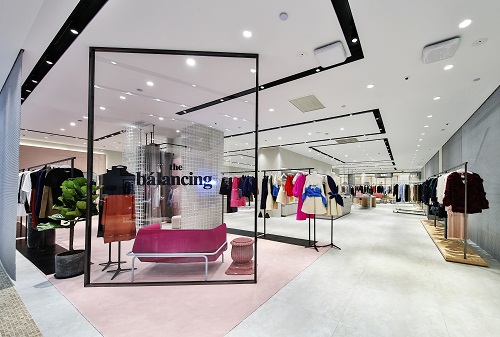 China has seen a dip in footfalls at shopping malls and department stores over the years due to increased competition from e-commerce players. The report shows, from 2014 to 2019, department store and footwear businesses in China dropped from 38.6 per cent to 26.3 per cent. Consumers are opting for multi-brand boutiques for personalized shopping experiences they provide.
Wenyan Jiao, Co-Founder, Shanghai and Wuxi-based boutique Mushion, attributes the dip in footfall to outdated operational methods of malls or department stores. Most malls and stores fulfill the needs of general consumers. They re-innovate their stores periodically to counter increased competition from specialist brands such as Proenza Schouler.
A popular multi-brand store Autumn Sonata chooses brands that uphold its values and promotes product exceptionality, avers Kian Zhang, Co-Founder. The store currently sells pieces from British brand Margaret Howell’s August/Winter 2020 collection.
Rolling inventory to innovative product assortment
Multi-brand retailers also attract consumers with a purposeful and poignant content on social media platforms, says Roberts. They adopt a rolling inventory model to uphold their brand values, and create an innovative product assessment. Many retailers also get their stores designed by indigenous architects who are aware of local Chinese customers.
Growth rate of multi-brand stores in China will continue to soar as local retailers act as a catalysts between global brands and audiences. However, mono-brand stores will also flourish as they will help brands track consumers’ shopping behaviors, desires and preferences.
US denim imports rise by 32.87 per cent from H1 2021
US saw a 32.87 per cent Y-o-Y increase in its denim clothing import values from worldwide from January-June 2021.
As per Apparel Resources, the US imported $1.44 billion worth of denim apparels in January to June ’21 period as against $1.08 billion in the corresponding period of prior year.
Bangladesh ended 2020 as a top ranked denim apparel shipper to US but the country has been surpassed by Mexico in H1 ’21.
Mexico clocked US $ 286.28 million from its denim clothing exports to US in H1 ’21, noting 54.80 per cent Y-o-Y surge, while Bangladesh accommodated US $ 283.65 million in its respective shipment, growing by 49.25 per cent on yearly note.
Bangladesh was followed by Vietnam that shipped US $ 151.06 million worth of denim clothing to USA and upped its value by just 5.22 per cent on Y-o-Y basis.
Another country that emerged victorious is Pakistan that went past China to grab fourth spot in tally, jumping one rank up because of significant rise in its denim shipment value in the US market.
Pakistan’s shipment valued $150.97 million, with a whopping increase of 50 per cent, and the country remained marginally ahead of China that could hit a figure of $148.91 million in its respective denim clothing exports to US in H1 ’21.
Kornit Digital acquires Voxel8
Kornit Digital a worldwide market leader in digital textile production technologies, has acquired the associated assets of Somerville, Massachusetts-based Voxel8.
Voxel8’s advanced additive manufacturing technology for textiles allows for digital fabrication of functional features with zonal control of material properties, in addition to utilizing high-performance elastomers adhering to inkjet technology. Voxel8’s innovative technologies and talent will help Kornit Digital accelerate the execution of its 4.0 strategy to digitize sustainable, on-demand textile production, says Ronen Samuel, Kornit Digital Chief Executive Officer. With this advanced and proven 3D technology, the company will disrupt the business of fashion, empowering completely new creative decorative concepts and never-before-seen functional textile applications, while exploring new lucrative opportunities in the functional apparel and footwear markets.
Voxel8’s innovative and sustainable technology—tested by some of the world’s leading global fashion and footwear brands, such as Hush Puppies, which is part of Wolverine Worldwide, enables the digital creation of unique decorative and functional applications, while eliminating time and waste from the manufacturing process,adds Fred von Gottberg, President and Chief Executive Officer, Voxel8.
Arvind partners with Textile GenesisTM to address transparency need
Arvind Limited, the $1.5 billion textile to technology conglomerate and the largest manufacturer of denims in India, has collaborated with Textile GenesisTM a block-chain enabled digital transparency platform for apparel supply chain. This collaboration will address the emerging need for Transparency across the complete Denim supply chain, backed by a credible Traceability mechanism.
This platform will provide complete traceability of upstream (cotton and other inputs) being used by Arvind to the customers. This technology works closely with a network of key sustainable fibre suppliers and textile chain partners helping create a sustainable ecosystem for major brands and retailers.
Arvind Denim’s wide range of sustainable offerings like single-origin non-conflict cotton Renaissance range of recycled cotton, polyester and other man-made fibres; natural indigo etc., will be available with full track & trace.
Path breaking digital ‘Fibercoins™’ technology from TEXTILE GENESIS™, allows brand and retailers full value chain traceability and visibility along with ESG (environmental, social and governance) credentials of the Supply Chain Partners from fiber-origin to retail.
Welspun to launch expansion projects with Rs 600 crore capex
As per its annual report for 2020-21, Welspun plans to launch expansion projects across three business verticals in ongoing fiscal with Rs 600 crore capex. The company expects its top line to grow by over 15 per cent in FY22 on the back of expanded capacities and with customer demand remaining buoyant. In all, Welspun India plans to undertake capital-light capacity expansion to address growing demand. It will expand the capacity of its Vapi and Anar plants through debottlenecking and rebalancing.
In the home textile segment, the company has an annual capacity of 80,000 MT for bath linen, 90 million meters for bed linen, 10 million square meters for rugs and carpets. According to the annual report, the capacity utilizations for these stood at 88 per cent, 77 per cent and 82 per cent respectively in FY21
For advanced textile, the annual capacity for Spunlance was 10,000 MT with capacity utilization of 92 per cent last fiscal. The same for needle punch was 3,000 MT with capacity utilization of 34 per cent, while that of wet wipes was at 75 million packs and capacity utilization of 28 per cent, it added.
Welspun India excepts to increase the annual capacity at full capex for soft flooring to 16.3 million square meters and for hard flooring to 10.7 million square meters.
CIRC partners Andritz to commercialize recycling technology
US-based textile recycling technology provider CIRC has partnered Austrian technology group Andritz to commercialize CIRC’s patented textile recycling technology. As per Textile Today, Andritz will design and manufacture continuous processing equipment for CIRC facilities worldwide. CIRC technology can also separate and recover mixed polymer strands, including any blend of polyester and cotton.
Jorma Latva-Kokko, Vice-President-Mechanical Pulping, Andritz says Andritz will help CIRC capture a significant portion of the global circular textile market with its expansive engineering and equipment capabilities. Julie Willoughby, Chief Scientific Officer, CIRC adds, the Andritz team is working shoulder-to-shoulder with CIRC to implement its vision of a circular economy for textiles and beyond.
CIRC makes the technology to source nature’s raw ingredients and enables fashion brands to harness its proprietary technology that resources and re-harvests raw ingredients out of clothing waste. It aims to entirely eliminate the demand for raw ingredients needed to make clothing by creating new clothes entirely out of old ones.











