FW
Prima China conducts live showcase at Apparel Textile Sourcing Canada
Renowned apparel and textile brand alliance from China, Prime China holds a live showcase of its brands at the ongoing Apparel Textile Sourcing Canada Virtual trade show. The ‘show-within-the-trade-show’ features over 100 top trending and well-established Chinese apparel and textile brands alongwith attendees and 30 speakers.
The alliance Prima China includes reputed China’s apparel and textile companies, including garment producers, fabric manufacturers, designers and industrial brands. The alliance provides state-of-the-art manufacturing, well-coordinated tech integrations, enhanced e-commerce, a flexible international sales model and the ability to quickly react in a social-minded, trend-driven, time-sensitive and fast-changing world, as per a media release.
Prime China brands showcasing at Apparel Textile Sourcing Canada Virtual 2021 trade show include: Mizuda – fabrics, functional; Changshu Garments Town – garment industry cluster in Eastern China; Bosideng – a famous down jacket brand in China; Qirui & Deze – kidswear with more than 2,000 stores in China; Aparso – outdoor sportswear; Genjoe – knitwear collection; V.Roc.V – flight jackets, tactical pants and high-quality uniforms; and Minimal Edge – women’s collection.
Pakistan’s monthly average of apparel exports to rise 13.44 per cent
The monthly average of apparel exports from Pakistan is expected to grow 13.44 per cent in H2 FY2021 to reach $ 641.60 million from $565.60 million in the H1 FY 2021. The collective monthly average of textiles and clothing exports from Pakistan is expected to increase 9.12 per cent from $1237.55 million in the H1 FY 2021 to reach $1350.40 million in H2FY21.
In H1 FY 2021, Pakistan’s monthly average of textile exports was $ 278.77 million. It is expected to drop by 6.52 per cent in H2 FY2021 to reach a monthly average of $ 260.58 million.
Bangladesh, the US, Turkey, Italy and Sri Lanka were the top five importers of Pakistani fabrics in the first half of 2021 and accounted for approximately 46.64 per cent of total fabric exports of the country. China, Bangladesh, Portugal, the US and Turkey were the top five markets for Pakistani textile yarns in the first half of 2021 and accounted for approximately s 85.63 per cent of total textile yarn exports of the country.
The monthly average of home textile exports of Pakistan is expected to go up from $3 93.22 million in the H2 FY 2021 to $ 448.23 million in the H2 FY2021.
Bangladesh seeks letter of credit for unlicensed exporters
Bangladesh commerce ministry has asked stakeholders to allow apparel exporters without a bond license with back-to-back letter of credit (LC). To settle this issue, stakeholders hope to amend the VAT law and the Bangladesh Bank guidelines At a meeting directed Bangladesh Knitwear Manufacturers and Exporters Association (BKMEA) informed how many readymade and terry towel factories do not have a bond license, how many workers the factories have and how much the factories export.
The revenue board in a letter on August 31 had requested the Bangladesh Bank not to allow non-bonded apparel factories to enjoy back-to-back LC, as it contradicts the central bank's guidelines. The board’s move put around 500 knitwear and home textile exporters without a bond license in a limbo. Stakeholders say if the back-to-back LC benefit goes, more than 500 RMG and home textile factories will no longer be able to procure raw materials and accessories from local and foreign sources on credit.
In a back-to-back LC, an importer issues an LC to an exporter and the exporter can use it as collateral to get another LC issued for sourcing raw materials and accessories on credit. If the facility goes, RMG and home textile factories will have to make full payments plus VAT in cash for local purchases, which will make their survival very difficult.
Primark pledges to go eco-friendly with recyclable materials
One of Europe's biggest fast fashion chains, Primark has pledged to cut its environmental impact by using more recyclable materials. This would enable the retailer to control prices, make clothes more durable, and improve wages for workers. Primark, which sells more than a billion items a year including jumpers and jeans for as little as $10 each, plans to make sustainable fashion available for all. Owned by Associated British Foods, the retailer started its operations in Ireland in 1969 before taking Britain by storm with its ultra-low prices. It is now available in 14 markets, including the United States.
The British company had previously joined industry efforts on the environment. It has now published its own measurable targets for the first time. This plan entails, the company’s team of staff to work with factories to improve energy efficiency levels and encourage the use of renewable power. It will aim to eliminate single-use plastic and continue the switch to farming practices that use less water and fewer chemicals.
It plans to strengthen the durability of clothes by 2025, make them recyclable by design by 2027 and make all its clothes from recycled or more sustainably sourced materials by 2030.
On top of those changes, it also plans to work with factories and rivals that use the same sites to improve wages.
London Show Rooms to collaborate with White Milano
The British Fashion Council has announced for the first time, London Show Rooms are collaborating with the ongoing edition of White Milano, on from September 2 -26, 2021, in Milan. The showrooms located at Superstudio Più, via Tortona 27, within the renewed White set-up. Eleven designers are participating in the London show Rooms at White this season. These include: Ahluwalia, Ancuta Sarca, Completed Works, Duran Lantink, Edward Crutchley, Helen Kirkum, Jordanluca, Maximilian Davis, Palmer//Harding, Saul Nash, and Sweet Lime Juice.
The British Fashion Council is committed to strengthening British fashion in the global economy and will designers to sell their collections in Milan, says Caroline Rush CBE, CEO, British Fashion Council. The innovative platform developed by White enhances the network originated by the city of Milan as worldwide fashion capital, adds Massimiliano Bizzi, Founder, White Milano
Interloop announces $300 million expansion plans
In its Vision 2025, Pakistan-based knitting and apparel manufacturing firm, Interloop, has announced plans to expand operations in the country. The company will invest $300 million over the next five years to set up an activewear plant, a denim fabric mill and a hosiery plant, besides enhancing its spinning and yarn dyeing capacity.
Interloop also plans to invest in a fully vertical apparel facility to give customers complete supply chain transparency, besides expanding the company’s annual capacity to 40 million pieces of apparel, apart from the capacity it’s doing for socks and leggings. The investment will help the company create more job opportunities besides increasing its annual turnover to $700 million from current $300 million. Incepted in 1992 with just 10 knitting machines, Interloop has grown into one of the world’s largest hosiery manufacturers and a vertically integrated company.
Karl Mayer launches HKS 3-M ON range of wrap knitting machines
Karl Mayer has launched the HKS 3-M ON range of warp knitting machines that are networked with KM.ON’s secure cloud via KM.ON’s key. The HKS 3-M ON machines combine the respective advantages of N and EL gears: simple, fast design changes with high working speeds. Their patterning is highly flexible since the information for the guide bar movement is loaded directly onto the machine from the KM.ON cloud. Their design options allow customers to quickly and easily adapt their current market requirements using a new multi-model concept.
The SwapKnit 36 and SwapKnit 36 Flat models enable patterns with repeats of up to 36 stitch courses per main shaft revolution. The required lapping information for new or tried-and-tested articles is obtained from Karl Mayer’s Spareparts Webshop in just a few clicks, and loaded onto the machine. The acquired lapping patterns remain available to customers in the cloud and can be used successively on several machines.
For designs with over 36 stitch courses per main shaft revolution, a model has been developed that uses KM.ON’s k.innovation – Core. The web-based software makes uncomplicated pattern creation possible. Simply log in to k.innovation – Core from any internet-ready device, select a machine, enter the lapping patterns for the individual ground guide bars and subsequently create the pattern file and send it to the KM.ON cloud in just a few clicks. All that remains before production can get underway is to select the lapping pattern file on the machine’s operator interface.
Increase sourcing from Bangladesh, urges BGMEA to Canadian buyers
Faruque Hassan, President, BGMEA has urged Canadian buyers to increase sourcing from Bangladesh as it is a safe, sustainable and ethical apparel-sourcing destination. As per a Textile Today, Hassan made this appeal during a recent meeting with Paul Draffin, Chief Supply Chain Officer, Canadian Tire Corporation in Toronto, Canada. The meeting was also attended by Abdullah Hit Rakib, Director, BGMEA and Kimi Walker, Associate Vice President, Product Stewardship, Eddy Kong, General Manager, Asia, Canadian Tire Corporation.
They discussed possible avenues of business opportunities for Bangladesh in Canadian market. Hassan also highlighted the tremendous progress of Bangladesh’s RMG industry in terms of workplace safety, sustainability and ethical manufacturing,
Hassan said, Bangladesh will continue to be the world’s preferred destination for apparel sourcing. He urged brands and retailers of Canada to strengthen partnership with their Bangladeshi suppliers to enhance capacities in apparel products that are in high demand in the Canadian market.
Innovation labs helping brands launch new, sustainable materials
 The activewear industry has received a huge push in the last three years with brands from Adidas to Pangaia to Allbirds launching collections made with sustainable materials. While some of these collections are made with materials sourced from other companies, however, much of the materials is now being developed in brands’ in-house laboratories. California-based activewear brand Rhone has set up a laboratory called Nanoprojects to develop new materials and manufacturing techniques. The brand recently launched a collection under a namesake higher-end label. The collection offers blazers, outerwear and chinos in the range of $160-$600.
Opportunity to explore maximum creativity
A report by Glossy says, Rhone’s collection gives the brand an opportunity to experiment with new categories and products. The collection is limited with less than 100 pieces being made for some products. Rhone’s co-Founder, Kyle McClure says, the brand’s in-house laboratory enabled it to explore creativity to maximum levels through this collection.
The innovation lab was set up with investments from the brand’s existing resources, notes McClure. Employees at the lab operate from Rhone’s existing office in Connecticut, The brand recently also hired freelance designer Rachel Rozz to lead the development of the brand Nanoprojects.
Nanoprojects works with textile companies and fabric mills to develop new materials and has recently launched a regenerated nylon that’s being used in a Rhone raincoat. The brand also uses a new indigo dyeing process developed by one of Rhone’s Italian manufacturing partners to make its debut denim range.
Brand support necessary for innovation lab’s success
In the last one year, many activewear brands have ventured into developing new materials. Allbirds’split its team into two: one for developing products and other for developing new materials for the launch of its debut activewear collection last month, informs Hana Kajimura, Head-Sustainability. Similarly, fitness and outdoor apparel company Pangaia launched a new range of sweaters in August made from a plant and fruit based fiber developed by the company internally. Underwear brand Knix has announced plans to set up a dedicated innovation lab in its new office in the US next year. The lab will introduce materials and production techniques.
Innovation lab needs to be supported continuously by the brand to be successfully operated, says Scott Emmons, Previous Owner, Neiman Marcus Innovation Lab. Nanoprojects’ laboratory has been operating for the last three years and McClure hopes to continue supporting the lab for many more years. From ready-to-wear, the brand also plans to expand into collections made from new and innovative materials.
Bangladesh: New Accord fails in brands’ legal accountability to suppliers
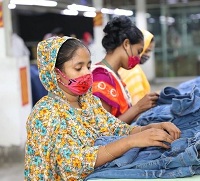 The recent renewal of the Bangladesh Accord has sparked a debate amongst industry leaders on the feasibility its renewal. While some believe, the agreement has led to substantial improvement in safety standards in Bangladesh factories, others are skeptical about the model’s ability to foster collaboration within the industry, writes Kim van der Weerd, Co-host of Manufactured Podcast, writer, consultant in a Textile Today write up.
Fails to shoulder supplier responsibility
The article quotes Elizabeth Cline, Author and Director- Policy and Advocacy, Remake who argues the new Accord encourages brands to enforce health and safety standards in garment factories. It makes brands legally responsible to adhere to worker safety rules in factories. However, it acquits them from their responsibility towards suppliers. The new Accord is an agreement between trade unions and brands, says Nurul Muktadir Bappy, who earlier worked with the Bangladeshi supplier Epcot. Though this compliance shake was needed, it would have been done in other ways.
Matthijs Crietee, Secretary-General, International Apparel Federation agrees, earlier, manufacturers were not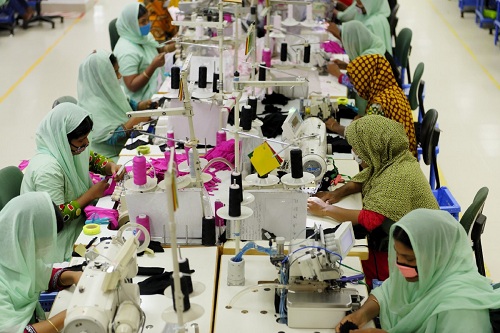 considered suitable to be the members of the International Apparel Federation. However now, perceptions are changing and suppliers are being treated on an equal level with brands, multistakeholder initiatives, unions, and employers,
Need to share financial risks and rewards
The author writes, to assert more control over safety standards in garment factories, brands need to share the financial risks and rewards involved in the production of their garments. However, the new Accord fails to make brands responsible to commit to making financial investments of at least 50 per cent of projected demand for a period equal to the supply chain’s total lead time. It also fails to compel brands to make prices compliant with demands.
If a brand is made to pay a deposit equal to the supply chain’s total lead time, it would compel them assume their fair share of the losses in lieu of changing consumer demands. Similarly, if a brand’s demand forecasts fail, they need to bear the losses equally with suppliers.
If suppliers are freed from shouldering the responsibility of changing consumer demands alone, they can concentrate on their workers’ conditions. Brands therefore, need to be made equally responsible for production of their garments. They also need to share financial risks equally. This alone would foster true collaboration between industry stakeholders.