FW
Pakistan textile, apparel associations demand revival of zero rated sales-tax
Council of All Pakistan Textile Mills Associations and Pakistan Apparel Forum has urged its government to revive zero-rated sales-tax regime and reinstate SRO 1125 in its true spirit to address the industries’ liquidity problems. The associations also submitted their proposals for a relief package to demand government’s support and relief for textile industries in the covid-19 situation. They said that hardships of exporters in terms of liquidity would multiply in the presence of 17 percent sales tax.
Thus, restoration of zero-rating or exemption from sales tax was crucial, for which SRO 1125 should be revived in true spirit. Under current circumstances, the local markets were closed, the intention of the government to collect sales tax was not being achieved, and by continuing to collect 17 percent sales tax, the government was creating severe liquidity problems for the exporters.
Trump to announce 90-day tariff deferral for few types of apparels
President Donald Trump is reportedly prepared to announce a 90-day deferral on tariffs for certain apparel imports. The move, which comes amid a mounting COVID-19 pandemic crisis, would defer payments for most-favored nation duties and isn’t expected to apply to Chinese goods tariffed higher in the trade war. Most-favored nation, or MFN, tariffs are the highest rates countries agree to impose on other members of the World Trade Organization (WTO), for product groups like textiles, clothing and footwear.
Nearly 400 CEOs from major global companies sent a letter to President Trump recently imploring him to delay duty collection in light of the havoc coronavirus has already wreaked on businesses both stateside and worldwide. The request was for a 90- to 180-day deferral. The deferral the CEOs are seeking would help the companies preserve their cash flow at a time when funds have largely dried up with stores shuttered and sales stunted. Many retailers have already laid off workers or furloughed them, and executives are starting to take pay cuts.
The 90-day pause on import duties still awaits Trump’s approval, according to reports, but his sign off on some sort of deferral is expected.
COVID-19: A 50 per cent drop in European textile, clothing sector expected
Eurostat data shows the European textile and clothing manufacturing went through a difficult year in 2019, despite good retail sales and export performances. This trend will worsen in 2020 due to the Coronavirus outbreak. An ongoing Euratex poll with members show 80 per cent companies are already laying off workers; more than half of them expect a drop in sales and production by over 50 per cent.
The outlook for 2020 is expected to worsen due to the virus’ outbreak, as in March 2020 industry confidence fell dramatically. Euratex is conducting a survey among European companies: preliminary results indicate that more than half of the companies expect a drop in sales and production by more than 50 per cent. Moreover, almost 9 out of 10 companies face serious constraints on their financial situation and 80 per cent of companies is temporarily laying off workers. 1 out of 4 is considering closing down the company.
Tirupur garment cluster stare at a bleak future amidst COVID-19
The Tirupur Exporters’ Association (TEA) says, garment industry in Tirupur, which has over 10,000 manufacturing units, is facing the worst time ever. The garment clusters that employ over 6 lakh people is staring at a loss of over Rs 10,000 crore in just three months. For both the small and big firms, the road to revival seems difficult.
As per Raja Shanmugham, President TEA revealed, Tirupur exports industry used to see a turnover of Rs 2,500 crore per month on an average, but the units have not yet received their payment dues for January and February. As COVID-19 affected the EU, Canada and other markets, the brands have not made our payments. Besides, the shipments released in March are right now on high seas or lying at the ports.
Even the domestic market, which is also worth Rs 2,500 crore a month, is affected. The business hub of Tamil Nadu is wearing a deserted look. The chances of its revival depend solely on government patronage as most firms have bank loans and insufficient working capital.
The association has requested the government for a moratorium of at least one year. “It’s clear that in next three months we won’t get any major export orders as coronavirus has battered economies globally. It has also requested the government to infuse at least 25 per cent of working capital into the industry.
Madewell announces long term commitments to sustainability
Madewell has announced long-term commitments to further its sustainable practices across key areas of the business and in connection with Earth Day in April. The brand’s sustainability initiatives include production, supply chain, retail and corporate culture, as the company deepens its commitments to better materials, its existing Fair Trade USA partnership, packaging and carbon usage.
Several goals and commitments were announced for 2025 and 2030. For starters, 100 per cent of key fibers used in all of Madewell’s materials will be sustainably sourced and free of virgin plastics, including more sustainable cotton, synthetics, cellulosics, wool and leather. To date, 60 per cent of Madewell’s spring collection incorporates sustainable materials.
Madewell will continue to expand its partnership with Fair Trade USA and will have at least 90 per cent of its denim confirmed as Fair Trade Certified. Madewell added four Fair Trade Certified denim factories in the past few months and has now nominated 10 additional factories to be certified in the near future. Among the existing ones is the Saitex factory in Vietnam, which prioritizes renewable energy, washes efficiently, air dries and turns its manufacturing waste into bricks for affordable housing.
In addition, 100 per cent packaging materials will be sustainably sourced and free of virgin plastics by substituting recycled and alternative sources. Madewell will also ensure that all operations in company-owned and operated facilities are carbon neutral by 2030.
To kick off these commitments, Madewell has added new Spring styles to the brand’s Do Well Shop featuring sustainably made pieces to Fair Trade certified denim. They include a tie-dyed jean jacket, denim short overall, a midi dress and cardigan.
ACT brands to maintain responsible business practices in Bangladesh
ACT signatory brands have expressed their commitment to maintain responsible business practices and social dialogue with union representatives from IndustriALL Bangladesh Council (IBC) and the Bangladesh Garment Manufacturers and Exporters Association (BGMEA), amid the corona virus outbreak.
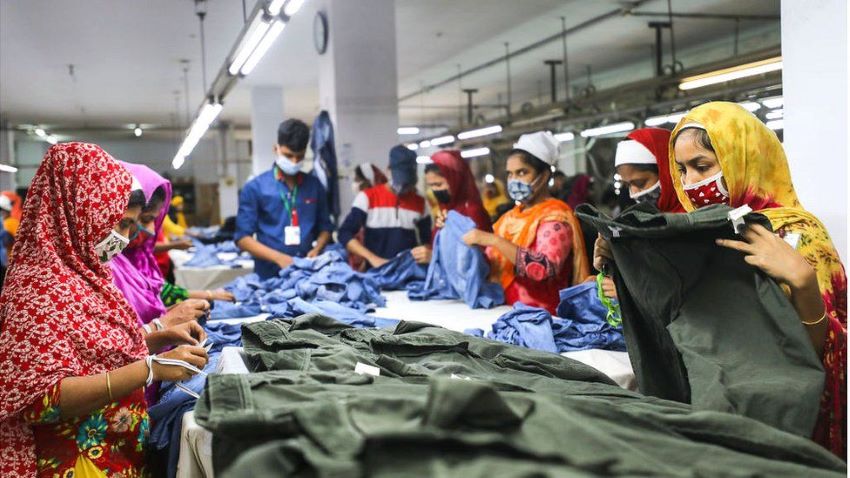
In majority of garment factories in Bangladesh, workers are yet to receive their due payments for March. Union leaders in the IBC stress that workers are vulnerable, as many factories are closing over fears of the virus outbreak, and in some cases laying off workers.
The IBC is urging brands to pay for orders that are wholly or partially completed, and if possible to consider paying in advance. According to BGMEA, 907 million apparel pieces worth $2.87 billion have been cancelled or suspended by brands and buyers that source from Bangladesh. This has a direct impact on the 2.09 million workers in the country’s textile industry.
If brands don’t take ownership of items already produced and ready to be shipped and pay at least the production cost of orders in the process of being manufactured, it will be nearly impossible for employers to pay workers’ wages.
US retailers to furloughs employees as virus crisis deepens
Major U.S. retailers Macy's Inc , Kohl's Corp and Gao plan to furlough tens of thousands of employees, as they prepare to keep stores shut for longer to curb the spread of COVID-19.
Kohl's would also suspend its share repurchase program, evaluate its dividend plan and draw down $1 billion from an existing credit line, joining a growing list of companies seeking to shore up their cash reserves to weather the financial hit from the health crisis.
Macy's and Gap have suspended their dividends and have also tapped into their credit facilities. Kohl's furloughed employees would continue to get health benefits. Macy's specified that employees enrolled in health benefits will continue to receive coverage, at least through May.
Macy's would maintain the "absolute minimum" workforce needed to maintain basic operations across its Macy's, Bloomingdales and Bluemercury brands. The retailer would have fewer furloughs in its digital business, supporting distribution centers and call centers, while Kohl's would start buy online and pick up-at-store services later this week.
India calls for allowing import sans certificate of origin
India has urged countries with which it has free trade agreements (FTAs) to allow import of goods now without certificate of origin as domestic authorities are currently not issuing the document on account of the ongoing lockdown. Exporters have to submit that certificate at the landing port of the importing country to claim duty concessions under FTAs.
The certificate helps in checking dumping of cheap and sub-standard goods from a third country. The request was notified in a trade notice by the Directorate General of Foreign Trade (DGFT).The certificates would be issued retrospectively by the concerned Indian agencies after they open their offices. Therefore, in the interim period, the customs authorities and other competent authorities in the trading partners with whom India has a trade agreement may kindly allow the eligible imports under preferences on a retrospective basis subject to the subsequent production of the certificates of origin by the Indian exporters.
The notice said, India would also honor its preferential trade agreement imports, subject to the respective governments also making a formal request or putting up a notice in this regard for accepting these certificates on retrospective basis. Under these trade agreements, two or more trading partners significantly reduce or eliminate import duties on maximum number of goods traded between them. India has implemented such agreements with the Association of Southeast Asian Nations (ASEAN), Singapore, South Korea, Japan, Sri Lanka, Thailand and Malaysia.
NCTO criticizes ministration’s tariff deferral
The National Council of Textile Organizations (NCTO has criticised administration’s plan to institute a 90-day deferral on MFN tariffs. NCTO believes the reported plan being pushed by importing and retailing industries would defer certain tariffs, including those on finished apparel products. It is an ill-advised policy that will hurt the US textile industry at a time it is answering the call of the nation to produce medical supplies to battle the COVID-19 pandemic.
NCTO has been at the forefront of efforts to deploy resources, converting production lines to manufacture urgently needed medical supplies like face masks and their textile components, to address the critical need for personal protective equipment and other medical and sanitation supplies in the fight against the coronavirus. These unnecessary tariff concessions would benefit importers and retailers at the direct expense of manufacturers on the front lines of the COVID-19 response and send a demoralizing message.
Tariff deferrals would severely exacerbate ramifications for the US economy, manufacturers and workers and open the floodgates for imports. If the US government makes tariff concessions during this crisis, it will be inviting a virtual tsunami of imports further devastating domestic manufacturing as it attempts to regain its footing.
Clothing rental and resale market face tough times as consumers stay home
 As both retailers and consumers are grappling with the effects of COVID-19, rental platforms like Rent the Runway and RealReal are also facing a shortage of orders. Demand for rented work wear and occasion wear is drying up as conferences, weddings and other events are being canceled across the board. This can be noted from the example of Nova Octo, an evening wear rental service, whose new rentals dipped by more than 90 percent last week. The supplies of resellers like The RealReal and Vestiaire Collective, are also affected as stores remain closed. This is likely to delay future consignment processing times of these sellers by up to four weeks.
Similarly, Vestiaire Collective is facing an inventory build up as many customers are depositing their old clothes in these stores. The Paris-based company closed its New York warehouse over the weekend as per Governor Andrew Cuomo's executive order for all non-essential workers to stay home. However, the company is seeing an increased visitor turnout on its shopping app.
As per managing director of of GlobalData Retail, Neil Saunders, during these times, shoppers that use rental and resale services, may have less disposable income hence, they are likely to cut non-essential purchases out of their spending habits.
Though New York City-based rental service, Rent the Runway, is yet to see members pause and cancel the service en masse. However, some of its competitors like the Seattle-based Armoire have been recording a significant number of cancellations since the last two weeks.
Despite such instances, online shopping may increase due to the growing work-from-home culture. As retail customer service platform Hero reveals, in the second week of March, e-commerce purchases made between the hours of 9am and 6pm jumped 52 percent compared to the same period last year. Rental users, in fact, are embracing dressing up at home rather than for the office.