FW
Plus size fashion moves ahead as designers adopt the right attitude
 For years, plus-size fashion was stereotyped as something created to hide a woman’s unpleasant curves. This grossly limited the fashion choices for healthy women who had to contend with whatever was available in the market. Now this attitude towards plus size fashion is changing. Rising acceptance of diversity and body inclusivity is translating into more choices for large-size women. Still, size issues continue to persist.
Dealing with size issues
As per a Forbes report, most plus size garments are designed in a single size and later scaled up or down according to requirement. However, a garment can be scaled only up to a certain size. Extending it beyond this size can ruin not just its fit but also the overall look, says Nadia Boujarwah, Co-Founder, Dia & Co, As a solution, SHEFIT, a manufacturer of sports bras, extends its bra designs only upto three sizes. Beyond that, it revamps the designs to fit larger sizes. This approach helps the company double its revenues every year.
Though attractive, this process is quite expensive as companies have to bear the cost of buying inventories for each expanded range of sizes before their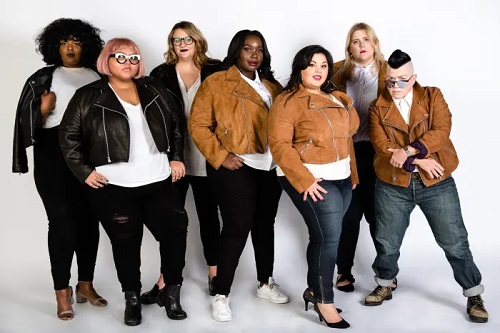 garments are sold. This leads to most companies bypassing this route, opting instead to extend their existing sizes and making only a small number of garments in plus sizes.
Meeting specific needs with right attitude
One key to be a successful a plus size retailer is to respect the customer. Companies like Dia & Co, Shefit and Ashley Stewart describe their business as a mission to meet the needs of a specific group of customers with products and the right attitude.
The concept of plus-size is nowadays not limited to fashion. It has also extended to other categories such as beddings. For instance, Big Fig Mattress makes beds only for plus-size people. The company’s President, Jeff Brown, sees its initiative as an opportunity to change the world.
Respect for consumers has become a critical component of a brand’s success these days. It is helping the industry abandon its traditional attitudes and create a new all-encompassing world.
Despite government aid, Asian garment workers lost jobs, see wage cuts: Report
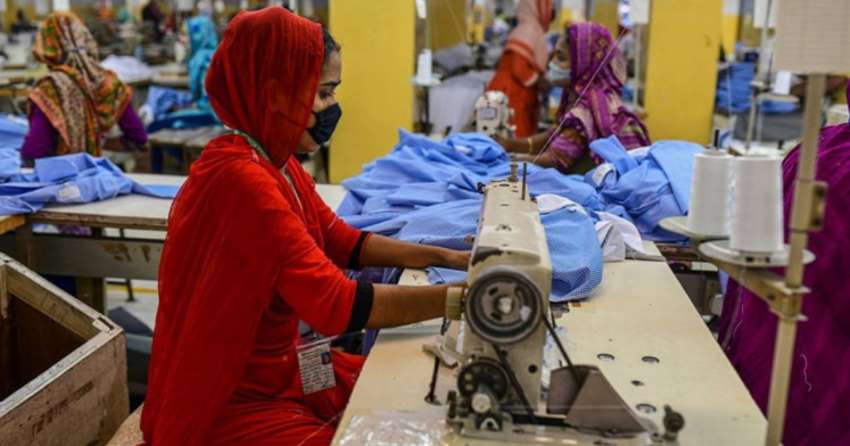
 Working conditions for garment workers were already under distress pre-COVID. The pandemic has worsened the situation with wage thefts across Asian garment factories rising, says a new report by the Asia Floor Wage Alliance (AFWA). The report states, predatory purchasing practices adopted by brands during the pandemic has forced many suppliers to lower production costs besides accepting unstable offers and delayed payments. Around l 2,185 employees employed in 189 factories in six countries including Sri Lanka, Pakistan, Indonesia, India, Cambodia and Bangladesh, have faced wage thefts during the period.
Bangladesh sees 60 per cent wage drop
As per a MDS report, world’s second largest garment producer, Bangladesh is one of the most affected countries by the pandemic. Bangladesh generates almost 11 per cent of its GDP from the fashion industry and employs 4.4 million workers. The country reported a 60 per cent decline in minimum wages last year due to the pandemic. The laid off workers had to rely on debts to satisfy their basic needs such as food, housing or health services. Around 28 per cent these workers were unable to find any other jobs. They have also not received any financial relief from the government.
Bangladesh has also not renewed its Agreement on Fire and Building Safety, which expired this year. This is compelling workers to work with bare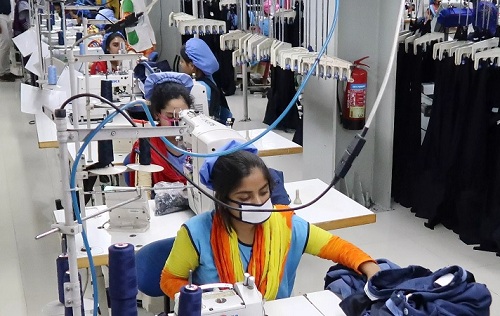 minimum wages and in unsafe working conditions.
High job loss in India
With a worker base of 45 million direct and 60 million indirect employees in the textile and garment industry, India suffered one of the largest lockdowns imposed. This led to a 73 per cent decline in workers’ wages with companies failing to pay $29.67 million in wages and $5.3 million in bonuses. Around 88 per cent workers in the industry have lost their jobs.
Wage gap in Cambodia widens
Value chain disruptions in China and reduced consumption in the US and EU led to 72 per cent Cambodian garment workers losing their jobs. Some also faced wage cuts or temporary wage suspensions. Wage gap between male and female workers widened to 21 per cent by the end of the year from 12 per cent before the pandemic.
Pakistan workers see wage cuts
Workers’ wages in Pakistan declined 29 per cent in 2020. The country also laid off 81 per cent garment workers during the year. Workers, who succeeded in retaining their jobs, faced 5 per cent decline in monthly wages. Factories failed to pay $85.08 million in wages due to order cancellations and failed payments by brands. Most women garment workers were forced to take up extremely poorly paid jobs that roughly provided $2-3 per day. Others had to work for longer hours and also faced increased verbal and mental harassment.
No aid for COVID-positive workers in Sri Lanka
Since the outbreak, Sri Lanka has fired almost 96 per cent its garment workers. Of this, 85 per cent have not received any compensation from the government leading to 78 per cent of them falling below the poverty line between March and May 2020. Workers’ debts in the country rose from $6 a month per employee before the pandemic to $17 month in April this year. Around 94 per cent workers were paid 23 per cent less wages between March and December 2020 than in January and February 2020
COVID-19 outbreak also deteriorated the working conditions of Sri Lanka’s garment factory employees. Over thousand employees at the Brandix Lanka factory in Minuwangoda, who, tested COVID positive in October, faced physical violence and mistreatment from the government and the military.
Indonesia workers seek debts to cover basic needs
Order cancellations and raw material shortage led to loss of jobs for 72 per cent of Indonesia’s garment workers. Around 81,633 workers stopped earning $20.02 million in wages leading to 70 per cent of them getting into debt to cover basic needs. The garment labor sector is yet to recover from the pandemic effect. Though, 95 per cent laborers in the industry have received government assistance, they are still struggling to meet their basic needs, says the AFWA report.
Vietnam becomes second largest clothing exporter in 2020
Vietnam surpassed Bangladesh to become the second largest clothing exporter globally in 2020, reports the Financial Express. As per the World Trade Statistical Review 2021, released by the World Trade Organization (WTO), Vietnam’s share in global ready-made garment (RMG) exports rose to 6.40 per cent in 2020 from 6.20 per cent in 2019.
At the same time, Bangladesh's share in global market of clothing exports dropped to 6.30 per cent in 2020 from 6.80 per cent in 2019. The WTO statistical review report also showed that Vietnam’s RMG exports declined by 7.0 per cent in the last year when Bangladesh faced 15 per cent decline mainly due to COVID-19.
The value of annual RMG exports from Bangladesh in the last year was estimated at $28 billion when it was $29 billion for Vietnam. China remained the top clothing exporter in the world and its share increased to 31.60 per cent in the last year from 30.80 per cent in 2019.
VF untangles global supply chain with isolated product delays
VF Corp is working through isolated product delays to deal with increasingly tangled global supply chain. As per a Women’s Wear Daily report, compliance of suppliers with local public health advisories and governmental restrictions has resulted in isolated product delays for the company. The resurgence of COVID-19 lockdowns in key sourcing countries has resulted in additional manufacturing capacity constraints during the first quarter. Additionally, port delays, equipment availability and other logistics challenges have contributed to product delays. VF is working with its suppliers to minimize these disruptions and is employing expedited freight as needed, it said.
The company expects to spend more than $35 million this year for quick freight shipments. The company’s net income for the quarter ended July 3 totaled $324.2 million, or 82 cents a share, reversing year-ago losses of $285.6 million, or 73 cents. Adjusted earnings per share from continuing operations rose to 27 cents — well ahead of the 10 cents analysts were looking for on average. Revenues doubled to $2.2 billion from $1.1 billion.
As per Steve Rendle, Chairman, President and CEO, the company remains focused on winning in parts of business, with consumers coming back strong. It plans to take advantage of supply chain savvy and financial strength to keep goods flowing and grab more shoppers.
During the quarter, Vans led the way with sales growth of 110 percent while The North Face was up 93 percent, Timberland gained 70 percent and Dickies rose 61 percent. Supreme’s contribution to VF’s total results for the quarter included $145.7 million in sales, $88.8 million in gross profit, operating income of $31.7 million and 7 cents a diluted share. For the full year, VF is looking for Supreme to contribute revenues of $600 million with 25 cents of earnings per share.
Hybrid to be the future dressing style
Sam Kershaw, Buying Director, Mr Porter believes, the emerging hybrid styles of working will give rise to new hybrid style of dressing. Post pandemic, consumers will combine comfort wear with smart outfits to enhance their looks, says Kershaw in a report by The Guardian.
Kershaw predicts, men will eventually shop across different styles. He says, the pandemic was a catalyst in menswear. It sped up a casualization already in process. In 2019, market analysts Kantar reported that sales of suits were down 7 per cent year-on-year and even investment banking was loosening up – Goldman Sachs announced a new “flexible dress code” with suits no longer mandatory.
Kershaw says items ranging from longline shorts to statement watches have become new trends since the lifting of restrictions on July 19. The biggest ‘trend’ being witnessed is the shift in customers’ shopping habits to prioritize well-made things, with longevity and functionality top of mind. Hybrid items that can work for working from home, for an office meeting and weekend activities tick those boxes.
Deckers Brands’ Q1FY22 revenues grow 78.2 per cent
Revenues of US-based global designer of footwear, apparel and accessories Deckers Brands grew 78.2 per cent to $504.7 million in Q1 FY22. The company’s net income rose to $48.1 million during the quarter. Its gross profit increased to $260.5 million from $142.5 million, while income from operations declined by $7.7 million to $61.8 million.
Sales from the company’s UGG brand grew 70.8 per cent to $213.0 million from $124.7 million in the fourth quarter of last fiscal. Sales from Hoka One One brand also escalated by 95.5 per cent to $213.1 million while those from Teva brand expanded by 65.9 per cent to $58.5 million and Sanuk’s sales increased by 13.7 per cent to $15.0 million). Sales from other brands including Koolaburra boosted by 435.9 per cent to $5.0 million. Deckers Brands’ wholesale sales rose 140.2 per cent to $344.3 million and DTC sales increased by 14.7 per cent to $160.4 million.
In fiscal 2022, the company expects sales to be between $3.010 billion to $3.060 billion.
RCGD launches Global Design Contest
Red Carpet Green DressTM (RCGD) has launched the 2021 RCGD Global Design Contest in partnership with TencelTM and CLO. Founded by leading environmentalist Suzy Amis Cameron over a decade ago, the international design contest enables new and established designers to extend their sustainable journey. As per a Textile World report, designers can submit their application for the contest through rcgdglobal.com from July 30 to August 23. 2021. The winners will be selected by an international panel of design experts. The winning designs’ construction will be created as one-of-a-kind pieces in CLO’s cutting-edge true-to-life 3D garment simulation software. Created from world leading TENCEL™ branded fibers – botanic in origin and biodegradable – each sustainable piece will be worn by a RCGD ambassador from the world of fashion and media to this year’s RCGD Event.
This year’s event will also showcase the power of sustainable design using fabrics made with Tencel™ fibers or Tencel™ Luxe filament with a spotlight on the key environmental themes such as regeneration, circularity and de-carbonization. Alongside the exhibition opportunity, access to RCGD’s network of sustainability pioneers and talents, the contest prize for the design contest will include a business mentorship, monetary prize and partner goodies.
The 2021 RCGD Event will also present the 2020 contest winning designs by Sanah Sharma Mehra (Chennai, India) and Jasmine Kelly Rutherford (New York, USA) after the postponement of the RCGD Pre-Oscars Event in early 2021 to comply with global COVID-19 safety protocols.
China’s garment exports decline as production diversifies to other nations
A report by the International Labor Organization (ILO) reveals, China’s garment exports continue to decline as the country moves away from garment and shoe production. Production diversification to other countries will accelerate post pandemic and spread to other regions like Africa in a significant way, according to a research report.
However, Chinese textiles will continue to be an important factor for the industry in coming years, says a report by Emnetra. China accounted for 40 per cent of world textile exports in 2019 and continues its upward trend, which began about 20 years ago. China remains a major source of apparel and footwear, accounting for 33 per cent of global exports in 2019, but exports have declined from 37 per cent in 2015.
Bangladesh and Vietnam have benefited most from the shift from China. The total share of apparel and footwear exports to the world in both countries was 37 per cent of China’s share in 2019. In contrast, apparel and footwear exports from other countries such as Sri Lanka and India are either constant or even declining as a global export share of these products.
Pakistan textile exports reach highest levels in FY21
As global economies return to normal, Pakistan is experiencing a major surge in export orders. As per a BOL report, with $15.4 billion Pakistan’s textile exports reached its highest levels in FY21. Exports in the second half of FY 2021 exceeded that in the first half by 7 per cent. Compared to FY 2019, the second half exports increased by 19.10 per cent against 11.8 per cent in the first half, indicating a robust outlook for the sector in the near-term with order book stretching to 6 million to 9 million.
Hamza Kamal, Investment Analyst, AKD Securities says, strict measures to clamp down the virus spread in competitive economies, yielded some share to the local manufacturers improving Pakistan’s share in the US apparel imports to 2.7 per cent in 5MCY21 from 2.1/1.7 per cent in the same period last year/CY19. Shift in demand fundamentals have turned the table in favor of the spinning players while low cotton output pulled up domestic cotton prices by 54.40 per cent Y-o-Y in FY21 and consequently yarn prices.
The spinning sector posted earnings of Rs2.8 billion in the third quarter of FY 2021, compared with the loss of Rs 60.30 million in the corresponding period of FY 2020, and the profit-after-tax of Rs 269.10 million in the third quarter of FY 2019 with impetus coming from revenue growth of 23.7/21.5 per cent over FY20/19 and expanding the gross margins (in the third quarter of FY 2021, GMs stood at 16.7 per cent, compared to 11.3/8.3 per cent in the corresponding period of FY20/19.
Asian garment recovery to be dominated by three possible scenarios: ILO
A new research report by the International Labor Organization (ILO), post pandemic recovery in the Asian garment will be dominated by three possible scenarios; repeat, regain and renegotiate. As per the report ‘The post-COVID-19 garment industry in Asia’, the ‘repeat’ scenario will have unequal impact on the workers, particularly women. While some workers will benefit from consolidation and automation, others will be left unemployed or in low-quality jobs. Decent work deficits will persist in large swathes of the industry.
The ‘regain’ scenario will accelerate pre-crisis trends and the further bifurcate the industry, with both positive and negative connotations for decent work. The ‘renegotiate’ scenario will include introduction of wide-ranging and deliberate reforms that reimagine the business model, with social and environmental sustainability assuming an integrated and integral role at its core.
Global garment trade faced a sharp decline in the first half of 2020 due to the COVID-19 crisis. Imports from some of the main global consumer markets for garments declined sharply. Garment exports of some garment-producing countries plunged by as much as 70 per cent, says the report Brands are also consolidating their global supplier bases by concentrating on fewer countries, it adds.