FW
Indo Rama Synthetics Q2 income, profits grow
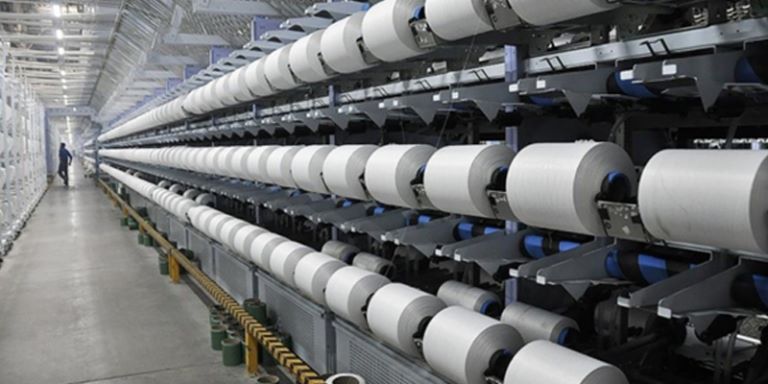
Indo Rama Synthetics’ total income was Rs 994.27 crores during the second quarter as compared to Rs 695.31 crores during the earlier quarter. Net profit was Rs 52.31 crores for Q2 as against a net profit of Rs 14.22 crores for earlier quarter. Q2 total income was Rs 994.27 crores during the second quarter as compared to Rs 487.31 crores during the same quarter last year. Net profit was Rs 52.31 crores for the second quarter as against Rs 13.81 crores for the same quarter last year. For the six months period in Q2 total income was Rs 1,689.58 crores as compared to Rs 607.57 crores during the previous six month period. Net profit was Rs 66.53 crores for the six month period as against Rs 91.44 crores for the earlier six months.
Indo Rama Synthetics’ fiber manufacturing facility has a combined capacity of 6,05,000 tons per annum, consisting of polyester chips, fibers and filament yarns.
Chic’s matchmaking helps integration
Chic held in China from October 9 to 11, 2021 is one of the country’s most important platform for fashion and lifestyle. The latest edition welcomed over 20,000 trade visitors and almost 500 brands presented their collections from all fashion segments, from women’s wear to menswear and children’s wear to streetwear styles, fashionable accessories, shoes and bags.
There were comprehensive matchmaking events with industry giants such as Walmart, Shein etc. Thanks to the match making events manufacturers could make contact with more than a dozen exhibitors and find satisfying partners to match their business needs. Matchmaking promoted better integration of Chinese customized brands into the industrial chain. The flexibility of China´s garment manufacturing industry is growing visibly. Initially only some small factories showed flexibility. But now some 500 manufacturers fully implement flexible production lines, which was also reflected in the Chic exhibition.
As a trend hotspot for the Chinese sales market, Chic highlighted important developments, with particular focus on sustainability. Selected trade visitors were very well prepared and raised targeted questions, allowing for a very professional discussion and subsequent sincere business talks. Professional area planning and design maximized efficiency. Chic has poised itself as the place to be for the fashion business of the future.
Las Vegas to host Sourcing at Magic in February
Sourcing at Magic will take place in US city Las Vegas, February 13 to 16, 2022, and August 7 to 10, 2022. Committed to the evolution of the fashion supply chain, Sourcing at Magic’s 2022 events will provide access to new and innovative supply chain solutions, sustainable resources, cutting-edge fashion technology focused on retail solutions, networking, and extended visibility into the industry’s most critical global issues.
In its second edition as a hybrid event, the 2022 editions will once again offer both physical and digital shopping and showcasing opportunities, featuring exhibitors from both well-known and new interest regions for apparel and footwear manufacturing, textiles, and supply chain solutions. In addition to physical booth space and digital representation, suppliers who are unable to attend the event in-person will be able to showcase physical samples within a dedicated shared space on the event floor, with an opportunity for buyers to directly connect with the supplier via video conferencing. First introduced at the August 2021 edition, this hybrid approach of physical sampling combined with digital connection not only helps to bridge globalized commerce and connections, but it also supports continued market presence despite ongoing international travel disruptions and allows participating suppliers new and inventive ways to engage with the onsite community in a productive manner.
China’s spandex exports up 32 per cent from Jan to Sep ’21
Exports of spandex from China were up 32 per cent from January to September 2021, compared to 2019 exports were up 29 per cent says a CCF Group report. Turkey remained the biggest export destination. Exports of spandex to Turkey, South Korea, Taiwan and Egypt accounted for 40 per cent of total exports. And Chinese spandex exports to Columbia, Turkey, Bangladesh, Taiwan and India rose 63 to 134 per cent from January to September 2021.
Zhejiang, Jiangsu, Guangdong, Chongqing, Henan and Shandong are major export suppliers of Chinese spandex. The global spandex market is estimated to grow at a CAGR of more than eight per cent from 2016 to 2023. It is also commonly known as elastane. Technology advancement with moisture management properties coupled with performance efficiency is likely to benefit elastane market growth.
Factors such as superior elasticity, regaining original shape, durability, lightweight, resistance to UV light are likely to favor spandex market demand. Spandex is used in textile manufacturing applications such as leggings, gloves, cycling jerseys and competitive swimwear. Strenuous movements are involved in active sports that may require garment stretch. This stretch can result in movement restriction for the wearer. This can be overcome by using spandex material.
Jonathan Akeroyd joins Burberry as new CEO
Jonathan Akeroyd is the new CEO of Burberry. He is an experienced leader with a strong track record in building global luxury fashion brands and driving profitable growth. Jonathan was previously Chief Executive Officer of Alexander McQueen, when he led a turnaround of the British luxury brand and laid the foundation for global expansion. He has also held a number of senior fashion roles at luxury department store Harrods.
As pandemics effects ease and Burberry’s boutiques open fully, particularly in international travel hubs, Akeroyd’s years of experience should give him a deep understanding of the needs of the retail business as well as overseeing the brand’s creative development.
The fusion Burberry has been pursuing between social media celebrities and blockchain, including the launch of NFTs in the gaming world, is likely to continue under his watch. Burberry’s ultra-savvy marketing drives are helping the company win new style-hungry customers across the world, desperate to get their hands on a slice of the brand and willing to pay full price for the privilege. It won’t be easy sailing, though, for the new CEO. With new Covid-19 variants still disrupting economies around the world, there is still uncertainty ahead.
Kraig Biocraft reopens Vietnam unit
Kraig Biocraft Laboratories has resumed production of finished goods utilizing its specialized recombinant spider silk in Vietnam. Safety protocols and restrictions put in place at the onset of the COVID-19 in Vietnam had led to closures and slowdowns of many businesses throughout the country. These restrictions delayed operational growth, and led to slowdowns at yarn spinners and weavers, which limited Kraig’s ability to convert its raw silk into finished fabrics and garments.
As these restrictions are lifting, Kraig Labs is ready to scale-up silkworm production with scheduled delivery and installation of new quality control lab equipment. With the re-opening of textile mills and yarn spinners, Kraig Labs is now resuming work to produce the custom yarns and spider silk fabrics for the launch of SpydaSilk apparel, a joint development partnership with Kings Golden Harvest.
Kraig Biocraft is a biotechnology company focused on development and commercialization of spider silk. In coming weeks, the company expects to receive and install several pieces of lab equipment delayed due to lockdowns. Most critically, with re-opening, Kraig can once again work with textile mills to weave its silk into finished fabrics for the first garments for SpydaSilk and to supply materials to the numerous other brands eager to incorporate spider silk into their products.
Shenzhen Fashion Week becomes more snazzier this season
China’s newly biannual Shenzhen Fashion Week upped its game this season. More than 300 fashion brands and designers showcased in over 105 runways in various districts around the metropolis —an increase of nearly 30 per cent compared to April’s edition. The event is a perfect addition as it brings brands live to followers and consumers. It is also a chance for them to exclusively discover the products from the collection before its actual launch online and therefore, adds a sense of exclusive access into the brand’s universe.
As a part of its offline expansion, the fashion week introduced Revelation, a new hub for hotly tipped, global talent. The co-exhibition brought together an innovative selection and mix of seasons ranging from archival to spring 2022. While the likes of cult favorite Robert Wun used archive pieces to showcase his DNA, Turkish accessories brand Manu Atelier used the space to build brand awareness and connect with the local audience through spring 2022.
Shenzhen is one of the top four first-tier cities of China and is also China’s so-called youngest city. The population aged 60 or above accounts for only 5.36 per cent, making the event an ideal attraction for Gen Z and millennial fashion lovers.
Lenzing introduces matte denim
Lenzing Group has introduced denim with sustainable lyocell fibers. This type of fiber is specially designed to reduce the shimmering effect on denim products, thereby enhancing its functionality that use a natural dyeing system for blue or dark colors. The aim is to meet the needs of consumers who want to have a denim fabric option made from matte.
By applying an innovative production process to make Trencel Lyocell fiber with a matte type, Lenzing is setting a new standard for indigo coloring applications. Lenzing is at the forefront of advocating for complete sustainability by creating products made with naturally derived raw materials and biodegradable cellulose fibers. Tencel Lyocell with matte is a product that combines functionality and aesthetics. This product increases the versatility of denim design while reducing the ecological footprint of fabric and garment production.
It’s because the product is made with a closed-loop production process that is efficient in terms of resource use, and also provides a smooth feeling on the skin and gives a dense color appearance. Denim products are always in everyone's wardrobe even though fashion trends continue to change from year to year. In this case, the manufacture of this matte material also aims at introducing sustainable jeans or denim products.
Visitors throng Shenzhen shows
The Shenzhen fashion events in China featured 1,500 select exhibitors, 25 fashion shows and 300 independent designer brands.
Fashion Source, Original Design Fashion Week, and Première Visionwere warmly welcomed by professional visitors from all over China. The three-day events gathered over 38,651 visitors, covering various groups of core buyers comprising brands, agents, distributors, fashion buyers, e-commerce operators, and shopping centers from China.
At Original Design Fashion Week,many original Chinese designer brands displayed their latest fashion runway shows.Première Vision covered an exhibition area of 5,500 square meters and exhibitors from France, Italy, Spain, Turkey, Korea and China presented their latest collections of fabric, design, leather and manufacturing. Première Vision Shenzhen highlighted once again its key role as an international communication link.As an international leading force of the fashion supply chain, Fashion Source is said to drive the development of China's fashion industry and enhances soft power and creativity of fashion in Shenzhen. The three-day event gathered leading players from the fashion industry and encouraged them to exchange ideas.
One of the key roles of Fashion Source is to help exhibitors develop more businesses. Four exclusive orderings were attended by over 180 high quality suppliers with more than 400 items of new collections and 200 specially invited buyers.
Bangladesh shifts from quantity to quality
Orders from brands and retailers are coming to Bangladesh following the reopening of European economies and the US and it would help Bangladesh's apparel industry recover from the pandemic fallout.
In the meanwhile apparel exporters in Bangladesh are shifting their focus more toward value-added, high-end apparel items like technical apparel as their demand is high in the global market. So they are pursuing a higher growth vision, diversifying textile material from cotton to non-cotton to make their business sustainable amid the fierce competition in the global market. In other words there is a shift from quantity to quality, from volume to value.
The country has invited foreign investment in Bangladesh’s non-cotton textile industry such as the production of manmade fiber-based apparel which will create a demand for artificial fibers and other raw materials in the local market.
Reputed brands and consumers are leaning toward manmade and recycled fiber to achieve sustainability. Buyers are choosing the fabric as a substitute to cotton fiber for sustainability and environmental issues. In keeping with sustainability many well-known brands may stop buying apparels produced from non-recyclable material. Imports of polyester staple fiber by spinners in Bangladesh went up 3.4 per cent in 2020 even amid the pandemic from the previous year.