FW
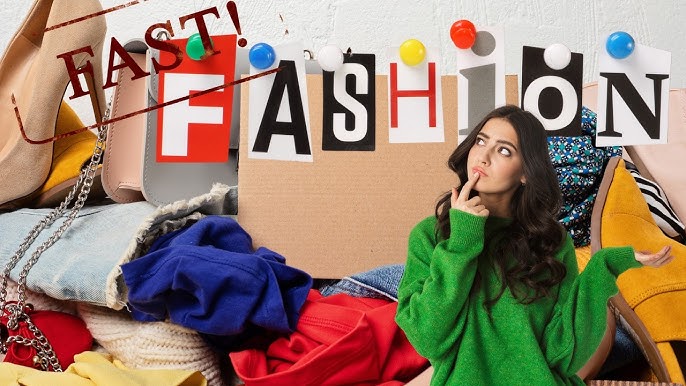
Fast Fashion grows at 7.7% CAGR despite dissent
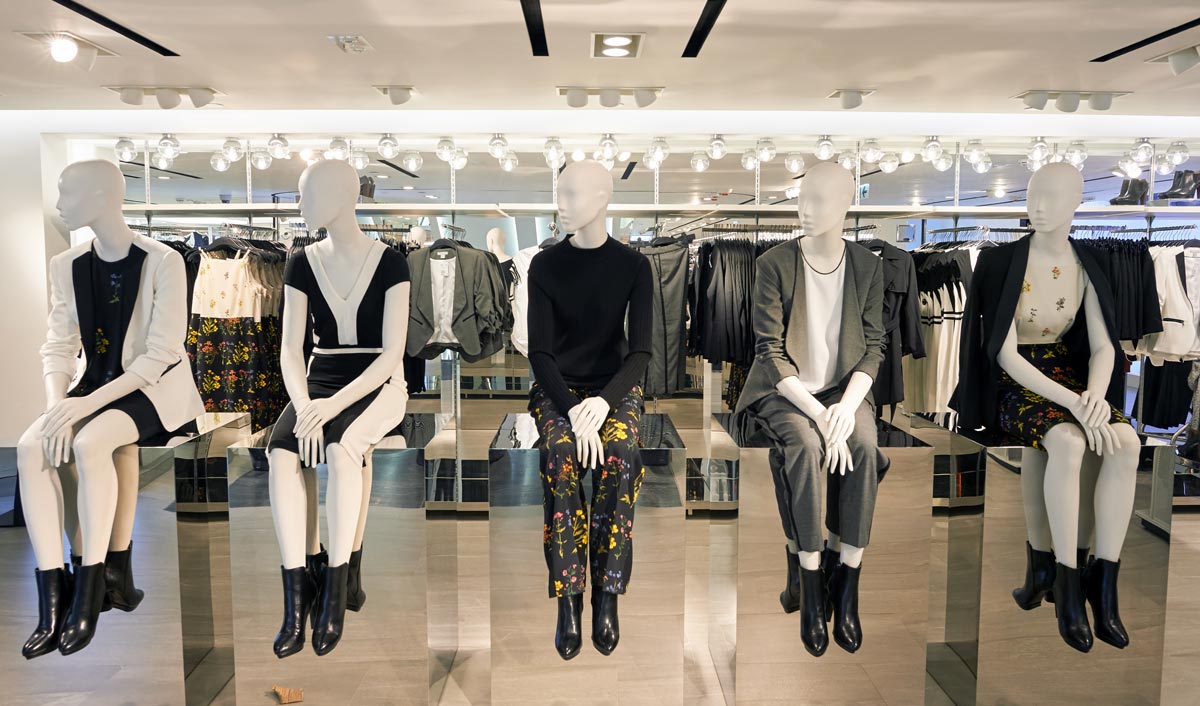
As underdeveloped countries transit to developing status, their retail sectors are getting better organised and enabling a large number of brands use the affordability and accessibility platforms to reach out to the masses. The global fast fashion market size is expected to grow from $91.23 billion in 2021 to $99.23 billion in 2022 at a compound annual growth rate (CAGR) of 8.8%. The fast fashion market is expected to grow to $133.43 billion in 2026 at a CAGR of 7.7%.
A growing number of dissenting voices are on the rise, yet not heeding the environmental concerns; fast fashion is on a trajectory to greater successes. The demand and popularity saw the rise of fashion brands like never before, Zara, H&M, Uniqlo, Forever 21, GAP and Primark being some of them.
The Rio Earth Summit in 1997 had already raised the green issues of the fashion industry in general and today it rings true, particularly for fast fashion. British fashion designer Stella McCartney expressed “I’m here today because I'm begging for policy to be put in place for the fashion industry,” she tells Forbes at the opening of her “Future of Fashion: An innovation conversation with Stella McCartney” exhibit at the Kelvingrove Art Gallery and Museum in Glasgow, on the sideline of the COP26 UN climate conference.
Is sustainable fashion really gaining grounds?
Harvard Business Review in a recently published article remains critical of the efforts that the fashion industry claims it is undertaking to be more sustainable and responsible. Clothing and accessories ranging from swimsuits to wedding dresses are marketed as carbon positive, organic, or vegan while yoga mats made from mushrooms and sneakers from sugar cane have come into the market, stoking the consumers’ environmental consciousness.
New business models including recycling, resale, rental, reuse, and repair are sold as environmental life savers. Harvard Business Review points out that these have really had little impact as the fashion industry’s environmental track record remains abysmal for the last 25 years. Post pandemic trickle effect percolating from celebrities to masses
Post pandemic, the consumer worldwide waking up to the stark realities of fast fashion and the promise of responsible consumption through sustainable fashion has come to the forefront.
Designers and media are playing their role, educating people of fast fashion’s excesses. Technology, research and development are introducing more viable and durable fabrics whilst economics is making the most of reuse and repair. Sustainable shopping is growing in popularity, particularly in developed nations. Brands such as Levi’s, Patagonia, Marine Layer and Reformation are focusing on quality over quantity with completely eco-friendly clothing lines.
Rentals are also being pushed just as much as pre-loved clothing, with e-commerce sites leading the way. “Renting formal attire is the better economical and environmental choice when it comes to finding a one-time-use outfit,” said Angela Nunes, a Rent-the-Runway representative. “Most formal pieces are produced cheaply, sold for large amounts, and are never worn again.”
It seems that the trickle effect has started, percolating from celebrities to masses. However, it remains to be seen if sustainable fashion can become a sustainable business model.
Bangladesh aims for Gulf market
Bangladesh’s garment makers are looking to expand their trade with the Gulf countries.
As of now three countries, China, India and Pakistan, currently control the Gulf market. Bangladesh’s garment manufacturers’ sales in their established markets, the EU and the US, are declining amid the political crisis in Europe due to Russia’s invasion of Ukraine. So to grow their business they also want to focus on the Gulf markets. For one delivery times to the Gulf are shorter.
To meet demand in the Middle East, however, the industry would first need to diversify its production, which is previously limited to the production of shirts and jeans. The GCC market is diverse and Bangladesh will undoubtedly need to put in a lot of effort. Of Bangladesh’s apparel exports 60 per cent goes to the European Union and 20 per cent to the US.
The current market situation in the Gulf, where imports have been increasing for the past few years, could present an opportunity for Bangladesh.Bangladesh will have opportunities to enter it, but needs to diversify on the supply side and also needs to improve its competitiveness. About 2.5 million Bangladesh expatriates live and work in Saudi Arabia, and another 7,00,000 in the United Arab Emirates.
Adidas unveils recyclable viscose tracksuit
Adidas has unveiled a viscose sportswear garment. Called Adidas by Stella McCartney, it is designed to demonstrate the potential of a circular fashion ecosystem. The tracksuit forms the pinnacle expression of the brand’s pilot circularity program. Consumers can wear it until it's worn out and then return it by scanning the QR code on the Adidas app. The product can then be sent back to the recycling stream where it can be broken down to be reused, ensuring less waste goes into the fashion eco-system. This launch moves Adidas closer to its goal to help end plastic waste.
The tracksuit has been made using 60 per cent viscose and 40 per cent organic cotton. Built on a foundation of comfort, the oversized tracksuit blends peach-soft material with a neutral light grey and black color paletteto provide a contemporary canvas for the next generation to move through the world.
The Adidas by Stella McCartney garment is Adidas’ milestone which demonstrates the successful implementation of the entire value chain to produce a commercial end-of-life garment. To create and test this garment Adidas joined forces with leading innovators in the fashion industry. The consortium collected and sorted post-consumer end-of-life textiles and regenerated them into a new textile fiber called Infinna.
Chinese spandex exports down ten per cent
China’s exports of spandex fell by ten per cent during the first eight months of 2022. Overseas buyers mainly purchased spandex on a need-to-basis. Turkey is the biggest buyer of Chinese spandex followed by South Korea and Pakistan. Exports to these three nations amounted to 38 per cent of total exports. Exports to Columbia, Taiwan of China and Bangladesh reduced.
Overall Chinese imports of spandex declined by 31 per cent during the first eight months of 2022. Hyosung Quzhou suspended production amid the pandemic. Players focused on consuming domestic spandex when domestic sales were soft in June to August, supply exceeded demand and the exchange rate of RMB against the US dollar depreciated. Vietnam, Singapore, South Korea and Japan are the major countries from which China imports spandex. These four nations amount to 90 per cent of imports. However, during January 2022 to August 2022, spandex imports from Vietnam, Singapore, South Korea and Japan fell by 25 per cent, 18 per cent, 36 per cent and 18 per cent respectively.
The global spandex market is growing at eight per cent a year. It is also commonly known as elastane. Spandex is used in textile manufacturing applications such as leggings, gloves, cycling jerseys and competitive swimwear.
ILO launches apparel scheme in Sri Lanka
Better Work aims at strengthening the resilience of Sri Lanka’s apparel industry. Better Work will leverage its extensive experience, tools and partnerships to this end. Better Work is an initiative launched by the International Labour Organization (ILO).
Better Work concentrates on occupational safety and health, gender diversity and inclusion including leadership skills, training and career development for women workers, empowering small and medium enterprises with leadership and financial literacy training and a factory improvement toolkit. Better Work will partner with local and international stakeholders to strengthen the commitment of ensuring decent work environments built on gender equality, safety, health, inclusion and holistic empowerment.
The apparel industry is Sri Lanka’s largest exporter, employing nearly one million both directly and indirectly, across 350 manufacturing plants island wide.With the onset of the pandemic, and the subsequent economic crisis, the apparel industry implemented a range of initiatives to ensure that the welfare of workers and their families was a top priority. These included providing additional meals for employees to takehome in order to feed their families, distribution of dry rations, and provision of schoolbooks for children, free medical facilities and transport and customized food packages for expectant women. Approximately 80 per cent of apparel manufacturers make cost-of-living adjustments to salaries over and above annual increments.
PRGMEA gets new chairman
Mubashar Naseer Butt is chairman of the Pakistan Readymade Garment Manufacturers and Exporters Association.
He will continue with his efforts for the promotion and protection of the value-added textile industry and top priorities would be early clearances of outstanding refund cases, resolution of tax related issues, and a favorable environment for the promotion of the garment industry in Pakistan.
Pakistan is committed to reducing the cost of doing business for export-oriented sectors including textiles and reducing the current account deficit. Value-added products are being promoted. Other steps taken include the supply of energy at competitive tariffs, monetary disbursements to mitigate prevailing liquidity issues due to severe economic challenges, duty-free import of cotton and reduction of custom duties on import of dyes and chemicals, and duty-free import of textiles and apparel machinery.
The textile industry is faced with countless opportunities to capture a greater market share, but state reforms in energy, technological upgradation, diversification and value addition will be necessary in order to enhance the potential of the sector and facilitate economic growth. Pakistan’s exportershandled disruptions such as the Covid pandemic very well especially in comparison to regional competitor Bangladesh.To maintain the current momentum, the textile sector has committed to unprecedented value addition by committing to setting up 1000 garment plants.
Turkey aims at building brands
Turkish suppliers want to be recognised not only for their manufacturing but also for their in-house brands.
Turkey is well known for near-shore manufacturing capabilities that are of high quality, The European Union, UK, US, and the Middle East and Gulf countries are Turkey’s biggest clothing export markets. Europe accounts for 65 per cent of Turkey’s clothing exports. Other big customers are Germany, Spain, the Netherlands, France and the US. Turkey’s proximity to Europe means that retailers and brands receive orders in less time than locations such as Bangladesh and China. The average Turkish lead time is between 45 and 60 days.
By contrast, clothing orders from Bangladesh can take between 90 and 120 days. Most suppliers in Turkey have their own design team. Investments in digitalisation have helped to reduce travel, cost of making samples and enabled getting approvals online.
Turkey’s factories are used by retail giants including Next, Inditex and H&M. The post-Brexit trade deal struck in 2020 between the UK and Turkey offers favourable terms. Among Turkey’s garment and textile exports are knitted and crocheted clothes and accessories, non-knitted apparel and accessories, carpets, mats, matting, and tapestries and textile goods. However Turkey is facing a high rate of inflation.
Machinery expo opens in Vietnam
Zhejiang fair is being held in Vietnam, September 28 to 30, 2022. The 4,000sqm expo comprises 130 booths run by more than 100 exhibitors, displaying products in hardware and machinery, textiles and inputs, interior and exterior furniture, electronics and household appliances.
The event will feature various events such as a seminar on e-commerce from China’s perspective: lessons and practices; a symposium on international trade promotion in the era of the Fourth Industrial Revolution; and a Vietnam-China business matching model in the new context; and a bicycle test tour.
Launched in 2011, the expo has been a platform not only for product exhibition and promotion but also for Vietnam and China to strengthen economic and cultural exchange and multifaceted cooperation between their localities. China’s direct investment in Vietnam has surged more than 60 per cent. China now is the third-biggest FDI investor to the country.Vietnam is one of the favored options as the country has witnessed pledges of foreign direct investment from China surge. Increasing production costs in China has pushed manufacturers to relocate their factories to Southeast Asia countries which have lower costs. Vietnam is also seen as a country with a better labor supply. Another reason for the Chinese shift to Vietnam is the trade dispute with the US.
Trousers, Shorts remain China’s top exports
Trousers and shorts are China’s top apparel export products.
From January 2022 to June 2022 they accounted for 20 per cent of China’s apparel exports. The share of coats, sportswear and suits is less than one per cent each.The contribution of jerseys was 12 per cent in China’s total apparel exports for the first half of the year. Jackets and blazers contributed nine per cent, dresses seven per cent, T-shirts seven per cent, accessories four per cent, socks four per cent, shirts four per cent, nightwear two per cent and skirts two per cent. The share of swimwear, babywear and ensemble was less than two per cent each.
China’s apparel exports remained mostly steady despite the US ban on cotton and cotton products originating from Xinjian region.
China’s textile industry posted stable revenue growth of four per cent in the first seven months of the year. The total value-added output of these companies rose 0.3 percent year-on-year during the period. Combined sales of primary retailers were up one percent from a year earlier.The country’s garment exports increased 12 percent year-on-year.Exports of textiles, apparel and clothing accessories increased by 17 per cent in the first seven months of 2022.
UK Textile Forum in October
Textile Forum will be held in the UK, October 12 to 13, 2022.
The event will highlight a number of British mills and suppliers so buyers can source more locally as the focus on sustainability gains momentum.
Exhibitors will include wool specialists and silk experts and there will be more collections incorporating sustainable yarns.This Textile Forum is the 40th show. Exhibitors will promote their creativity alongside their green credentials as well as their low minimum order quantities and stock holdings so they can respond quickly to designers’ requirements.
Textile Forum is not just an important event for fashion designers but also for those creating costumes for the entertainment industry, such as historical dramas for the leading streaming broadcasters, who are looking for fabrics and specialist skills, such as embroidery. Additionally, the event has been attracting more interiors specialists, an area that is beginning to cross over into more retail apparel businesses.Alongside the fabrics, Textile Forum also provides the essential trimmings such as buttons, linings and packaging, as well as garment manufacturing contacts.
Textile Forum is a boutique event that brings together a broad spectrum of the industry in one place so that buyers can easily find what is on their sourcing shopping list and discover new suppliers.