FW
Government fails to control influx of under-billed Chinese cloth, allege Ludhiana textile makers
Tarun Jain Bawa, Chairman, Bahadurke Textile and Knitwear Association and Federation of Textile and Manufacturing Association of Ludhiana, has accused the state government of inaction against the influx of an under-billed Chinese cloth in the state.
Bawa highlights, subject to a 25 per cent import duty, filament polyester cloth is being wrongly imported as cotton fabric in the state with a 5 per cent duty from China. This is resulting in a direct tax evasion of 20 per cent, he points out.
Questioning the possibility of such actions with the involvement of customs officials, Bawa reveals multiple attempts to address the issue with the Government of India have been unsuccessful.
Adding weight to these claims, another Ludhiana-based textile manufacturer alleges, polyster fabric, currently priced at Rs 320 per kg was being sold as cotton fabric for Rs 80 per kg in the state. Approximately 500 containers each carrying 22,000 kg of this fabric enter India on average, he adds.
The government failure to contain the arrival of under-billed polyester in India is making survival difficult for Indian textile manufacturers, Bawa adds.
Burberry expects FY’24 operating profit to decline to £410 million
British luxury fashion house Burberry expects operating profit for FY24 upto March to be in the range of £410 million to £460 million as against an earlier forecast of £552 million to £668 million. The brand is being hurt by a slump in luxury demand triggered by the deflation of a boom in high-end spending that peaked during the pandemic.
Sales of the fashion house to the end of December declined by 7 per cent to £706 million, compared with £756 million for the same period in 2022.
The end-of-year slowdown has hit Burberry’s US retail sales hard, with store sales declining by15 per cent in its third quarter compared with the same period the previous year, with store sales in Europe, the Middle East, India and Africa falling 5 per cent.
Along with Burberry, other industry players including Richemont and LVMH have also being hit by a slowdown in luxury spending.
India leads South Asia growth but inflation and infrastructure concerns remain

Amidst a sluggish global economic landscape, South Asia has emerged as the fastest-growing region among emerging markets and developing economies. Fueled by India's powerhouse performance, with growth projected at 6.3 per cent in 2023-24 and 6.4 per cent in 2024-25, the region offers a beacon of hope, indicates World Bank's latest Global Economic Prospects report.
Indeed, India, driven by robust investments and vibrant services, remains the undisputed regional champion. However, a closer look reveals a diverse picture across South Asia, with both promising opportunities and lurking challenges.
Bangladesh: While growth dipped to 5.6 per cent in 2023 due to import restrictions and rising costs, a moderate rebound is projected for 2024. However, inflation and currency concerns, as highlighted by the World Bank, remain pressing issues.
Pakistan: After a drop in 2023 due to high inflation and currency depreciation, Pakistan's outlook remains subdued. Growth in 2024 is expected to hover around 4 per cent, with tight fiscal and monetary policies dampening expansion.
Sri Lanka: Mired in debt restructuring negotiations, the island nation's economic future hangs in the balance. Finding a sustainable solution will be crucial for Sri Lanka's recovery.
Maldives and Bhutan: These two nations offer bright spots. Tourism investments are expected to boost growth in the Maldives by 4.5 per cent in 2024, while Bhutan's commissioning of a new hydro plant promises 7.2 per cent growth in 2024.
Risks and Opportunities
However, despite positive growth indicators, South Asia's road ahead isn't without its bumps. The World Bank warns of global headwinds like rising energy and food prices, tighter financial conditions, and geopolitical tensions, all posing significant risks. Domestic uncertainties surrounding elections in some countries add to the mix.
Amidst these challenges lie immense opportunities. South Asia's youthful population, rising consumption, and focus on infrastructure development offer a springboard for sustained growth. Implementing growth-friendly policies that attract investments, particularly in climate-friendly initiatives, will be crucial.
A Call to Action
Economic expansion is just one part of the bigger puzzle. South Asia faces the daunting task of tackling broader challenges like debt burdens, food insecurity, and climate change. Indermit Gill, World Bank's Chief Economist, warns without swift action, the 2020s could be a "decade of wasted opportunity." Boosting investment in climate-friendly initiatives and tackling these broader issues is essential for South Asia's long-term success and its contribution to global progress.
Policymakers and stakeholders across the region must seize this moment. By embracing the opportunities, navigating challenges and investing in a sustainable future, South Asia can not only secure its own economic future but also become a model for responsible and inclusive development on the global stage. The time for action is now.
Bharat Tex 2024: Redefining global textiles standards
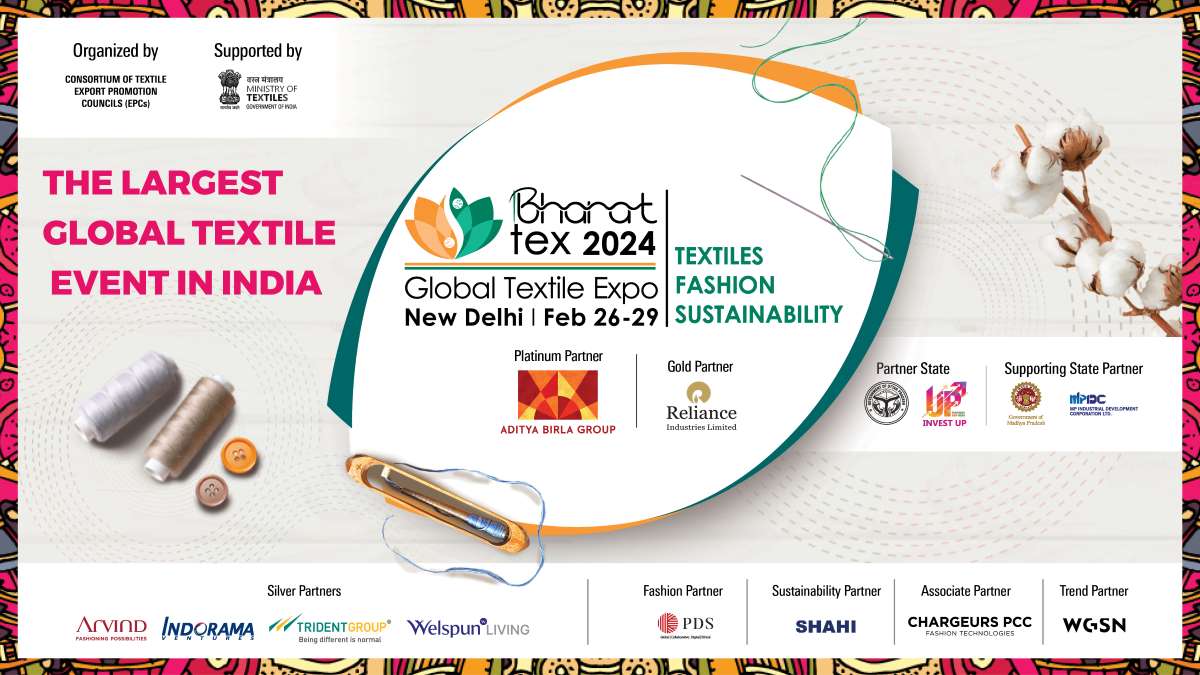
Bharat Tex 2024, India's flagship global textile event, is set to take place in New Delhi from February 26-29, 2024, at Bharat Mandapam and Yashobhoomi. With the esteemed patronage of the Ministry of Textiles, Government of India, and organized by a Consortium of Textile Export Promotion Councils, this event aims to reshape industry standards through strategic alliances.
Strategic Collaborations for Growth and Innovation
Underlining its commitment to growth, innovation, and sustainability, Bharat Tex 2024 proudly announces collaborations with leading national and international textile associations, corporate entities, and Indian states. These partnerships signify a significant leap forward for the textile industry.
State Partnerships and Corporate Alliances
Bharat Tex 2024 proudly designates Uttar Pradesh as the 'Partner State' and Madhya Pradesh as the 'Supporting Partner State.' Corporate alliances include Aditya Birla Group, Reliance Industries Limited, Arvind Ltd, Indorama Ventures, Trident Group, Welspun Living, PDS Limited, Shahi, Chargeurs PCC, and WGSN.
Global Recognition and Commitment to Innovation
These collaborations, with recognized entities in the textile industry globally, reinforce Bharat Tex 2024's commitment to showcasing innovation, India's textile legacy, and sustainable practices on a global stage.
Bharat Tex 2024 and Prime Minister Modi's 5F Vision
Aligned with Hon'ble Prime Minister Narendra Modi's 5F vision, Bharat Tex 2024 embodies the 'Farm to Fibre to Factory to Fashion to Foreign' concept. Envisaged as the largest global textile event, it anticipates participation from 40+ countries, featuring 3000+ exhibitors and attracting 40,000+ visitors.
Comprehensive Showcase of Textile Industry Value Chain
Bharat Tex 2024 is positioned as a comprehensive showcase, spanning India's cultural heritage, textile traditions, and the latest technological innovations across the textile industry value chain.
Domestic and International Collaborations
Domestic collaborations include renowned associations such as CITI, SIMA, TEA, ATMA, CMAI, BSLA, SGCCI, GMEA, SPAI, PTAIA, DMA, IIGF, and HCC. International associations like BGMEA and ITMF also contribute to the event's global stature.
Corporate Voices on the Partnerships
Representatives from Aditya Birla Group and Reliance Industries express gratitude and enthusiasm for their roles as key partners, aligning with Prime Minister Modi's vision.
Leadership Perspectives on Collaborations
Leadership figures within Bharat Tex 2024 express gratitude for the invaluable collaborations, acknowledging the transformative potential these partnerships hold for the textile industry.
Bharat Tex 2024: Catalyst for Global Textile Advancements
This event stands as a testament to India's commitment to leading the textile revolution globally. Partnerships underscore its significance as a beacon for international collaborations, pushing boundaries, and propelling the textile industry toward growth and sustainability.
Propelling the Textile Sector Towards Transformation
Bharat Tex 2024 aims to catalyze advancements transcending geographical boundaries, positioning India as a textile industry powerhouse. Focusing on knowledge exchange, technological innovations, and sustainable practices, this collaborative effort aims to redefine the textile industry landscape for mutual growth and development.
Pharrell Williams unveils 3rd men’s collection at Paris Fashion Week
Designer Pharrell Williams unveiled his third men’s collection for Louis Vuitton at the ongoing Paris Fashion Week. To run until January 21, the Paris Fashion Week is showcasing 74 brands, of which 41 brands will be introduced on the catwalks.
The show is being attended by all big luxury brands from Dior Homme to Hermes, Loewe, Dries Van Noten, Paul Smith, Rick Owens and Givenchy, alongside leading Japanese designers and creative brands such as Wales Bonner, Botter and Lemaire.
Besides Pharrell William’s, the Paris Fashion Week will also host events like the Louis Gabriel Nochi show which will present the designers’ new collection inspired by Guy de Maupassant’s Bel Ami.
This year, the Paris Fashion Week will start with Japanese brand Auralee followed by American brand Winnie and China's Ziggy Chen, who will close the week on Sunday, January 21.
On the presentation program, Paris Men's Week welcomes three new brands: Kartik Research, founded in 2021 by Indian designer Kartik Kumra; Meta Campania Collective, the discreet luxury brand born in Paris under the impetus of Jon Strassburg, Heiko Keinath and Constanze Walcher; and another French label, Ouest Paris, helmed by Arthur Robert, which will be joining the Sphère showroom, from January 17 to 21, alongside Jeanne Friot, Steven Passaro, Lagos Space Program Rolf Ekroth and Valette Studio.
Shein expands design competition across the world
Online fast-fashion retailer Shein has expanded its Shein X Challenge to include participants from around the globe.
Launched under the Shein X Designer Incubator Program, The Shein X Challenge, celebrated its third anniversary this year. It was originally limited to submissions from EU member states and the United Kingdom in its 2023. However, from its 2024 edition, the competition has expanded and will now accept entries from across the world. The theme for Shein X Challenge 2024 is 'Radiance', and the deadline for submissions is February 15, local time.
Judges for the competition include seasoned professionals from across the fashion industry including Adrien Robers, International Fashion Education Consultant, Italy; Julien Fournie, Founder, Julien Fournie Haute Couture, Paris; Jill Wanless, Editor, United Kingdom and Colin Horgan, Independent Designer, Ireland.
The 10 finalists will undergo a masterclass by the judges and workshops on sustainable fashion. They will present their submissions at the final round of the competition with winners set to be in March 2024.
The winner of the online competition will receive €10,000. The judges, on the other hand, will select three submissions for special awards, each winning €5,000. An additional six finalists will receive €3,000 each. The grand finale of the show will be, streamed globally.
In September 2023, Shein announced an additional investment of $50 million towards the Shein X Designer Incubator Program. This will help the e-commerce operator empower up to 5,000 emerging designers over the next five years to build their own successful brands.
Having onboarded over 4,600 designers and artists globally, the program has launched more than 41,000 original creations.
Global smart clothing market to grow at 32.3% CAGR till 2030: Report
Spurred by the growing integration of electronic devices into clothing, the global e-textiles and smart clothing market is project to grow at a robust CAGR of 32.3 per cent from 2024-2030 to reach $2.7 billion by 2030.
According to a report by Ameco Research, growth in the global smart clothing market will be led by upper wear including smart jackets and shirts, due to the speedy real-time data collection and processing capabilities of these garments.
Growth in the e-textiles market will be led by active smart textiles that can adapted to environmental changes. The military and defense sector will drive the growth of this market as it continues to invest in cutting-edge uniforms. The leading region for this market will be Asia-Pacific region though North America will also dominate in this sector.
The market is being driven by various innovative textiles that use body movements to generate electricity and integrated sensors and circuits that make smart textiles more useful and adaptable for daily usage.
EURATEX urges swift conclusion of EU-Mercosur trade deal
European industry leaders, represented by EURATEX and 22 industry associations, have urgently appealed to the EU Presidents in a joint letter to expedite the finalization of trade negotiations with Mercosur. The letter, addressed to Presidents Metsola, Michel, and von der Leyen, emphasizes the time-sensitive nature of reaching an agreement. The associations, spanning diverse sectors from manufacturing to food-related industries, stress the potential economic benefits of the EU-Mercosur deal.
The proposed agreement is deemed crucial for enhancing economic integration, diversifying value chains, and bolstering the competitiveness of European export-oriented sectors, which contribute significantly to job creation and the well-being of citizens. Positioned as an opportunity for the EU to establish a first-mover advantage with one of the world's largest economies, the deal aims to dismantle trade barriers and open up Mercosur's market with over 270 million consumers.
Given the EU's reliance on external sources for key raw materials and the anticipated global growth outside the EU in the coming decade, the agreement is framed as an economic, social, and geopolitical imperative. The industry leaders emphasize the agreement's role in maintaining a robust industrial structure, safeguarding jobs, and supporting the EU's green and digital transition.
Acknowledging environmental concerns, the letter underscores the EU-Mercosur agreement as a mechanism to collaborate on maintaining the Mercosur region's sustainable development commitments, including the prevention of illegal deforestation. The industry leaders call on European leaders to swiftly conclude and ratify the agreement, emphasizing its significance in the face of economic challenges and the need for strategic partnerships.
BTMA: Vickers Oils secures reliability for Lonati knitting machines
Vickers Oils, a member of the British Textile Machinery Association (BTMA), has achieved a significant milestone in its collaboration with Lonati, a leader in knitting machinery. The company has earned Original Equipment Manufacturer (OEM) approval for its VICKERLUBE SOCK 46 needle oil, a mineral-based lubricant designed for modern knitting machines. Lonati, renowned for designing and manufacturing 8,000 knitting machines annually, officially recommends VICKERLUBE SOCK 46 for use in its single-cylinder GOAL series.
This achievement follows rigorous testing and trials, highlighting the lubricant's ability to reduce wear and deposit formation, ensuring trouble-free running and extended needle life. VICKERLUBE SOCK 46's compatibility with all machine components, including those producing challenging elastanes, underscores its significance in achieving high-quality end products.
Vickers Oils, based in Leeds, shares Lonati's commitment to research and development, technological leadership, and quality control. The lubricant's adherence to sustainability standards, including Global Organic Textile Standard (GOTS) and ZDHC MRSL Level 1 certification, aligns with the industry's emphasis on eco-friendly practices.
BTMA CEO Jason Kent emphasizes the importance of specified and sustainable lubrication for modern textile machines, acknowledging Vickers Oils' crucial role in ensuring the precision and longevity of Lonati's knitting machines. VICKERLUBE SOCK 46's role in enabling smooth, automated operation aligns with the industry trend towards increased automation through software advances.
Will big players queer the pitch for smaller, established retailers in India's thriving value retail market?
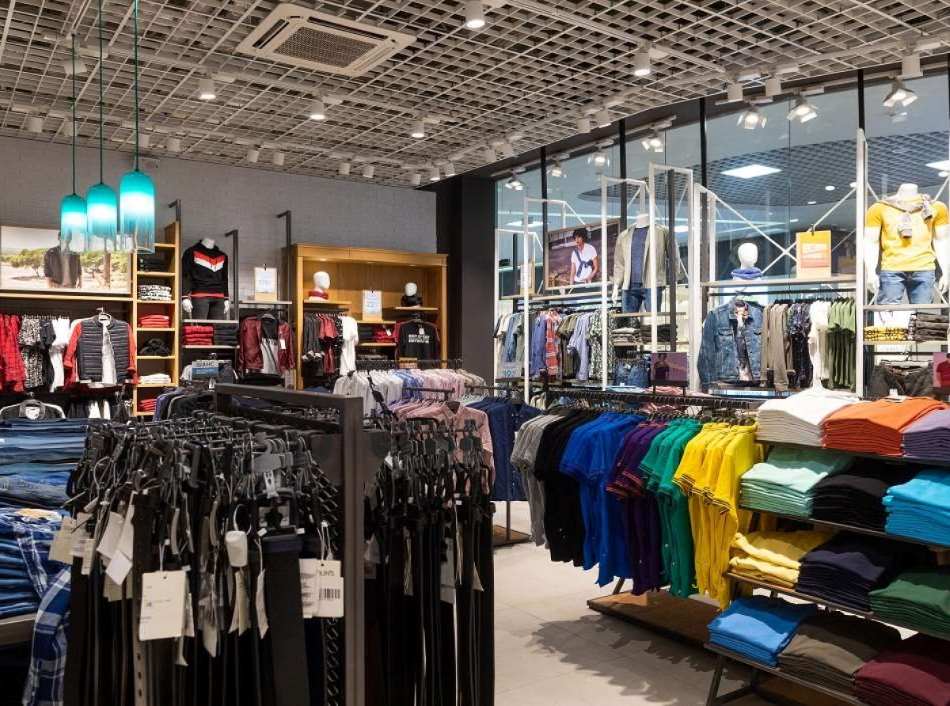
India's value retail market, excluding food and grocery, is poised for meteoric rise, with a projected growth from $111 billion in FY23 to a staggering $170 billion by 2026. This translates to a robust compound annual growth rate (CAGR) of 15 per cent for the segment, outpacing overall retail sector's anticipated 10 per cent growth. This highlights the immense potential of value retail in India.
Apparel Takes Center Stage
Leading the charge is the apparel segment, with its diverse range of affordable clothing, footwear, and accessories attracting significant consumer interest. Pioneered by Max, a retail format from Landmark Retail, this trend is now fueled by the entry and expansion of major retailers like Reliance Retail's Yousta, Aditya Birla Fashion & Retail’s Style-Up, and Shoppers Stop's InTune, all capitalizing on the growing demand for value-oriented fashion. Trent's Zudio stands as a testament to the success of this strategy, paving the way for further investments in the sector.
Organized vs Unorganized: A Divided Landscape
Despite the organized retail boom, unorganized players still hold 79 per cent market share, primarily driven by their competitive pricing and focus on unbranded goods. Organized retail, encompassing both physical and digital formats, currently constitutes only 21 per cent, highlighting the significant room for growth in this space.
Accessible Pricing: The Key to Success
The key to unlocking the potential of value retail in India lies in offering accessible pricing across essential categories, targeting the mass, economy, and mid-economy segments. This requires a deep understanding of consumer preferences and a focus on delivering value for money.
Digital Drives Growth Beyond Metros
While organized brick-and-mortar retail faces challenges in smaller cities, digital channels are emerging as a powerful growth engine. Platforms like Amazon, Flipkart, and Snapdeal are expanding their reach beyond major cities, catering to the burgeoning demand for value-oriented products in Tier II and III markets.
Evolution of Value Retail
The Indian value retail market has undergone a distinct evolution over the years. It began in 1995-2010 with the rise of large retailers like Shoppers Stop and Westside, focusing on mid-to-premium brands in metros.
The scenario changed in 2004 with Max Retail owned by the Landmark Group making a splash in the value segment. It catered to the mass and mid-market segments offering a wide range of affordable clothing, footwear, accessories, and homeware. From 2010 to 2015 emerged more value-oriented players like M-Bazaar and Citi Style, catering to Tier II and III markets. This led to a clear segmentation between national chains and regional champions, particularly in the fashion segment.
Data Points
• Average Transaction Value: Rs 500 to Rs 2,500, with average basket sizes of 2.5 to 7 items.
• Store Location: 50% of value retail stores are located in tier 3 or smaller cities and towns.
Frontrunners
• Max emerged the largest player with over 470 stores across India, with a large concentration in Tier II and III cities, with a revenue in FY23 standing at around Rs 8,000 crore.
• Despite pandemic challenges, retailers like Vishal Megamart with 120+ stores; Style Bazaar with 100+ stores and Rs 2000 crore turnover; V Bazaar with 100+ stores, and Rs1500 crore turnover have maintained a CAGR of over 15 per cent from 2018 to 2022.
A Promising Horizon
India’s value retail market has emerged as a lucrative opportunity for both domestic and international players. Some catalysts for growth are: rising disposable incomes, increasing urbanization, and growing adoption of e-commerce. Apparel is expected to remain at the forefront, with organized players making significant inroads into the unorganized market. However, challenges like supply chain disruptions and competition from online marketplaces need to be addressed for sustained success.
The market is poised for a transformative journey. By understanding key drivers, consumer preferences, and evolving trends, businesses can capitalize on this burgeoning market and contribute to the overall growth of the Indian retail landscape.