FW
Sanko orders 48 Zinser 72XL: Saurer’s new generation of compact spinning machines attract customers
Saurer is supplying 48 ZinserImpact 72XL compact spinning machines with a total of 82,944 spindles to Sanko Textiles. The tradition-rich Turkish textile company is thus one of the first customers worldwide to use this new generation of machines. The internationally leading company has valued its relationship with Saurer, the ring-spinning specialist, for years.
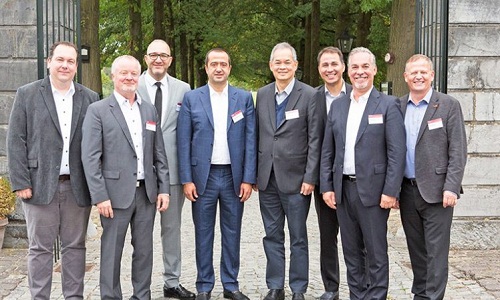
Mr. Hakan Konukoğlu, Member of board, Sanko Holding (fourth from left), Gökhan Aydın, Strategy and Business Development Manager, Sanko Textiles (third from left), Clement Woon, CEO, Saurer (fifth from left) and members of the Saurer management team
Branded yarns for the world market
Sanko was founded in 1904, produces around 250 tons of yarn per day and today employs a total of 2,520 people in spinning and knitting division. With its Textiles Innovation Center, founded in 2000, Sanko is constantly developing new textiles, such as the successful yarn brand Zeugma and others. Sanko is one of the pioneers in processing of organic cotton: In 2002, the company commissioned one of the world’s first certified spinning mills for this material.
By choosing the new ZinserImpact 72XL, this successful company underscores its claim of being ahead of the competition. Sanko wants to further enhance its competitive advantage with Saurer’s most modern generation of ring-spinning machines.
Peak technology for productivity and quality
Sanko is investing in a flexible and highly efficient overall solution consisting of roving and compact spinning machines. The roving is supplied by six ZinserSpeed 5A with a total of 1,152 spindles. Equipped with the RoWeLift transfer station, the RoWeClean tube-cleaning system, the RoWeStore empty-tube store and the world’s most effective doffing technology, the roving frames guarantee maximum cost-effectiveness. The ZinserSpeed 5A are connected to the compact spinning machines via the Autoflow FlexFlow system. This makes the assignment of the roving frames to the ring-spinning machines more flexible, and opens up potential for optimisation in operational planning.
The 48 ZinserImpact 72XL machines, each with 1,728 spindles, have been perfectly tailored to the spatial situation on site. This has resulted in an optimum ratio of production output per square metre of production area.
The central FlexiDrive of the ZinserImpact 72XL ensures consistent yarn quality over the entire machine length. The self-cleaning compact spinning technology, Impact FX, guarantees the most economical and top quality thanks to its constant compact power. The machines are equipped with the CS1 S premium spindle to further reduce noise emissions, vibrations and energy consumption in the high-speed range.
With its comprehensive range of applications, the ZinserImpact 72XL provides Sanko with a decisive flexibility bonus. For example, the Turkish trendsetter for innovative yarns is relying on the economical FancyDraft fancy yarn function to set itself apart in the textile markets with new creations.
The new Zinser compact spinning mill will go into operation this year. Thanks to this forward-looking modernization strategy, Sanko’s machine suite is one of the most innovative and efficient in the world.
“We have been relying on Saurer’s leading technologies for years,” says Hakan Konukoðlu, Sanko Holding board member. “The new ZinserImpact 72XL is an important building block in our future modernization strategy.”
Most modern weaving technology for China
Quality before quantity: China turns increasingly to superior quality weaving machines from Dornier for manufacturing technical fabrics.
 The new generation of rapier weaving machines, the P2 TGP: More and more Chinese textile companies are choosing weaving machines from Dornier in order to meet the growing demand for high quality technical fabrics for aircraft parts, filters, automotive and safety textiles © Dornier
Audacious investment objectives, rising wages, enormous funds for research and development (equivalent to about 226 billion euro in 2017 alone) and emerging aspiration towards quality: China‘s evolution from the overflow production facility for the West into a high-tech industrial powerhouse grows.
This trend is also reflected strongly in the Chinese textile industry, and is being monitored attentively at the Lindauer Dornier GmbH (Lido): „China has always been an important market for us, but since the demand for higher quality textiles has also begun to grow, it has become our biggest market“, says Wolfgang Schöffl, Head of Business Unit Weaving Machines at Dornier.
In China, LidO weaving machines are used to create fine scarves and elegant women‘s apparel from cashmere wool and silk as well as intricate airplane parts from carbon fibers. This last category is part of the growing global market for technical textiles, which is supplied with special coatings, airbags, tirecord and filters as well as much else which is manufactured in the Middle Kingdom on weaving machines from Dornier. And the volume of these high-performance fabrics required just to satisfy China‘s domestic demand is enormous.
Flawless processing of high-performance fibers
The fact that the Chinese city of Xi‘an cleans its air with the tallest anti-smog tower in the world (100 m) is convincing testament: cleaning air and water is a major concern in China. And this is one reason why Dornier offers its new P2 rapier weaving machine in its most powerful configuration (Type: TGP) for the chineses market.
This machine is able to bring a reed beat-up force of up to five tons for producing wide, seamless fabrics for high density air and water filters. „The textile is exposed to exceptionally high forces specifically for wet filtration; seams are weak spots, which should be avoided if possible“, explains Schöffl and further: „The greater the volume of high-quality fabrics China manufactures, the more weaving machines we can send them“, says Schöffl. At the same time, the division head continues, besides the technical quality the company‘s Chinese customers also value LiDO‘s aftersales and training services, ease of contact and fast response times.
Spinning on a growth path
Textile industry is booming with innovations taking center stage. Today, manufacturers are equipping their machine with advanced technologies by constantly upgrading their production methods. With latest development in machine functions, various textile technologies have tremendously eased operation, improved productivity and efficiency and at the same time ensured safer working condition. In a 24/7 operated factory, machine downtime of few minutes might lead to huge material and economic losses. In addition, biggest challenge is to bring the production back to normal in shortest possible times. Today, next generation automation technologies can be leveraged to overcome these challenges. Machines built with powerful controllers, high-speed motion components, interactive HMI systems, focus towards improving operational efficiency, reduce machine stoppages and increase availability of the machine. Automation has largely helped textile factories to efficiently use raw material, reduce waste, minimize energy consumption and reduce machine footprint.
Reduced footprint using decentralized control system
 Machine manufacturers are striking a balance between increased productivity and decreased energy consumption. In addition, shop floor space is of prime concern for factories, and they are constantly trying to optimize it. Machine builders can aid the endeavor of factories by reducing the footprint of their machines. Apart from the machine mechanics, cabinet occupies a lot of space. A slightest reduction in cabinet can help reduce costs as well as save space. A decentralized architecture helps machine builders have enhanced performance with same or increased output. Textile machines involves highly dynamic and precise functions, which demands extremely fast movements controlled with absolute precision. Today, machine architectures include high speed and low maintenance drive systems. Machine have become dynamic and such dynamic scalability might become a bottleneck in existing machine design.
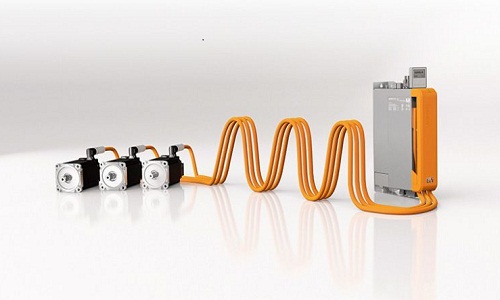
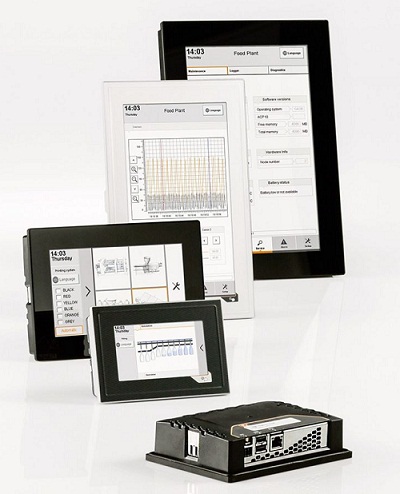
B&R enables textile machine builders to incorporate decentralized architectures in their machines and provide the necessary scalability in hardware and software. The power panels from B&R, which are integrated PLC and HMI as single unit have been a sheer game changer in this segment. These touch panels have reduced magnitude of control cabinet in the machine. In addition, the compact and versatile X20 I/O system gives complete flexibility over machine topology. An X20 I/O systems connected over Ethernet POWERLINK, a vendor independent real time communication protocol provides the necessary decentralized intelligence in machines, thus, maximizing space utilization effectively. The advanced motion control from B&R – ACOPOS P3 has further been able to reduce cabinet space on the motion front. A single ACOPOS P3 can control three servomotors, offering complete flexibility for expansion to deliver critical machine function. ACOPOS P3 reduces the cabinet space by 69% and the single cable solutions reduces the number of cables. ACOPOS P3 melds seamlessly with machine control system, HMI and safety system offering a complete system solution needed by textile machinery. All these systems are easily programmed using the powerful software from B&R – Automation Studio. Automation Studio is a single platform for enabling programming of complete range of hardware from B&R as well as providing an extensive simulation environment.
Intelligent machine diagnostics
Automation has been enhancing machine performance and B&R has been a trusted name in the textile industry for providing scalable and flexible automation solutions. With machines going digital, machine manufacturers are not just adding intelligence to machine operations, but also to diagnostics. To map the reasons of machine downtime and fix them with an appropriate solution, OEMs are taking advantage of mapp Technology from B&R. mapp Technology is revolutionizing the development of application software in the field of automation. These modular software blocks simplify development of new programs and reduce development time for new machines and systems by an average of 67%. With mapp blocks seamlessly integrated into Automation Studio environment, it becomes extremely easy to configure and relieve the developer of having to program every single detail.
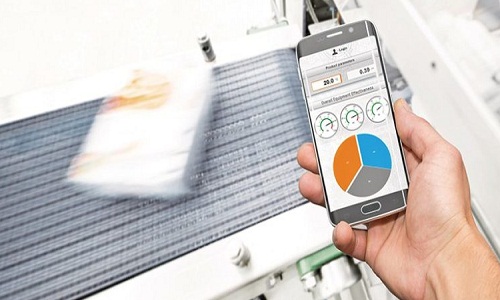
mapp Cockpit, an interesting component of mapp technology is an advanced yet easy-to-use tool for commissioning and troubleshooting machines. mapp Cockpit is built on web-based technology, enabling monitoring of machine parameters graphically over HMI as well as on any web supported devices such as a smart phone. The machine operator can is able to analyze the characteristics of a machine with a high degree of precision, owing to the trend functionality. mapp Cockpit uses open protocol OPC UA to connect and collect information from machines. It allows machine manufacturer easily create commissioning pages tailored to the machine operation.
Scalability makes machines future ready
 In the era of customization, OEMs might not have standard machines built in large quantities but might have more customer specific machines in smaller batches. When technology upgrades, OEMs strive to have it implemented in their existing machines and B&R is the apt choice for machine builders when it comes to scalable systems. In conventional systems, the machine builder needs to know the hardware to be programmed and then can start writing the code. With B&R, the machine builder not only does not need a hardware but also does not need to know which hardware would be used to start programming. Automation Studio programs all B&R products independent of hardware and a machine builder can change from an X20 controller to a power panel (integrated HMI & PLC) to an Automation PC to Simulation at any given point in the machine development. Such scalable systems reduce rework and costs in case of changing hardware after starting development and are preferred by machine builders. This is even true for ACOPOS drives and machine builder can change from one drive system to another in no time. In addition, with B&R a machine builder can synchronize servo, stepper, VFDs and robots easily with no programming effort, thanks to Automation Studio & mapp Technology. All B&R controllers support OPC UA client and server communications, ensuring them to be IoT ready. The machines can share data to IT systems or cloud in real time with queuing protocols such as OPC UA, MQTT or AMQP, which are supported by all B&R systems. Thus, with our scalable portfolio, flexible software and intelligent programming, B&R consistently allows machines to be future ready.
Textile industry going digital with B&R
Like every other industry, textile industry too is on course of digital transformation. As the industry moves towards digitalization, machines within a factory are expected to connect with each other and to IT systems. B&R trusts open source, vendor independent solutions with OPC UA acting as a key player enabling vertical and horizontal connectivity. As machines are developed to meet new age regulations, B&R helps machine builders with its advanced automation solutions in this transformation. With edge architectures, together with predictive maintenance, end users achieve reduced machine downtime and higher productivity.
EU cautious about suspending trade benefits to Cambodia, Myanmar
"The EU is reluctant to take action against Cambodia and Myanmar, who continue to enjoy duty-free market access to the EU, despite being accused of severe human rights violations. The Cambodian government, under longtime ruler Hun Sen has squelched democracy, while the Myanmar military has committed horrible atrocities against the Rohingya ethnic minority. Both these countries enjoy the ‘Everything But Arms’ trade preferences, as a part of a development policy intended to improve livelihoods by encouraging exports. European officials are worried frequently changing the eligibility of these preferences would not only increase political risk but also undermine those goals by discouraging investment in the countries affected."
 The EU is reluctant to take action against Cambodia and Myanmar, who continue to enjoy duty-free market access to the EU, despite being accused of severe human rights violations. The Cambodian government, under longtime ruler Hun Sen has squelched democracy, while the Myanmar military has committed horrible atrocities against the Rohingya ethnic minority.
Both these countries enjoy the ‘Everything But Arms’ trade preferences, as a part of a development policy intended to improve livelihoods by encouraging exports. European officials are worried frequently changing the eligibility of these preferences would not only increase political risk but also undermine those goals by discouraging investment in the countries affected.
Major employment generators
Cambodia and Myanmar together account for a little over a fifth of total imports into the EU under the Everything But Arms program. Both these countries have developed their successful apparel export industries that primarily rely on low wages. Until recently, both had seemed to be moving toward a more democratic future. Myanmar received the EU trade benefits only after restoring democracy and releasing Nobel Peace Prize winner Aung Suu Kyi from house arrest. Since then, the country’s exports to the EU have increased tenfold.
While exports enrich factory owners and corrupt government officials they also employ hundreds of thousands of poor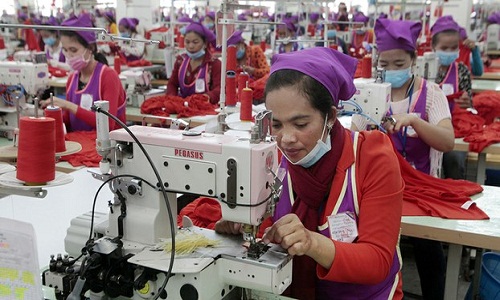 workers, especially young women. Although apparel factories are known for exploitation of workers but they offer alternatives to the poor in these countries. Especially for the young women who dominate sewing jobs in these factories, the only other alternatives are subsistence agriculture, domestic service, or marriage and motherhood at a young age.
EU adopts a cautious approach
The EU is cautious about enforcing the eligibility conditions of Everything But Arms since it could hurt the very people the program is designed to help. The new tariffs would hit exports from Cambodia and Myanmar hard, along with the workers in those factories.
EU officials, over the next year, will investigate the allegations and engage with officials in both governments to see if they will take steps to protect democracy in Cambodia and ensure a safe return for the Rohingya, nearly a million of whom have fled Myanmar for refuge in neighboring Bangladesh. If they do not, both countries could lose some or all of the duty-free market access they currently enjoy in Europe.
The threat of losing duty-free access to the EU is serious and credible enough to persuade these countries to reform. That will be harder in Cambodia and Myanmar, where the problems are deeply rooted in politics and the desire to hold onto power. If the EU suspends Everything But Arms benefits, thousands of people in Cambodia and Myanmar could lose their jobs and be thrown back into dire poverty.
Maharashtra to develop India’s first textile university
The Maharashtra government’s Cooperation, Marketing and Textile Department has proposed to develop a textile university at Harpur in South Nagpur. The textile secretary Atul Patne has stated that if the plan materialises, it will be the nation’s first textile university. The Nagpur Improvement Trust (NIT) has been appointed as nodal agency for planning and construction of the university which is to be developed on the State Handloom Corporation’s two-acre land.
State Handloom Corporation own five acres of land. The administrative building of the corporation will come up on one acre and other related infra on the remaining two. The NIT board of trustees appointed Nela Designers of Harish Chandani as architect and project management consultant of the project. The university will offer courses related to powerloom, handloom, spinning mills, silk, hosiery etc. However, there is no courses available in ITI, polytechnic and engineering colleges to educate the students on these fields. All these will be provided in the Textile University.
Invista unveils new technology Lycra Free F!t at Kingpins NYC Show
Integrated Fiber company Invista introduced the new patented Lycra FreeF!t technology to the North American audiences at the recent Kingpins NYC show. The new material provides greater comfort to denim and woven fabrics while allowing apparel to maintain its shape without the potential loss of recovery which is more common in softer stretchy material.
Lycra FreeF!t fabrics are made using the Invista’s patent pending technologies that covers yarn, textile processing and fabric structure. The fabrics use Lycra dualFX yarns which are specially treated and then woven in specific constructions to provide the soft stretch. In addition to easy stretch, these fabrics also provide a wider fit window because they are less compressive than typical stretch fabrics.
Furthermore during the show, the attendees were also able to preview Invista’s CoolMax Natural Touch technology, an cutting-edge offering that blends two type of CoolMax fiber with cotton and lycra which remains cool and yields a soft hand. Invista, headquartered in the USA, is one of the leading integrated producers of chemical intermediates, polymers and fibers. The company’s technologies for nylon, spandex and polyester are used to produce clothing, carpet, air bags and countless other everyday products.
Bangladesh government tries to curb Accord’s independence
In its submission to the Supreme Court on Accord’s appeal against an order that it cease operating in Bangladesh from November 30, the government has stated that the Accord should only be allowed to continue operations in Bangladesh under a set of highly obstructive constraints which strip the globally-respected safety initiative of its ability to operate independently of government and employer control. The constraints include that this will be the last extension allowed to the Accord maintaining its office in Dhaka.
The government’s conditions, if accepted by the Supreme Court, would destroy the independence of the Accord by subjecting all its decisions to the approval of a government committee. Another condition would prohibit Accord inspectors from identifying any new safety violations, effectively requiring them to ignore deadly hazards found during their inspections, such as faulty alarm systems, blocked fire exits, and cracks in structural columns. Yet another would prevent the Accord from taking any action against factory owners who threaten or fire workers for raising safety complaints.
The Accord has been instrumental in radically improving the safety of garment factories in Bangladesh since it was established in the wake of the Rana Plaza factory collapse in 2013 that claimed over a thousand lives. The Accord has identified more than 100,000 fire, building, and electrical hazards and the large majority have been rectified. Over two million workers have participated in safety training in over 1,000 factories.
TN government urges industrialists to handover land for CETPs in state.
P Thangamani, Minister of Electricity, Prohibition and Excise, Tamil Nadu, has urged industrialists to handover the required land for establishing zero liquid discharge based Common Effluent Plant (CETPs) in the state. The minister also mentioned that for improvement and betterment of the textile industry, a permanent solution was needed for addressing these issues and the solution to that is establishing CETPs. Also, he urged the government to make the villagers aware that the CETPs would not pollute the ground water.
The minister further revealed that currently 18,000 MW power was generated in the State and an additional 5,000 MW was needed in the near future, of which Tangedco had proposed to generate 4,000 MW by 2023. Jayalalithaa, former Tamil Nadu Chief Minister, had earlier announced setting of CETPs at Rs 700 crore as most of the units in Tirupur, Erode, Salem, Namakkal and Karur districts were cottage industries. But industrialists were yet to provide land for the project.
Discouraging results of forced labor in supply chains of 43 international brands
KnowTheChain, a benchmark that helps companies calculate their approach to address forced labor, has issued a new report marking out that forced labor risks within the supply chains of 43 international apparel and footwear brands found discouraging performances, with two-thirds of the companies ranked with an overall score below 50 out of 100, and nearly a quarter scoring under 10 out of 100.
This year’s apparel and footwear benchmarks report stated that luxury apparel brands such as LVMH, Prada and Salvatore Ferragamo fetched a rating of under 15 out of 100. While Adidas, Lululemon and Gap secured rankings of 92, 89 and 75 respectively. Notably, the overall report gave apparel and footwear industry an average rating of 37 out of 100 with leading footwear brands like Skechers and Foot Locker scoring as low as 7 and 12 respectively.
Reportedly, the apparel and footwear sector significantly relies on migrant labor. For example, in Jordan’s total apparel workforce, migrant workers account for 70 per cent and 44 per cent of the Mauritius apparel workforce.
Additionally, migrant employees are at particular risk of exploitation, as employers often hold their passports to stop them from travelling freely and enable recruitment agencies to charge hefty fees. In Taiwan, recruitment agents were reported to charge such employees up to US $ 7,000, for jobs in fabric mills.
UKFT to takeover Textiles Scotland management
Following a unanimous vote by STLA members and lengthy discussions between the two organisations, UKFT will take over the management of Textiles Scotland (STLA) from January 1, 2019. This will provide new opportunities to the Scottish companies by being part of a wider network while retaining the Scottish focus.
The Textiles Scotland branding will be continued, as will the Scottish focus of the activities, support and government lobbying. Existing Textiles Scotland members will be transferred to a new company called UKFT Scotland. UKFT Scotland will join the main UKFT board and UKFT CEO Adam Mansell will join the Scottish Industry Leadership Group.
UKFT will work with the industry to develop a new membership offer that will help Textiles Scotland become a self-sustaining organisation, including using its expertise to develop an export strategy and a skills strategy for Scottish members.