


FW
ISPO Munich 2019 focuses on women’s sportswear
"ISPO Munich, the world’s largest trade fair for sporting goods, focused on sportswear for women athletes this year. The show, held on March 2, 2019 at the Messe Munchen Exhibition Centre in Munich welcomed around 80,000 industry visitors from 120 countries. Around 2,943 exhibitors showcased their products and innovations, registering an increase of 5 per cent over the previous year. The ISPO Women’s Lounge organised talks with female executives, athletes and famous personalities including Corinna Umbach, Brand Developer and founder of CU Brand Spirit."
 SPO Munich, the world’s largest trade fair for sporting goods, focused on sportswear for women athletes this year. The show, held on March 2, 2019 at the Messe Munchen Exhibition Centre in Munich welcomed around 80,000 industry visitors from 120 countries. Around 2,943 exhibitors showcased their products and innovations, registering an increase of 5 per cent over the previous year.
Interacting with females executives and athletes
The ISPO Women’s Lounge organised talks with female executives, athletes and famous personalities including Corinna Umbach, Brand Developer and founder of CU Brand Spirit; Aline Bock and Anne-Flore Marxer, professional snowboarders and film makers; Lorraine Huber, Freeride World champion; Maria Elena Rizzieri, Blizzard Tecnica Global Leader of the Women to Women project, etc.
The program focused on products and sales marketing for the target group women in the sports industry, implementation of women campaigns, body positivity, empowerment and entrepreneurship, women in management positions and female influencers as figureheads of sport brands. ISPO Textrends forum featured over 458 innovative products spanning 10 different categories for the Autumn/Winter 2020-2021 season.
Innovations on display
The major innovations on display included, ‘Crafted in Japan’ display by Cordura presented backpacks and travel bags made using Cordura durable fabrics, featuring brands like F/CE, Milesto, and MSPC Master-Piece. The company also presented its Cordura Nyco Knits, engineered with military-grade Invista T420 nylon 6,6 staple fibre blended with cotton.
Karl Mayer showcased functional, warp knitted meshes for leisurée, fashion, sports and athleisure, as well as fabrics with textile electrodes, engineered spacer textiles with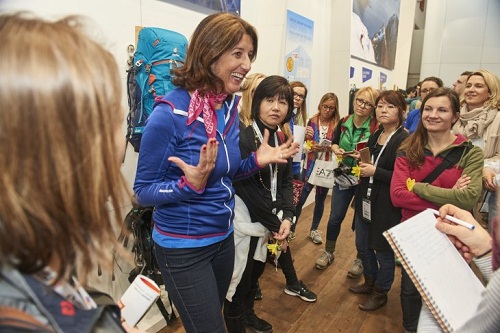 3D patterns, air-permeable jacquard designs and sporty lace fabrics.
Shima Seiki demonstrated its state-of-the-art SVR123SP computerised knitting machine for producing hybrid inlay fabrics and knit samples for shoe uppers and apparel applications.
Lonati and Santoni also presented the Goshoes single cylinder socks knitting machine and the X Machineoffering multiple possibilities in the knitting of unique Intarsia patterned goods and shoe uppers.
Eurojersey launched its new 2019 ad campaign ‘Free the Form’. It also presented its new Absolute Move collection of sensitive fabrics for sports bras powered by Lycra Sport technology. Isko presented its latest innovation Isko Vital, woven compression technology platform that showcased 18 different bottom silhouettes clim8 demonstrated its CES and ISPO 2019 award winning technology for base layer applications that allows the wearer to regulate temperature.
KnitWarm, based in Hong Kong, presented a patented self-heating textile that boasts softness, flexibility and breathability. The company also showcased its 4-in-1 jacket that consists of two jacket layers that zip together. Kymira, showcased its latest KYnergy technology designed to increase the wearer’s circulation, tissue oxygenation and cellular metabolism.
Noble Biomaterials, presented smart innovations, with its X-Static, XT2 and Circuitex technologies. X-Static harnesses the power of silver to create a technology that inhibits the growth of bacteria on fabric.
New exhibitors show their innovations
There wear many first time exhibitors who showcased their latest innovations and collections. For example, Norm from Germany displayed magnetic connectors on a conductor track system that allow easy installation of e-modules. In the apparel category, Careydesign, from China, presented functional urban garment made of a new Nano RGO-blended fabric. Maaree, from the UK, developed a high-impact sports bra with Overband technology.
German manufacuter Patronace showcased lightweight fashion wear with an abrasion-resistant skin protection system. UK’s Skapya’s convertible jacket featured a pocket system that fits the jacket itself while maintaining access to small items. Slovenian firm StandOUT SUP Wear featured a lightweight, breathable and flexible neoprene wear for standup paddlers. German brand Ryzon, presented a triathlon suit made of hydrophobic Teflon fabric with friction-free seams. Saola, from France, showcased its sustainably produced light outdoor shoes.
Changing demand, technology driven solutions revolutionise India’s fashion industry
"The Indian fashion industry is shifting from western brands to Indian designer and indigenous brands and clothing. This transformation is happening largely due to the income shift and the penetration of big brands into the Indian market. Gen Y or millennials are purchasing new, trendy, and fusion clothing rather than normal mundane clothes that look more like a uniform and are found in almost everybody’s wardrobes. Online fashion retail accounts for 18 per cent of the entire fashion sales in India. Flipkart alone crossed $1 billion sales in 2018, and its fashion-dedicated groups, Jabong and Myntra together clocked in $1.2 billion in sales last year. As per CNBC, Amazon will soon become a leading apparel retailer leaving behind competitors like Walmart."
 The Indian fashion industry is shifting from western brands to Indian designer and indigenous brands and clothing. This transformation is happening largely due to the income shift and the penetration of big brands into the Indian market. Gen Y or millennials are purchasing new, trendy, and fusion clothing rather than normal mundane clothes that look more like a uniform and are found in almost everybody’s wardrobes.
Online fashion a big draw
Online fashion retail accounts for 18 per cent of the entire fashion sales in India. Flipkart alone crossed $1 billion sales in 2018, and its fashion-dedicated groups, Jabong and Myntra together clocked in $1.2 billion in sales last year. As per CNBC, Amazon will soon become a leading apparel retailer leaving behind competitors like Walmart. The e-tailer is expected to sell fashion products worth $52 billion till the year 2020.
Growing popularity of content-based marketing
With the emergence of new fashion brands, the popularity of content-based marketing is growing. Online marketing and delivering fashion industry related news is attracting more customers. Designers are using influencers to reach out to prospective consumers and build a reliable relationship with them. Moreover, many fashion business brands are starting their own blogs to deliver fashion advice, tips, and tricks to users. This is gaining immense popularity among people as everyone reads updates on industry behavior and fashion trends and tips.
Adapting to global change
The Indian fashion industry is accepting not only the changing demands and global styles but also differently designed clothes. Today, people prefer comfortable rather than stylish but awkward clothes. This shift is changing conventional designing patterns with brands using comfortable fabrics, giving it a fashionable, trendy look. E-commerce fashion giants such as Myntra are offering try and buy solutions to users. Using these solutions, customers can try clothes at home and return immediately if they don’t like the fit.
Online stores are opting for custom-fit clothing. Customers can give measurements and get clothes stitched through e-commerce websites in a few days. This trend is more dominant in customised gift products such as T-shirts, wherein users can get funky designs printed on the fabric to give it a personalised and unique look.
E-commerce on the rise
Retail giants are offering clothing advice through their e-commerce apps. Once the user purchases a product or adds it to the bag, the app suggests possible options to pair it. Therefore, if a customer wants to purchase denim, the app will suggest options in T-shirts, shirts, bag, shoes, and accessories to team the denim with to get a complete curated look.
Physical stores retain popularity
Many fashion brands are setting up physical stores where their users can select the product on the store or buy it online as well. If the product bought online doesn’t fit or has issues, it can be easily exchanged in a day at the store. This adds to the convenience of online shopping. Collaborating with physical stores gives retailers the feasibility of delivering the product as early as possible. The fashion industry has great potential with its emerging demands and technology-driven solutions. All that a brand requires is the right knowledge and guidance to help set up its business in the industry.
EPCH buyer-seller meet in Santiago facilitates Indo-Chile interaction
"The Export Promotion Council for Handicrafts (EPCH) along with the Embassy of India in Santiago, Chile and Santiago Chambers of Commerce organised a buyer-seller meet on March 11 and 12 at Santiago in Chile. The event was inaugurated by Awadh Kumar, Commercial Attache, Embassy of India, Chile and Rodrigo Mujica R Diretor International Affairs, Santiago Chamber of Commerce. Magdalena Diaz Le Fort, Executive Director, Chile India Chamber of Commerce also graced the occasion."
 The Export Promotion Council for Handicrafts (EPCH) along with the Embassy of India in Santiago, Chile and Santiago Chambers of Commerce organised a buyer-seller meet on March 11 and 12 at Santiago in Chile. The event was inaugurated by Awadh Kumar, Commercial Attache, Embassy of India, Chile and Rodrigo Mujica R Diretor International Affairs, Santiago Chamber of Commerce. Magdalena Diaz Le Fort, Executive Director, Chile India Chamber of Commerce also graced the occasion.
In its fifth year, the event featured 32 Indian exporters who displayed a wide range of handicrafts, decorative, houseware home furnishing, garments and made ups, shawls, scarves, fashion jewelry, jute bags, bags, fashion garments, and incense, aromatics and Christmas décor from Delhi, Rajasthan, Uttar Pradesh, Karnataka, Punjab, Maharashtra, Haryana, Kolkata and Madhya Pradesh. Rakesh Kumar, Director General, EPCH said, the main objective of the meet was to enable Indian companies to interact with their Chilean counterparts interested in sourcing handicrafts, gifts, lifestyle products
Indo-Chilean brand interaction
The first day saw meetings of some of the biggest Chilean brands like, Lider DIB Carpets & Home Republic, Cencosud Retails S.A., Lounge, Paris with their Indian counterparts. Meetings with other major companies like Home Republic, Commercial Windsor Ltda, Imprtadora Triveni SA, Terapias Masajes Sacamostress and La Casa Magica were held on the second day.
As per Kumar Indian handicrafts exports were worth $3,573.49 million in 2017-2018. The average growth in handicrafts exports was between 15-16 per cent per annum. Exports to Chile increased to $12.05 million during 2017-18. The buyer-seller meet will further enhance Indo-Chilean Trade relations.
Gartex, Messe Frankfurt India collaborate for unified platform
"Mex Exhibitions and Messe Frankfurt India have entered into a strategic alliance to create a unified industry platform called ‘Gartex Texprocess India.’ The event will be a part of Messe Frankfurt’s Texpertise Network and leverage on the group’s strong global network and expertise in the sector. With the merger of these two strong textile trade fair brands, the organisers, aspire to collaborate for India’s textile industry development besides facilitating global sourcing and networking in the textile value chains."
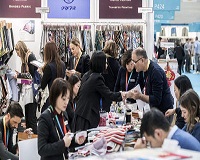 Mex Exhibitions and Messe Frankfurt India have entered into a strategic alliance to create a unified industry platform called ‘Gartex Texprocess India.’ The event will be a part of Messe Frankfurt’s Texpertise Network and leverage on the group’s strong global network and expertise in the sector. With the merger of these two strong textile trade fair brands, the organisers, aspire to collaborate for India’s textile industry development besides facilitating global sourcing and networking in the textile value chains.
Broadening the show’s horizons
The partnership will benefit from synergies created due to higher operational efficiencies, improved logistical know-how, and overall commercial benefits. The experience and scale of operations of Messe Frankfurt will enable Gartex to improve its position in the garment and textile industry. It will boost the show by making it more expansive, broadening its horizons.
Gaurav Juneja, Director of Mex Exhibitions, says, “Gartex India has created new standards for the industry in terms of enhancing awareness, excellent networking, knowledge dissemination and industry bonding. Now, it is time to take it to the next level and with this strategic alliance with Texprocess of Messe Frankfurt Trade Fairs India, Gartex India will realise its true potential and soar to even greater heights.”
Focus on textile and garment manufacturing
The show will maintain a strong focus on garment and textile manufacturing solutions, embroidery machines, digital textile printing sector, sewing machines, laundry 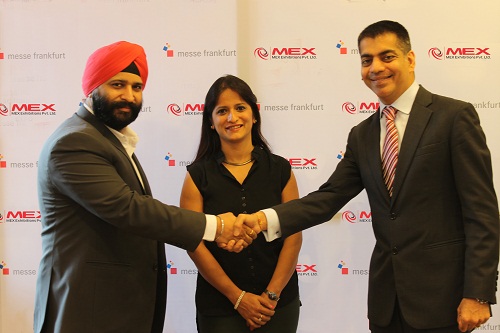 solutions, innerwear manufacturing, denim show, fabrics, accessories, etc. The organisers aim to cover the complete textile process chain in the coming editions. This includes technologies involved in design, cutting, sewing, knitting, embroidery, finishing, refining, IT and logistics which will supplement its textile technologies portfolio through the association with Texprocess.
Raj Manek, Executive Director and Board Member of Messe Frankfurt Asia Holding says, “Together, we are positioned to grow and provide industry stakeholders with a strong brand of enhanced offerings through a single-source business platform - ‘Gartex Texprocess India.’ The alliance has set pace for our brand expansion strategy as India is one the most promising textile markets.”
The unified Gartex Texprocess India edition will be held from August 10 to 12, 2019 in New Delhi.
Peta objects to rear label patch on Levi’s jeans
People for the Ethical Treatment for Animals says the rear label on Levi Strauss jeans that proclaims the brand name should be changed since it is made of cow leather. The animal rights group is calling on the brand to ditch animal-derived leather for a more ethical alternative, specifically vegan leather. Animal leather generates three times the environmental impact of its vegan counterpart, which is typically made from synthetic materials such as polyvinyl chloride or polyurethane.
The Higg Materials Sustainability Index, a cradle-to-gate material scoring tool from the Sustainable Apparel Coalition, rates cow leather as the number one material with the greatest upstream burden. Leather is considered to be a high impact material due to the swaths of land required for cattle grazing and growing feed, the levels of methane the animals release and the amounts of energy tanneries consume.
Animal leather often comes from cows who endure confinement, food and water deprivation, extreme crowding and disease. Branding, tail-docking, dehorning and castration are all commonly performed on them without painkillers, and they’re transported hundreds of miles to feed lots and slaughterhouses, where many are skinned while still conscious.
Denim giant Levi’s has listed empathy as one of its core values.
Pakistan’s textile exports up two per cent
Pakistan’s textile and clothing exports rose two per cent year-on-year in the first eight months of the fiscal year. The primary growth driver was, value-added textiles. Readymade garment exports went up 2.72 per cent in value and 27 per cent in quantity. Exports of knitwear edged up 11.4 per cent in value and 18.3 per cent in quantity. Exports of non-textile products went up by 3.15 per cent. Exports of petroleum products went up 23.64 per cent. Petroleum crude and naphtha led the increase in the sector’s exports.
Footwear exports jumped 14.55 per cent mainly driven by footwear sales. Exports of surgical goods and medical instruments went up by 1.71 per cent. Exports of gur were up by 6.58 per cent, cement by 37.5 per cent and gems by ten per cent during the period under review. Basmati rice exports witnessed a robust growth of 14.8 per cent. Meat and wheat emerged as the other two major export commodities which recorded growth during the period. Other products which also posted growth include oil, fish, seeds, pulses, spices, fruits, vegetables and tobacco.
One of the reasons for the revival of exports was a cash subsidy. Pending refunds to taxpayers were released.
UK buyers want Tirupur exporters to act fast
UK-based buyers want garment exporters based in Tirupur to ship orders before Britain leaves the European Union. Buyers want to avoid losses in the face of possible changes in import and export tariffs in the UK once Britain exits the EU. The Brexit deal is set to be sealed on March 29. It is uncertain, though, how exporters can respond to the request since garments cannot be manufactured overnight.
Britain is one of the major importers of apparel goods from India. For the Tirupur knitwear industry, such exports account for about 12 per cent of their business. Goods worth Rs 3,000 crores are exported from the cluster a year. Trade bodies like the Apparel Export Promotion Council have urged the government to take immediate steps to enter a free trade agreement with the UK once the Brexit deal is completed. They feel since there is a strong preference for Indian apparels among buyers and chain stores in Britain, it will be possible to sign an agreement with Britain.
Brexit is only impacting a limited number of Indian businesses operating and investing in the UK. These include manufacturing companies that rely on just-in-time supply chains and who trade between the UK and the EU.
Textile Forum, UK gets a thumbs-up from exhibitors, visitors
Textile Forum was held in the UK, March 13 and 14, 2019. The show is a one-stop sourcing platform for brands and designers. This year, the show featured a dedicated manufacturer’s area. Exhibitors ranged from specialist lingerie manufacturers and denim producers to pattern cutters. Some 45 exhibitors – manufacturers, textiles producers and trimmings businesses – showed at the event. Exhibitors praised the positive atmosphere, strong caliber of visitors and the focus on UK names at the latest edition of this fashion fabrics trade show. Despite challenges in the fashion market and continuing unease concerning Brexit, the mood at the show was buoyant. The smaller nature of the show – where textile mills offer lower minimums to buyers than at other shows – meant it was potentially benefiting from the uncertainties in the market, as buyers and designers felt the need for flexibility and adaptability from suppliers.
While most exhibitors attended the show to target smaller businesses, visitors ranged from independent dressmakers, new brands and manufacturers to costume designers, luxury fashion houses and high street names. The majority of buyers were London and UK based, although Turkish and Lithuanian visitors also made an appearance.
Report highlights wools’ damaging environmental impact
A recent “Pulse of the Fashion Industry” report shows, sheep farming, just like cattle farming, generates huge quantities of the greenhouse-gas emissions that cause climate change. Wool production gobbles up precious resources. Environmentalists are increasingly highlighting the negative impact of sheep farming on the landscape. Land are cleared and trees cut to make room for grazing sheep, leading to increased soil salinity, erosion, and decreased biodiversity.
In England and Wales, farming has stripped almost the entire upland area of wildlife such as eagles and mountain hares. If we stopped exploiting sheep, this land could be returned to nature, allowing the re-establishment of forests, wetlands, and other vital natural habitats that provide wild animals with homes.
Pesticides and insecticides are often used on sheep to keep them free of parasites. And once sheep have been shorn, their wool is scoured and washed using chemicals, which can also contaminate nearby water sources.
According to the “report and the “Higg Materials Sustainability Index“,greenhouse-gas emissions generated in wool production are far greater than those caused by the production of acrylic, nylon, viscose, and many other synthetic materials.
Rising cotton prices alarm Indian apparel industry
The sudden rise in cotton prices in India might slowdown the already dull apparel business. Cotton arrivals in Tamil Nadu markets have decreased and resulted in a sudden increase in cotton prices. Inflation has already increased the price of warp yarn and soon hosiery yarn prices are also expected to go up, subsequently increasing prices of garments. If cotton prices keep rising, hosiery manufacturers will be affected. The domestic hosiery market has already been reeling under pressure.
While in many countries, a hectare yield 1400 kg of cotton, in India the yield is only around 500 kg of cotton per hectare. Besides, unscientific data collection on cotton production is a bane. Gujarat and Maharashtra together account for more than half of the country’s total cotton production. Textile mills have been advised against panicking over reports of a tight cotton stock position during the current season. The Indian Cotton Federation has appealed to traders to desist from speculating on the production of cotton and increasing the price of the white fiber. Demand for Indian cotton happens to be robust this year from China as a trade war is prompting the world's top consumer to avoid imports from the United States.











