


FW
UK fashion designers/brands makes inroads in China
The British Fashion Council (BFC) is helping UK designers make inroads in China - from finding a space, to negotiating contracts or licensing arrangements. Its looking to plug into independent retailers across China that reach customers through social platforms like WeChat and Weibo, and sell through those channels directly as well. BFC is looking at partners that can help them open retail stores and the big e-commerce players that can help them in mass distribution.
From buyers to fashion writers, Chinese consumers are drawn to the creativity of British design. The Balancing, a chain of Chinese boutiques, sells top British designers including Stella McCartney, Victoria Beckham and Anya Hindmarch.
Chinese spending accounts for one-third of global luxury market. In 2018, the country’s luxury goods market posted its second straight year of 20 per cent growth. China is expected to overtake the US as the world’s largest fashion market in 2019. However, while wealth is rising, hefty import taxes are driving the cost of western luxury labels beyond the reach of many. Chinese customers are experimental, with a taste for clothes that are vibrant and sculptural yet feminine. Western brands have long eyed the potential of China’s growing middle class, seeking to find their way into the lucrative but sheltered market.
CCI begins cotton sales
The Cotton Corporation of India (CCI) has sold around 10,000 bales at a price of Rs 47,000 per candy through e-auctions in Maharashtra and Telangana. Nearly 70 per cent of the cotton has arrived in the market so far, and with the peak period about to get over, the season is likely to stretch for another couple of months.
Since early March, cotton prices have strengthened by Rs 3,000 a candy to Rs 44,500 now. Spot prices have increased from Rs 45,000 to Rs 45,500 per candy. After the 26 per cent year-on-year increase in 2018-19, the MSP for medium-staple variety of cotton is at Rs 5,150 per quintal, and that for the long-staple variety is at Rs 5,450 per quintal.
Crop output this year is pegged at 328 lakh bales. The Cotton Association of India has procured around 11.60 lakh bales so far, nearly four times the amount collected in the same period the previous year. CCI has also begun purchasing cotton from the open market on its commercial account, amid bullish price indications due to falling supplies. Until now, 7000 bales to 8000 bales of cotton have been purchased on commercial accounts in Karnataka, Maharashtra and in the northern states.
APTMA recommends 200 per cent duty on Indian products
Following the imposition of 200 per cent duty by India on all items exported from Pakistan, the All Pakistan Textile Mills Association (APTMA) has recommended a similar duty on all products originated in or exported from India. APTMA asked for a 200 per cent duty on all imports from India whether they be duty paid or imported through a duty-free scheme.
This step is important as after the Indian elections, India will reduce the duties to normal again. The situation will not be a tangible one for Pakistan if they do not impose reciprocal duty right now, APTMA says. APTMA noted the balance of trade between the two countries was highly skewed in the favour of India, saying that the imposition of duty on Indian imports would help reduce the trade deficit in the short run.
Upcoming ATSM 2019 to offer unprecedented networking opportunities
"The Apparel Textile Sourcing Miami (ATSM) show, to be held from May 28-30, 2019 at the Mana Wynwood Conference Center, will present latest developments shaping the booming apparel and textile market. The show provides an unprecedented opportunity for networking and education as more than 300 exhibitors from over 15 countries converge at the show — including fabric mills, ready-made garment factories, service providers, wholesalers, trade offices and home textile suppliers."
 The Apparel Textile Sourcing Miami (ATSM) show, to be held from May 28-30, 2019 at the Mana Wynwood Conference Center, will present latest developments shaping the booming apparel and textile market. The show provides an unprecedented opportunity for networking and education as more than 300 exhibitors from over 15 countries converge at the show — including fabric mills, ready-made garment factories, service providers, wholesalers, trade offices and home textile suppliers.
More than 4,000 visitors from Florida, Southeastern US and Latin America are expected to attend, representing brands, retailers, e-commerce sellers, designers, importers and buying offices. The overlap with Miami Fashion Week will increase the numbers to more than 10,000 fashion industry professionals visiting the Magic City at that time.
Pantone to unveil fashion color trend forecast for Fall 2020
At the forefront of the event will be the unveiling of the fashion color trend forecast for Autumn/Winter 2020-2021 by Pantone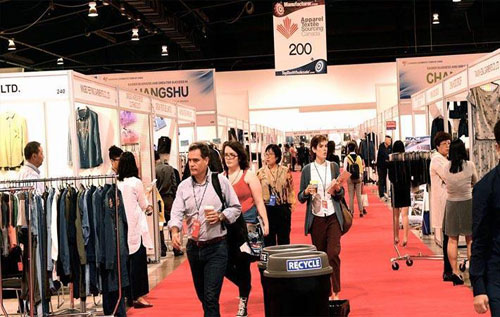 Color Institute, the global authority on the movement of color across current and future seasons that enables color-critical decisions through every stage of workflow for brands and manufacturers. Visitors will get an opportunity to experience upcoming trends first hand and interact with color specialists at the Pantone booth.
Asia-US-Latin America Investment Summit to focus on local investment
To be organised by ATSM in conjunction with the Investment Association of China (IAC), the first Asia-US-Latin American Investment Summit on May 28, 2019 will take place in the show’s VIP Lounge. It will focus on local investment opportunities in Miami and Fort Lauderdale in the areas of logistics, ports, commercial/residential real estate, infrastructure and technology.
Focus on Latin American producers
As a study by McKinsey & Company indicates, much of the future global apparel market’s continued growth will come from developing markets. ATSM has plans to bring a Latin American delegation of apparel and textile producers to Miami who are ready to facilitate “near-sourcing” business with attendees.
Strategic alliances with private firms, associations, and government agencies to provide support
The Miami-Dade Beacon Council, economic development organisation for Miami-Dade County, will bring both domestic and international representatives to the region, stimulating economic development and prosperity for Miami-Dade.
Show visitors will also reap the benefits of unique Florida Business Panel, which will provide insight into local industry opportunities and services. Julie Hughes, President of the DC-based US Fashion Industry Association will also be on hand to provide an update on the latest developments in global trade, tariff and non-tariff barriers, and new sourcing opportunities.
Fashion Show to feature local and international designers
The trade show will also include the return of the much-anticipated ATSM fashion show, representing both local and international designers, up-and-coming student talent and global fashions presented by show exhibitors.
PVH Corp to exit Calvin Klein
Apparel maker PVH Corp will exit its high-end collection of Calvin Klein apparel and shut the label’s flagship store on New York’s Madison Avenue, as the fashion line failed to strike a chord with customers. The company is in discussions with its North America apparel partner G-III Apparel Group to license out the brand’s women’s jeans unit. G-III also operates Tommy Hilfiger women's business, which helped boost PVH’s strong financial results in the fourth quarter, lifting its shares nearly 18 per cent in morning trading.
Fashion missteps at high-end Calvin Klein’s line of clothing have hit sales in recent quarters as customers balked at the high prices of the ready-to-wear luxury clothing label that offered oversized sweaters, tie-dyed and silk dresses. PVH’s decision to exit the label and license out its women’s jeans unit is expected to lower its fiscal 2019 revenue by 100 million dollars. However, the restructuring of Calvin Klein and the lack of a need for big promotions in its jeans business are likely to improve profit margins in the second half of 2019. Trade tensions have impacted the company’s retail business in China and the United States. Still, PVH forecast full-year adjusted profit between 10.30 dollars and 10.40 dollars per share.
Zara continues to top BrandZ™ Top 30 Most Valuable Spanish Brands rankings
WPP and Kantar’s latest BrandZ™ ‘Top 30 Most Valuable Spanish Brands’ report indicates top five brands have maintained their position in 2019 also. Zara emerged the most valuable Spanish brand with a value of $24.8 billion. The company’s ranking in 2019 grew by 1 per cent to $103.9 billion. It was followed by telecom provider Movistar (No. 2, $21.6 billion), banking giant Santander (No. 3, $9.9 billion), finance brand BBVA (No. 4, $8.5 billion) and energy titan Iberdrola (No. 5, $5.6 billion).
CaixaBank emerged as the fastest riser with a growth of 36 per cent, followed by oil & gas brand Repsol and national airline Iberia, which both grew by 19 per cent. Created by WPP and Kantar, the valuation behind the BrandZ™ Top 30 Most Valuable Spanish Brands was conducted by brand equity research experts Kantar. The ranking combines rigorously analysed market data from Bloomberg with extensive consumer insights from over 3.7 million consumers around the world, covering more than 166,000 different brands in over 50 markets
The BrandZ Top 30 Most Valuable Spanish Brands is the most definitive and robust ranking of the country's brands available, and the brands ranked are all originally created in Spain They are either owned by a publicly listed company traded on a credible stock exchange or a private company with financials publicly available
As per Spanish consumers, the values of kindness and difference drove the growth of most of its brands. Iberia was perceived as the kindest brand in the Spanish Top 30, indexing 126 (where the average is 100). Spanish brands scoring highly on difference were worth an average of $6.9 billion, compared to $1.4 billion for those with a low difference score. Although a significant proportion of brands clearly recognise this, there is potential for many of Spain's most valuable brands to improve in this area.
TT expanding garment facility
TT is setting up two garment manufacturing facilities. In fact, the two factories have partially started in Gajraula and Avinashi. It also has plans to open a manufacturing facilities in Kolkata in the upcoming Hosiery Park. The company is looking at 20 per cent of its revenues coming from the new factories. The new facilities are likely to produce both active and casual wear. TT has been restructuring its organization for the past one year and as part of its strategic planning is bringing down its spinning capacity.
TT has a strong presence in the innerwear segment in north and east India through its flagship TT brand. It also exports yarn and fabric to 65-odd countries. The company has shifted focus from spinning to branded garments especially inner wear and casual wear. Going forward TT’s garment business is expected to grow by 30 per cent to 40 per cent, which will improve its ebitda margins and reduce the overall risk exposure to the outside environmental and economic changes happening across the globe. The company is investing in technology to connect with the distribution channel and with its consumers - this is expected to bring in huge benefits in the days to come. Apart from the TT brand, the company’s new garment brand HiFlyer is slowing gaining market acceptance. An organised company like TT is seeing many positives as it gains a competitive advantage over the large unorganised segment.
Global spandex market grows at eight per cent
The global spandex market is growing at a CAGR of eight per cent. Spandex is used in textile manufacturing applications such as leggings, gloves, cycling jerseys and competitive swimwear. Strenuous movements are involved in active sports that may require garment stretch. This stretch can result in movement restriction for the wearer. This can be overcome by using spandex material. Factors such as superior elasticity, regaining of original shape, durability, lightweight and resistance to UV light are likely to favor spandex market demand. Sportswear application is likely to witness the highest gains. Up to three per cent of spandex fiber in fabric is enough for fabric improvement and shape retention whereas high performance garments such as swimwear may contain 30 per cent.
The Asia Pacific region accounts for more than 60 per cent of the total volume and China accounts for a major chunk of the market in the Asia Pacific region. Latin America is likely to grow at significant rates owing to the growth in the sportswear and apparel industry. The market in the US is expected to grow with the recovery in the US economy post recession. But the North America spandex market share is likely to witness moderate growth rates. Europe is likely to witness below average growth rates in the near future.
Online sales benefits global knitwear sales
Sale of knitwear products through the online channel is increasing in emerging economies such as Brazil, Russia, India, China, and South Africa. Moreover, increase in penetration of smart phones across emerging economies, rise in middle class population with increasing discretionary income, and innovative and advanced e-commerce technologies are driving demand for knitwear products. Online knitwear sales are increasing due to the increase in average revenue per user (ARPU) in e-commerce knitwear products compared to ARPU of offline knitwear product sale.
Knitwear products are a major segment of the fashion industry. In terms of product type, knitwear is classified into innerwear, T-shirts and shirts, sweaters and jackets, sweatshirts and hoodies, shorts and trousers, evening dresses, suits and leggings, and accessories. Based on material type, the market is classified into natural, synthetic, and blended. On the basis of application, the market is segmented into outerwear, innerwear, sportswear and others. Based on consumer group, the market is segmented into men, women, and children.
The global knitwear industry ecosystem analysis includes value chain analysis of the global knitwear industry including natural, blended, and synthetic fabric suppliers, textile companies spanning knitwear fabric, knitwear manufacturers, knitwear products distribution and export channels, and various retail outlets including department stores, specialty stores, discount chains, and mass merchandise chains, among others.
Levi’s leads in potential sales for two years
According to YouGov Plan and Track, Levi’s has led Wrangler and Lee on the site’s metric for potential sales for the past two years. Around 32 per cent of US consumers aged 18 or older expressed their willingness to consider Levi’s when shopping for clothing, shoes, accessories or luggage. This is 10 percent more affirmative responses than Wrangler, at 22 percent, and more still than Lee, at 17 percent.
Levi’s has redefined its aesthetic through a diverse roster of collaborations, including Supreme, Vetements and even Peanuts. The brand will launch a program that allows consumers to design their own denim online. It even partnered with Gen Z marketers to launch a revamped retail store, complete with digital features and Instagram-able spaces to entice the ever-connected set.











