


FW
Ensuring investment security, profitability through rightsizing
 Bigger may not be better in case of the textile and apparel industry; especially during the current unprecedented times. And as Md. Eousep Novee argues in the article ‘Rightsizing the textile and apparel industry to make business sustainable’ published in TextileToday, the industry needs to tame its desire for expansion and focus on rightsizing its businesses to combat the current critical situation, say experts. In the last 10 years, many textile and apparel factories in Bangladesh have fallen into the ‘capacity expansion trap. Lured by the desire to expand production and manpower capacity, these once profitable factories are now incurring excessive fixed costs and executing orders at loss only in a bid to survive.
Many of these factories also failed to pay their monthly installments with high interest rates of interests. Even those who did not borrow from banks suffered due to the existence of bank burrowers as they had to take orders with the minimum price to counter competition. Over 90 textile and apparel companies burrowed money from the stock market in the last 10 years. Most of these companies now face losses as their expansion plans failed miserably.
Timing investments wisely
Companies fall into the bad expansion trap as an unscrupulous increase in production capacity proves counterproductive and increases their production costs instead of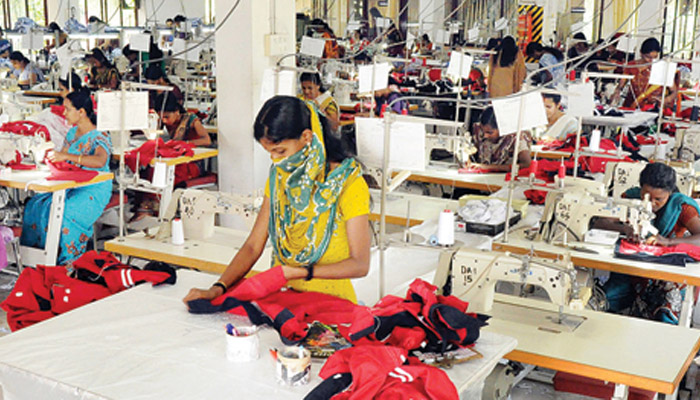 decreasing them. Also, the proportion of returns from additional capacity is quite variable. Hence, factories need to be compact rather than composite in their pattern of expansion.
A case in point is the US-based Boston Market Franchise, which was compelled to close 200 of its 900 stores in 1998 due to poor sales. To ensure positive returns, factories, need to time their investments wisely. They should avoid investing once the rate of increase of their returns starts diminishing.
Poor management leads to expansion failure
Some of the earlier capacity expansion decisions were taken with a view to improve the efficiency of their supply chains. Companies believed that adding allied and related production units could boost their efficiencies.
However, their decisions failed to fetch positive outcomes as their expanded units required independent supply chains. They needed new factories to produce accessories which in turn required a separate supply chain for procuring raw materials.
Managing an expanded business requires rightsizing to make it more sustainable Factory owners and management CEOs must adopt rightsizing to ensure investment security and profitability of their businesses.
Aligning business with changing values to help sportswear brands ensure sustainability
 It’s common to see people wearing suit with casual shoes, leggings with heels, or yoga pants at work. Growing interest in health, recycling and environmental protection is compelling consumers to mix sports and fashion and create new style trends. Sportswear brands are adapting to this new reality by combining technical features and design with a new sports aesthetic or ‘athleisure’. Brands are segregating their products according to customers’ needs. They are also segmenting sales on the basis of consumers’ growing in interest in healthy living and well-being.
The biggest market for sportswear in the world is the United States while Germany is the biggest sportswear market in Europe followed by France, Spain, Italy, and the United Kingdom. France and Italy are Europe’s largest athlesiure markets while Japan is frequently visited by design teams from major brands across the world.
Creating new looks for every season
To succeed in these new growing markets, sportswear companies need to align their business with new values. They need to create more athleisure trends for both men and women of all ages. They also need to keep an eye on millennials, who in five years will account for nearly 50 per cent of the workforce.
Another challenge for sportswear brands is to create attractive looks for each season. The sportswear trend is currently being driven by specialized personal shoppers only in the US. However, growth will finally be determined by global affluent consumers who will ultimately decide whether a look is good. For such customers, brands need to combine their luxury sportswear with expensive technical items from good brands.
Sportswear brands also need to maintain their identity to sustain longer in the market. They should be well-aware of customers’ choices and emphasize on personalizing their products. They should explore innovative designs and materials to attract customers.
Managing limited editions like resale
The trend of launching limited edition collections was started in 1980 by American brands. Since then, the trend has spread across the globe with many sportswear brands launching limited editions targeting sneakerheads. Some of these top brands have also opened stores specializing in limited-edition products.
As limited editions collections symbolize the status and exclusivity of sportswear brands, the industry must manage this rising phenomenon like a resale business. It should resell limited-edition collections by adverting about them on the social media and through well known personalities. Sportwear brands must also be careful while segmenting products. They should separate each group of customers to offer right items. They should also introduce a sales model where each sell products associated with consumer profile.
Brands must be careful to ensure the sustainability of business. They should be attentive to demand but should not lose their roots. They should let their customers decide whether they want to buy purely technical sportswear or trendy garments that can be mixed and matched for a fashionable look.
Hyve to launch three virtual forums
Tradeshows giant Hyve plans to launch three virtual forums next month, Fashion Together (comprising Pure, Pure Origin, Moda and Scoop), Autumn Fair @ Home and Glee Gathering.
These forums will provide exhibitors and attendees with the opportunity to showcase and discover new products, engage with suppliers via The Virtual Showroom, and hear market-leading content from retailers and trend forecasters on what 2021 may hold for the industry and how they can kick-start their own sales now.
The event teams behind Autumn Fair, Glee, Pure, Pure Origin, Moda and Scoop said these virtual forums are a key part in their new Refuelling Retail initiative. This brand-new initiative calls for all market players to refuel the retail industry after a challenging first eight months of 2020.
Importantly, the three new forums will be non-commercial events “allowing existing customers to participate at no additional cost, aiming to connect the industry this autumn as all national and international retail trade exhibitions had to be cancelled due to COVID-19.
Vietnam-based S Korean apparel producers to benefit from EVFTA: KITA
Vietnam-based South Korean fashion firms are likely to benefit from the European Union-Vietnam Free Trade Agreement (EVFTA), according to a report by the Korea International Trade Association (KITA), which recently said apparel producers in Vietnam can enjoy the benefit of that FTA for goods made with South Korean materials.
Clothes produced with Chinese materials, on the other hand, cannot enjoy the benefits of the EVFTA, as China does not have a pact with the EU, according to South Korean media reports. South Korea implemented its own FTA with the EU in 2015.
Vietnam's imports of South Korean materials to produce clothes reached $1.7 billion in 2019, accounting for 11.5 per cent of the total. Those of Chinese goods reached $6.7 billion, or 58.9 per cent. KITA said exports of South Korean materials to the Southeast Asian nation may also increase on the back of the EVFTA.
Vietnam was the third-largest export destination for Asia's No. 4 economy in 2019, with China and the United States standing as the top two.
South Korea's combined exports to Vietnam in 2019 reached $48 billion, down by 0.9 per cent from a year earlier. Over the cited period, the country's exports dipped 10.4 per cent amid the growing protectionism around the globe and falling prices of memory chips.
SaigonTex/Saigon Fabric to be combined with 2021 edition
SaigonTex/SaigonFabric 2020 has been postponed and the trade fair will now be combined with its 2021 edition. The decision has been taken in view of the Vietnamese government continuing with the 14-day quarantine policy for foreigners entering the country.
Joint organizers Vietnam National Textile & Garment Group (Vinatex), Vietnam Chamber of Commerce and Industry (VCCI), and VCCI Exhibition Service Co have recommended foreign companies to exhibit in HanoiTex/HanoiFabric, which is scheduled for December 17-19, 2020.
The Vietnam Saigon Fabric & Garment Accessories Expo is held concurrently with the Vietnam Textile & Garment Industry Expo—the biggest and the most influential event in the textile and garment industry of Vietnam. These two expos are aimed to provide a one-stop market for all buyers in Vietnam and the neighboring countries.
The next concurrent event will be held from April 7-10, 2021 at SECC, Ho Chi Minh City, Vietnam.
Withdraw regulartory duty on polyester spun yarns: FPCCI
Khawar Noorani, Chairman- Standing Committee on Imports, Federation of Pakistan Chambers of Commerce and Industry (FPCCI) requested Prime Minister Imran Khan to withdraw the regulatory duty on polyester spun yarn in order to protect the textile industry from disaster.
Noorani added that the textile sector relied on imported polyester spun yarn to continue production activities because local manufacturers were unable to meet the demand of industries.
Currently, according to him, the local industry meets about 30-35 per cent of total yarn demand of Pakistan while the remaining 65-70 per cent is covered through imports.
Despite this, local yarn manufacturers have created a monopoly and they continue to take full advantage of the lack of government supervision by setting arbitrary prices for yarn, he said. He regretted that by imposing regulatory duty on yarn import, the government had jeopardized the entire textile sector while local yarn manufacturers continued to benefit.
Noorani requested the prime minister to withdraw the regulatory duty on spun yarn in order to save the textile industry from complete devastation.
Santa Fe Indian Market to go virtual
The annual Santa Fe Indian Market fashion show, will go virtual this year on August 16, 2020.
The event will showcase the work of seven designers, including Santa Fe Navajo designer Orlando Dugi’s debut of a capsule collection and behind-the-scenes film. Each designer will be spotlighted with a teaser on the market’s web site the week of August 10, culminating in the August 16 event A question-and-answer session will follow with the designer, who uses traditional hand-dyeing, weaving and beading techniques on eveningwear, but not in the “Santa Fe zigzags and blue skies” way one might expect.
The other designers showcased also reflect the breadth of indigenous fashion, Bear Robe said, mentioning Skawannati, a Mohawk digital artist who will be bringing her stylish avatar to real life in the show; Korina Emmerich (Coast Salish Territory, Puyallup) whose New York-based Emme brand focuses on social justice and uses upcycled textiles; Sage Paul, a member of English River First Nation and the founder of Indigenous Fashion Week Toronto, whose tactile clothing has reflected such personal moments as her struggles with miscarriage; Dene beadwork artist Catherine Blackburn; Ojibwe accessories designer Delina White and Taos Pueblo avant-garde designer and former “Project Runway” contestant Patricia Michaels.
USFIA releases Seventh Fashion Industry Benchmarking Study
The United States Fashion Industry Association (USFIA) has released the seventh annual Fashion Industry Benchmarking Study that details respondents’ outlook on business, their sourcing practices, utilization of Free Trade Agreements and preference programs, and views on trade policy.
The study surveyed executives from 25 leading fashion brands, retailers, importers, and wholesalers, including some of the largest brands and retailers in the country. It was conducted in conjunction with Dr. Sheng Lu, Associate Professor, Department of Fashion & Apparel Studies, University of Delaware.
Sourcing executives showed the lowest level of confidence in the five-year outlook since the inception of this report. The number of respondents who were either optimistic or somewhat optimistic about their outlook for the next five years dropped from 64 to 57 per cent. One-third of the respondents reported being ‘somewhat pessimistic’ or ‘pessimistic.’ Hundred per cent respondents reported ‘supply chain disruption’ as the most significant impact of COVID-19 on their business operations. Many respondents saw garment factories that make their products struggling with a labor and raw materials shortage or facing a substantial cost increase in shipping and logistics, and barriers to conducting regular factory audits because of COVID-19.
Despite COVID-19 related disruptions, sourcing executives may continue to diversify to Asian countries. Reshoring for Made-in-USA production may also increase in the next two years, the study says.
Apparel Impact Institute expands mill improvement program
The Apparel Impact Institute (Aii), which scales up textile mill improvements by using the National Resources Defense Council’s Clean by Design methodology, is expanding its program to include not just foundational low-key projects, but also intermediate- and advanced-level initiatives that can reduce environmental impacts worldwide.
This year, Aii is augmenting its signature program for energy and water efficiency for textile mills with a pilot project that incorporates best practices for chemistry and wastewater management. For this program, AII is taking a multi-stakeholder approach, receiving both financial and strategic support from institutions like HSBC, IDH, the Schmidt Family Foundation and Stitching Doen and brands and retailers such as Burberry, Gap, Target, Levi Strauss, New Balance, Puma and PVH Corp.
Since 2017, Aii’s programs have helped hundreds of facilities in mainland China, Taiwan, India and Vietnam, verify savings and identify opportunities for further improvement. In addition, Its Clean by Design methodology has demonstrated an excellent environmental and financial return on investment with expecting to recoup their investments in 14 months.
Shandong Ruyi refutes claims of Lycra sale
Fashion conglomerate Shandong Ruyi has refuted claims of selling to textile maker Lycra and is instead looking to publicly float the business. Debt-laden Shandong Ruyi Technology Group (Ruyi) bought control of The Lycra Company (Lycra) from the US conglomerate Koch Industries for $2.6 billion in 2019, borrowing about $1 billion for the deal. Lycra's weakening financial performance has prompted some of its creditors to hire restructuring firm Alvarez and Marsal (A&M) as an adviser, fearing Lycra may default.
Ruyi believed Lycra would be better valued via an IPO, rather than a trade sale. Last year Ruyi had suggested it could list the company on China's new tech-focused STAR market. Ruyi holds 53.4 per cent of Lycra, with Koch Industries holding 22.2 per cent and Itochu Group subsidiary CFC holding 15.5 percent. Minority shareholders own the remaining 8.9 per cent.











