FW
PHMA elects new executive body
The Pakistan Hosiery Manufacturers and Exporters Association (PHMA) has elected new executive body for the year 2020-21. The election of central chairman, zonal chairmen, senior vice chairman and vice chairmen will be held on Sept 29, 2020 followed by the Annual General Meeting of the Association.
The all new members of the executive committee include Shahzad Saleem Asghar, Shahzad Azam Khan, Farrukh Iqbal, Muhammad Zubair, Muhammad Idrees, Hafiz Rashid Mehmood and M. Rafi Sony. The executive committee expressed the confidence that it will make all efforts to work selflessly in resolving issues faced by the industry in the best interests of PHMA members and in further enhancing and boosting the exports.
Shafiq Butt. Vice Chairman, PHMA said the new body would continue its efforts for the industry’s growth. He said that the knitwear apparel maintains the highest exports share, remaining at top of exports statistics every year despite adverse factors such as liquidity crunch and high costs of doing business.
COVID-19 hits luxury expansion plans
The health crisis has hit demand for high-end handbags, apparel and accessories as more customers hold back on non-essential spending, forcing many companies to slow their expansion plans.
Ralph Lauren Corp plans to cut 15 per cent of its global workforce by the end of this fiscal year as the luxury retailer strives to lower costs and ride out the impact of COVID-19 on sales and shopping habits.
The New York-based fashion house, which has 530 stores globally, said the changes would see it move more business online. It has put the brakes on the industry's biggest ever merger, with France's LVMH trying to back out of its $16 billion deal to acquire Tiffany & Co.
The layoffs could result in gross annual pre-tax savings of about $180 million to $200 million, the company said. It expects to incur one-time pre-tax charges of about $120 million to $160 million in fiscal 2021. Britain's Burberry Group and luxury department store operator Harrods has also cut hundreds of jobs.
White Milano to launch new fashion show
White Milano will launch a new fashion show to attract Italian and international leaders to the city. To be held from September 24-27 along with Milan Fashion Week, the show will present 200 exhibitors offering their collections inside its pavilions. It will also feature a series of parallel initiatives to re-spark attention from insiders and provide inspiration, generate business, infuse optimism in the business and throughout the city.
Among other initiatives, the show will also host WSM Fashion Reboot, a series of collaborations for promoting young talents and Exquisite Beauty, a cultural fashion and art collaboration, disclosing Afro-Italian fashion talents. The show will also hold ‘Fashion Meets Design,’ a roundtable conference on September 24 involving designers Andrea Incontri and Massimo Giorgetti, Gilda Bojardi, Director, Interni magazine, and Beppe Angiolini, Owner, Sugar Store in Arezzo
The show will host 200 brands including some Italian brands. The Focus on Italy section will include Salar, Dieffe Kinloch, Blue of a Kind, Edithmarcel, Federico Cina, Michele Chiocciolini, Gilberto Calzolari Delirious Eyewear, The Bespoke Dudes Eyewear and Maison Flâneur, a “Made in Veneto” brand. Also exhibiting will be Attic and Barn, Oof, Transit Par-Such and Pierre Louis Mascia.
From September 24, the digital White B2B marketplace will connect companies, showrooms, brands and buyers. The marketplace will offer brands participating in the physical show physical and virtual sets for showing their collections to buyers and a web platform for networking activities and managing B2B orders in real time.
Textie Ministry designs policy framework to promote handloom products
Textiles minister Smriti Zubin Irani says textile ministry has designed a policy framework to promote e-marketing of handloom products, under which any willing e-commerce platform with good track record can participate in online marketing of handloom products.
Accordingly, 23 e-commerce entities have participated in the online marketing of handloom products. The government has also decided to continue the RoSCTL (Rebate of State and Central Taxes and Levies) scheme until such time it is merged with Remission of Duties and Taxes on Exported Products (RoDTEP) scheme. For this purpose, the government has approved adhoc allocation of funds of Rs 7,398 crore for FY21 for issuance of duty credit scrips under RoSCTL.
Further, in order to boost exports in manmade fibre sector, the government has removed anti-dumping duty on PTA (Purified Terephtallic Acid), a key raw material for the manufacture of MMF fibre and yarn. Irani adds the National Textile Corporation (NTC) has been incurring operational losses since 2006- 2007 due to high input costs, high worker turnover, wage cost and less market competitiveness, among other reasons. She further said that despite infusion of huge funds, the corporation has not been operationally profitable
Under a revival scheme, the corporation spent Rs 5,500 crore to meet its various expenses like clearing up outstanding statutory dues, One Time Settlements (OTS) with Moreover, it spent an amount of Rs 1646.07 crore on modernization of its mills under the revival scheme.
COVID-19 presents an opportunity for designers to rebuild businesses: BFC
Stephanie Phair, Chairman, British Fashion Council believes there is an opportunity for designers and businesses to reset and rebuild on better foundations. She urges the industry to negotiate business rate relief, rent relief, funding and loans with the government to help with cash flow issues. Phair, also the Chief Customer Officer at Farfetch, the luxury e-commerce platform, said COVID-19 has accelerated a lot of the conversations that had been happening in the industry before. According to her, both the designer sector and the high street will have to adapt to this new reality and be even more creative
Phair believes high street should create sustainable products at a good price points. The fashion industry must face up to the fact that it is a large contributor to carbon emissions including on production, waste and transportation, which all still need to be addressed, she says.
Despite all the challenges the industry is facing from the COVID-19 crisis and Brexit, Phair is confident of a bright future for the British fashion industry.
2nd Denimandjeans Virtual Show in October themed ‘Cloud Sourcing’
The second Denimsandjeans Virtual Show will be held from October 14-15 with 'Cloud Sourcing' as its theme. The show will cover the US, South America, and European time zones this time. The show is expected to bring some of the biggest names in the industry as speakers and panelists. They will share their thoughts on new development and innovations happening in the industry and also the changes they witnessed during the pandemic.
The first edition of Denimsandjeans Virtual Show in July exhibited collections of global denim companies. Internationally acclaimed denim experts shared their thoughts and ideas during the two-day show via different denim talks and panel discussions.
The speakers included: Adriano Goldschmied, Stefano Aldighieri, Beau Lawrence, Jean Hegedus, Maurizio Donadi, Tricia Carey, Andrea Venier, CarLucia Rosin, Ebru Debagg, Ani Wells, Dr. Dilek Erik, Dr. Naresh Tyagi and Neha Celly.
Aldighieri and Donadi discussed the 'State of Retail in Apparel Industry.' They shared their thoughts on the upcoming and existing challenges for the retailers in the apparel industry due to the ongoing pandemic. They also talked about the consumer behavior and other factors leading to bringing a paradigm shift in overall attitude of consumers and their buying habits.
J Crew exits UK market
Known for its womenswear and menswear, American retailer J Crew has exited from the UK market. The retailer has closed all its six stores across the country. The debt ridden company was unable to keep pace with fast-changing fashion trends. The onslaught of the pandemic in March further broke its spine, forcing it to liquidate its UK business. Though the retailer tried to restructure its business in May 2020, it could not succeed at the attempt.
After exiting the UK market, the fashion retailer plans serve its customers across the country through its global digital platform.
Earlier this month, J Crew emerged from Chapter 11 bankruptcy with Anchorage Capital Group, LLC becoming its majority owner. The retailer now has $ 400 million in capital through a term loan due in 2027 and another $400 million via asset-backed loan due in 2025.
Applied DNA Sciences inks supply chain agreement with ITW Pillar Technologies
As per a Sourcing Journal report, Applied DNA Sciences has entered into a supply agreement with ITW Pillar Technologies for its CertainT platform. As per the agreement, Applied DNA will supply SigNature molecular tags and SigNify in-field authentication devices to Pillar for use on materials and products treated with Pillar’s patented plasma deposition technology. These materials and products will carry Applied DNA’s CertainT trademark, representing authenticity, origin, traceability, sustainability and quality.
The deal will help Pillar prevent counterfeit personal protective equipment (PPE) from entering the healthcare supply chain. The company will train its personnel in the application of molecular tags and use of the in-field authentication systems.
Pillar will incorporate SigNature molecular tags into textiles including, but not limited to, polypropylene, cotton, recycled polyester, nylon, wool and viscose for the manufacture of products, including those used in producing PPE. All tagged materials and products will be tracked via CertainT’s cloud-based portal for ease of access by Pillar and its customers.
Luxury becomes more artistic as brands focus on slow fashion
 Conforming to the old saying, everything happens for the better, the COVID-19 pandemic has sparked an interest amongst luxury consumers for products focusing on greater craftsmanship, points out Kayla Marci, Market Analyst, Edited. Brands offering conscious and ethical products are gaining more popularity for the value they offer compared to traditional luxury brands, says a Womens Wear Daily (WWD) report.
Growing emphasis on quality
The industry is moving towards slow fashion movement that emphasizes on quality and durability of the product. It aims to minimize waste of all kinds and maximize social impact. The movement advises brands to put a brake on production that does not conform to demand.
One of the leaders of slow fashion movement is brand Agua by designer Agua Bendita. Founded in 2018, the luxury ready-to-wear brand plans to slow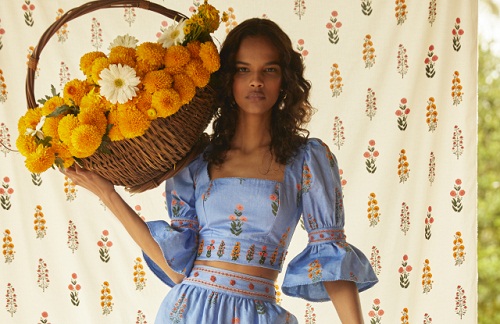 down its fashion cycle and launch only two collections every year. The brand plans to work at a more organic pace to reduce its impact on the environment. Its aim is to have more time to boost creativity.
A new beginning
As per Lyst’s 2020 Conscious Fashion Report , over the last 12 months slow fashion has generated more than 90 million social impressions which suggests the beginning of a shift in consumers’ shopping behaviors. For example, Sika, a brand founded by Ghanaian designer Phyllis Taylor which makes handmade and made to order garments in Ghana. Taylor started by producing a handful of garments at a time before ordering more accordingly. She later moved to an online-only model and only made garments on order. This helped achieve zero waste besides giving her space to customize garments as per demand.
The uptick in Sika’s orders prompted the brand to alert customers about the delay in payments. However, customers are willing to wait for their orders. The brand has gained 35,000 followers on Instagram which proves, though slow fashion may take time to work, artisan luxury brands will lead this change.
COVID-19 can drive inventory-efficiency among brands
 Growing economic uncertainty with ongoing pandemic has made apparel makers skeptical about unsold inventory. And to avoid future losses, they now prefer to make clothes only on pre-paid orders, says a Business of Fashion report. For example, Stòffa, a Manhattan-based producer of classic luxury menswear, which now makes garments only after they are paid for. This helps generate around 90 per cent of its revenue besides eliminating the risk of holding unsold inventory.
To build its business, Stoffa had to first establish a good relationship with Italian manufacturers and suppliers. Then, it had to build a client base through own network and trunk shows across cities. Finally, it had to hire and train sales people to help fit clients for garments in a convincing and authoritative way. As 90 per cent of products are made-to-measure, consumers are willing to wait for their orders to complete. However, this has slowed the company’s pace of annual growth. While in some years, it has grown by upto 70 per cent; in others, it has recorded just 25 to 30 per cent annual growth.
Pandemic worsens inventory issues
One of the biggest problems the fashion industry faces today is that excess inventory that costs the US around $50 billion a year, comments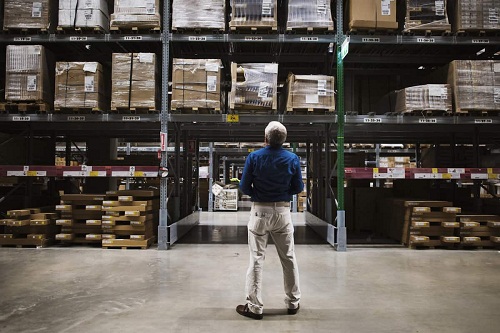 Haley Smith Recer, Retail Consultant. Pandemic-induced lockdowns and a recession in 2020 have left retailers with much more inventory than usual. However, it’s not just the unsold inventory that’s the problem, the costs associated with inventory is also an issue.
In a trend-driven sector like fashion, it is impossible to align supply with demand as the brand has to place bets on a product almost nine months before it hits the market. In the past, it was considered a good thing for a brand to have some excess inventory at the end of each season. However as the pressure for revenue grew over time, brands resorted to markdowns to drive volume.
Production softwares like PlatformE were introduced to smoothen logistical issues of made-to-order brands. The platform currently has 17 brands including Pyer Moss and Tucker. It allows designers to develop new products without betting their own cash on the end result.
Greater collaboration on components
Stanley Szeto, Executive Chairman, Lever Style points out, one of the biggest challenges in getting brands to convert to a lower-inventory model are the restrictions on fabrics. Viewing factories as partners can help brands negotiate better rates on materials. John Thorbeck, Chairman, Chainge Capital advises brands to collaborate and cooperate on the components required for finished goods to create flexibility, which in turn creates value to be shared among partners.
Katie Demo, Chief Executive, Brass’ factory in China has adapted to brand’s need for inventory. It plans to sell a certain number of units each year. For this, they first determine inventory requirement at the beginning of the year. The brand pays more per piece than ordered everything in advance, but it’s worthwhile if more garments are sold at full price.
Shan Reddy, Financial Consultants, advises brands to rethink the base of their production. This can help local manufacturers turn things around quickly. Indeed the pandemic offers brands an opportunity to rejigger operations.