FW
Diesel choses Supreme Green Cotton for Green Label
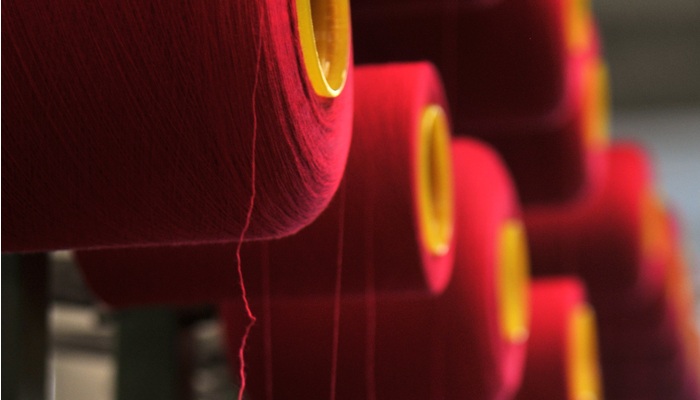
Italian brand Diesel has chosen premium quality yarn collection, Supreme Green Cotton for its Green Label. Launched by Varvaressos SA European Spinning Mills, Supreme Green Cotton uses a customized satellite-powered drip irrigation system in the fields that allows saving up to 40 per cent of water. Its advanced drip irrigation system allows plants to be watered and fed without wasting a single drop.
A custom-developed app connected via satellite and meteorological stations in selected cotton fields allows farmers to monitor the fields in real time. The IoT – Internet of Things system warns them to take action to ensure plants to flourish healthily and high a higher yield in a sustainable way.
The smart yarns are made in Greece and have been certified as Made in Green by Oeko-Tex® which assures transparency and traceability, moreover the company has also obtained the Step by Oeko-Tex.®.
TCM approves SGS as its third-party laboratory member
The Microfibre Consortium (TCM) has approved leading inspection, verification, testing and certification company SGS as its first third-party laboratory member. As per Innovation in Textiles, the collaboration will help SGS extend its fibre fragmentation testing services to consortium member organizations and the wider textile and apparel industry.
Yvonne Tse, Vice President, SGS Softlines has welcomed to opportunity to work collaboratively with TMC members and the wider textile and apparel industry to support them in taking the practical steps needed to accelerate reductions in fibre fragmentation. With more than 89,000 employees, SGS operates a network of over 2,600 offices and laboratories around the world.
The collaboration will provide TMC’s brand, retail and supplier members with bespoke support and standardized testing services. These members will gain access to extensive testing services to help them understand requirements, whilst demonstrating their environmental responsibility and improving sustainability along the supply chain.
Founded in 2018, TMC aims to facilitate the development of practical solutions for the industry to minimize the fragmentation of fibres and the release of microfibres into the environment from textile manufacturing and product life cycles.
Patagonia moves away from corporate logos on products
American outdoor apparel brand Patagonia is moving away from adding corporate logos to its products due to environmental reasons. As per SGB Media reports, the brand has realized adding an additional non-removable logo reduces the life span of a garment. The extra logo makes for an awkward re-gift as people avoid passing logo clothes down to their kids. In 2018 alone, 11.3 million tonne of textiles ended up in landfills.
The brand hopes customers will support its efforts to extend the lifespan of its garments. The American outdoor clothes manufacturer was founded in 1973. Patagonia has expanded its product line to include apparel targeted towards other sports, such as surfing. In addition to clothing, they offer other products such as athletic equipment, backpacks, sleeping bags, and camping food
In April 2017, Patagonia announced merchandise in good condition can be returned for new merchandise credits. The used merchandise is cleaned, repaired and sold on its ‘Worn Wear’ website. As of April 2020, Worn Wear had sold more than 120,000 items. In 2019, it launched a program named ReCrafted that creates and sells clothing made from scraps of fabric coming from used Patagonia gear.
CFDA plans physical edition of New York Fashion Week in September
The Council of Fashion Designs of America (CFDA) has announced plans to hold the physical edition of New York Fashion Week in September this year. The event is likely to be held from September 8 to12 depending on the local restrictions linked to the ongoing health crisis. Some designers may opt to keep their presentations online.
Vast majority of shows held during the past two fashion weeks in February and last September were virtual, with just a few designers including Christian Siriano and Rebecca Minkoff organizing a live event. However, encouraged by New York's ongoing vaccination campaign, CFDA now looks forward to a strong fashion season that celebrates the best of American fashion in both physical and digital presentation formats, says Steven Kolb, CEO
This time, Fashion Week will culminate with the Met Gala -- a star-studded benefit that coincides with the Met's Costume Institute exhibit -- on September 13. The extravagant event will take place on a smaller scale in September 2021 before another ball the following spring.
UAE approaches India for FTA revival
United Arab Emirates (UAE), GCC’s biggest trading member, has approached India to revive FTA talks that got stalled in 2008. As per SRTEPC reports, two rounds of negotiations were held between India and the GCC on feasibility of a free trade agreement in 2008. However, talks stopped after the latter began a review of its negotiations with all countries and economic groups.
India is keen to increase exports to the UAE. In FY21, it imported goods worth $80.5 billion from GCC countries, while its exports amounted to $40.5 billion. About half of this trade was with the UAE.
India’s exports to UAE in April-January FY21 amounted to $12.9 billion with the main items being mineral fuels, apparel, gems and jewellery, and electrical machinery. During the same period, India’s imports from the UAE were worth $19.65 billion.
Industry experts say, India can export products made of leather, plastic, and iron and steel to the UAE, while it may have to give tariff concessions to import petroleum-related products and fertilizers.
Exempt garment factories from COVID-19 lockdowns, urges AEPC
A Sakthivel, Chairman, AEPC has urged the state government to exempt garment factories from COVID-19 related lockdowns. He says, the industry supports over 13 million workers directly and many more indirectly, in rural and backward areas and largely comprises MSMEs. Lockdown will severely disrupt the functioning of these factories.
He said all factories have been taking stringent measures and following strict health protocols. Exporters are willing to follow even more strict safety measures but would want to avoid even partial lockdowns as they create widespread disruption and impact not just in the short term but also the long term health of the industry.
Any lockdown, will disrupt the last year of hard work put in by the industry in getting back on the global map, Sakthivel added. Incorporated in 1978, AEPC is the official body of apparel exporters in India that provides invaluable assistance to Indian exporters as well as importers/international buyers who choose India as their preferred sourcing destination for garments.
60th Dornbirn GFC Congress to have a highly interactive platform
Organizers of the 60th Dornbirn GFC Congress have created a highly interactive platform for the virtual edition of the show to be held from September 15-17 this year. As per Friedrich Weninger, Managing Director, Austrian Fibers Institute, the 2021 edition of the tradeshow will present outstanding new ideas, motivate networking and promote a unique learning experience. It will feature the latest scientific results and ninety lectures by top experts from industry. Panel discussions, breakout sessions and virtual meeting lounges will provide opportunities for networking and information exchange.”
Featuring 25 exhibitors, the show will focus on fibre innovations. Its major themes will be sustainability and the circular economy, nonwovens and technical textiles and surface modifications and additives. The Dornbirn Global Fiber Congress is the lead event and communication platform for fiber innovations and its downstream manufacturing stages. The Dornbirn-GFC takes place in the Kulturhaus Dornbirn/Vorarlberg, Austria every year in September to enable the networking between the industry, universities, technical colleges and trade associations. In more than 100 expert lectures more than 700 participants from around 30 nations are informed about the latest trends, developments and innovations.
EFI Reggiani completes three new sales contracts in Russia
EFI Reggiani together with its partner in Russia, Nissa Distribution, have completed three new sales contracts for supply and installation of industrial solutions for direct-to-fabric and sublimation industrial textile printing. Russia’s first EFI Reggiani Power 180 and Power 240 digital printers were recently sold to D-TEX Digital Textile Printing, located in Stupino, in the Moscow Oblast, and to MIRtex, in Furnmanov, Russia. © Mirtex
The EFI Reggiani Power 180 and Power 240 are industrial digital printing machines for direct printing on fabric, knitwear and textiles in widths of 1.8 and 2.4 metres, respectively. They are equipped with a high-precision continuous transportation belt for reliable, accurate fabric feeding without wrinkles. Both machines can use EFI Reggiani’s water-based, eco-friendly inks, including popular EFI Reggiani BDR Diamond reactive inks.
Russia’s first EFI Reggiani Next 340 printer is being installed at the largest wholesale textile company in Russia, Sima-Land. The Yekaterinburg-based company offers more than 1 million different products, including décor textiles for the home and office and men’s, women’s and children’s clothing.
The EFI Reggiani NEXT 340 is a 3.4-metre-wide, beltless industrial digital printing machine for direct and sublimation printing. Sima-Land’s printer is equipped with four Kyocera industrial printheads and will give the wholesaler productivity running in a CMYK x 2 configuration or in an eight-colour configuration for superior quality. Using eco-friendly, water-based EFI Reggiani IRIS inks will give Sima-Land the ability to print bright vivid shades and colours and ensure an extraordinary level of print durability.
Fast fashion to decline with consumers’ growing eco-awareness
A report by investment firm UBS expects the craze for fast fashion will decline as more consumers become aware of the environmental and human costs of apparel production. The report says, revenues in fast fashion could decline 30 per cent over the next 10 years as apparel companies, including fast fashion, are increasingly addressing rising consumer concerns. H&M is launching its new collection made from eco-friendly textiles.
Analyst at UBS urge apparel companies to reduce their output — an idea antithetical to the production and supply chain methods honed by fast fashion in the past several decades. In a survey of consumers in the US, UK and Germany, UBS found more than half are aware of people who have changed their shopping behavior over environmental concerns. Around 58 per cent of consumers said they were previously unaware of apparel's environmental impact, 25 per cent said, they would buy less clothing now and 31 per cent promised to seek out sustainably manufactured clothing.
UBS analysts also view public pressure campaigns as effective in stoking strong feelings resulting in a fundamental change of habits.
China’s cotton imports to rise marginally in 2021-22
After a surge this season, China’s cotton imports are expected to rise marginally in 2021-22. As per forecasts by the US Department of Agriculture’s Beijing bureau, China’s cotton imports are expected to grow by 460,000 bales to 11.02 million bales in 2021-22. This would represent a far smaller increase in imports by China than estimated for this season, when recovery from the pandemic was forecast sending purchases soaring by 3.43 million bales.
According to the National Bureau of Statistics, China’s textile exports skyrocketed 28 per cent in 2020 while apparel exports declined by 9.2 per cent compared to 2019, with textile exports boosted by increased demand for medical PPE during the pandemic. The bureau expects PPE to continue to drive textile exports, while exports of general textile and apparel products will face uncertainty.
The bureau expects the ban on US’ imports of clothing made from Xingjiang to affect China’s cotton consumption to some extent. Yet, despite the curbs, cotton sowings for 2021-22 in Xinjiang are forecast at 2.48 million hectare. China’s overall cotton output this year is forecast to grow by 100,000 bales to 35.86 million bales.