FW
Pure London’s toolkit to help UK fashion retailers embrace sustainability
Pure London's Independent Retailers Sustainability Toolkit was launched at the Pure London event held from 12-14 February, and has already been downloaded by over 250 independent retailers.
The toolkit is now available on the Pure London website and aims to help independent fashion retailers in the UK embrace sustainability in their business operations, with a step-by-step guide that covers everything from reducing carbon footprint to sustainable packaging.
The Sustainability Toolkit was created as an invaluable resource to make a difference and drive sustainability in the fashion industry. The toolkit has four chapters: Mapping Your Impact and Creating a Strategy, The Shop Environment, Sourcing Sustainable Suppliers, and Circularity. The first chapter empowers retailers to create a sustainability plan by exploring the core principles of sustainability strategies, while the second chapter focuses on the shop environment and covers areas such as packaging, water, electricity and gas use, end-of-season stock, shop fittings and fixtures, ecommerce, and staff. The third chapter encourages retailers to challenge their suppliers to provide adequate proof that their products are being made in a responsible way, while the fourth chapter explains circularity and its importance in reducing our unsustainable reliance on raw materials. The toolkit includes practical advice, balanced views, activity worksheets, and links to further resources.
OECD Forum Paris: IAF emphasizes need for effective enforcement of European corporate sustainability due diligence legislation
In February 2023, the International Apparel Federation (IAF) participated in the OECD's Forum on Due Diligence in the Garment and Footwear Sector in Paris.
This event brought together brands, suppliers, NGOs, CSOs, international bodies, and government representatives from around the world, and was the first in-person event since the Covid-19 pandemic.
The IAF represented the interests of garment manufacturers and small and medium-sized brands, expressing support for European corporate sustainability due diligence legislation while emphasizing the need for effective enforcement and implementation in line with the OECD's due diligence guidance to create a level playing field.
At the event, the IAF and its partners in the Sustainable Terms of Trade Initiative (STTI) highlighted that purchasing practices are fundamental to effective due diligence. The STTI is a coalition of 13 associations from 10 garment manufacturing countries, supported by the IAF, GIZ Fabric, and the Better Buying Institute, and was represented by various individuals, including Dr. Liang Xiaohui of CNTAC from China, Cem Altan, President of IAF and member of the Board of TCMA from Turkey, and Faruque Hassan, President of BGMEA and IAF Board Member from Turkey.
During a panel discussion, Matthijs Crietee, Secretary General of IAF, commented that the way due diligence is implemented in a supply chain can lead to bad purchasing practices, highlighting that corporate sustainability due diligence is a risk-sharing exercise, not a risk transfer exercise. Another panel focused on how brands and suppliers could collaborate to share the costs and responsibilities of due diligence more fairly, with Dr. Liang Xiaohui discussing STTI's origins and the need for a collaborative solution.
EU sends million of second-hand clothing items containing synthetic materials to Kenya
In 2021, the EU sent over 112 million second-hand clothing items to Kenya, with at least 37 million containing synthetic materials, according to research by Clean Up Kenya and Wildlight for the Changing Markets Foundation.
Of the 900 million garments received by Kenya from around the world, over 56 million were either dirty or unusable. The report's findings were based on an analysis of 4,000 used clothing items found in Kenyan markets, compared with data from the country's customs records.
Each year, tons of clothing produced by fast fashion addiction are directly dumped in African landfills, causing severe health and environmental problems. Exporting plastic waste from the EU is already restricted and soon to be banned, but over one-third of second-hand clothing shipped to Kenya contained plastic and was of poor quality, becoming landfill waste. The solution is not to shut down the used clothing trade but to transform it, banning recycling companies from exporting junk clothing, says George Handing-Rolls, head of campaigns at Changing Markets Foundation.
The cost of clothing in EU countries has fallen from 30% of household expenditure in the 1950s to just 5% in 2020, thanks to the use of synthetic materials, which are cheaper than natural ones. Consumers are now buying 60% more clothing than they did 15 years ago, and each EU citizen throws away an average of 15 kilos of textiles a year, despite keeping them for only half the time. According to petrochemical industry experts, the use of synthetic materials such as polyester and nylon has quadrupled since 1980 and accounts for 69% of all textile fibers used in clothing production.
Germany, Belgium, France, the UK, Poland, Hungary, Italy, Lithuania, Estonia, and Ireland accounted for 95% of all second-hand clothing exports from the EU to Kenya, with Germany being the top exporter, sending over 50 million clothing items, of which over 25 million were waste and almost 17 million were plastic-based.
China's Apparel Exports to the US Rise in 2022, US Cotton Exports to China Increase Despite Ban
In 2022, China's apparel exports to the US increased to $36.547 billion from the previous year's $34.772 billion, following a sharp recovery from COVID-19 disruptions. However, the growth rate was not sustained in the last quarter, possibly due to the ongoing geopolitical disputes and trade wars between the two largest economies. Despite this, both countries recognize the mutual economic benefits of trade.
China's apparel exports to the US declined to $7.195 billion in the last quarter of 2022, compared to $11.042 billion in Q3 2022. Earlier in the year, the shipment was $10.581 billion in Q2 2022, $7.728 billion in Q1 2022, $9.647 billion in Q4 2021, and $11.649 billion in Q3 2021.
Interestingly, despite the US's ban on importing cotton and cotton products from China's Xinjiang region, cotton exports from the US to China increased in 2022. Cotton exports from the US to China rose to $2.902 billion in 2022, up from $1.330 billion in 2021. The trade was $1.820 billion in 2020, $705.069 million in 2019, and $920.496 million in 2018.
However, the quarterly figures show a decrease in US cotton exports to China in the last two quarters of 2022, with $525.120 million in Q3 and $423.983 million in Q4, down from $959.613 million in Q1 and $993.916 million in Q2.
Kontoor Brands reports strong Q4 and 2022, expects low single-digit revenue growth in 2023
Kontoor Brands, the global apparel company that owns the iconic brands Wrangler and Lee, has reported its Q4 and full-year results for 2022, and provided its financial outlook for 2023. In Q4 2022, the company recorded revenues of $732m, an increase of 7% YoY, and reported EPS of $0.91, compared to Q4 2021's $0.75.
For the full year, revenue was $2.63bn, up 6% YoY, and reported EPS of $4.31 compared to $3.31 in 2021. The company also announced that it had returned $166m to shareholders through a combination of share repurchases and dividend payouts.
Kontoor's Q4 revenues were driven by strength in domestic wholesale and digital, offset by decreases in international, with China particularly affected by COVID-related lockdowns and restrictions. In contrast, U.S. revenue increased 16% YoY to $605m, with gains in both Wrangler and Lee brands, and strength in digital wholesale, which increased 66% YoY. U.S. own.com revenue also increased by 19% YoY. International revenue fell 20% YoY to $127m due to the continued impact of COVID restrictions in China.
Looking ahead to 2023, the company expects revenue to increase at a low single-digit percentage compared to 2022, with an EPS in the range of $4.55 to $4.75. CEO Scott Baxter praised the company's performance despite "unprecedented macroeconomic challenges", and said he expects the company's "strategic investments in talent, demand creation and innovation" to drive growth across DTC channels, categories, and international markets.
Armani Exchange India leads sustainable fashion with eco-friendly T-shirts
Armani Exchange India is a brand that is leading the way in sustainable fashion by demonstrating perfect dedication and contribution to the environment. The brand's commitment to sustainability is evident in its T-shirts, which are made from organic cotton, recycled polyester, and produced in a way that reduces waste and energy consumption. Armani Exchange T-shirts are a perfect blend of sustainable materials, innovative production, and fair labor practices, making them an excellent choice for those looking to make a positive impact on the environment while remaining stylish and contemporary.
The production process of Armani Exchange T-shirts involves the use of sustainable materials like organic cotton and recycled polyester, which help reduce the brand's impact on the environment. The brand also uses digital printing technology and water-saving dyeing techniques, which are highly efficient and help conserve water. Additionally, Armani Exchange has implemented a biodegradable packaging program that uses eco-friendly materials that decompose quickly and do not harm the environment.
The brand is committed to reducing waste and energy consumption in its production processes and is also dedicated to bringing fair labor practices. The brand helps local communities, provides a safe working environment for cotton farmers, and ensures that the workers involved in its production processes are treated fairly and receive fair wages.
Armani Exchange's commitment to sustainability goes beyond just its materials and production processes. The brand has implemented a sustainable packaging program that uses eco-friendly materials and works towards the reduction of waste. The brand's commitment to transparency and communication provides its customers with information about the materials and processes used in producing the Armani Exchange T-shirts, increasing their awareness of the fashion industry's environmental impact.
Quake hit Türkiye showcases apparel industry’s strength, resilience at Istanbul Fashion Connection
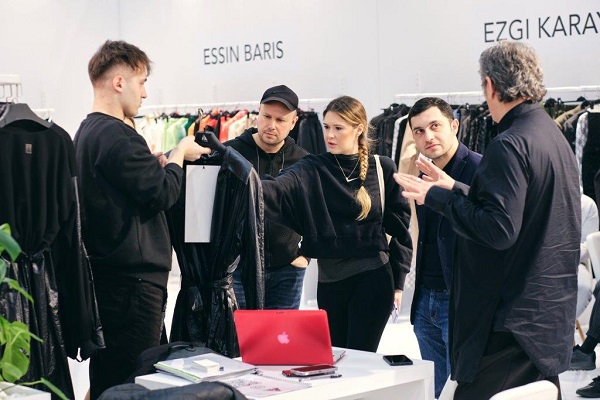
Against the backdrop of a massive earthquake, the third and largest edition of Istanbul Fashion Connection trade fair took place in Istanbul from February 8 to 11, 2023, showcasing Türkiye’s power of disaster management and the need to revive economic development.
The fair, while paying respects to the victims of the disaster- was an extremely successful one with around 588 exhibitors and another 22,543 visitors from 134 countries. This comprised 45 per cent international visitors from Asia (33 per cent), the Middle East (33 per cent), Europe (19 per cent) and Africa (13 per cent) and 55 v domestic visitors, showing their faith in the country’s high levels of crisis management.
Core Istanbul, bridal, and other innovative segments attract crowds
Alongside the busy exhibition, the Türkiye Exporters Assembly (TIM) and Exporters’ Associations also initiated immediate aid campaigns in coordination with the official Disaster and Emergency Management Presidency of Türkiye to help the thousands of victims. The trade fair continued with lively economy-boosting activities with international visitors such as Ackermans (South Africa), Al Shaya (Kuwait), Apparel Group (UAE), Truworths (Kenya), Bodesa (Mexico), El Corte Ingles (Spain) and other countries who met exhibitors relevant to them and concluded orders.
The Istanbul Fashion Connection spread over a massive 100,000 sq. mt. was divided into segments of different brands and manufacturers and showed the collections in women’s wear, menswear, kid’s wear, denim, sportswear, evening and wedding wear, lingerie, hosiery, leather and fur collections. With a concept of B2B meetings in speed dating mode: brands and manufacturers networked with special international buyers which insured the fair’s success.
Also, there was a new and sophisticated designer area called ‘The Core Istanbul’ where globally renowned designers from Istanbul Fashion Week presented their innovative product portfolios. They included Arzu Kaprol, Aslı Filinta, Cerenocak, Çiğdem Akın, Ersozata, Essin Barış, Ezgi Karayel, TAGG, Giyi World, Lug Von Siga, Mehmet Emiroğlu, Meltem Özbek, Kuela, Murat Aytulun and By the Oak among others.
Creative spaces in the trade fair showcased trends and themes for the coming season in a visually-elaborate manner. Euphoric Recall encompassed colourful, playful 70's vibes; Metasphere described the return of glitter and metallic with a futuristic touch. The New Gen area featured pieces by up-and-coming designers. A huge aesthetically appealing display of high-quality bridal and evening dresses and suits was shown in the FashionIST area, which caught the attention of many visitors.
In the IFCO Sourcing area that was specially designed for production trade, visitors networked directly with international production companies such as Bozkurt, Bilce Tekstil, Gelişim, Karar, Cemsel, Bozpa, Demezoğlu, Zevigas and more. As a part of IFCO, around 145 manufacturers presented their product portfolios here.
As per Türkiye’s government, the textile and clothing sector exported around $31.2 billion in 2022 which accounted for around 12.4 per cent of the country’s total exports. With a share of 6.7 per cent of the total GDP, the total production of textile and clothing industry was $79 billion last year. Export volume of over $21 billion is what is keeping the country’s economy alive. The apparel industry as the sixth largest exporting country in the world targets exports worth $40 billion in the medium term. The success of the third edition of Istanbul Fashion Connection was a great step to boost a flailing economy currently reeling under the after-effects of a natural disaster.
Hyve Group UK and Products of Change drive fashion towards sustainability

The Hyve Group’s bi-annual Spring-Autumn Fair, usually held at the National Exhibition Centre in Birmingham, UK, is the country’s leading offline and online marketplace for wholesale fashion, home and gift items. As a part of its commitment to the United Nation’s 17 Sustainable Development Goals programme, the Hyve Group’s fair management division partnered Products of Change, a global educational hub driving sustainable change across consumer product markets and beyond, to create a set of exemplary whitepapers as a part of the ‘Power of One’ campaign that was launched by Pure London in May 2018. The five set of whitepapers aim to help wholesalers, retailers, brands and businesses in the fashion, home and gift items categories make informed decisions to reorganize their operations to begin a journey founded sustainable, ethical and regenerative operations and productions.
Pathway to Sustainability
Called ‘Pathway to Sustainability’ the first of the five-set whitepapers is aimed at continuing to showcase the ‘Power of One’ activities by providing businesses with tools to build action, and together reduce the collective impact over the next seven years across the fashion, home and gift industries to meet 2030 targets.
The whitepaper, focuses on understanding the thinking required to bring about change in organizations and the tools they can adopt after the mindset change and set sustainability goals that are relevant, practical and doable. It serves as an easy to follow guideline that can be used by organizations that are committed or required to deliver on the United Nation’s 17 Sustainable Goals.
The other four whitepapers are deep dives on achieving sustainability. The others papers are: Navigating the Green Claims Code’, ‘Avoiding Greenwashing’ and’ Towards a Circular Economy’. Nikki Griffiths, Group Communications and ESG Director, Hyve Group PLCsays: “Thanks to our partnership with Products of Change, we can deliver real education to our audience of retailers and suppliers, with which they can begin to build actionable steps as part of a wider strategy to transition towards sustainability and business practices that benefit people and the planet. We are really excited to deliver this first series of whitepapers through the lens of the expertise at Products of Change and look forward to seeing the positive change we can all drive across business across the world together.”
The Power of One campaign
Pure London is the UK’s leading fashion trade show that takes place twice a year in Olympia, London. Pure London partnered with Caryn Franklin MBE, British fashion commentator, activist and professor of diversity to accelerate the United Nations’ Sustainable Development Goals with the launch of a new campaign, the ‘Power of One’. Pure London has been acknowledged as the voice of the fashion industry in the UK that wants to achieve a more sustainable, ethical and regenerative future and bring the circular fashion economy to a working level. The campaign is set to champion individual actions and encourage small changes in the way people produce, consume and reuse clothing to collectively made a substantial difference to the environment and the people living in it.
Vietnam strives to reach $47 bn apparel export target amid decreased global demand, intense competition
Vietnamese apparel companies have been working hard this year to fulfill orders in order to reach the target of $47 billion in exports, thanks to the benefits of free trade agreements. They also plan to invest in modern technology to increase efficiency and boost worker incomes.
However, global apparel demand is expected to decrease by nearly 5 per cent annually this year, resulting in a decrease of 25-27 per cent in orders. Major importers of Vietnamese apparel, including the US, China, and South Korea, have shown signs of lower demand since October 2022. Meanwhile, the European Union and Japan have maintained positive growth, albeit at a lower rate than previous months.
In order to achieve sustainable development, Vietnam Textile and Apparel Association (VITAS) intends that the sector will continue to call for investment in the material supply chain, building sales solutions, and developing automation, digital governance, a transparent business environment, and a high-quality workforce.
The sector faces intense competition from Bangladesh, India, and Indonesia, particularly in products with simple designs. Despite this competition, the sector can still produce mid and high-end products, which is one of its advantages to boost exports. However, it is expected that 30-35 per cent of apparel makers will suffer from a shortage of orders, while the remainder will face price pressure.
Domestic textile firms have suggested that the State adjust policies and mechanisms flexibly, particularly those related to credit and foreign exchange rates, in order to improve their competitiveness.
US T&A industry experiences significant increase in imports, exports in 2022, driven by post-Covid demand rebound
In 2022, the textile and apparel industry in the United States experienced a significant increase in imports and exports. According to US government data, textile and apparel imports into the USA were worth $132.2 billion, exceeding the figure of $127.7 billion recorded in 2019. Meanwhile, textile and apparel exports topped the $30.4 billion mark, which was a considerable increase compared to the $22.1 billion recorded prior to the pandemic. This represented a growth of 37.5% over 2019.
China was the leading supplier country, with a market share of 24.7 per cent and an order value of $32.7 billion. Vietnam was China's first competitor, with a growth rate of 27 per cent over a year, resulting in an export value of $19.6 billion. India was third with $11.1 billion, up by 12.2 per cent. Bangladesh, Indonesia, and the European Union followed, with export values of $10 billion (up 35.4 per cent), $6.2 billion (up 36.7 per cent), and $5.7 billion (up 13.6 per cent), respectively. Cambodia also saw a significant increase in imports, growing 31.43 per cent to $5.2 billion, overtaking Mexico ($4.8 billion, up by 10.2 per cent) and Pakistan ($4.7 billion, up by 12.9 per cent).
On the export side, North America accounted for 51 per cent of orders shipped from the USA ($12.8 billion), with $6.8 billion going to Mexico (up 9 per cent) and $5.9 billion (up 11.1 per cent) going to Canada. US textile/apparel exports to the EU were worth $2.2 billion, equivalent to a 16.7 per cent increase that made European orders reach an 8.1 per cent market share. Honduras followed with $1.7 billion (up 22.55 per cent), and China with $798.7 million, down 5.8 per cent.
The US textile and apparel industry's sustained buoyancy contrasted with the European industry's hit by the repercussions of the invasion of Ukraine and the inflation it has triggered on the continent. The United States played a leading role in the renewed growth of international textile and apparel trade since 2021.
The main international trade flow for apparel in 2021 was exceptionally not the one between Asia and Europe (worth $117 billion), but that between Asia and the Americas, worth $124 billion. This was mainly driven by the USA's post-crisis demand rebound.