FW
Vietnam's Garment Exports Experience Significant Decline
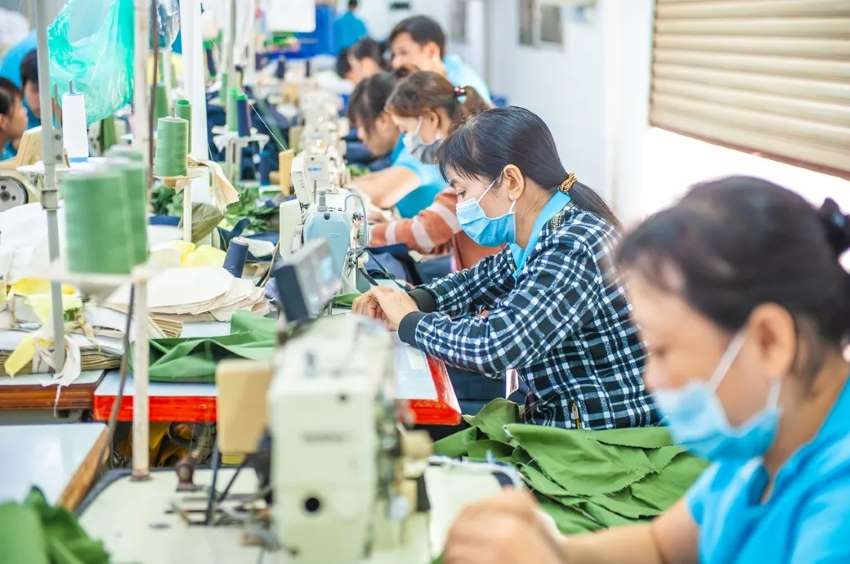
Vietnam's garment exports are facing a substantial decline, with export earnings dropping by 19.3% to $9.6 billion during the January-April period, following a 17.4% decline in the first quarter. This decline can be attributed to reduced consumer spending in major markets and the looming possibility of a recession.
Export Slumps, Japan Provides Hope
Shipments to the U.S. and China have been severely affected, experiencing slumps of over 30%, while exports to Europe fell by 12%. However, there is a glimmer of hope with a 6.6% increase in garment exports to Japan as the country emerges from a technical recession.
The textile and garment industry is a vital component of Vietnam's economy, acting as a major export earner. The decline in earnings from this sector adds extra pressure to the country, which experienced slower economic growth of 3.32% in the first quarter compared to previous years. Local garment and textile manufacturers are grappling with a credit crunch, hindering their access to working capital from commercial banks. This shortage of funds has pushed some companies into a debt repayment crisis.
April US Retail Sales Rebound Amidst Economic Uncertainty: NRF
The National Retail Federation (NRF) reports that retail sales in the US saw a significant rebound in April, indicating growth when compared both month-over-month and year-over-year.
US Retail Sales: Mixed Category Performance
Analyzing data from the US Census Bureau, the NRF identified positive trends in four out of nine retail categories. While sales in clothing and clothing accessory stores experienced a slight decline, online and other non-store sales demonstrated noteworthy growth.
As per NRF consumers continue to exercise caution due to ongoing economic uncertainties. The NRF expects modest progress in consumer spending throughout the year, although a deceleration in year-over-year growth is anticipated.
India: Arvind Ltd posts profits in Q4FY23 results
Arvind Ltd, a leading textile manufacturer, showed resilience by achieving a 12% increase in net profit for Q4 FY 2022-23, despite a 14% decline in revenue. Net profit reached Rs 97 crore ($12 million), up from Rs 86 crore in the same period last year.
The revenue decline was due to soft denim and garment volumes, but the Advanced Materials segment maintained momentum with a 22% increase in top-line performance and improved margins.
Growth and Sustainability Soar: Arvind's Success
Arvind remains optimistic, planning investments of Rs 600 crore to expand capacities and enhance sustainability initiatives. This strategic approach demonstrates the company's adaptability to evolving market dynamics. FY 2022-23 saw exceptional financial performance for Arvind, with a remarkable 71% increase in net profit and successful reductions in net and long-term debt.
The company's board recommended dividends and aims to raise Rs 200 crore through Non-Convertible Debentures, strengthening its financial position.
Arvind's ability to capitalize on tax gains and maintain a positive consolidated net profit highlights its astute management in a volatile market. With a focus on Advanced Materials and sustainability, Arvind is positioned for future growth and success in the textile industry.
Fashion Success-Sandra Choi's Insights as Jimmy Choo's Creative Director
Sandra Choi, the driving force behind Jimmy Choo's success, has spent nearly three decades leading the brand's evolution from a small accessory label to a global lifestyle empire. As the creative director, Choi has navigated numerous challenges, including ownership changes, economic downturns, and the unprecedented events of 2020's lockdown. Choi's unwavering dedication to the family legacy and her deep passion for design and footwear has remained evident throughout it all.
Resilience in Fashion Leadership
Choi's remarkable resilience is demonstrated through her pragmatic approach to work stress. With the poise of a seasoned leader, she acknowledges that mistakes are inevitable but emphasizes the importance of learning from them. Over the years, Choi has overcome self-doubt by collaborating with and observing others, ultimately realizing the tremendous success achieved by trusting their instincts and following their unique path.
With her bright and bubbly demeanor, Choi remains unfazed by challenges, embodying the spirit of someone who truly loves what she does. Her journey exemplifies the power of perseverance and the ability to turn obstacles into opportunities, solidifying her legacy as an influential figure in the fashion industry.
Textile Exchange aims for 45% reduction in emissions with unified standard for fiber and material production
Textile Exchange, a global certification body for the fashion, textile, and apparel industry, has introduced a preliminary draft of its proposed unified standard in an ongoing effort to reduce greenhouse gas emissions from fiber and material production. Since 2021, the organization has been diligently working on a comprehensive revision of its standards framework, aiming to integrate its Climate+ strategy into a cohesive system that encompasses all existing material standards, including the Responsible Wool Standard.
In addition to addressing environmental concerns, Textile Exchange seeks to improve communication with consumers through the implementation of the unified standard. To achieve this, the organization is inviting public feedback on the draft until July 14, 2023. Textile Exchange's primary objective is to contribute to a 45 percent reduction in greenhouse gas emissions from fiber and material production by 2030. Simultaneously, the organization aims to drive positive impacts on soil health, water resources, and biodiversity through its Climate+ strategy.
To provide an overview of the key material categories covered by the future standard system, Textile Exchange has developed a series of summary papers that accompany the draft standard criteria. These papers outline various material categories, including animal-derived fibers such as wool, mohair, alpaca, yak, cashmere, and down. Notably, the summary paper includes a fundamental requirement from the Responsible Wool Standard, which prohibits sheep from undergoing mulesing or any other form of breech modification.
Textile Exchange emphasizes the importance of input from all stakeholders affected by and interested in its standard system. The organization encourages active participation and collaboration to ensure the development of a robust and effective unified standard for the industry.
Rising Star Awards celebrate resilience and perseverance in the fashion industry
The 27th annual Rising Star Awards, hosted by Fashion Group International (FGI) of Dallas, took place at Galleria Dallas, showcasing the theme of perseverance. In the face of the daunting challenges posed by the COVID-19 pandemic, all five winners, selected through a poll of FGI Dallas chapter members, demonstrated remarkable resilience. These entrepreneurs not only launched their businesses shortly before or during the pandemic but also managed to thrive against all odds.
Elizabeth Hooper received the Accessories award for her captivating abstract brass jewelry plated in silver and gold. Munisa Khuramova, originally from Tajikistan, claimed the Fashion Design prize for her brand, Munelle de Vie. Stephen Swetish triumphed in the Retail category for his creation of M.K.T., a sprawling 6,000 square feet store located in West Village, Dallas. The store features rotating displays of Texan fashion, accessories, home furnishings, and food items. In the Beauty category, makeup artist Tina Adams-Mason, founder of About Face Pros, secured the prestigious award, while Dexter James received recognition as the inaugural recipient of the Fashion Styling award.
The Rising Star Awards serve as a powerful testament to the unwavering spirit and determination of these entrepreneurs.
Textile exports plunge by 25.76% YoY, hitting Pakistan's economy
Pakistan's textile sector has suffered a significant blow, with a sharp decline of 25.76% in total textile exports, according to a report by the State Bank of Pakistan. The country's textile exports plummeted to $1.17 billion in comparison to the $1.58 billion recorded during the same period last year.
The decline in exports was not only witnessed on an annual basis but also on a monthly basis. In April 2023, the textile group experienced a 10.42% decrease compared to the previous month. Throughout the ten months of the fiscal year 2023, textile exports accumulated to $14.11 billion, marking a significant decline of 6.51% YoY compared to the corresponding period in FY22, which recorded $15.09 billion in exports.
Textile products remained the primary exportable goods for Pakistan in April 2023, accounting for 55.74% of the total exports for the month. However, it is concerning that key contributing products within the textile sector, including knitwear, readymade garments, and bedwear, experienced declines of 29.29% YoY, 28.69% YoY, and 16.77% YoY, respectively, when compared to April 2021.
The sharp decline in Pakistan's textile exports raises concerns for the country's economy and the overall health of its textile industry.
EU T&A trade hits historic high of €200 Billion, but trade deficit raises concerns
In a historic milestone, trade in textiles and clothing from the European Union (EU) exceeded €200 billion in 2022, marking a significant increase compared to previous years. However, this growth comes with a concerning trade deficit of about €70 billion in the segment.
The surge in total trade can be attributed to a substantial rise in clothing imports, which saw a 36.6% increase in value. The primary sources of these imports were China and Bangladesh. Despite the positive export performance, the EU's trade deficit in textiles and clothing has grown to €70 billion, representing a 48% increase from the previous year. These findings were revealed in Euratex's 2023 Spring Report, which analyzes the latest trade flows in the textile and clothing sector.
Euratex has raised concerns about the growing deficit, noting that it contradicts the EU's Industrial Strategy's objective of enhancing resilience and achieving "strategic autonomy." Rather than achieving autonomy, the EU has become more dependent on imports, especially for certain raw materials and fibers. This situation poses challenges to the Commission's aim of promoting and prioritizing high-quality and sustainable textile products on the Single Market, regardless of their country of origin.
With clothing imports reaching €140 billion, ensuring effective quality control and compliance becomes a significant challenge.
Furthermore, the EU must make efforts to strengthen its export performance and rebalance its trade relations with other countries. Euratex emphasizes that EU companies are global leaders in high-end fashion products and technical textiles. Therefore, additional support should be provided to bolster their activities in both established and emerging markets. In this regard, ongoing Free Trade Agreement (FTA) negotiations with India should prioritize improving market access and ensuring fair competition between local and EU companies.
While the EU's textile and clothing trade has reached record levels, the widening trade deficit and challenges in ensuring quality control warrant attention.
Amazon Fashion x Ronny Kobo marks milestone collaboration in the fashion industry
Renowned contemporary designer Ronny Kobo is set to broaden her reach by launching a shop-in-shop within the Amazon Fashion store.
The highly anticipated debut of the Ronny Kobo shop-in-shop is scheduled soon, featuring Kobo's captivating spring collection.
Kobo's collection is celebrated for its cutting-edge designs, unique prints, and alluring silhouettes, catering to the fashion-forward individual. Following The Drop, customers will have the opportunity to explore and purchase Kobo's collection directly from the brand store.
Kobo's summer collection is poised to captivate fashion enthusiasts with its enticing offerings. From jumpsuits and crochet knits to tie-dye dresses and white suiting separates, the collection seamlessly transitions from day to night or from the beach to the backyard.
For Kobo, this partnership marks a significant milestone, as Amazon Fashion stands as one of the world's largest e-commerce retailers and has been steadily expanding its presence in the fashion industry.
Luxury vegan men's fashion market set to skyrocket to USD 63.52 Bn by 2033
The global luxury vegan men's fashion market was valued at USD 17.5 billion in 2022 and is expected to reach USD 63.52 billion by 2033, growing at a CAGR of 13.75% over the forecast period, according to a new report published by Market.biz.
The growth of the luxury vegan men's fashion market can be attributed to the rising demand for cruelty-free and eco-friendly fashion products. Consumers are becoming more conscious of the impact of their purchases on the environment and animal welfare. This trend is expected to drive the demand for luxury vegan men's fashion products, such as shoes, bags, and clothing, in the coming years.
North America is expected to dominate the luxury vegan men's fashion market during the forecast period, owing to the high demand for sustainable and eco-friendly products in the region. Europe and Asia-Pacific are also expected to witness significant growth in the luxury vegan men's fashion market due to the increasing awareness of ethical and sustainable fashion.
The luxury vegan men's fashion market is set to witness remarkable growth in the coming years, driven by the increasing demand for eco-friendly and cruelty-free fashion products.