


FW
Industry leaders call for more compassion from brands and retailers
Industry leaders are urging brands and retailers to be more compassionate towards garment workers as leading European nations re-enter lockdown against a second wave of the pandemic. Christie Miedema, Campaign and Outreach Coordinator, Clean Clothes Campaign, has urged apparel brands to ensure full wages for all their supply chain workers irrespective of order placements.
Mark Anner, Director, Center for Global Workers' Rights (CGWR), has urged brands and retailers to step up and support wage assurance campaigns. He urged governments and organizations, to step up their financial support for social protection. As per a survey by the Power and Participation Research Center and The Brac Institute for Governance and Development, over 60 per cent of poor and low-income people in Bangladesh received no support, from either the public or private sectors, to help them cope with the economic impact of the pandemic.
And the 39 per cent of households which did receive support between April and June, received only the equivalent of four per cent of their lost income. The survey of 7,638 households was carried out between June 20 and July 2, 2020.
Riri Group incorporates Cobrax Metal Hub
Riri Group has reached another milestone with the incorporation of Cobrax Metal Hub, the new company in the Group which specializes in the design, development and manufacturing of metal components for the luxury and haute couture sector.
The new company is a result of the acquisition of 2Frame, a historical Italian brand in the industry, which is now an integral part of the Riri family, under the new name Cobrax Metal Hub. Thanks to this new entry, the Swiss Group has become the first sole supplier of metal accessories for the leatherwear industry, adding to its traditional range of zips and buttons a new line of products which includes all types of fastening, padlocks, snap hooks and buckles. It is an actual strategic hub, to offer the brands a single contact point for any needs and requests concerning metal accessories.
This new acquisition also makes it possible for Riri to respond, in an even faster and more effective way, to the demand for developing new articles and prototypes. By focusing on customer needs, Cobrax Metal Hub is actually able to design and develop customized products, guaranteeing continuous support in all process phases: from the search for materials, to technical and finishing solutions, the prototyping and sampling stage, to the industrialization and manufacturing stage.
Luxury brand Lyla Dumont forays into India
Lyla Dumont. a luxury couture brand from St. Barth’s, has forayed into the Indian market. The brand has caught the attention of every major fashionista in the world along with several other global brands who have reached out for collaborations.
Their CEO, Lyla Dumont co-founded this company with her mother Lisa Schiller Dumont in 2014. From couture to ready to wear, pieces that Lyla Dumont created in her collections are inspired by St. Barth’s beautiful landscape and world-famous beaches while simultaneously evoking the island’s atmosphere of ageless, easy sophistication. Simply put Lyla Dumont aims to make women of all ages feel powerful, free spirited and beautiful when they wear her pieces.
The reason the most prestigious fashion clients and the world’s most famous celebrities have all taken note of Lyla Dumont is her immense attention to detail and quality. Lyla Dumont’s Couture dresses are all hand embroidered with Japanese cut glass beads, Swarovski rhinestones and a variation of different traditional embroidery techniques, while her ready to wear pieces are only made of natural, sustainable fabrics. True to French couture tradition her dresses are stitched and finished in France with materials sourced from French and European fabric makers.
Many of Lyla’s exclusive clients such as stars like Mariah Carey, Kris Jenner, international super models and even the Middle Easters royalty each have very different tasted and design requirements to which Lyla Dumont custom designs for.
JFW Textile View Autumn/Winter exhibition to launch sustainability project
This edition of JFW Textile View Autumn/Winter exhibition will launch the‘JFW Sustainability Project targeting the enlightenment and promotion of sustainable textiles. The exhibitors at the event will include Leservoir Co which deals with EC apparel/cosmetic brands, including < la peau de gem >, previously visited the PTJ fair as a buyer. On this occasion, however, the company will join the fair as an exhibitor to initially launch a woollen product by Aoyang Wool Fabric (China) in Japan.
Thermore Japan: Founded in Milan, Italy in 1972, the company has been applying recycled polyester since 1980, making it a pioneer in the eco-oriented insulation field and it has been a constant presence at PTJ.
Tamurakoma will focus on leveraging the PTJ event to boost its customer base; ‘part from the abovementioned items, it will also showcase < comfeel > tricot material for shirting, produced by partly leveraging < C2C >, which retains water-absorbing and quick-drying properties and does not sag when worn thanks to limited vertical stretchability. This item has been applied by suburban-type menswear chains and a brushed (raised) type is also available for autumn/winter. The company has also launched an eco-project; < ecoMA >, proposing recycled cotton and nylon alongside down fabrics.
Lily Lace International has participated in PTJ several times to date, mainly showcasing raschel lace, but they will be emphasising sustainable fabrics this time around. As a raschel lace maker, it is set to showcase original patterned items, including: products made from raw material, Teijin’s recycled polyester < ECOPET >, lace blending washi and nylon, alongside tulle net among others. Besides the abovementioned, facemasks and eco-bags, both of which required for COVID-19, will also go on show.
Copenhagen Fashion Week partners with Zalando
Copenhagen Fashion Week has partnered with Zalando for the next three years. The two parties will accelerate sustainability efforts in the fashion industry.
Zalando revealed their do.MORE strategy in October 2019 with the vision to be a sustainable fashion platform with a net-positive impact for people and the planet. One part of the strategy is to continuously increase ethical standards and by 2023 only work with partners who align with them. To this end, Zalando has made sustainability assessments mandatory for both its private labels and partner brands.
Copenhagen Fashion Week unveiled its sustainability action plan at the start of 2020, which announced its ambition to transition and develop into a pioneering, sustainable industry platform. Outlining targets across not only the event itself but also setting minimum sustainability requirements for all participating brands by 2023, the sustainability action plan aims to push the fashion industry to implement necessary and comprehensive positive change, according to a press release by Copenhagen Fashion Week.
Together, both Zalando and Copenhagen Fashion Week will align across these three year action plans in order to leverage impactful change together.
The partnership between Copenhagen Fashion Week and Zalando will run from 2020-2023 and it commences as Copenhagen Fashion Week is preparing for the next edition of fashion week, to be held from February 2-5, 2021.
CAI projects lower cotton production this season
India’s cotton production for the current season (October 2020-September 2021) has been projected a tad lower compared with last year by trade body Cotton Association of India (CAI), but the natural fiber’s consumption and exports could be higher.
According to CAI initial estimates, cotton production this season is estimated to be 356 lakh bales (of 170 kg each) against 360 lakh bales last season.
The production is lower for two reasons. One, the area under cotton this year was two percent lower at 129.50 lakh hectares against 133.73 lakh hectares last year. This was mainly since farmers shifted to crops such as soybean or groundnut as cotton prices ruled lower for the most part of last season.
Second, rains in growing parts such as Telangana, Andhra Pradesh, Madhya Pradesh, Gujarat and Maharashtra have affected the crop.
Reports from Telangana say that some growers have plucked out cotton from their farms due to damaged caused by heavy rains and planted alternative crops.
The rains can affect the plucking of bolls in cotton plants later. There are two-three pluckings in the cotton plant, starting from October with the third plucking taking place around January.
Trade sources said off late, the cotton crop has been affected by diseases in some parts of the country and details are awaited.
EU brassiere, girdle, corset market retains momentum in 2019
 Growing modestly at 3.5 per cent over previous year, the EU brassiere, girdle and corset market reached $3.2 billion in 2019. As per Indexbox stats, the market remained relatively stable from 2013-19 with an average annual growth rate of 2.4 per cent. The most prominent growth was recorded in 2018 at 6.6 per cent y-o-y. Growth peaked further in 2019 and the momentum is expected to sustain in future too.
UK emerges largest consumer
UK with 156 million units was the largest consumer of brassiere, girdles and corsets in 2019 followed by the UK with a consumption of 156 million, France with 100 million units and Germany with 99 million units. These countries comprised 44 per cent of total global consumption followed by Spain, Italy, the Netherlands, Portugal, Poland, Ireland, Austria, the Czech Republic and Greece.
The biggest consumption increase from 2013 to 2019 was recorded in Ireland, while other countries experienced more modest paces of growth. In value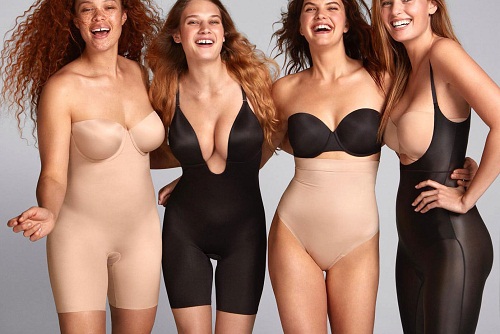 terms, Germany was the largest consumer of brassiere, girdle and corsets in the European Union with consumption worth $525 million. It was followed by the UK with consumption worth $491 million and France with $457 million worth of consumption. Together, these two countries had 47 per cent share in the total market while Spain, Italy, the Netherlands, Poland, Austria, Ireland, Portugal, the Czech Republic and Greece had 39 per cent share.
The largest per capita consumers in 2019 were Ireland with average consumption of six units per person, Portugal with 3.44 units per person and Austria with 3.26 units per person.
Croatia top producer
EU’s production of brassieres, girdles and corsets declined 14.5 per cent to 56 million units in 2019. Though production peaked in 2013 to 104 million units it failed to gain momentum from 2014 to 2019. With 11 million units, Croatia emerged as the biggest producer of brassiere, girdle and corsets in 2019 followed by Spain and Italy which together had 50 per cent share of total production. These were followed by Romania, Poland, Latvia, Hungary, Sweden, Portugal, the Czech Republic, Cyprus and Austria with 42 per cent share.
The most notable growth during this period was attained by Sweden, while production by other countries grew at a modest pace.
UK retains top position as imports increase
In 2019, import of brassieres, girdles and corsets in the European Union increased by 2 per cent to 1.1 billion units, Total import volume increased at an average annual rate of +4.4 per cent, with a few prominent fluctuations. The value of brassiere, girdle and corset imports declined slightly to $4.2 billion in 2019.
In 2019, the UK with 180 million units, Germany with 156 million units and France with 140 million units were the major importers of brassieres, girdles and corsets in the European Union. Together, these countries constituted 43 per cent of total import share. These were followed by Spain with 8.2 per cent share, followed by Italy, Austria , the Netherlands and Poland .
The most notable growth in imports from 2013 to 2019 was attained by Ireland, while imports for the other leaders experienced more modest paces of growth. In value terms, Germany, France and the UK were the largest import markets constituting 48 per cent of total imports. These were followed by Italy, the Netherlands, Spain, Austria, Poland, Belgium, the Czech Republic, Portugal and Ireland with 42 per cent share.
Streetwear brand Supreme merges with VF Corp
Streetwear brand Supreme has merged with multi-fashion player VF Corporation as investors Carlyle Group and Goode Partners have sold their stakes in the brand. The merger will further accelerate VF’s hyper-digital business model transformation and drive its commitment to top quartile total shareholder return and long-term value creation. It will validate its vision and strategy to further evolve its portfolio of brands to align with the total addressable market opportunities driving the apparel and footwear sector.
The partnership will help Supreme maintain its unique culture and independence, while allowing it to grow on the same path we’ve been on since 1994. The transaction is expected to be completed late in calendar year 2020, subject to customary closing conditions and regulatory approval. Additional details regarding the transaction and the strategic rationale supporting it will be reviewed during a VF conference call.
Forum for the Future invites US Cotton Trust Protocol to join Cotton 2040 coalition
Nonprofit organization, Forum for the Future has invited US Cotton Trust Protocol to join its Cotton 2040 coalition. The Trust Protocol also will be included in Cotton 2040’s CottonUP guide, a toolkit to help sourcing directors make sustainable decisions. The CottonUP guide to sourcing sustainable cotton seeks to address one of the main barriers for companies looking to start sourcing or increase the amount of sustainable cotton they source: the time and resource required to research and implement the most appropriate sourcing approach for their organisation’s sustainability priorities. The guide highlights the business case and main sourcing options for sustainable cotton, provides guidance on creating a sourcing strategy and on working with suppliers, and shares case studies from companies that have already navigated the complex challenges of sourcing more sustainable cotton.
The coalition is a unique partnership that brings together representatives from standards, producers, brands and retailers, and existing industry initiatives specifically to build on and accelerate collective action to scale up and overcome barriers to sustainable cotton uptake across multiple standards.
The US Cotton Trust Protocol is a new system for responsibly-grown cotton that provides annual data for six areas of sustainability aligned with the UN Sustainability Goals. This year-over-year data, available for the first time, allows brands and retailers to better measure progress towards meeting sustainability commitments.
Transformers Foundation publishes report on ethical business practices
A non-profit organization, Transformers Foundation has published its first white paper: ‘Ending Unethical Brand and Retailer Behavior: The Denim Supply Chain Speaks Up.’ As per Sportswear International, the report focuses on the experiences of denim supply chain vendors, their ethical business practices, and expectations from brands, retailers, and importers. The report aims to inspire the entire denim industry to collaborate for developing fair business relationship codes and offer actionable steps and solutions for all stakeholders. The report features in-depth interviews with executives representing a diverse cross-section of the denim supply chain, including laundries, mills, and cut-and-sew factories in 14 countries informs Marzia Lanfranchi, Intelligence Director, Transformers Foundation, and Alden Wicker, Freelance Journalist.
The report surveys 79 leading denim suppliers and jeans factories. It shows how even the leading denim suppliers with the longest relationships with brands faced significant financial damage from brand, retailer and importer behavior: Many in the supply chain decided to cancel and delay orders, postponed payments and extend payment terms, with no possibility for negotiation or discussion.
Customers such as brands, retailers and importers refused to pay for goods even after they were delivered to the retailer or the next supplier in the chain. One brand tried to lengthen payment terms from 45 to 90 days, impose a discount of 15 per cent as well as delay payments into a months-long repayment schedule. The survey also analyzes commonalities between brands that canceled orders and those who came upon the table with solutions. According to it, independent, privately-owned brands, acted more reasonably which could be attributed to their core culture.










