FW
Malaysian fashion players urge government to allow operations under NRP II
Fashion organizations in Malaysia have appealed to the government to allow them to operate under Phase Two of the National Recovery Plan (NRP), reports The Star. Datuk Seri Tan Thian Poh, President, Federation of Malaysian Fashion said, his federation is concerned with the current situation as it might only be allowed to operate when the country reaches Phase Three of the NRP. This will lead to a loss of RM163 million per day for retailers and manufacturers, he added.
To avoid the collapse of industry, it is important to be allowed to operate under Phase II, he added. Since the first movement control order in 2020, about 15 per cent of fashion, textile and apparel businesses had ceased operations while 30 per cent were on the verge of closing down due to a lack of cash flow and future uncertainties, he added.
The situation will deteriorate further and will be beyond salvaging as some members are facing litigation and risk losing their overseas customers, Tan warned.
ZAAF to venture into other African countries
Ethiopian-brand ZAAF plans to venture into other African countries. Set up in 2014 by entrepreneur Abai Schulze it deals with leather bags and apparels. The brand opened its first retail outlet in 2015, in Addis Ababa. Its clientele is mostly international tourists or business visitors, as well as Ethiopian diaspora on their trips home.
ZAAF currently runs two stores and an e-commerce platform that ships globally. It has added jewellery, shoes, garments and other accessories to its line that are produced in Ethiopia, Senegal, Niger, Kenya and Rwanda. For the online shop, ZAAF focuses on one-size-fits-all products to reduce the complexity of returns if garments don’t fit. Leather sandals from Kenya and jewellery from Niger are proving popular.
ZAAF currently has 17 full-time employees in the US and Ethiopia and various partners in the other African countries from where it sources products.
US apparel sales rise 2.6% in June
Apparel and accessories store sales in the US increased 2.6 per cent in June 2021 compared to previous month and 47.1 per cent from a year ago, reveals analysis by the Women’s Wear Daily of the latest Census Bureau Data. Department store sales rose 9 per cent from May and 24.4 per cent from a year ago while e-commerce sales increased 1.2 per cent from May and 12 per cent compared with a year ago. Total sales in the first half of the year increased 19 per cent from the first half of 2019.
Sales of specialty stores increased only 7 per cent in the first half of the year compared to two years earlier, while sales of department stores declined 2 per cent.
E-commerce sales jumped 40 per cent during the period as brands rushed to improve their websites and offer curbside pickup and other online friendly options. Jack Kleinhenz, Chief Economist, National Retail Federation says, the sector is benefitting from the continued government support, reopening of stores and increased vaccinations.
Spain’s Nextil Group to expand with a new fabric production plant
Spanish textile firm Nextil Group plans to expand capacity by opening a new fabric production plant in Guatemala. Spanning 25,000 sq mt, the plant is expected to be operational in Q1 2023. It will enable Nextil Group minimize losses, secure maximum efficiency in logistics and distribution, with preferential tariff arrangements.
The plant will be set up with an overall investment of €40 million. It will have 350 local employees on its payroll and train Guatemala university students who wish to go into the textile sector. The plant will optimize its cost structure in line with other plants in the group and maintain the certifications of origin for its products. Nextil Group will maintain its existing production plants in Spain and the US for value-added specialties, for the development of new products and for local and commercial logistics.
The industrial group will build a state-of-the-art factory. In keeping with its policy of environmental commitment, the new plant will implement a plan to maintain a low carbon footprint and incorporate cutting-edge machinery and advanced systems in energy saving, rainwater treatment and reuse of resources, among others.
Rising sea levels threaten to submerge Asian apparel factories
Rising sea levels are threatening to submerge thousands of apparel factories in Asia by 2030. As per a report by two Cornell researchers as part of a paper commissioned by the International Labor Organization (ILO), the analysis warns the problem of rising sea levels will impact smaller-scale suppliers most. The analysis, which covered Jakarta, Phnom Penh, Tirippur, Dhaka, Guangzhou, Columbo, and Ho Chi Minh City, overlaid a map of factory locations from open-source factory database the Open Apparel Registry onto data from US climate change think-tank Climate Central on where elevation will fall below the level of a coastal flood on average once per year by 2030.
Climate Central's data is based on projections from global datasets published in peer-reviewed science journals. The overlaid maps paint the gravest picture in Ho Chi Minh City, Vietnam and Guangzhou, China, where an estimated 50-60 per cent of factories will be below the level of the average annual coastal flood by the end of the decade.
Saleemul Huq, Director, International Centre for Climate Change and Development, Independent University, Bangladesh says, this calls for urgent action at the global level to both reduce emissions to limit warming while also providing funding for the workers to adapt to the adverse impacts of climate change.
Keep apparel factories open during lockdown, urge Bangladesh manufacturers
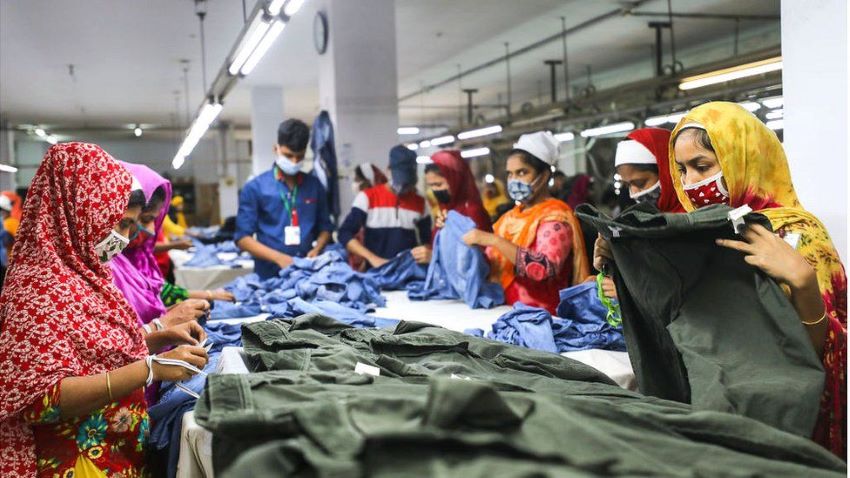
In a joint letter addressed to Prime Minster Sheikh Hasina, garments, textile, terry towel and garment accessories makers in Bangladesh have urged the government to keep apparel factories open during the countrywide lockdown. These industry leaders warned Bangladesh might lose $119.38 million per day only from garment export if factories remain shut for any reason. They said, the sector is expected to earn around $1.68 billion in the first 14 days of the current fiscal year. If factories are kept shut for nearly three weeks, it might lose a lot of work orders and few billions of dollars, the letter said.
The international retailers and brands have been granting new work orders to Bangladesh as the clothing retail outlets have already been opened up in Europe and the USA. The letter, therefore, urged the prime minister to shorten the lockdown period so that the production continues in the factories to offset the losses. It was signed by
Faruque Hassan, President, BGMEA; AKM Salim Osman, President, BKMEA, Mohammad Ali Khokon, President, Bangladesh Textile Mills Association; Shahadat Hossain Sohel, Chairman, Bangladesh Terry Towel and Linen Manufacturers and Exporters Association, and Abdul Kader Khan, President, Bangladesh Garment Accessories and Manufacturers and Exporters Association.
Munich Fabric Start, Bluezone to be held in a new format
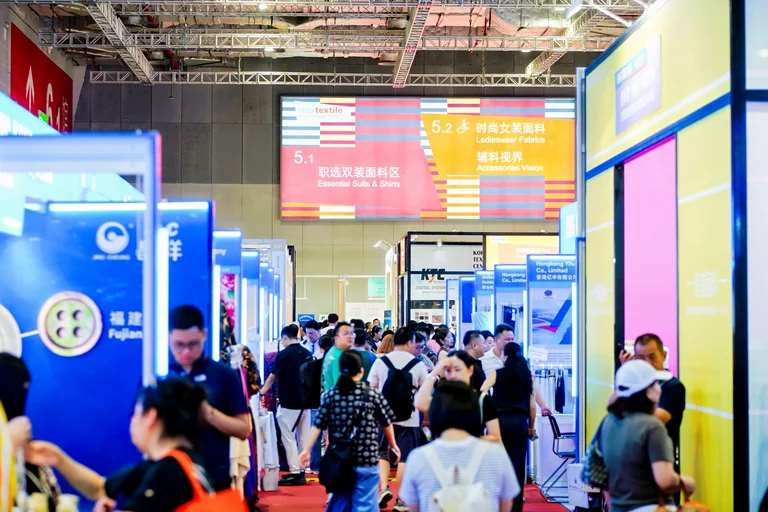
Munich Fabric Start and Bluezone will be held in the new format from August 31 to September 2, 2021. As per Textile Network, the trade fair will host around 800 international suppliers. IT show will offer a large pool of inspiration: The trend forums will give unique insights for developing Autumn. Winter 22/23 collections; a COVID-19 compliant event program consisting of keynotes from leading trend researchers, panel discussions and expert rounds reveal industry information, innovations and future-oriented topics relating to circular economy, digital tools and production processes.
The modified hall layout of Munich Fabric Start will showcase the Fabrics, Additionals, Design Studios and Sourcing areas across four halls and two atriums in the MOC Munich. Almost 300 international exhibitors will present their textile innovations in the Fabrics Area – including brands such as Lisa, Yünsa, Lenzing or Thermore; the premium collections from well-known agencies such as Berner & Sohn, LOOMseven or Tex-Reseach; as well as exciting new exhibitors such as Delegant, Ecomax or Belinac.
In the Additionals area almost 90 manufacturers of buttons, ribbons, labels & Co. such as Frameless, The Button Maker, Shindo, Panama Trimmings or Deko Graphics and Packtato will be exhibiting.
The Sourcing area will have a significant European presence, with a broad scope of strong manufacturers from Portugal as well as suppliers from Greece, Italy, Turkey and Romania. Lagoon, Teijin Frontier, Top Trends or Calvelex and TMR Fashion will be among the 26 exhibitors featured there.
The Bluezone will be staged in the Zenith Hall in a renewed format: a fusion of the proven spectrum of international denim weavers and mills combined with a newly approached Keyhouse area as an innovation hub. A total of around 65 exhibitors such as Tejidos Royo, Prosperity, Calik Denim, Berto, Officina +39 or Montega will present their latest developments. Advance Denim, Tat Fung, Weko and Dinghui Fashion qualitatively expand the Bluezone repertoire.
Puma raises 2021 sales outlook
Boosted by strong second quarter demand, especially in North America, German sportswear company Puma has raised its 2021 sales outlook. As per Business of Fashion, the brand now expects 2021 currency-adjusted sales to rise by at least 20 percent, up from its previous forecast of mid-teens sales growth for the year.
It also specified full-year operating profit guidance, now expecting earnings before interest and taxes (EBIT) between €400 and 500 million ($472-590 million).
Second quarter currency-adjusted sales nearly doubled to €1.589 billion and EBIT swung to a profit of around €109 million.
Puma is a German multinational corporation that designs and manufactures athletic and casual footwear, apparel and accessories, which is headquartered in Germany. Puma is the third largest sportswear manufacturer in the world. The company was founded in 1948. It has been a public company since 1986, listed on the Frankfurt Stock Exchange. French luxury group Kering (formerly known as Pinault-Printemps-Redoute or PPR) holds 16per cent, Kering's largest shareholder Artemis SA owns 29 per cent of the share capital. Since 1 July 2013, the company has been led by former football professional Bjørn Gulden.
Co-optex to foray into organic wear for kids
The Tamil Nadu handloom weavers cooperative society Co-optex plans to foray into manufacturing and supply of organic wear for global markets. As per a Daiji World report, having over 1,000 handloom weaver societies, the cooperative plans to move away from selling traditional sarees due to declining demand.
The department is planning to target the high-income groups and urbanites. It is in the process of getting certification for its organic products to attract customers from all the age groups. It is also in the process of preparing more organic dyed products."
The raw materials for the organic cloth lines will be purchased from Pollachi and surrounding areas. The organic children wear and other new products from Co-optex will hit the market either during Diwali or Pongal depending on the certification it gets.
Co-optex is also planning to market the product in Western countries as well as in the Middle East, Singapore, and Malaysia. The Indian diaspora in these countries, as well as the local populace will be targeted in a high voltage campaign in the near future.
Burberry launches new campaign for TB Summer Monogram Collection
Burberry has launched a new campaign for its TB Summer Monogram Collection, starring the iconic Naomi Campbell.
The campaign captures fuses the classicism of stills imagery with the modernity of CGI technology. Its imagery seamlessly morphs into a dream-like digital realm in the campaign video, created by visual artist Frederik Heyman, featuring a CGI embodiment of Naomi Campbell. Beautiful structures meld nature and machine, as suspended shell sculptures rise from crafted seaside environments. A futuristic, harmonious vision, connecting serenity and adventure – inspiring us to dream, discover, be bold and go beyond.
Riccardo Tisco, CEO designed the campaign alongwith his creative team including photographer Danko Steiner, stylist Catherine Baba, make-up artist Adam Fleischhauer and hair stylist Jawara, He also collaborated with visual artist Frederik Heyman to bring the campaign to life in a unique CGI world.
This year’s TB Summer Monogram collection features lightweight pieces for women including nylon trench coats, nylon bomber jackets and nylon hooded jackets with silk, silk-satin slip dresses and oversized shirts in cotton and silk, cotton hooded tops, cotton jersey vests and silk shorts, stretch- jersey bodysuits and leggings, swimsuits and triangle bikinis. For menswear, the collection includes nylon car coats and hooded jackets, cotton hoodies and oversized T-shirts, cotton piqué oversized polo shirts, short-sleeve silk shirts and shorts, and drawcord swim shorts and briefs.
An ode to the house’s founder, Thomas Burberry, the bold interlocking TB initials of the Monogram are refreshed with new summer-inspired colourways, including cobalt blue, deep royal blue and mid grey. The collection of lightweight pieces is printed with the Thomas Burberry Monogram.