FW
Archroma gets platinum rating for CSR from EcoVadis
Archroma has been awarded the EcoVadis platinum rating in corporate social responsibility (CSR), placing the company among top one per cent of the best rated companies in the industry. Archroma was evaluated by EcoVadis, an organization specialized in assessing the CSR performance of companies on a global basis.
The assessment focuses on 21 criteria which are grouped into four themes: environment, labor and human rights, ethics, and sustainable procurement. EcoVadis assesses more than 75,000 companies in more than 160 countries and 200 industries. Archroma participated in the assessment for the fourth consecutive year and is a global leader in specialty chemicals. This company has built a strong reputation as a global leader in developing innovations and systems that help minimize resources, increase productivity and create value for its customers. It is reputed for its continuous flow of ground-breaking innovations.
Archroma is a global leader in chemicals serving branded and performance textiles, packaging and paper, coatings, adhesives and the sealants markets. Based in Switzerland, the company operates a highly integrated, customer-focused platform that delivers specialized performance and color solutions in over 100 countries. This footprint is what makes Archroma a reliable partner for brands and textile manufacturers who need world-class and consistent quality and service levels.
Vegan fur may replace animal furs in future fashion
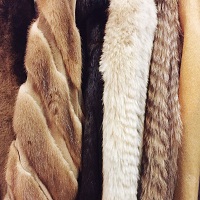 Gergana Damyanova, Co-Founder and Chief Executive Officer, Blonde Gone Rogue believes, though it’s difficult to completely ban the adoption of animal fur globally, some countries might be able to pass laws banning its inclusion in the fashion industry.
Brands adapt to changing global scenario
Last month, parent company of luxury retailers Gucci, Balenciaga, Saint Laurent and Bottega Veneta, Kering announced its decision to ban animal fur in upcoming collections by next year. Kering’s decision was supported by other brands like Mytheresa, Selfridges, Calvin Klein and Ralph Lauren, who also pledged to avoid fur in their collections. More companies are expected to follow suit. Katie Ramsingh, Fashion Copywriter says, increasing pressure to be honest and transparent about their supply chains is leading to more brands going fur-free in recent times.
Kim van Langelaar, Co-founder and Polly Drábová, Content & Research Marketer, Shop Like You, UK opine, the widespread pressure to stop using animal fur is compelling retailers to disown it. Brands are going fur-free to adapt to the changing global scenario, they add.
CO2 emissions increase fur’s ecological dangers
Retailers would have continued to use fur if it wasn’t banned, says Damyanova. Consumers’ are known have a close proximity to animal fur despite faux fur being widely available at various price points, she adds. Despite them contributing to the increasing microplastics issue, consumers continue to shop for fur look-alikes and realistic looking alternatives from synthetic materials. They also opt for textiles including polyester, nylon, polyamide, acrylic that release tiny plastic fibers on being washed, worn or dried.
As Ashley Bryne, Campaign Specialist, PETA says, real fur is far worse for the environment than faux fur as animal farming emits a huge amount of carbon dioxide which is a nightmare for the environment. On the contrary, faux-fur has more potential to become sustainable, she adds.
Wizz Selvey, Founder, Wizz adds, animal fur cannot be compared to faux fur without knowing its durability, production process, sustainability and carbon footprint. To achieve this, supply chain transparency of both type of furs need to be compared to their length of use. Langelaar and Drábová point out, vegan fur and other plant-based alternatives are cheaper as brands don’t need to breed and feed animals to acquire them. Their demand will continue to grow in future because of their affordability and accessibility, they add.
Loss of GSP+ benefits threatens Sri Lanka’s apparel exports: JAFF chairman
 The European Union (EU) has threatened to suspend Sri Lanka’s GSP+ Plus status on account of its failure to adopt human rights reforms and repeal the Prevention of Terrorism Act. This has ignited much speculation in Sri Lanka, on the potential costs and its impact. A Sukumaran, Chairman, Joint Apparel Association Forum believes, many of these speculations fail to account certain vital factors.
Loss of export earnings from the EU
Loss of GSP+ benefits may cause Sri Lanka to lose a significant portion of export earnings from the EU, says a Eco Textiles reports. Sri Lanka’s second largest destination for exports, the EU accounted for 23 per cent of its total export earnings in 2020. And around 43 per cent of these earnings were from the apparel sector; though Sri Lanka also exports plastics and rubber and vegetable products, machinery and appliances, food, beverages and tobacco to the EU. Exports of seafood, rubber products, and footwear benefit more from the GSP+ status, and hence, are more vulnerable. The GSP+ scheme mainly benefits countries eligible for these concessions. From 2011-2017, the scheme enabled Sri Lanka boost its export earnings from the apparel sector to over $5.3 billion (pre-pandemic level).
Exacerbate income disparities
Losing GSP+ status may also impact employment in domestic apparel sector, adds Sukumaran. The sector employs around 350,000 workers, indirectly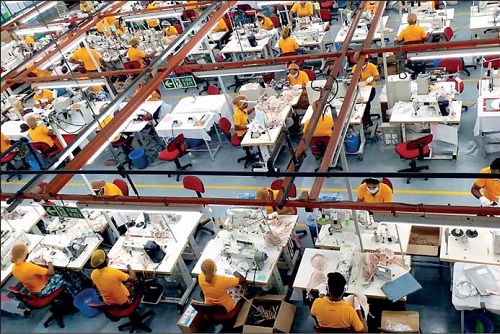 creating livelihood for an additional 700,000 within the country. Since nearly 80 per cent employees are rural women, this would exacerbate their income disparity with urban counterparts. Besides, it could also affect SMEs in the apparel sector.
Moreover, this will also result in a 9.5 per cent increase in cost of Sri Lankan apparels for EU buyers. This may lead to buyers shifting purchases to Sri Lanka’s competitors. Also, the trade concessions granted by the EU to the UK and US may come under review if Sri Lanka loses its GSP+ status. Sri Lanka’s foray into two other markets – Japan and Australia – could also be affected.
Intensify currency depreciation
Losing GSP+ status may also impact Sri Lanka’s FDI. This may intensify currency depreciation pressures, raising questions on the sector’s viability. Over the years, Sri Lanka has introduced several initiatives to enhance apparel sector’s competitiveness. These include forming strategic relationships with buyers, enhancing R&D capabilities and product and market innovations. To boost apparel exports earnings to $8 billion by 2026, Sri Lanka needs to combine existing preferential trade concessions with new initiatives in the industry, points out Sukuraman. This will help increase export earnings, employment, technology adoption and investment, he adds
UK charity collects surplus clothing
The British Heart Foundation is appealing to retailers and brands with end of line or surplus stock to donate items to help raise funds for its research. The charity is also urging more textile brands to join the Textiles 2030 initiative to help create a more sustainable, circular textile industry. Textiles 2030, launched in November 2020, is a voluntary agreement that aims at bringing together UK fashion and textile organisations to accelerate progress towards a circular economy and climate action within the textiles industry.
BHF already works with several high-profile retailers, such as Marks and Spencer, and runs a successful brand partnership program. This means the charity’s partners donate stock that can be sold in the BHF’s 712 shops across the UK. BHF has a network of vans that can collect any large amounts of stock directly from retailers nationwide. This year, by selling over seven million pieces of preloved women’s and men’s clothing the foundation aims at saving almost 14,000 tons of clothing from going to waste, while raising millions of pounds for life saving research. BHF wants to continue to collaborate with other fashion and textile brands who can support the British Heart Foundation’s vital work by simply donating their unwanted stock
Rise in Vardhman Textiles’ Q2 income
For the second quarter Vardhman Textiles’ total income was Rs 2,452.54 crores against Rs 679.48 crores in the corresponding quarter of previous year and Rs 1,971.96 crores in the previous quarter. Net profit was Rs 481.49 crores against Rs 60.22 crores in the corresponding quarter of the previous year and Rs 314.70 crores in the previous quarter.
For the six month period, the company’s total income was Rs 4,424.50 crores as against Rs 2,540.11 crores in the previous year. Net profit was at Rs 796.19 crores compared to Rs 4.07 crores in the previous year.
Vardhman Textiles is a textile and apparel major that is into manufacturing of high-end premium quality shirts for large retail brands Van Heusen, Benetton, Sisley, Color Plus, among many others. Vardhman, which began operations in 1965, is engaged in the business of manufacturing yarn, fabric, acrylic fiber, garments, sewing threads and alloy steel. The group has over the years developed as a business conglomerate with a presence in India and in 75 countries across the globe.
Retail sales in China up 24 per cent
From January to August 2021, retail sales of clothing, footwear, headwear and knitted goods grew 24.8 per cent in China. Sales of social consumer goods were up by 18.1 per cent, eight per cent higher than the same period in 2019.
In August 2021, retail sales of social consumer goods saw a year-on-year growth of 2.5 per cent, three per cent higher than 2019. By consumption type, in August, retail sales of commodity had a year-on-year growth of 3.3 per cent. From January to August, retail sales of commodity were up by 16.5 per cent year-on-year. Retail sales of clothing, footwear and headwear and knitted goods were down six per cent year on year in August. From January to August, China’s online retail sales grew 19.7 per cent year on year. In the online retail sales of physical commodities, wearing goods increased by 19.4 per cent year on year.
China's garment industry reported higher revenue and profit in the first eight months of 2021. From January to August, the combined operating revenue of 12,520 major garment companies was up 9.6 per cent year on year. Total profits of these companies rose 9.5 per cent from a year earlier while the combined output expanded 12.9 per cent year on year to 15.2 billion pieces.
Cambodia garment exports up 11 per cent
Cambodia’s garment exports from January to September this year rose 11.4 per cent over the same period last year. The uptick was despite the February 20 community outbreak of Covid-19 and the ensuing lockdowns. Garment orders have managed to avoid sliding into negative territory despite the pandemic. This year, Cambodia was lucky to receive some orders that shifted from Myanmar and would have grown bigger were it not for the February 20 community outbreak.
Garment export growth augurs well for economic activity in the country as other countries reel under severe pandemic-induced conditions. Cambodia’s exports of garments, including apparel, footwear and bags, in 2020 fell 10.44 per cent compared to 2019.
Meanwhile the EU has decided to withdraw one-fifth of the Everything But Arms (EBA) for Cambodia covering Cambodia’s exports of garment and footwear products, travel goods, and sugar. Without EBA, Cambodia will find it difficult to continue the necessary transformation of the textile industry. It will negatively impact future investments, as well as predictability and trust, two crucially important elements of a well-functioning industry. It will also make it difficult for Cambodia to create a modern and competitive industry, with a skilled workforce, and where labor rights are fully respected.
Bangladesh sees a spurt in RMG orders
The reopening of economies in the EU and US has created new opportunities for Bangladesh to recover from the severe fallout of Covid-19. Garment exporters have been receiving a lot of work orders from international clothing retailers and brands ever since Western economies reopened. Demand for garment items made with artificial fibers has increased worldwide, so local apparel makers could use this chance to grab a bigger share of the market. Reputed brands and consumers are leaning toward manmade and recycled fiber to achieve sustainability. FDI in the woven sector will also help.
Bangladesh will continue to enjoy preferential access to European markets even after the country graduates from the UN’s least developed grouping in 2026. Access will be enabled under the EU’s proposed Generalised System of Preferences that will come into effect from January 1, 2024.
However, unhealthy competition among local suppliers has been affecting the garment prices. In the absence of unhealthy price competition, Bangladesh’s garment exporters can obtain better prices from international retailers and brands. Another way of getting better prices would be for green garment factories to label their products. Bangladesh is the global leader in green garment factories.
KPR Mills Q2 income and profits rises
For the second quarter KPR Mills’ total income was Rs 1,225.74 crores against Rs 951.51 crores in the corresponding quarter of previous year and Rs 940.56 crores in the previous quarter. Net profit was Rs 242.22 crores against Rs 112.54 crores in the corresponding quarter of the previous year and Rs 168.07 crores in the previous quarter.
For the six month period total income was Rs 2,166.30 crores as against Rs 1,498.74 crores in the previous year. Net profit was at Rs 410.29 crores compared to Rs 172.84 crores in the previous year. KPR is an integrated textile manufacturing company from India.
Meanwhile KPR Mills has opened a garment unit in Ethiopia. The complete set-up of the garment unit took about two months. Extensive training of workforce took place in both Ethiopia and India. At full capacity, the company will employ 1,500 machine workers who will produce 50,000 garment pieces a day for the world market. So far, employment has been created for 700 people and export shipments have commenced to Europe and the United States.
Antwerp to host 36th IAF World Fashion Convention on November 8
The next edition of IAF World Fashion Convention will begin in Antwerp, Belgium on November 8, 2021. This time the theme is transition of the global fashion system and it will be approached through the perspective of collaboration in the global supply chain. Sessions focusing on new business models, digitalization, supply chain resilience and transparency will highlight the necessity of buyers and suppliers working together to create the transition the apparel industry needs.
The composition of convention’s delegates, from across the world and spanning the supply chain with a strong representation of small and medium brands and manufacturers further highlights the convention’s core message that is buying brands, retailers and supplying manufacturers rely on each other equally to create supply chains that are resilient enough to withstand the rough ride of the apparel industry’s transition.
For example, one session on new business models, on e-fashion in manufacturing, will bring together a US manufacturing brand, a European fashion tech company and an innovative Asian manufacturer.
The convention will be a physical event, with the organizers noting a nearly full house. To facilitate delegates who are not able to be physically present, the sessions will be live streamed and recorded.