FW
Mame Annan-Brown to be Kontoor Brands’ new Global Head-ESG
Mame Annan-Browne has been appointed new Global Head-Environmental, Social and Governance (ESG) by Kontoor Brands, a global lifestyle apparel company with two of the world’s most iconic brands Wrangler® and Lee®, in its portfolio
In her new role, Annan-Brown will manage Kontoor’s global ESG efforts. She will also spearhead the company’s engagement with environmental, health and safety, corporate social responsibility, corporate governance, sustainability, diversity and inclusion standards, etc. She will be the company’s representative in organizations promoting ESG issues across the business landscape. Annan-Brown will continue to oversee the company’s Global Communications and Public Affairs. She will be responsible for all aspects of global corporate communications, government relations, global philanthropy, and charitable giving.
Annan-Brown will also lead Kontoor’s ESG Council to establish a foundational ESG framework and roadmap that establishes Kontoor’s priorities and vision relating to ESG matters, and prioritizes and recommends policies, practices, and disclosures that conform to the strategy.
12th Bangladesh Denim Expo held from May 10-11, 2022
The 12th edition of the Bangladesh Denim Expo was held from May 10-11, 2022 at the International Convention Centre in Bashundara, Dhaka. As per a Textile Today report, held twice a year, the international denim trade show allowed select vendors to interact, build contacts and meet other stakeholders in the industry.
Archroma – a global leader in dyes and specialty chemicals with a strong focus on sustainability and innovation, showcased new aniline-free indigo dye, Denisol® Pure Indigo 30 liq, it reduces risks when producing traditional, iconic indigo blue that consumers associate with denim and jeans.
Another exhibitor was, Austtex one of the most innovative-driven companies in the chemical textile industry. It is a renowned expert in chemicals for pretreatment, dyeing and dyestuffs, printing and coating, finishing, garment dyeing, and denim washing.As a part of the global Bozzetto Group, the company now supplies to the entire textile value chain by partnering with renowned textile companies.
Renowned jeans manufacturer, Bossa showcased a wide range of high-quality denim fabrics, with a high production capacity in dyeing and finishing. Participants witnessed their Quality Management System that enables to effectively handle a competitive market resulting from globalization, changing consumption patterns, and consumer behavior.
Bangladesh leads US’ apparel imports in Q1FY’22: OTEXA
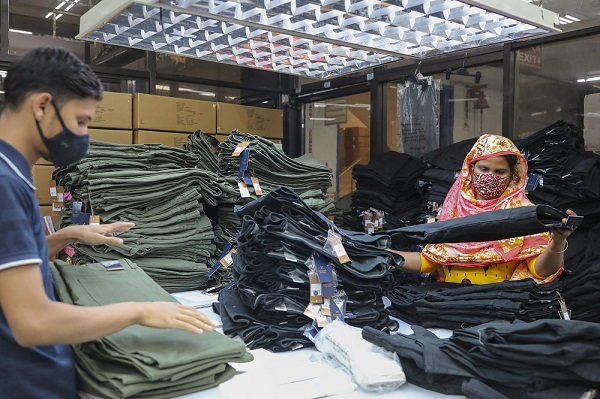
In the first quarter of 2022, the US’ imported 24.72 per cent more apparels from Bangladesh and Indonesia, as against the same period last year, says latest Commerce Department’s Office of Textiles and Apparels (OTEXA) figures. As per a Sourcing Journal report, the country imported 50.12 per cent more apparels from Bangladesh totaling 0909 million SME during the quarter. It’s shipments from Indonesia surged by 46.83 per cent to 376 million SME.
Imports grow despite tariffs, production hurdles
Compared to a year ago, US’ apparel imports from China increased 25.64 per cent to 2.85 billion SME from January to March as against last year. Growth was achieved despite ongoing tariffs and diversification of sourcing from China. The US government is striving hard to introduce a feasible tariff exclusion process for exporters, says Steve Lamar, President and CEO, American Apparel & Footwear Association (AAFA). Overcoming production hurdles, Vietnam shipped 18.11 per cent more goods in the first quarter Y-o-Y to reach 1.36 billion SME.
Shipments from India also rose by 34.24 per cent during the quarter to 415 million SME, while imports from Cambodia grew 14.98 per cent to 371 million SME. The US also imported 22.59 per cent more garments from Pakistan totaling 257 million SME during the quarter.
Nearshoring fuels interest from Central America, Western Hemisphere
Exports from other suppliers also benefited from the nearshoring during the quarter. Mexico’s exports went up 11.87 per cent to 214 million SME, while from Western Hemisphere neighbors Honduras and El Salvador saw a jump of 9.21 per cent to 212 million SME and 7.41 per cent to 164 million SME, respectively.
Facilitated by the Central American Free Trade Agreement, interest in the Central American apparel industry also grew. However, the region lacks sufficient investment opportunities. To push up investments AAFA has launched a coalition to engage stakeholders and policymakers to find ways to incentivize investments, says Lamar.
New investments to boost economic development in the region
Hosted by Jose Fernandez, US Under Secretary of State for Economic Growth, Energy and Environment, a recent meeting between the National Council of Textile Organizations (NCTO) and regional textile industry associations attracted US and Central American textile and apparel executives and investors who discussed trade policies supporting economic development in the region. To boost economic opportunities in the region, the textile industry has invested over $20 billion in the US, informed Kim Glass, President and CEO, NCTO. It has also invested billions of dollars in the western hemisphere over the last decade.
ThinkHUGE (Honduras, USA, Guatemala, El Salvador) also announced $340 million investments in textiles and $680 million investments in renewable energy production in the region. The initiative aims to attract investments worth $10 billion in these four countries over five years. It also aims to to create 500,000 direct and 1.5 million indirect jobs. It has already attracted $1.9 billion in new investments that would help create an estimated 160,000 jobs.
Workers’ agitation in garment factories compels buyers to pull out of Sri Lanka
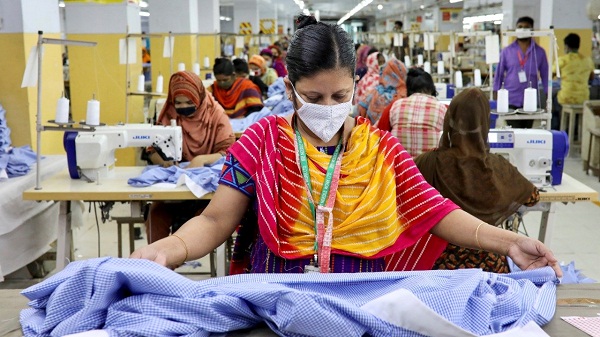
On April 28, this year, parties-led trade union instigated workers at the main Katunayaka Free Trade Zone to stop work in protest against the inhuman treatment being meted out to them. Free trade zones in Sri Lanka have been facing numerous faces including frequent power cuts due to lack of fuel to power generators. These disruptions are impacting manufacturers as buyers are shifting orders to Bangladesh. Dhammika Fernando, Secretary, FTZ Manufacturers Association says, buyers aware of the situation in Sri Lanka are pulling out despite manufacturers assuring them of timely deliveries.
Airports closure may intensify crisis
The crisis may intensify if the government closes airports and ports in the country, warns Fernando. This will hinder Sri Lanka’s garment trade with SMEs being the worst sufferers, he adds. Currently, free trade zones in Sri Lanka are not facing any power crisis. However, interruptions continue at factories outside the zone. As a result, apparel manufacturers are urging Ceylon Electricity Board (CEB) to refrain from imposing power cuts in these factories.
Trade unions ensure unhindered work at factories
As per a Sunday Times report, the ongoing agitation at garment factories has caused concern amongst other trade unions who have decided to resume the protest only after working hours in order to allow unhindered production at factories, says Anton Marcus, General Secretary, FTZ and General Services Union. The situation at factories intensified after a few managers, who had earlier allowed workers to participate in the protest, later asked them to complete their tasks on a different day. This was opposed by workers who refused to complete the task, adds Marcus.
The campaign on May 6 was joined by workers at Katunayake, Ekala and Biyagama zones. While some factories continued with normal operations on this day, others declared a holiday. They also prevented workers from joining the agitation by threatening to cut their pay. On the day of the agitation, protestors blocked roads leading to the FTZs of Katunayake and Biyagama zones, preventing workers from entering the factory premises. They also forced buses bringing workers to the FTZ to turn around. This forced many workers return to their homes.
EU-27 continues to suffer despite surge in textile and apparel consumption
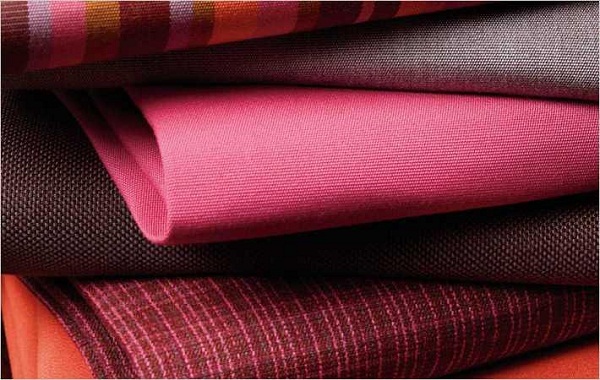
Just as the European textile and apparel market had recovered from the pandemic it was once again hit by the Russia-Ukraine war. However, the market showed great resilience with the volume of apparel imports by the EU-27 countries growing 13 per cent to 1,057 million tons in January 2022.
February sees a surge in imports
Textile and apparel imports by EU-27 countries went up 10.2 per cent Y-o-Y from January to February, says a CCF Group report. Most of the imports were from China, Bangladesh, India, Pakistan, Vietnam and Turkey which together accounted for nearly 80 per cent of total imports. In February, textile and apparel imports by EU-27 were expected to decline due to the Russia-Ukraine war. However, the war did not have much impact. On the contrary imports from Bangladesh and India have grown rapidly since the second half of last year.
Demand shifts to nearest market
Last year, apparel imports by the EU-27 countries from China declined due to the shift in part of demand to nearer markets. At the same time, imports from Turkey, Bangladesh, India and Pakistan increased significantly with sanctions on Xinjiang cotton causing this shift. Cotton exporters from Uzbekistan, India and Vietnam have been supplying more cotton yarn to Bangladesh, South Korea and European markets since last year.
The processors in these countries accept higher yarn prices than China due to the tariffs and downstream processing costs. The epidemic continues to impact global textile and apparel despite EU relaxing its epidemic prevention policy and production and consumption in the region normalizing.
Diversification to MMF a must for Bangladesh for future growth in RMG exports
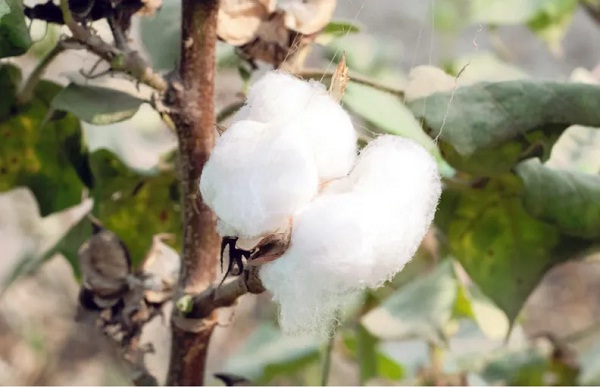
An important growth driver of its economy, Bangladesh readymade garments (RMG) industry mainly depends on import of raw materials like cotton. As per a Textile Focus report, Bangladesh imported around 8.5 million bales of cotton, worth over $3 billion in 2021.
The pandemic caused several disruptions in Bangladesh’s clothing sector. Prices of local materials went up almost 50 per cent as supplies from China did not arrive on time. Around 15 to 20 per cent raw materials and 80 to 85 per cent of knitwear sector’s dyeing chemicals and accessories are imported from China. Bangladesh imports around 40 per cent raw materials for garment accessories and packaging from China every year. However, the virus outbreak caused a severe crisis in raw material supply to the country and it led to about 40 per cent increase in prices, hampering production in several factories.
Diversify raw material sources
If Bangladesh continues to depend on cotton imports, demand and prices may fluctuate, making it impossible for the country to boost exports in the long-term. To tide over the crisis, Bangladesh needs to diversify its raw material sources in order to resist sudden supply disruptions. It needs to boost the number of MMF textile and clothing factories in the country. Currently, out of the 433 spinning mills in the country, only 27 produce man-made yarn. The yarns produced by these mills can fulfill only 20 per cent of the country’s demand. To capture the remaining 80 per cent demand, Bangladesh needs to invest in backward linking of man-made textile value chain.
Boost MMF production
A Bangladesh Garment Manufacturers and Exporters Association survey shows, MMF clothing exports are stuck at 20 per cent for many years. The country needs to diversify production to MMF textiles and clothing, opines BGMEA. In the initial months of 2022, Bangladesh import of MMF increased 45.72 per cent to 99,597 tons. According to BTMA, of the total imports, around 61,693 tons were polyester staple fiber, 32,454 tons were viscose staple fiber, and approximately 5,450 tons were Tencel and flax fiber.
To cater growing demand for fibers and yarns, local millers are either expanding or reinvesting in manmade fiber sector. Last year, millers invested Tk 600 crore for setting up 26 new mills. The Korean Corporation invested $65 million in three RMG factories and plans to invest $120 million in two other factories in Korean EPZs.
Bangladesh was unable to meet its target of $50 billion in RMG export for fiscal year 2021. In 2022, it needs to target both short and long term goals by adopting the diversification strategy.
Under Armour forecasts lower than estimated full-year profit
Under Armour forecasts its full-year profit to be lower than analysts’ estimates. The sportswear makers’ bottom lines are likely to be impacted by higher transportation costs and renewed COVID-19 curbs in China. COVID led curbs resulted in a 14 per cent decline in the brand’s revenue from the Asia-Pacific region during the quarter ended March 31.
Shipping delays and labor shortages also prevented the brand from getting its hoodies and shoes to stores, forcing it to cancel orders. For fiscal year 2023, Under Armour projected an adjusted per-share profit between 63 cents and 68 cents, below Refinitiv estimates of 83 cents. The brand expects sales to grow between 5 to 7 per cent growth, while analysts expect a 5.4 per cent rise in sales.
Emphasize Hemp! conference to look at the pros and cons of the fiber
A 30-minute roundtable conference tilted ‘Emphasize Hemp!’ is scheduled to be held during Denim Premiere Vision in Berlin on May 17, 2022. As per The Spin Off report, the round table will feature some key players from the industry. It will showcase the latest joint development by weaver and exhibitor Naveena Denim (NDL) and the German jeans brand Tom Tailor: denim made from hemp.
These two brands will be joined by Lenzing and The Flax Company–Marmara Hemp who will reflect on the latest denim innovations and disclose the properties of this unique natural fiber that produces very little emissions and ensures minimum waste of resources. The four companies will analyze some of hemp fiber’s weaknesses too. They will highlight the experience of growers, weavers and brands that recently started operating in the industry, and have already established significant relationships within the value chain.
The conference will be attended by Christina Agtzidou, Manager - Design Denim Female, and Juliane Nowakowski, Head - Sustainability & Corporate Responsibility, Tom Tailor; Rashid Iqbal, Executive Director, NDL; Denis Druon, President and CEO, The Flax Company–Marmara Hemp; and Michael Kininmonth, Product Development, Lenzing. The conference will be moderated by Maria Cristina Pavarini, Senior Features Editor International, The SPIN OFF/Textil Wirtschaft.
New trademark will identify local brands for global consumers: Australian Fashion Council
The Australian Fashion Council hopes, the newly launched trademark will identify Australian brands for global consumers and boost growth of the local industry to $38 billion within a decade. According to Leila Naja Hibri, CEO, the trademark will reflect effortless style, raw nature, boundless optimism and fearless innovation of Australian fashion. It will also demonstrate advanced social and environmental outlook, Hibri adds.
Funded by the government, the $1 million trademark will be a digital marker rather than just a clothing tag. The trademark was launched during the recent Sydney Fashion Week. To qualify for the Australian Fashion trademark, brands need to meet at least two out of five criteria. They need to be of Australian origin, their collections need to be made in Australia, need be to Australia’s taxpayers and have Australian employees. Hibri believes, these rules would help disqualify overseas competitors and qualify only a selective group of truly Australian brands.
The trademark was launched after a report by the accounting firm EY predicting $11 billion growth for the industry in the next decade. The report predicts, the industry would be worth $38 billion by 2032 and add 86,000 new jobs. The Council has urged the government to provide $69 million in funds to promote the trademark internationally, build manufacturing capabilities, fix skill gaps, and build a circular clothing economy.
Kitex Group plans Rs 3,200 crore investments in Kerala
After investing Rs 2,400 crore in two Telangana units, Kerala-based apparel manufacturer Kitex Group plans to invest another Rs 3,200 crore in the state. Sabu M Jacob, Managing Director informs, the group plans to set up two integrated fiber-to-apparel facilities at the Kakatiya Mega Textile Park in Warangal and Sitarampur in the Rangreddy district with an investment of Rs 800 crore. Inaugurating the KMTP plant, Jacob said the plant will create 50,000 additional jobs across both units. These will include 22,000 direct jobs and 18,000 indirect jobs.
Jacob expects the KMTP unit to be completed by January 2023, after various processes will be added in a staggered manner to start production in full swing by March 2023. The plant will be constructed on 460 acres with Telangana government allotting 210 acre at KMTP, another 250 acre at Sitarampur. Construction of the second unit will begin in September-October 2022 and complete in the June-September 2023 quarter. The plant’s technology will be imported from Switzerland while the entire pre-fabricated factory building will be shipped in from the Middle East.