FW
Indian government extends deadline to import cotton without taxes
Indian government has extended the deadline to import cotton without paying import tax till October 31. As per a Thrakika Ekkokkistiria report, the earlier deadline to import cotton without paying import taxes was September 30, 2022 as sowing of the fiber crop was delayed in some regions due to uneven railways. India, the world's biggest producer of cotton had allowed duty free imports in April as local prices surged to a record high due to a drop in the production and following rally in global prices.
Ceylon Petroleum Corporation failed to direct fuel distribution, alleges JAAF
The Sri Lankan, Joint Apparel Association Forum (JAAF) has alleged that Ceylon Petroleum Corporation has not directed the government to prioritize fuel distribution to it despite urging for an essential service status for industry. The Association added while the country was dealing with a fuel crisis, apparel exporters were managing daily operations to meet production deadlines to the best of their ability. Several factories claim to have sufficient fuel stocks to meet on-going production requirements. However, small and medium apparel factories were struggling to obtain fuel as the industry lacked the essential service status, said JAAF.
It is important for all manufacturers to remain fully operational as the country’s economy depends on it. They need to meet production deadlines as per order books. Only, this will ensure uninterrupted foreign exchange inflow in the country, the association added.
Pay 10% cash incentive for MMF garments shipments, urges BGMEA
Bangladesh Garment Manufacturers and Exporters Association (BGMEA) has urged the Commerce Ministry to pay at least 10 per cent cash incentive for the shipment of non-cotton garment items made from man-made fibers (MMF). This will relieve exporters facing difficulties owing to the war, says Tapan Kanti Ghosh, Senior Secretary, Commerce Ministry.
The additional cash incentive will help accelerate garment shipment from Bangladesh and overcome the impact of the war, he added. The decision on new cash incentive will come into effect soon since orders are declining in some destinations due to higher inflation, Ghosh added. Despite the gloomy global outlook, exports from Bangladesh hit an all-time high of $52.08 billion in the just-concluded fiscal year. Garment exports from the country grew by 35.47 per cent Y-o-Y to $42.61 billion.
Currently, the government pays a 5 per cent cash incentive on the sales of garment items made from locally spun yarn, a 1 per cent additional incentive for exports in all markets and a 4 per cent cash incentive in non-traditional markets. Bangladesh considers all markets as non-traditional except the US, the EU, the UK and Canada.
Faruque Hassan, President, BGMEA, said, demand for non-cotton garment items are rising thanks to the change in fashion and styles. Of the total garment items exported from Bangladesh, 74 per cent is made from cotton fibre and the rest is manufactured from the non-cotton fibre.
The price gap between cotton and MMF-made items is also large. For instance, if a cotton-made garment item is sold at $5 apiece, the selling price of an MMF apparel item is $10, Hassan added.
Fluctuations in Indian rupee’s value eroding its purchasing power in global market

Analysts are concerned over the fall of the rupee that hit a record low of Rs 79.03 per US dollar a few days ago. Experts expect weak demand to lead to a further decline in the value of the local currency. Since January 2022, the rupee has fallen by around 6 per cent. However, it recently recovered by 13 paise to hit Rs 78.90 against the dollar. The common man is reeling under rising inflation and drastic increase in prices of daily essentials.
High crude prices, outflows causing depreciation
As per an Outlook India report, the value of Indian rupee against the US dollar is determined by demand and supply factors. Higher demand for the US dollar causes the value of the rupee to depreciate. An increase in demand for the US dollar is caused by a country’s rising imports. The current fall in rupee’s value can also be attributed to high crude oil prices, a strong dollar overseas and foreign capital outflows.
Heavy foreign fund outflows from the domestic markets are also contributing to the fall in rupee’s value. The rupee has depreciated 5.9 per cent against the dollar so far this calendar year. This depreciation is also impacting the rupee-dollar exchange rates. Further, it’s causing import prices of crude and raw materials to rise, increasing production and retail prices.
The US Federal Reserve plans to hike interest rates, causing the Indian rupee to plunge further. India mostly pays for imports in US dollars. A weak rupee could compel it pay more for the same quantity of items. This threatens to increase the costs of raw materials and production for consumers.
Rising crude oil prices to make imports expensive
Meanwhile, a decline in the rupee’s value causes exports to surge as they become more competitive, giving buyers a wider choice. However, the current fall in rupee is not being supported by exporters.
India imports crude oil to meet over 80 per cent of its energy requirements. Rising crude oil prices are likely to make imports more expensive. It also indicates a rise in India’s imports, further signaling a weakening of the rupee. Since January, the Indian rupee has been on the decline, eroding its purchasing power in the international market.
Analysts expect a further decline in the rupee against the dollar in the next few years. To restrict this fall, the Reserve Bank of India is using the country’s huge stockpile of forex reserves. The RBI has so far sold Indian rupees at an exchange 78.97-78.98 per US dollar to boost its forex reserves and restrict the rupee’s fall. The bank may intervene further to contain the rupee’s depreciation. It will not allow such fluctuations in the value of the rupee, says Michael D Partra, Deputy Governor, RBI. The bank aims to work towards the stabilization of the Indian rupee, he adds.
Made-to-order helps fashion brands resolve waste issues

To avoid waste accumulation due to unsold inventory, more fashion brands across the world are offering garments made according to customer specifications.
Offering 3D configured designs
Italian menswear brand Laneri has been offering made-to-measure garments to consumers since November 2020. As per The Spin Off report, the brand uses a 3D configurator to make its menswear garments. . The technology enables the brand to make suits, blazers, shirts, polo shirts and trousers. All these garments are made in Italy using a unique custom-fit pattern. They are made from fabrics supplied by the best Italian suppliers with measurements taken through a few dedicated ateliers in Italy, Paris and Bruxelles.
Complementing the female figure
Another brand Max Mara offers customized apparel collections to consumers. For S/S 2022, the brand launched ‘Tailored Suit’ project collection. The collection offers seven single and double-breasted jackets that have been carefully ironed to enable them to mold naturally to the female figure.
Others to have launched customized blazers for instance, JTB Custom launched a made-to-order blazer collection in collaboration with Rowing Blazer’. Founded by Jack Carlson, Rowing Blazer is an American clothing brand known for its authenticity, quality, and craftsmanship. Along with JTB Customs, the brand aims to deliver custom dress shirts, blazers, and sweaters within a span of two weeks.
Launched during the White Milano event, Italian company Blazer Bar offers a made-to-order and made-to-measure service for women blazers. Available in shop-in-the-shops or via web, this service delivers single edition jackets within six weeks at prices that start from €600 upwards.
Recycling fabric scraps for sustainable activewear
Indian activewear brand So What launched an sustainable collection made in compliance with environmental standards. The collection comprises garments from size XS to 6XL. So What also makes garments from fabric scraps, used plastic bottles and water-based vegan and Oeko-Tex certified dyes. Its latest collection offers customized leggings and high support sports bra in vibrant prints and contemporary shades.
Operating on a pre-order business model, the brand operates from its headquarters in Delhi while its design team is based in Florence, Milan, Delhi, Dubai and Barcelona.
Revolutionizing the footwear industry
A specialist of next-generation footwear, Japanese company Fuji Uni aims to revolutionize the future of custom-made footwear by using computer generated designs and resources chosen by manufacturing giants. The company uses instant digital imaging technology, UNI robotics and a 3D foot scanning process to offer a custom-made footwear solution.
The Japanese brand offers structural footwear in collaboration with podiatric physicians. Designed to overcome the discomforts of mass market shoes, this footwear boasts of modern designs created according to latest trends in the market. Launched simultaneously in Milan Tokyo and New York in March 2022, the first Fuji Uni collection offers upmarket, fashionable and comfortable sneakers, shoes and boots from the Italian specialized footwear design studio Black Cube.
Owned by expert shoe designer Andrè Maritan, the studio scans customers’ foot before allowing them to select their favorite shoe model, color and add their own unique touch to the shoe. The studio then uploads these digitized measurements and sends them directly to the manufacturer, which begins manufacturing the customized shoe.
The studio uses the 3D Goldilox-01 technology to design its shoes. The technology allows it to use all materials without creating any waste. Manufactured in Japan and Italy, the shoes are sold via the brand’s store in China, Japan and onine for prices ranging $300 to $800.
Illuna Groups participates in Premiere Vision
Iluna Group, the Italian company known for its high-quality recycled laces, is participating in the upcoming Première Vision, to promote a new fashion that combines aesthetic research and environmental responsibility.
This season, the Iluna team is introducing for the first time GOTS-certified organic cotton inside its gallons and allovers, to add a natural touch to its Green Label line. Among the smart ingredients chosen by Iluna Group are Renycle® and Q-Nova, both GRS-certified pre-consumer recycled polyamide yarns, in addition to premium recycled stretch ROICA™ EF by Asahi Kasei. The result is a comfortable and ultralight product that remains true to a high value of creativity and responsibility.
In terms of aesthetic innovation, explorations continue with a yarn blend of FSC-certified viscose and polyamide, resulting in striking new Textronic designs. The 3D effect embossed designs create a cloud effect that, combined with Lurex, shows unexpected glows.
Moreover, the continuous path through the new dimension of responsibility continues in several directions: developments in GRS (Global Recycled Standard) certified recycled yarns aimed at unprecedented effects in both look, performance and hands; experiments with 16 different natural dyestuffs; and continued investment in technologies that can ensure significant savings in water and energy consumption, including Greendrop, the new GOTS-certified digital pigment printing system.
Columbia Sportswear launches largest store in Bengaluru
Expanding its retail presence in India, Columbia Sportswear has launched its largest store in Bengaluru.
Spread across 2,500 sqft, the store is Bengaluru’s 4th and India’s largest experiential brand store. The brand plans to further expand its presence by opening stores in Lucknow, Mangalore, Indore, Mumbai, Ahmedabad, Jaipur over the next six months.
Ankur Bhatia, CEO, Chogori India Retail which retails Columbia Sportswear in India in a statement says, through the opening of this store, the brand aims to be the game changer and the best outdoor sportswear brand in India. The industry is witnessing a rapid growth projection and the enthusiasts need gear that is backed by superior technology and can withstand extreme conditions.”
The brand is also focusing on strengthening its digital presence with a dedicated online portal for outdoor sportswear products, he adds
Based in Portland, Oregon, USA, Columbia Sportswear is a global brand with a strong presence in the outdoor sportswear segment.
Online clothing rental market to grow to $3.3 billion by 2027: Report
According to the latest report by Imarc Group, titled ‘Online Clothing Rental Market: Global Industry Trends, Share, Size, Growth, Opportunity and Forecast 2022-2027, the global online clothing rental market, that reached a value of $1.9 billion in 2021, is expected to grow at a CAGR of 9.75 per cent through 2022-2027 to $3.3 billion by 2027.
The report, COVID 19 pandemic has adversely affected the online clothing retail market since public gatherings, including weddings and family get-togethers had to be canceled or postponed due to the mandatory lockdown restrictions imposed by the governments of various countries Moreover, due to the fear of transmission of the virus, a majority of the people hesitated in wearing rental clothes due to hygienic concerns, thus impeding the market growth.
Apart from this, the increasing popularity of internet shopping portals due to their enhanced convenience is creating a positive outlook for the market. Moreover, several online clothing rental portals are offering customization options and discounts to attract customers, thus catalyzing the market growth. Besides this, the rising prominence of fashion vlogs, considerable growth in the film and television industry, and the growing preference for rental services due to their easy availability and accessibility to an enormous assortment at a lower cost are propelling the demand for online clothing rental services.
Additionally, the high usage of these resources among fashion-conscious individuals who lack the finances to purchase clothes of their choice is strengthening the global market. Other factors, including the inflating disposable income and easy return or refund options provided by these portals, are also providing an impetus to the market.
Pure London reveals sneak peak of Spring Summer 23 trends
UK’s leading trade fashion buying event, Pure London has revealed a sneak peak of its inspirational Spring Summer 23 trends which will be brought to life on the thrice daily shows on The Catwalk in partnership with Drapers, during the next event at Olympia London from July 17-19, 2022.
The catwalk shows at Pure London are renowned for their bold styling and inspirational looks, featuring designs created by the brands and designers showcasing their new collections at the event, and always delivered to a packed audience.
Buyers at the July show will be treated to six key SS23 trends including eye-popping colour, rainbow prints, digital atelier effects, acrylic jewellery, and bucket loads of nostalgia from the global Kidult trend; vibrant sunflower yellows, crochet effects, and retro florals from the Sundial trend; and hyper pinks and Galactic cobalt blue from Empowered Electricity. Natural Nouveau features natural knits, cut out details, cropped jackets, cardigans and body jewellery in soft whites, while New Utilitarian delivers a punk revival with laced corsets, chains, sheers, black and metallics, and Tide Green presents soft waves, loose pants, transparency, crochet, cut-outs in bright, butterfly, and night tide greens.
Placing it firmly on the fashion map, a dedicated scene features designers from Romania including Nissa, Papucei, VeneraArapu, Inga Velery, Cristina Bacio, Lynx, Boyari Design, Kan-Brand, Atelier RalucaMihalceanu, Anna Caro, and Antonia Nae. Visitors will also be treated to key new season looks from Jayley.
Global export of all types of textile machines grew in 2021: ITMF report

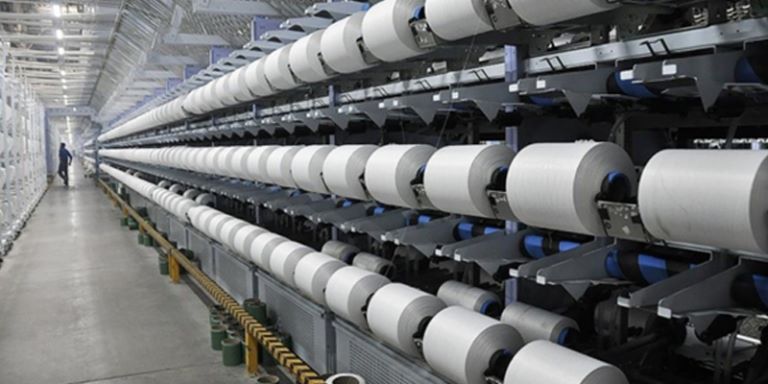
International Textile Manufacturers Federation (ITMF) has released its 44th annual International Textile Machinery Shipment Statistics (ITMSS) report. The findings show, global exports of spinning, texturing, weaving, knitting, and finishing machines increased sharply in 2021 compared to 2020.
Export of new short-staple spindles, open-end rotors and long-stale spindles surged 110 per cent, 65 per cent and 44 per cent respectively. Shipments of draw-texturing spindles grew 177 per cent while exports of shuttle-less looms increased 32 per cent. Export of large circular machines increased 30 per cent while flat knitting machines grew 109 per cent. Total exports of finishing machines surged 52 per cent on average. Compiled in collaboration with 200 textile machinery manufacturers, the 2021 survey is an apt representation of the world’s textile machinery production.
Short-staple spindles dominate spinning machinery exports
In spinning machinery, export of short-staple spindles dominated with shipments increasing by 4 million units to 7.61 million units in 2021. Of this, 90 per cent were exported to Asia and Oceanic countries, with exports increased by 115 per cent to these regions.
Second highest exported spinning machines were open-end rotors whose shipments increased 273,000 to 695,000 in 2021. Turkey and Pakistan led this segment with imports increasing by 56 and 47 per cent, respectively. On the other hand, imports by Uzbekistan declined 14 per cent to 12,600 units in 2021. Exports of long-staple (wool) spindles increased 44 per cent from about 22,000 units in 2020 to nearly 31,600 units. Around 68 per cent were imported by Iran, Italy and Turkey in 2021.
Single-heater draw-texturing spindles shipments rise
Export of single heater draw-texturing spindles increased 365 per cent from 16,000 units in 2020 to 75,000 in 2021. Chinese Taipei and Turkey were the biggest importers of these machines with 90 per cent an import share which. Global shipment of double heater draw-texturing spindles increased 167 per cent to 870,000 units. Most of exports were directed to Asia, with China accounting for 95 per cent of global shipments.
Shuttle-less looms top global weaving machine shipments
Worldwide shipments of weaving machines were dominated by shuttle-less looms, with exports increasing 32 per cent to 148,000 units. Exports of air-jet, rapier and projectile and water-jet weaving machines surged 56 per cent to nearly 45,776 units, 24 per cent to 26,897 and 23 per cent to 75,797 units, respectively. Asia and Oceania cumulatively imported 94 per cent, 84 per cent, 98 per cent of global air-jet, rapier/projectile, and water-jet looms. China emerged the major importer.
Electronic flat knitting machines exports grows 109%
Global exports of large circular knitting machines grew 29 per cent to 39,129 units. China emerged the largest importer followed by Turkey and India. In 2021, electronic flat knitting machines exports increased 109 per cent to around 95,000.
Relax dryers and tumblers lead finishing machinery exports
Exports of relax dryers and tumblers dominated fabrics continuous segment with shipments increasing 183 per cent. Exports of all other types of finishing machines surged in the range 33 to 88 per cent. Only exports of dyeing machines declined 16 per cent for CPB and -85 per cent for hotflue.