FW
Continue with the GSP plus preferences, urges JAAF
YohanLawerence, Secretary General, JAAF urged authorizes to continue with the GSP plus preferences that enable sectors including apparels to help sustain the country’s level of exports and ensure that it has an uninterrupted inflow of foreign currency.
The apparel association forum has been warning Sri Lanka could lose its competitive edge and risk about US$580 million worth of exports if the GSP+ concessions are withdrawn. The GSP Plus trade concession scheme is offered by the EU to encourage development and good governance by offering tariff cuts to developing countries.
Accounting for approximately 6 per cet of Sri Lanka’s Gross Domestic Product (GDP) and almost half of all merchandise exports, the apparel sector serves as a bulwark of the nation’s economy.
While the sector continues to face significant limitations from continuing disruptions in energy supply and logistics, cumulative export earnings from the sector increased by 16 per cent Y-o-Y to $2.2 billion during May 2022.
Despite unprecedented domestic volatility, unstable global market conditions and escalating raw material and logistics costs, Sri Lanka’s apparel sector has provided extraordinary support to the national economy, including direct surrender of export proceeds to the Government.
Despite the ongoing crisis, the outlook for Sri Lankan apparel is still considered positive, as evidenced by the continuing Foreign Direct Investment (FDI) inflows to Sri Lanka which have mirrored upward trends in export performance, recording 17 per cent Y-o-Y growth up-to June 2022. At present, $73 million worth of investments have been committed for expansions in the apparel sector in 2022, out of a total apparel investment pipeline of $94 million.
House of Anita Dongre to open first flagship store
House of Anita Dongre will soon open its first flagship store showcasing premium brands – AND, AND Girl, Globaldesi, Globaldesi Girl and the newly launched Itse.
As per an India Retailing report, situated in the InOrbit Mall, the store is spread across 4,056 sqft and offers an incredible range of stylish, comfortable and easy designs for women and girls in western and Indian wear
Redefining fashion since 1995, House of Anita Dongre (HOAD) has time and again set new standards in fashion. The brand has a workforce of over 2,800 associates. It is spearheaded by Anita Dongre, MeenaSehra and MukeshSawlani.
Giving appropriate attention to Indian craftsmanship, House of Anita Dongre creates exquisite ensembles and handcrafted jewelry. A versatile brand, HOAD offers its customer designs for every day and special occasions, which they will love and wear for many years.
MAS Holdings launches new venture with BAM Knitting
MAS Holdings has launched a new venture by acquiring the assets of BAM Knitting, a leading fabric manufacturing and finishing operation in Sri Lanka. MAS Holdings takes the majority stake in the new venture, with BAM Knitting as its joint venture partner.
The new joint venturewill benefit from the technical resources and expertise of MAS, following the appointment of MAS specialists to key roles in the company, as well as MAS’ vast global experience in apparel and textile manufacturing. Significant synergies are expected from the acquisition, including production capacity enhancements and collaborations on new product developments.
SurenFernando, CEO, MAS Holdings, says, the acquisition enables MAS to increase the verticality of its Sri Lankan operations and mitigates the increasing volatility of global supply chains and costs of logistics while increasing the overall value added by MAS. It also highlights our continued confidence in Sri Lanka as a sustainable and competitive destination for apparel manufacturing, despite the ongoing economic challenges.
This new investment also serves as an endorsement of MAS’ continued confidence in the Sri Lankan apparel industry, especially at a time the island nation is undergoing many economic challenges,” Fernando adds
Amandha Fernando, CEO, BAM Knitting, who will be at the helm of the new organisation, adds, the acquisitionby MAS will undoubtedly elevate the capabilities that were developed at BAM, and MAS’ lean manufacturing processes, product development expertiseand the strong people-centric ethos will surely transform the existing operation into a truly world-class business.
Homeboy Industries partners with Guess for a new upcycled collection
Homeboy Industries has partnered with American clothing brand Guess to launch a new upcycled collection.
The new upcycled collection is being launched by Guess in collaboration with Homeboy Recycling, a social enterprise branch of Homeboy Industries.
By partnering with Guess, Homeboy Recycling has expanded from exclusively electronics recycling into the world of textiles and apparel.
According to both companies, the new collection will help both companies support environmental sustainability, facilitate creativity, create new jobs, and uplift the community.
No two pieces in the Upcycled collection are alike as transforming recycled clothing yields distinctly unique pieces. The collection features tote bags, patchwork denim, bustiers, and throw pillows among other things.
The Upcycled collection is designed with the hope that each piece can give purpose to a member of the community who can learn the skills needed to turn discarded merchandise into desirable, commodified items with an eye to the fashion set.
Columbia Sportswear Company’s ESG report highlights progress across 2021
The 2021 Environmental, Social, and Governance (ESG) Report by American sports brand Columbia Sportswear Company highlights the brand’s progress throughout 2021 in the three pillars of its corporate responsibility strategy — empowering people, sustaining places, and responsible practices.
The report highlights work accomplished by its four primary brands — Columbia, SOREL, Mountain Hardwear, and prAna. In 2021, Columbia Sportswear Company finalized one Carbon Leadership Project program and one Clean by Design programwith two cohorts of manufacturing partners at the Tier I and Tier II levels to help the partners reduce their environmental impact.
The company also introduced the Coalition of Asian & Pacific Islander Employee Resource Group, bringing the total number of employee resource groups to seven. Two new water towers in supply chain locations were also built to bring clean water to manufacturing partners and their employees with the Planet Water Foundation, bringing the total number of water towers built to 24. COVID-19 community vaccine clinics in Portland, Oregon were coordinated and an educational campaign encouraging all employees to get vaccinated was launched.
The company has also released a Sustainability Accounting Standards Board (SASB) Index, which discloses the Company’s ESG efforts in accordance with SASB industry-specific standards.
Adidas adjusts guidance for FY2022 as recovery in China slows
On July 26, adidas adjusted its guidance for FY 2022 due to the slower-than-expected recovery in Greater China since the start of the third quarter resulting from continued widespread covid-19-related restrictions. adidas now expects currency-neutral revenues for the total company to grow at a mid- to high-single-digit rate in 2022 reflecting a double-digit decline in Greater China.
In the second quarter, adidas’ currency-neutral revenues increased 4 per cent as the brand s continued to see strong momentum in Western markets. This growth was achieved despite continued challenges on both supply and demand. Supply chain constraints as a result of last year’s lockdowns in Vietnam reduced top-line growth by around € 200 million in Q2 2022. In addition, the company’s decision to suspend its operations in Russia reduced revenues by more than €100 million during the quarter.
Revenue growth in the second quarter was driven by Western markets despite last year’s lockdowns in Vietnam still reducing sales, particularly in EMEA and North America, by€ 200 million in total. In addition, the top-line development in EMEA was also impacted by the loss of revenue in Russia/CIS of more than € 100 million. Nevertheless, currency-neutral sales grew 7 per cent in the region. Revenues in North America increased 21 per cent during the quarter driven by growth of more than 20 per cent in both DTC and wholesale. Revenues in Latin America increased 37 per cent while Asia-Pacific returned to growth.
The company’s gross margin declined 1.5 percentage points to 50.3 per cent. .Other operating expenses increased by19 per cent to €2.501 billion. Net income from continuing operations slightly declined to € 360 million.
Fashion for Good’s first India report highlights textile recycling initiatives
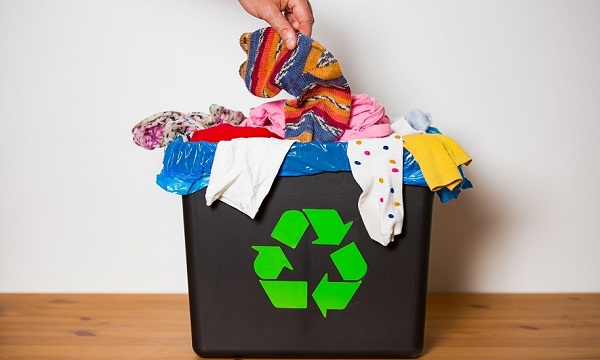
To reduce dependence on virgin resources and decarbonize operations, the fashion industry needs to introduce, new textile recycling technologies, says Katrin Ley, Managing Director, Fashion for Good that recently released its most comprehensive report on textile waste recycling in India. Titled, ‘Wealth in Waste: India’s potential to bring textile waste back into supply chain’, the first-of-its-kind report highlights India’s initiatives to leverage its infrastructure to emerge as world leader textile recycling technologies.
Initiate actions against rising textile waste
Commissioned by Fashion for Good, the report is a part of the ‘Sorting for Circularity India Project’. It was launched in collaboration with Sattva Consulting, Saahas Zero Waste and Reverse Resources, specialist organizations in strategic impact, waste, resource and data management, and the scaling of textile recycling infrastructures. The report attempts to provide the required data in India’s textile waste landscape. It aims to a build a better coordination between those engaged in managing domestic post-consumer waste, pre-consumer waste and imported waste in India. The report aims to help industry players to initiate actions, devise solutions and mediate accordingly.
Improve access to textile waste
India accumulates up to 7,800 kilo tons of textile waste annually. It produces around 8.5 per cent of the global textile waste. However, only 59 per cent of textile waste is recycled with only a small percentage being reused in the global supply chain. India lacks strict rules and traceability systems. Also, technological infrastructure is limited to processing only certain type of wastes. The study highlights sustainable materials that have the best potential to recycle textile waste.
The report also outlines the potential for collaborative and systemic interventions to strengthen sustainability in the Indian textile waste industry. It recommends the industry to improve visibility and access to waste, explore the potential of textile recycling in India and establish the required infrastructure and laws for waste management.
Expedite implementation of recycling technologies
Launched in November 2021, ‘Sorting for Circularity: India’ is a project initiated by Fashion for Good and supported by Laudes Foundation as catalytic funder, PVH Corp., adidas, Levi Strauss & Co, Tesco, Primark, Arvind Limited, Birla Cellulose and Welspun India, and technology partner Reverse Resources. A framework conceived by Fashion for Good, the project aims to expedite the implementation of new textile recycling technologies. Through this project, Fashion for Good aims to launch several industry-wide, precompetitive projects that focus on the recycling of man-made cellulosic fibers and polyester.
Supporting disrupting innovators
A global platform for innovation, Fashion for Good has launched the Global and Asia Innovation program to support disruptive innovators in providing practical project management, access to funding and expertise, and facilitate new collaborations between brands and manufacturers
Fashion for Good has launched the world’s first interactive museum to promote sustainable fashion and innovation. The museum encourages people across the globe to initiate positive change. The initiatives are supported by: Laudes Foundation, Founding Partner, William McDonough, Co-Founder and adidas, Bestseller, C&A, Chanel, Inditex, Kering, Levi Strauss & Co, Otto Group, etc.
APTMA outlines new reforms to stabilize Pakistan’s economy, boost exports
Sri Lanka’s economic fallout made headlines in the last few months. Pakistan is also on a similar path with most of the country’s foreign currency reserves fast depleting and inflation levels rising to unprecedented levels. The country’s exchange rates are also on a downfall while interest rates have reached irrationally high levels. Pushing all leaders and policymakers to develop new ways to navigate through this situation, All Pakistan Textile Mills Association (APTMA) is urging them to introduce the following reforms.
Achieve political and economic stability
APTMA’s first recommendation is for Pakistan to achieve political stability. A volatile political environment is impeding policymakers’ ability to introduce short term macroeconomic policies. It is also compelling them to make frequent U-turns on policies, leading to non-completion of many ongoing projects. Another cause of concern is the unstable exchange rate that continues to threaten the progress achieved by sectors like textiles. Pakistan’s exchange rate has been on the decline for last few months. On July 27, 2022, the value of one dollar in Pakistan reached its highest levels of Rs 237 (Pakistani). This large-scale devaluation in exchange rates is making textile materials in Pakistan more expensive and exports less competitive.
Make exchange rates competitive
To tide over the situation, Pakistan needs to abandon the widespread misconception that exporters welcome rupee devaluation. The central bank and government need to focus on achieving a competitive exchange rate and actual exchange parity. Foreign exchange achieved through exports is the cheapest with only 3 to 4 per cent cost and no compulsion to return it and no interest rates. Moreover, the government cannot ignore the need to introduce new long-term policies featuring lower interest rates. It also cannot ignore the need for more investments and reformed policies to boost the confidence of investors and markets in Pakistan.
Revolutionize economy at grass root levels
Further, Pakistan needs to empower its youth to revolutionize economy at the grass root levels. It needs to abolish policies that lead to a hike in interest rates besides incorporating more individuals into the economy and increasing labor supply.
Reduce import bills
In FY22, Pakistan’s current account deficit increased 517 per cent compared to FY21. To counter the risks of mounting debt, Pakistan needs to take few steps immediately. First, it needs to reduce the import bill by at least $5 billion, especially energy’s, through ensuring energy efficiency. Second, Pakistan needs to limit its use of gas for productive purposes. It needs to introduce new energy conservation measures.
Pakistan also needs to reduce its import bills by over 25 per cent and save $6 billion. It needs to implement both price and administrative measures to curtail consumption; curtail domestic supply of gas and reduce consumption and waste by 18 per cent; fastrack calibration of cooking burners to save 200 MMCFD of Gas/RLNG.
Open new bank accounts
Another important measure is reducing external pressure on ‘hawala’ from $10 to $5 billion through documentation. It needs to introduce new schemes enabling State Bank of Pakistan to open new bank accounts with a pre-approved overdraft facility of Rs 10,000 to be used as seed money for entrepreneurship. Lastly, it needs to make tariffs more competitive to boost exports.
More value-addition to exports
Pakistan also needs to add more value to its exports to improve its global image. For this, it needs to create an industry-friendly atmosphere that focuses on improving quality by adding new processes, products, and entering new markets.
Abolish tariffs on MMF
Another measure that needs to be adopted is abolish tariffs on MMF that prevents Pakistan from participating in the booming market. Lastly, Pakistan needs to focus on textile exports to boost economic growth. It needs to ensure consistent energy supply at regionally competitive tariffs. The government needs to provide regionally competitive terms for the sector to help Pakistan achieve economic stability and subsequent growth.
Sri Lanka’s Stretchline Holdings using the downturn to spread wings beyond country’s shores

The recent success of high-end apparel manufacturing nations like Sri Lanka can be attributed to three defining characteristics including robust secondary supply chains, high-skilled staff and a cost-competitive location. Sri Lanka has one of the most skilled workforce besides being strategically located, says Norman Collier, Director, Stretchline Holdings. The company is the largest manufacturer of narrow elasticated fabric in the world. It is also a major supplier of covered elastomeric yarn and textile coating and bonding solutions.
Building robust secondary supply chain in Sri Lanka
Having commenced operations in Sri Lanka in 1996, Stretchline currently has seven production plants and over 3,400 employees in the country. The company has partnered companies like MAS Holdings to build a robust secondary supply chain in Sri Lanka, adds Collier. MAS Holdings has some of the most advanced production plants in Sri Lanka. Even 25 years ago, these plants were more advanced than the factories in the UK, adds Collier.
Producing for some of the world’s best-known high-end intimate and activewear brands like Victoria’s Secret, Nike, Lululemon and PVH, the Sri Lanka workforce has become highly skilled. “There is also a strong alignment between the high-end segments specialized by Sri Lankan manufacturers and local available resources. Manufacturers in the country have been focusing on higher –margin businesses to pay their workers more,” explains Collier.
This strategy also enables the Sri Lankan apparel sector to invest in research and development, innovation and capacity development.
A strategic move under five-year plan
The Sri Lankan apparel industry has a bright future ahead, says Collier. His company Stretchline continues to invest in Sri Lanka under its ongoing five-year plan. The market is an important part of its overall strategy. Stretchline has made significant contributions in central warehousing, yarn dyeing and its rubber covering plant.
The company has also made significant investments to make production facilities more environmentally-friendly and sustainable. It does not expect operations to be severely impacted by the country’s current downturn. The company aims to use the current downturn in business to strengthen its presence in the other locations beyond Sri Lanka, affirms Collier.
Vietnam to organize 8th Textile Summit 2022
The 8th Vietnam Textile Summit 2022 will be organized from September 22-23, 2022. Highlighting the latest policy developments in Vietnam’s textile and apparel industry, sourcing strategy, supply chain, digital transformation, labour shortage, sustainability, etc, the two-day conference will include a keynote speech, panel discussion, and other networking activities. It will be open to both onsite and virtual participants worldwide, according to the event’s organizer ECV International.
Despite the challenges brought about by the COVID-19 pandemic, the turnover of Vietnam’s textile and garment industry grew by 22.5 per cent to $8.84 billion over the same period last year. The country’s manufacturers and their partners are exploring new opportunities in the global textile and garment market. They currently export their product to markets such as United States, Europe, and Japan.
Vietnam still imports many raw materials used in the textile industry. It also faces an acute labor shortage, climate change issues and a volatile trade market. The Vietnam Textile Summit will offer valuable insights on the future prospects of Vietnam’s textile and apparel industry to attendees.