FW
Sustainable Creativity: Filo & C.L.A.S.S. offer guidance
The textile industry is facing a challenge to become more sustainable and responsible. However, companies often don't know how to navigate the complex world of sustainability.
Filo, a textile yarn show, and C.L.A.S.S., an international eco-hub, have partnered to offer a new service called "Sustainability from A to Z" to help companies on their journey towards sustainability.
The service will provide companies with information and guidance on a variety of topics, including:
• How to integrate sustainability into a business plan
• Certifications
• Measuring environmental impacts and end-of-life assessments
• Ethics
• Energy savings
• Responsible innovation
• New generation communication
• Sustainability reports
"By the word 'sustainability' we are referring to many different concepts," said Paolo Monfermoso, responsible for Filo. "For example, adherence to production models aware of the social and environmental impact, as well as the compliance with European and national regulations, in addition to the increasingly fundamental certifications. Not to mention those who call evident green washing practices 'sustainability'."
"Innovate in the textile industry without having a negative impact on people, environment, oceans, and animals is a complex task," said Giusy Bettoni, CEO of C.L.A.S.S. "It means knowing your impacts and having measured yourself and then knowing how to communicate them in the right way, so that we talk about 'measured' values and not about 'wish lists' and promises."
"That is why Filo and C.L.A.S.S. make themselves available to talk about strategies related to design, responsible innovation, and new generation communication, but through simple information. When we talk about sustainability, nothing has to be taken for granted or considered as ordinary, so that it is fundamental to create new generations values in line with contemporary consumers."
Filo 60th edition opens
The 60th edition of Filo, the Yarns and Fibers Exhibition, opens tomorrow, Wednesday 20 September 2023, at Allianz MiCo – Milan.
The undisputed protagonists of the 60th edition of Filo are the yarns, fibers, and materials proposed by the exhibiting companies, the result of careful research and passion of companies aware of their social and environmental responsibility.
Welcome Exhibition
Welcoming visitors and exhibitors to the fair is an exhibition, designed to underline the milestone of the sixty editions of Filo, which retraces in a lively and streamlined way the thirty years of activity of the Yarns and Fibers Exhibition.
Program
A rich program of meetings is also planned over the two days of the fair. The first is the opening ceremony set for Wednesday 20 September, at 10 am, entitled “Good, Healthy, Clean, Fair and Durable Textiles: Slow Fiber”. Guests of the event are Dario Casalini, founder of Slow Fiber and Barbara Nappini, president of Slow Food Italia.
Not to be missed during the two days of the fair, the dense calendar of events of the “Dialoghi di Confronto” (here the full program) dedicated to crucial themes for the textiles of today and tomorrow and which feature exceptional personalities of the textile industry.
Accessibility
Allianz MiCo Milan, the exhibition site chosen by Filo, is located in one of the most interesting places of the “new” Milan and it is easy accessible by using all means of transportation, from plane to train, from car to public transport.
Yarn Expo Autumn 2023: A resounding success
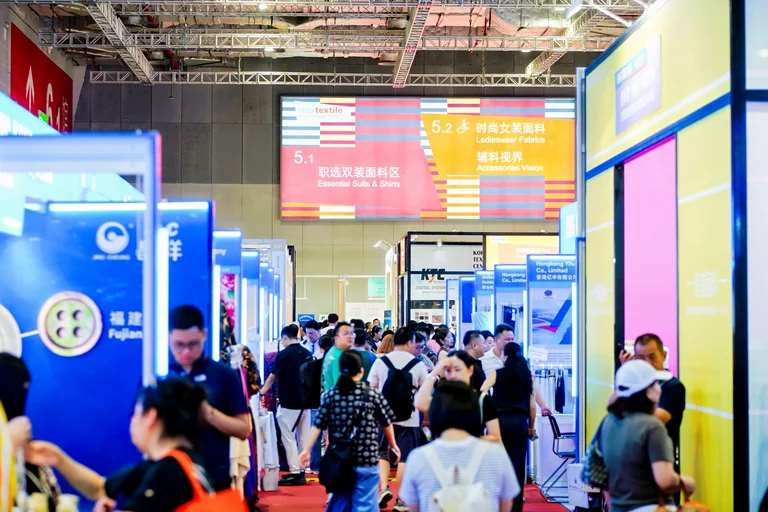
Substantial Increase in Exhibitors and Visitors; The recent Yarn Expo Autumn show, Asia's largest yarn and fiber trade fair, saw a significant increase in exhibitors and visitors. With 510 exhibitors from 14 different countries and regions, the event marked a 19% increase in participation compared to the previous edition. Notably, the fair welcomed new exhibitor countries and regions, resulting in an almost six-fold surge in international booths.
Wide Array of Products on Display
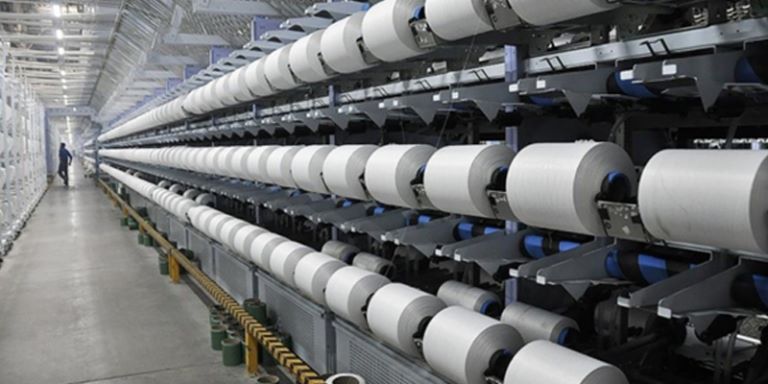
The fair showcased a wide range of products across various zones and pavilions, encompassing an extensive spectrum of offerings such as cotton yarns, cellulose fibers, and recycled synthetics, among others.
In light of the growing emphasis on sustainability, the event witnessed a significant surge in attendance, with 20,297 buyers representing 106 countries and regions.
Global Industry Collaboration
By bringing together numerous prominent industry players from across the globe, the Yarn Expo Autumn serves as a crucial contributor to global industry trends.
The event's fringe program often mirrors the innovative trends observed on the show floor, with a notable focus on eco-friendliness throughout the textile supply chain.
Sustainability at the Forefront
There was palpable enthusiasm throughout the fairground during this edition, with buyers displaying a particular interest in the diverse range of environmentally friendly products showcased by both international and domestic exhibitors.
The Econogy Concept
The recently introduced 'Econogy' concept, which combines economic and ecological considerations, is poised to have a lasting and sustainable impact within Messe Frankfurt's Texpertise Network.
For Yarn Expo Autumn, this initiative will further enhance the focus on an area that is already of paramount importance to a multitude of fair attendees.
Coats Digital wins four awards at 2023 SaaS awards
Coats Digital's GSDCost, a time-cost benchmarking solution, won four awards at the 2023 SaaS Awards:
• Best SaaS for Improved Productivity (Non-USA)
• Best Data-Driven SaaS Product
• Best SaaS Product for ERP/MRP
• Best SaaS Product for Product Analytics
The awards recognize GSDCost's innovative features, seamless integration, ability to revolutionize the fashion industry, and for delivering real ROI, while supporting a more collaborative, transparent and sustainable global fashion supply chain.
Quotes:
• Kunal Kapur, Managing Director, Coats Digital: "We are truly honoured to receive these awards. This is a testament to GSDCost's contribution in making the fashion supply chain more transparent, sustainable, and collaborative for the benefit of brands, manufacturers and consumers."
• Adrian Elliot, Divisional CEO, Apparel, Coats Group: "We are immensely proud of our software arm, Coats Digital. Our industry needs technology to meet future sustainability and CSR compliance requirements and GSDCost is certainly a catalyst for industry change."
Fashion Redressed: A new film series mobilizing sustainability in the Fashion Industry
Fashion is a powerful form of self-expression, but our love of clothes is pushing our planet and societies to the limits. Fashion Redressed, a new online film series presented by Global Fashion Agenda and produced by BBC StoryWorks Commercial Productions, intends to inspire the industry to take action to transform the way we produce and consume fashion.
The series comprises multiple films that showcase organizations from across the fashion and textile industries, spotlighting the innovations that are influencing the new seasons of fashion and featuring a collection of stories that depict tailor-made solutions to fit us and our planet.
The 11 self-contained branded films showcase a range of participants including eBay, Elk, The Ellen MacArthur Foundation, Vestiaire Collective, Spinnova, Lenzing, Faherty, FarFetch, Waste2Wear, Colorifix and Forest Stewardship Council. Each film focuses on a bespoke solution that can benefit us and the planet.
From the scientist taking inspiration from silk-spinning spiders in Helsinki and the duo taking a deep dive into the genetic makeup of colour in Cambridge, to the pre-loved clothes being brought to life on a global platform from Paris and the importance of cultural appreciation in Arizona, fashion gathers the most creative and innovative minds.
This series expresses the dynamism and creativity of the fashion world, spotlighting the people weaving change into the fibres of fashion and those who are working to find the stylish side of a more sustainable sector.
The series was unveiled ahead of GFA's landmark event – Global Fashion Summit: Boston Edition – on 27 September. The renowned forum will bring together core fashion stakeholders for agenda-setting discussions and productive meetings on the most critical environmental and social issues.
Federica Marchionni, CEO, GFA, says: “Education is a crucial tool to mobilise and inspire the positive transformation of the fashion industry, so we are thrilled to present this series produced by BBC StoryWorks, which showcases an array of promising solutions through human-centric storytelling.”
Apparel Group Bahrain Honors Outstanding Bahraini Employees
In a recent ceremony, the Undersecretary of Bahrain's Ministry of Labour, His Highness Shaikh Khalifa bin Salman bin Mohammed Al Khalifa, honored outstanding Bahraini employees at Apparel Group Bahrain.
The event recognized 120 top-performing Bahraini employees, including new additions, within Apparel Group Bahrain, specifically celebrating the exemplary performance of Bahraini store managers over the past three months.
Neeraj Teckchandani, CEO of Apparel Group, was also present at the ceremony. He emphasized the company's commitment to more than just business expansion in Bahrain, underscoring their dedication to investing in the local community and nurturing Bahraini talent.
He further highlighted the alignment between Apparel Group's vision and the broader objectives of the Kingdom of Bahrain, noting the acknowledgment and support from HE Mr. Jameel Bin Mohammad Ali Humaidan, Minister of Labour.
In 2023, Apparel Group continued to actively support Bahrain's National Employment Program by employing 80 new Bahraini nationals, out of a total of 120 across various roles and branches in the Kingdom. This achievement represented a noteworthy Bahrainization rate of 34%.
During the ceremony, His Highness Shaikh Khalifa bin Salman bin Mohammed Al Khalifa presented recognition certificates to the esteemed managers and employees of Apparel Group.
He also addressed the new recruits, conveying the Ministry's pride and gratitude for the valuable contributions made by Bahraini nationals across diverse sectors, while extending his best wishes for their promising and successful careers.
This ceremony is a testament to Apparel Group's commitment to the Kingdom of Bahrain and its people. The company's dedication to investing in Bahraini talent and supporting the National Employment Program is commendable. The recognition of 120 outstanding Bahraini employees is a well-deserved celebration of their hard work and dedication.
India: Tiruppur Exporters Association to Reintroduce Tiruppur Stakeholders Forum
The Tiruppur Exporters Association (TEA) announced its plans to reintroduce the Tiruppur Stakeholders Forum next month during its recent annual meeting. The forum, led by TEA Vice-President V. Elangovan, will include representatives from the association, ETI, eight trade unions, three NGOs, the Brand Ethics Working Group, the Assistant Commissioner of Labour from the Labour Department in Tiruppur, and the UN Women Wing.
The revived forum aims to promote worker welfare, enhance working conditions, and contribute to the sustainability of the Tiruppur cluster. TEA is also focusing on fostering the production of man-made fiber (MMF) products to meet global demands. Mr. Subramanian emphasized the importance of product diversification, noting that the current ratio of synthetic to cotton garments is 70:30.
TEA plans to conduct awareness programs to help its members increase their market share in MMF products.
ESG (Environment and Sustainability Governance) has gained prominence, and TEA is in discussions with experts to understand the necessary procedures for its members to adopt sustainable practices.
In terms of export performance, India's Readymade Garments (RMG) sector experienced an 8.78% growth in the 2022-2023 fiscal year in rupee terms, and a 1.06% growth in dollar terms compared to the previous year. In the same period, Tiruppur's knitwear exports increased to ₹34,350 crore from ₹33,525 crore in the previous fiscal year.
Tiruppur's share in all India knitwear exports in 2021-2022 was 55.60%. However, in dollar terms, Tiruppur's knitwear exports in 2022-2023 decreased to $4.29 billion from $4.50 billion in 2021-2022.
Lenzing Launches Real-Time Ocean Shipment Tracker
Lenzing Group, a world-leading provider of specialty fibers for the textile and nonwovens industries, has launched a pioneering real-time ocean shipment tracker in collaboration with digital supply chain solution company, project44.
The tracker is designed to enhance the transparency and efficiency of the global fiber supply chain, while also helping Lenzing and its customers to reduce carbon emissions.
The tracker is powered by a fully integrated real-time application programming interface (API) between Lenzing's systems applications and products (SAP) and project44's platform, Movement.
It also leverages advanced artificial intelligence (AI), GPS sensors, and machine-learning technologies to provide customers with accurate real-time insights on fiber orders, ranging from shipment status, container location, to vessel route tracking and estimated arrival times at ports around the world.
In addition to providing enhanced visibility, the tracker also offers capabilities to improve the visibility of carbon emissions among partners. This is done by providing customers with access to Scope 3 carbon emission data accredited by the Global Logistics Emission Council (GLEC) framework on shipment and container level. This data can then be used by Lenzing and its customers to collaboratively establish goals and adjust shipment plans to reduce carbon emissions.
The Lenzing real-time ocean shipment tracker will be accessible to all Lenzing customers worldwide starting September.
Benefits of the tracker:
• Enhanced transparency and efficiency of the global fiber supply chain
• Reduced carbon emissions for Lenzing and its customers
• Real-time insights on fiber orders, shipment status, container location, vessel route tracking, and estimated arrival times
• Access to Scope 3 carbon emission data accredited by the Global Logistics Emission Council (GLEC) framework on shipment and container level
Südwolle Collection: Responsible Innovation for Versatile and Durable Yarns
Südwolle's collection of yarns for weaving and circular knitting continues to evolve based on the key concept of Responsibility. This principle guides Südwolle Group's commitment to the environment, the textile industry production chain, consumers, employees, and the social repercussions of its business.
The responsible creation of new products is based on 6 integrated and consistent areas of innovation:
• Design: Unique colors, the selection of special raw materials, and the structure of the yarns endow the fabrics with special effects.
• Performance: Yarn performance is constantly improved during the production process, which adds special properties and functionality to the finished apparel.
• Technology: Cutting-edge technology is used, and innovative spinning processes and services are constantly improved for the customers' benefit.
• Traceability: Products have a controlled, traceable production cycle, which makes the supply chain more transparent.
• Circularity: Products and services are in compliance with recycling processes and production chain circularity.
• Sustainability: The entire design and production process is aimed at reducing the negative impact on the environment by developing environmentally friendly products, technologies, and processes.
The intersection between these 6 areas has resulted in a collection in which the concept of seasonality is blurred, and products have a flexible, versatile use. The use of cutting-edge technology means yarns offer a high level of quality, suitable for apparel with outstanding durability, which helps to reduce the environmental impact of textile waste and disposable fashion.
BTMA retrofit extends life of textile machinery
A number of member companies of the British Textile Machinery Association (BTMA) are making a critical but seldom-acknowledged contribution to a more sustainable textile industry – giving existing machines out in the field an extended life.
At this year’s ITMA 2023, BTMA CEO Jason Kent noted that many new technologies are being developed to reduce resource consumption in the textile industry, but many textile companies are not in a position to invest in new capital-intensive projects.
“Outdated but mechanically sound machines used to be simply scrapped, with few other options, but this has now completely changed,” Kent said.
One BTMA member company, Adaptive Control Solutions, is working to extend the life of jet dyeing machines. The company’s Plant Explorer central control system sets the standard around the world for automation, with powerful features and ease of use.
“We have successfully automated many makes and types of dyeing machine and found that the flexibility of PC-based controllers has allowed us to help customers in other parts of the dyeing and finishing plant as well, including with stenter frames and dryers,” says managing director Richard Armitage.
Another BTMA member company, Garnett Controls, has been a pioneer in the retrofit market since 1990. The company offers a wide range of retrofit solutions for textile and nonwoven machines, including blending, carding, nonwovens, and spinning.
“We’ve been installing the most advanced retrofit drive systems internationally for many years and we continue to develop our products as new technologies emerge,” says managing director Mark Baldwin. “Our retrofit systems are fully supported internationally by an experienced team and customers have reported achieving energy savings of up to 40% depending on the type of machine.”
Tatham is another BTMA member offering retrofit services for OEM carding machines, crosslappers, needlelooms, blending systems, spinning frames, and twisting and winding units.
The company’s TS Drive System is designed to run the motors at their optimum performance levels enabling considerable energy savings in the region of 30% to be achieved
“TS Drive Technology is the most advanced product on the market for synchronous drive applications,” says director Tim Porritt. “It provides superior performance and accurate speed regulation even at low speeds.”
Streat Drycom is a BTMA member that specializes in moisture measurement and control systems. The company’s Drycom system is retrofitted onto a wide range of production lines to measure the moisture content of textiles and nonwovens during production and automatically controls the energy and/or speed of ovens and dryers in order to maintain the optimum moisture content.
“Most machines already in operation worldwide function flawlessly mechanically and BTMA members can offer many options via upgrades and automation to secure their production going forward, ensuring a sufficient margin of profit is retained by keeping them going,” Kent said in conclusion. “The cost-effective longevity of retrofitted machines makes sound and sustainable sense.”