FW
EU, European Parliament sign CSDDD agreement
The European Parliament and the Council of the European Union (EU) have signed an agreement on the Corporate Sustainability Due Diligence Directive (CSDDD). First proposed by the European Commission in 2022, this landmark law has been lauded by civil society, trade unions and consumers for its ability to tackle systemic human rights and environmental abuses in global value chains.
Introducing the mandatory human rights and environmental due diligence obligations for large companies, the law urges them to remedy the harm caused by their value chains. The law specifically applies to foreign and EU companies, their subsidiaries, and their business relationships.
The law also introduces monetary sanctions on companies failing to comply with their new obligations. It facilitates a network of competent authorities in Member States to receive complaints from rights holders. It also allows aggrieved workers to sue companies under the new civil liability regime on being subject to harm as a result of a due diligence failure.
The final text of law will be approved by both the Council of the EU and the European Parliament over the next months. The implementation of this law will also be monitored by the Clean Clothes Campaign to ensure that garment workers’ rights remain at the top of the political agenda.
Inaugural Pure London x JATC to showcase Spanish brands
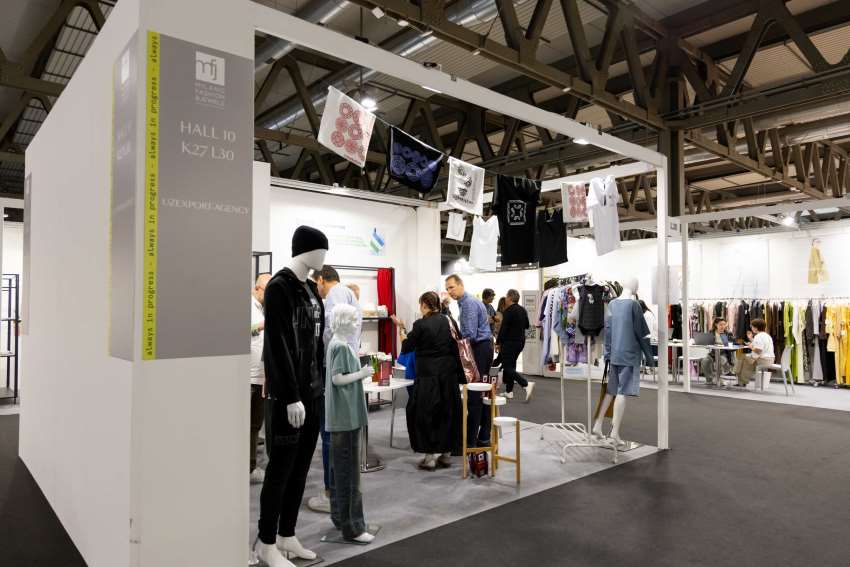
The inaugural combined Pure London x JATC show, will showcase Spanish brands at Olympia London from February 11-13, 2024. The organisers of the show have collaborated with ICEX Spain Export and Investment, FEDECON, the Spanish Federation of Clothing Companies and FICE to introduce a variety of Spanish fashion brands to the UK market.
Melissa Ramage, International Development Manager, Pure London x JATC says, the alliance will facilitate a link between innovation and responsibility. It will enable the show to provide international designers and exciting collections every season to the UK Fashion market.
The show’s largest zone, ’Woman,’ will house a collection called Skatie. , Inspired by the iconic California-cool vibe, the collection will offer sustainable fashion epitomising an active and laid-back lifestyle. The collection will be made using exclusively surplus and upcycled fabrics. It will help disrupt the industry’s wasteful practices.
Another collection in the zone, Rubísnacks will offer sporty bra tops to promote movement, comfort, style and joy. The NKN Nekane collection will be meticulously hand-crafted and offer apparels made with fabrics having intricate trimmings and finishings. The collection by Vilagallo will feature its signature vibrant colours, patterns and silks. A collection of vintage garments, Wearibe will mix colors and fabrics in an original way while the Compañía Fantástica collection will feature printed garments.
In JATC Shoes & Accessories zone, brand ALPE will offer an extensive footwear collection featuring Spanish design and style alongside active and kid’s ranges. The zone will also house an ecological footwear collection called Natural World, that will made from 100 per cent organic raw materials.
The Jewellery section will present a collection by Studio Lia Etoile featuring two distinct styles, geometric patterns using acrylic and elegant bead embroidery to create standout earrings, brooches, necklaces, hair accessories, and bracelets and the extensive Sonata collection.
VF Corp appoints Nina Flood interim president for Timberland
After the departure of Susie Mulder, VF Corp, the lifestyle giant, has appointed Nina Flood, current President-EMEA, as interim president for Timberland. In her new role, Flood will be overseeing the brand's global operations. With two decades of experience at Timberland, Flood is well-acquainted with the intricate workings of the group, having taken charge of the brand's EMEA region earlier this year.
During the first half of its fiscal year, Timberland saw a 6 per cent decrease in sales, amounting to $742.5 million. Timberland, an American outdoor footwear and apparel manufacturer and retailer owned by VF Corporation, also offers accessories such as watches, eyewear, and leather goods.
PVH Corp names new President for Tommy Hilfiger in North America
Sophia Hwang Judiesch, currently the President of Hudson’s Bay, has been appointed new President of Tommy Hilfiger in North America at PVH Corp. Her tenure will commence on January 8, 2024, and she will report directly to Stefan Larsson, the CEO of PVH Corp. Judiesch's proven track record in driving profitable omnichannel growth and enhancing the overall shopping experience for consumers is deemed essential for her new role, according to Larsson.
While at Hudson’s Bay, Judiesch played a crucial role in overseeing the retail stores in Canada, focusing on elevating the consumer experience through her strategic omnichannel optimization initiatives. Prior to her time at Hudson’s Bay, she served as the Vice President of Strategic Initiatives at Ulta Beauty, where she successfully launched the Ulta Beauty brand at Target.
In addition to Judiesch's appointment, PVH Corp announced the promotion of Amba Subrahmanyam, current Executive Vice President of PVH Americas and Calvin Klein Global, to the position of Chief People Officer. Subrahmanyam, who joined PVH in early 2022, has a background in HR leadership roles at Tapestry, Tory Burch, and Coach. She will succeed Julie Fuller, who has been with the company since 2020 and will be departing PVH to explore new opportunities. This leadership transition is scheduled to take effect on February 5, 2024.
Laurent Malecaze to lead Chloe in Richemont reshuffle
Laurent Malecaze, the current CEO of Dunhill, has been appointed the new President and CEO of Chloe, the prestigious Paris-based fashion house belonging to the luxury group Richemont. This move follows the departure of Riccardo Bellini, who will now oversee the recent appointment of Chemena Kamali as the house's new Creative Director.
Malecaze brings a wealth of experience to Chloe, having previously been associated with AZ Factory, an Alber Elbaz brand under the Richemont umbrella. Before his tenure at AZ Factory, Malecaze served as the CEO of The Webster, a luxury multi-brand retailer based in New York. His professional journey also includes a role as a strategic consultant at Bain & Company.
In his new role at Chloe, Malecaze will be reporting to Philippe Fortunato, the CEO of Richemont's Fashion and Accessories Maisons.
Chloe, established in 1952 and recognized as a influential marque in Paris fashion, has been home to renowned designers such as Karl Lagerfeld, Martin Sitbon, Stella McCartney, Phoebe Philo, and Clare Waight Keller. With Laurent Malecaze at the helm, the brand looks set to continue its legacy of excellence and innovation in the world of luxury fashion.
Pakistan foresees $5 bn boost in textile exports through ongoing tax reductions
Pakistan's textile exports are poised for a substantial boost, with the Chairperson of the National Tariff Commission, Rubina Ather, forecasting a potential $5 billion increase in the next fiscal year. This positive outlook stems from a continuous reduction in tax duties on raw materials, a strategy the government has employed over the past two years.
Ather highlighted the government's proactive measures, such as reducing over 2,000 tariff lines to zero, as well as lowering tax duties on all raw materials. These initiatives are geared towards achieving an ambitious target of $4-5 billion in textile exports for the upcoming year.
In a recent meeting of the Standing Committee on Finance, Revenue, and Economic Affairs, officials from the Federal Board of Revenue (FBR) shared additional measures to support various sectors. Notably, the government plans to eliminate taxes on point-of-sale machines, facilitating duty-free imports for large retail stores. Furthermore, there's an exemption on additional customs duties for vehicles below 850 cc, and the import duty on auto kits has been halved from 30% to 15%, aimed at promoting the local auto sector.
Chemical tariff lines are also receiving attention, with a 5 per cent reduction in duties on 240 lines, and the steel industry is benefiting from reduced duties as well. Saddia Abbasi, Chairperson of the National Tariff Commission, disclosed that duties on steel have been lowered from 20 to 16 per cent, and from 16 to 11 per cent, demonstrating the government's commitment to providing relief and support to key industries.
Veritas, the trend book for Spring/Summer ’25 unveiled at Texworld Evolution Paris
Discover the future of fashion at the Texworld Evolution Paris exhibition, where the highly anticipated trend book, Veritas, for the Sprin/-Summer 2025 season will be unveiled from February 5-7, 2024. Louis érin and Grégory Lamaud, the visionary Art Directors of Texworld Evolution Paris, are set to redefine the narrative of future humanity in this trend book. What sets it apart is the infusion of artificial intelligence into the patterns, offering a unique and cutting-edge perspective. The design board promises to seamlessly blend colors and styles, creating a captivating visual journey through each creative universe.
The overarching theme for the upcoming season is "elegance and discretion," reflecting an amalgamation of expressiveness and classic aesthetics. Prepare for a color palette that is bold, contrasting, and perfectly suited for materials with crumpled, liquid, or transparent textures.
The grand reveal will take place in two Trend Forums: one at Texworld Evolution Paris showcasing fabrics and the other at Apparel Sourcing Paris featuring finished products. Visitors will be treated to looks inspired by carefully selected fabrics and products curated by the show's artistic directors. Explore new thematic areas such as Highlights Texworld, Highlight Apparel Sourcing, Highlights Elite, and Highlights Denim, each with samples bringing the themes to life.
To enhance the visitor experience, Messe Frankfurt France has seamlessly organized Apparel Sourcing and Texworld Evolution Paris in one location, on the same dates, ensuring maximum convenience for all fashion enthusiasts and industry professionals. Be prepared to witness the future of fashion unfold at this groundbreaking exhibition.
Taiwan’s key jeans maker Nein Hsing Textile, downsizes operations as demand falls
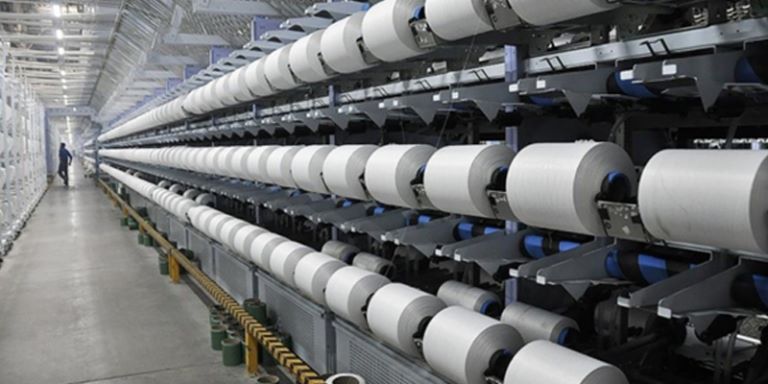
Taiwanese denim fabric and jeans manufacturer, Nien Hsing Textile, is undergoing a strategic downsizing of operations in response to volatile cotton prices, diminished demand, and labor shortages. The company has decided to shut its Houlong Township factory upon completion of pending orders. This facility, encompassing yarn spinning, dyeing, weaving, and finishing departments, currently operates at 76.4 per cent of its 1.4 million yards per month capacity, producing an average of 1.07 million yards of denim fabric monthly. Unfortunately, the closure will result in the layoff of 600-700 employees.
Nien Hsing Textile, a key player in the industry, caters to renowned brands such as Levi’s, Gap, Old Navy, Madewell, American Eagle, The Children’s Place, and Macy’s. With global reach, the company operates facilities in Mexico, Vietnam, and Lesotho.
Experiencing a notable decline of approximately 30 per cent in consolidated net revenue from January through November 2023 compared to the same period last year, the Houlong factory reported a pre-tax loss of $6.98 million in the first 10 months of this year. The closure is viewed as a strategic move by Nien Hsing to enhance overall operations and expand shareholder equity.
Despite the challenges, Nien Hsing Textile Co showcased its Spring/Summer 2025 collection at Kingpins Amsterdam in October, featuring Y2K-inspired metallic coatings, aged washes, cracked surfaces, and unique textile fabrics.
Maharashtra forms study group for power loom industry improvements
The Maharashtra government is taking steps to address issues within the state's power loom industry by forming a study group. This group, led by Textile Minister Chandrakant Patil, will focus on recommending modifications to the recently launched textile policy to better serve the power loom sector. Notably, Samajwadi Party MLA Rais Shaikh from Bhiwandi will be part of this group, aiming to address the concerns raised by power loom operators in the state.
Patil highlighted the collaborative efforts involved in crafting the new textile policy and stressed the need for increased support for the industry. The study group will be allocated resources to visit power loom centers, enabling them to compile a comprehensive proposal. Additionally, the government plans to distribute 24 lakh sarees exclusively produced by Maharashtra's power looms to women below the poverty line.
While appreciating the inclusion of power loom cloth products in the sari distribution initiative, Sheikh advocated similar considerations for handlooms. He also urged the prompt clearance of pending subsidy-related files for power loom operators.
In a written response, Patil provided a detailed overview of the power loom landscape in Maharashtra, citing approximately 1,270,000 looms in the state. Emphasizing the sector's crucial role in employment and revenue generation, he underscored the Integrated and Sustainable Textile Policy 2023-28's significance in attracting investment and creating job opportunities over the next five years.
Bangladesh RMG sector confident about labor conditions amidst policy changes
In a recent seminar addressing ‘The Current Labor Issues and International Trade Scenario’, Mohammad Halem, Executive President, BKMEA, stated labor conditions in Bangladesh's Ready-Made Garments (RMG) sector won't be a trigger for economic or trade sanctions. Despite acknowledging the industry's pace trailing behind others, Halem emphasized that Bangladesh maintains superior labor conditions compared to manufacturing giants like China.
Highlighting changes in the labor law, Halem pointed out the collaborative effort between industry stakeholders to eliminate the trade union registration threshold. Now, the revised threshold stands at 15 per cent for factories with more than 3,000 workers and 20 per cent for units with fewer than 3,000 workers.
Fazlee Ehsan Shamim, Vice President, BKMEA explaind, the situation was political and urged the government to address it. On a different note, Mostafa Abid Khan, Economist and Member, Bangladesh Trade and Tariff Commission expressed optimism about low chances of tariff increases. However, he advised the industry to proactively navigate potential rises in individual penalties.