FW
Levi's 2023 revenue dip offset by diverse collaborations, innovative product launches
In 2023, Levi's, despite facing a slight reduction in its full-year revenue forecast from $1.54 billion to $1.51 billion, initiated several strategic collaborations and product launches to maintain its brand presence and appeal. The year kicked off with notable partnerships with companies such as Undercover, Ambush, Junya Watanabe MAN, and streetwear brand Stüssy, reflecting Levi's commitment to diverse collaborations. These collaborations extended to luxury labels like Kenzo, ERL, Slam Jam, and cultish imprints like JJJJound and Bornxraised, showcasing a broad spectrum of styles and influences.
Special attention was given to the 501 range of jeans, with Levi's introducing unique collections. This included environmentally friendly pants, Japanese-made jeans, and a premium pair of $900 dungarees, catering to various consumer preferences and sustainability concerns.
In an unexpected yet exciting move, Levi's ventured into unconventional collaborations, teaming up with Studio Ghibli and featuring K-Pop sensation NewJeans in a dedicated campaign. This demonstrated the brand's versatility in reaching diverse audiences and engaging with pop culture.
Adding an innovative touch, Levi's expanded its product line by introducing denim-flavored clogs, showcasing a fusion of fashion and functionality. This move aimed to diversify the brand's offerings and tap into new markets.
Despite the revised revenue forecast, Levi's proactive approach to collaborations, product launches, and marketing strategies throughout 2023 reflected a commitment to staying relevant and appealing to a wide range of consumers.
Fast fashion reshapes US market dynamics in 2023: Study
The US fashion market witnessed a notable shift in 2023, as fast fashion brands exerted a substantial influence on consumer preferences, reshaping the dynamics of luxury fashion sales. A comprehensive report by Consumer Edge highlights, the allure of high-end fashion labels such as Louis Vuitton, Gucci, and Burberry faced a challenging scenario due to the reproduction and sale of their designs at affordable price s by fast fashion counterparts.
Surprisingly, even among shoppers aged above 35, spending on luxury fashion brands witnessed a decline from 10 per cent in 2022 to 9 per cent in 2023. Direct-to-consumer (DTC) luxury goods also experienced a setback with a 7 per cent decrease compared to the previous year.
The standout performer in this evolving market landscape was the Chinese company Shein, registering an impressive sales growth of over 20 per cent in the first 10 months of 2023 compared to the same period in 2022. Notably, Shein secured the largest market share, commanding 40 per cent of the US fashion market. Following closely was the Japanese retailer Uniqlo, which recorded a remarkable 28 per cent increase in sales in 2023. French luxury brand Hermes also showed resilience, boasting of a 15 per cent improvement in sales through October.
In contrast, traditional giants faced challenges, as consumer spending on H&M experienced a 2 per cent dip in the US market during the same period. Michael Gunther, Vice President and Head of Insights at Consumer Edge, attributed the success of fast fashion retailers in 2023 to their ability to offer both affordability and trendiness.
Examining global transaction data through November, Consumer Edge found a modest growth of 0.4 per cent in consumer spending across the apparel, accessories, and footwear sub-industries compared to November 2022. This underscores the ongoing transformation in consumer preferences, signaling a new era where affordability and trend-conscious choices play a pivotal role in shaping the fashion landscape.
SP Apparels acquires Bannari Amman Group’s textile biz
SP Apparels, a prominent apparel exporter, has successfully acquired the textile business of the Bannari Amman Group, including key assets such as its subsidiary, Young Brand Apparel. This strategic acquisition encompasses the garment unit at Palladam Hi-Tech Weaving Park, along with 6.43 acres and a building at SIPCOT in Perundurai, providing SP Apparels with significant leasehold rights.
Notably, SP Apparels will now have access to the manufacturing and export capabilities of Young Brand Apparel, a well-known player in the intimate wear market segment. Young Brand Apparel, a joint venture between Jacob Industries (US) LLC, Mexico-based Intimark, and Bannari Amman Spinning Mills, boasts of a sprawling 26-acre site on the outskirts of Chennai, housing a 280,000 sq ft manufacturing facility.
SP Apparels, recognized for its leadership in sustainability, focuses on comprehensive sourcing, manufacturing, and supplying children's and kidswear. In fiscal 2022-23, the company recorded substantial growth, with revenues increasing to Rs 9,623.20 million from Rs 7,764.21 million in FY 2021-22.
On the other hand, Bannari Amman Spinning Mills, the previous owner of the acquired textile business, is a renowned manufacturer and distributor of cotton yarn, woven and knitted fabrics, home textiles, knitted garments, and fabric processing. With two spinning units in Dindigul, Tamil Nadu, boasting an installed capacity of 145,440 spindles, the company also operates weaving and home textiles units at Karanampettai near Palladam, a processing unit at SIPCOT, Perundurai, a knitting unit at Karanampettal near Palladam, and garment units at Palladam Hi-tech Weaving Park. Additionally, Bannari Amman Spinning Mills owns 27 windmills for captive consumption.
This strategic move to acquire Bannari Amman Group's textile business positions SP Apparels as a stronger player in the apparel sector solidifying its presence and capabilities in the industry.
Hyosung TNC's spandex facilities operate at 90% capacity with demand surge
South Korea’s Hyosung TNC's spandex facilities are experiencing a notable increase in demand, pushing their operational capacity beyond 90 per cent. This uptick is attributed, in part, to the increasing demand for spandex in China. From January to October, consumption in China rose 13.4 per cent to 690,000 tons compared to the previous year, resulting in an 88.1per cent spike in import volume and a 2.7 per cent decline in exports during the same period.
In the Chinese market, heightened competition and oversupply have prompted the closure of several small and medium-sized spandex companies. Intensified competition and an unstable supply of polytetramethylene ether glycol (PTMG), leading to higher raw material costs, have forced these companies to suspend production. The number of spandex producers in China has gone down from 22 in 2015 to 11 by the end of last year. Recently, four more companies stopped production, with two more expected to follow suit this month. Additionally, other producers are considering reducing their production capacities, according to a report by the CCF Group.
In contrast, Hyosung TNC is strengthening its competitiveness by internalizing PTMG production and diversifying its product portfolio. With a $53 million investment, the company established a PTMG production facility in Vietnam last year. Looking ahead, Hyosung TNC aims to introduce innovative products like Creora Bio-based, made from corn-derived materials, and Creora Fresh, designed to eliminate sweat odors in the market. These strategic initiatives position Hyosung TNC to navigate market dynamics effectively and maintain a robust presence in the spandex industry.
Unlocking Climate Solutions: ICAC Recorder sheds light on cotton's crucial role
Amidst global call for climate action, the latest release of the ICAC Recorder proves to be an invaluable resource. Comprising 35 pages, this complimentary publication provides a trove of data, research insights, and perspectives from preeminent cotton researchers worldwide.
Keshav Kranthi, Chief Scientist, ICAC, highlights the urgency of the matter, revealing that a staggering 219 billion tonnes of carbon have been introduced into the atmosphere in the past 62 years. However, there is a glimmer of hope highlighted in the editorial, showcasing the potential of the plant kingdom to capture 4 billion tonnes of carbon annually, with cotton's 97 per cent cellulose fibers making it a standout contributor.
The publication encompasses nine compelling articles, delving into subjects such as climate-smart agronomy, the repercussions of climate change on global cotton production, and innovative, climate-resilient technologies. From exploring regenerative agriculture to the digitization of carbon farming, the Recorder provides a thorough examination of cotton's pivotal role in the battle against climate change.
This edition serves as a valuable asset for individuals seeking sustainable solutions in the face of environmental challenges, offering a comprehensive exploration of the multifaceted dimensions of cotton's contribution to combating climate change.
CMAI's ‘FAB’ show in Mumbai set to ignite textile and apparel deals
The Clothing Manufacturers Association of India (CMAI) is gearing up to host the fourth edition of 'Fabrics, Accessories, and Beyond' (FAB) trade show in Mumbai from April 15 to 17. The event, will be hosted at the Bombay Exhibition Centre, covering an extensive two lakh sq. ft space. It aims to facilitate connections and business transactions between manufacturers and buyers on a national scale. With over 200 exhibitors expected, the trade show is sponsored by Fabexa and anticipates a strong turnout of more than 12,000 trade visitors.
Stall bookings are currently open for vendors specializing in textiles, accessories, and related materials and machinery. The CMAI, during a promotional roadshow in Surat that attracted over 100 industry members, outlined the objectives of the trade show. The event is designed to be inclusive, welcoming various participants such as private labels, distributors, e-commerce entities, overseas buyers, wholesalers, exporters, and retailers.
Based in Mumbai, the CMAI plays a crucial role in promoting India's clothing manufacturing sector and regularly organizes notable trade shows like the National Garment Fair and Bharat Tex. The upcoming 'Fabrics, Accessories, and Beyond' trade show aligns with the organization's dedication to advancing and championing the nation's garment manufacturing industry.
Winners and losers countries in denims, jeanswear global trade of export, import in 2023
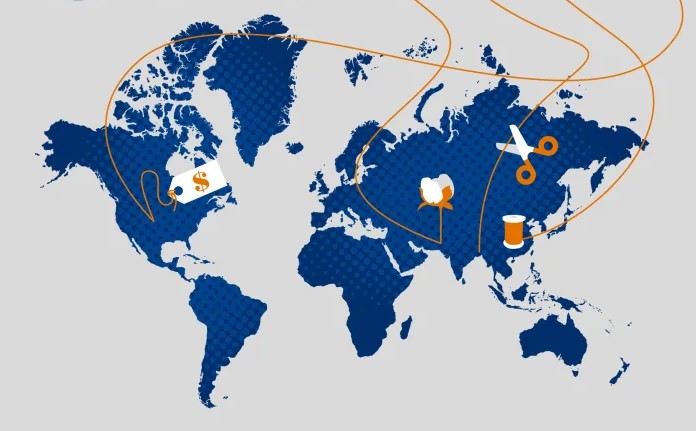
The world's love affair with denim took a fascinating turn in 2023, with some countries strutting in stylish new threads while others faced a wardrobe re-think. Let's unravel the tale of who soared and who slumped in the global denim trade, both exports and imports, and the reasons behind the sartorial shift.
Exports: Top Winning Countries
• Bangladesh: The undisputed denim king held his crown tight, weaving a 12% export surge. Skilled workers, robust infrastructure, and savvy trade deals kept the Bangladeshi looms humming.
• Vietnam: Making a powerful comeback, Vietnam saw a 9% rise. Government initiatives, automation investments, and a shift to high-end denim revitalized the Vietnamese jeanswear scene.
• Egypt: The surprise contender! Egypt's 8% jump was fueled by competitive prices, a focus on sustainable production, and strategic partnerships with European labels.
Top Losers
• China: The long-reigning king lost some shine, facing a 4% decline. Rising labor costs, environmental concerns, and Southeast Asian competition unraveled China's dominance.
• Turkey: Economic headwinds caused Turkey's exports to dip by 5%. Inflation, currency woes, and regional instability dampened the once-thriving Turkish denim industry.
• Mexico: Despite its US proximity, Mexico's exports shrunk by 6%. Domestic market saturation and increased competition chipped away at its export share.
Imports : Top Winning Countries
• United States: The denim-hungry US remained the import king, with a steady 5% rise. A diverse consumer base and competitive global prices kept the import engines running.
• Japan: Seeking quality and innovation, Japan's imports jumped 6%. High-performance jeans with unique washes and sustainable features from Turkey and Japan itself fueled this rise.
• Germany: Europe's fashion capital maintained its allure, with German imports increasing by 4%. Functional yet stylish jeans and strategic partnerships with countries like Bangladesh and Egypt boosted their denim game.
Top Losers
• China: Domestic production and a focus on homegrown brands led to a 3% decline in Chinese denim imports. Consumers embraced locally-made jeans.
• Brazil: Economic woes caused Brazil's imports to shrink by 4%. Currency fluctuations and rising domestic costs made foreign jeans less attractive.
• Russia: Geopolitical tensions and sanctions caused a 7% import plunge. Diversification towards alternative suppliers is underway, with a focus on practical and durable jeans.
The Change Drivers:
Sustainability, ethical practices, and innovative fabrics are the new currency in the global denim trade. Evolving fashion trends, trade dynamics, and online shopping will continue to reshape the denim export and import landscape. As the needle of change threads through the industry, new patterns will emerge, creating a captivating narrative to watch unfold in the years to come.
Global jeans market to grow at 6.31 % CAGR from 2023-29
Currently valued at $71.23 billion, the global jeans market is expected to grow at 6.31 per cent CAGR from 2023-29 to reach $109.32 billion by 2029.
By 2029, the online sales channel segment is anticipated to grow at the fastest rate of 11.2 per cent. The growth will be driven by the rise in participants and the popularity of e-commerce sites that offer a large selection of products, such Myntra, Amazon, Alibaba, and Flipkart.
Additionally, during the projected period, sales through online channels are anticipated to increase in tandem with the growth in internet and smartphone users.
With a share of 57.23 per cent in 2022, the men’s end-user segment dominates the market. However, the women's segment is also anticipated to expand at a CAGR of 3.61 per cent over the forecast period, as women’s demand for jeans over other clothing items increases.
Lenzing Conclave in Jaipur sparks sustainable fashion synergy
The Lenzing Group, a prominent player in wood-based specialty fibers, recently organized 'The Lenzing Conclave' in Jaipur in collaboration with the Garment Exporters Association of Rajasthan (GEAR).
The event served as a focal point for Jaipur's garment makers to explore sustainable practices and cutting-edge innovations. With a spotlight on sustainability, circularity, and traceability, manufacturers in Jaipur are actively seeking supply chain solutions aligned with progressive standards.
Lenzing showcased its flagship fiber brands, such as TENCEL and LENZING ECOVERO, including advanced options like LENZING ECOVERO black fibers. The conclave facilitated discussions on global consumption trends, emphasizing the need for supply chain solutions enabling Jaipur's garment exporters to seamlessly integrate Lenzing's innovations.
The event featured an extensive product display, spotlighting Lenzing's commitment to innovation and sustainability across diverse textile applications. GEAR's adaptation to international trends was also showcased. Zakir Hussain, President of GEAR, underscored the importance of collaboration and value-driven sustainable ingredients, aligning with Lenzing's ethos.
Avinash Mane, Senior Commercial Director of AMEA & NEA region, Textiles Business, Lenzing Group, expressed optimism about the successful convergence of innovation and sustainability at 'The Lenzing Conclave,' envisioning a transformative journey toward sustainable, value-driven textile solutions.
The event marked a pivotal moment for Lenzing and Jaipur's garment industry, fostering a continued partnership shaping the global textile landscape.
British Wool surges 20% in global markets
In a significant rebound from pandemic lows, British Wool reports a robust 20% surge in prices during recent auctions, signaling a remarkable recovery. The surge is attributed to escalating global demand for British wool, buoyed by the entry of three major buyers at the auctions.
Graham Clark, Director of Marketing, notes the overall improvement in demand and prices, emphasizing a 20% rise, with specific sought-after types gaining 15p to 20p per kilo. The auctions are experiencing heightened competitiveness, attracting new buyers in recent years.
Additionally, British Wool has strengthened its brand licensing scheme, collaborating with 130 global brands, amplifying the utilization of British wool in their products.
While challenges persist in the UK's retail sector, positive market shifts, particularly in contract carpets and Chinese exports, are seen as encouraging signs.
British Wool anticipates this upward trend to persist into 2024, offering optimism for member returns.