FW
The Ohzone Inc to hold interactive fashion show at New Era Virtual Fashion Week
US-based fashion technology provider The Ohzone Inc, plans an interactive fashion show as the closing event of New Era Virtual Fashion Week on September 27, 2020. Featuring 10 exclusive designs, this virtual fashion show will use 3D technology developed by The Ohzone, Inc. This will support the interactive capabilities of show and enable attendees to virtually hop onto the runway to stop a fashion model, rotate him/her to inspect different angles of the worn garment.
Attendees will also be able to zoom in the garment to closely examine its design details like colors, fabric textures and patterns. The OHZONE Inc will produce 3Dreal versions of runway looks of international fashion designers along with animation in order to offer attendees the opportunity to shop live on their own terms.
Award-winning Fashion Community Week, San Francisco will host its first-ever digital fashion week from September 24-27. The fashion week will also have a global fashion conference to discuss the future of fashion.
Zalando launches range of pre-owned clothing
To take charge of the Europe’s fragmented resale market, e-commerce retailer Zalando has launched a range of pre-owned clothing,. The retailer collected, curated, quality assured and photographed this collection and is now selling it in Germany and Spain. It also plans to launch the collection in four more countries next month.
The Berlin-headquartered retailer hopes the multi-brand consignment will appeal to customers. The move offers the retailer new lines of revenue as the resale market is expected to more than double in five years to $51 billion by 2023, predicts GlobalData. Prior to this, Zalando experimented with secondhand retail both offline and online for two years. The company operated a pop-up bricks-and-mortar resale store in Berlin last autumn and has been selling womenswear via a separate app called Zalando Wardrobe since 2018.
Zalando’s new range has been carefully curated to appeal to its 34 million strong customer base. It currently sells 20,000 items on the site. The company plans to collect inventory directly from its consumer base. Customers will be able to sell 20 items at a time to Zalando, receiving credit on the site or making a donation to charity in return for their contribution for anything the retailer decides to buy.
Sri Lanka’s Finance Ministry permits BOI approved manufacturers to engage in local sales
Acceding to the request of Sri Lanka’s Joint Apparel Association Forum (JAF), the Finance Ministry has permitted apparel manufacturers approved by the Board of investment (BOI) to engage in local sales or to undertake sub-contracts from retailers or suppliers for three months starting from September 10 subject to conditions.
The apparel manufacturers approved by the Board of Investment can undertake sub-contracts to the domestic retailers to manufacture apparel products using duty paid fabric (raw material), supplied by domestic retailers/suppliers. This will be subject to payment of relevant taxes on income generated from such contracts as per provisions of the BOI agreements and the Inland Revenue Act.
JAAF had made this proposal with the objective of utilizing the excess capacity available at these BOI-approved factories and to generate an extra income for them during these trying times. According to the federation, if the industry calls for an extension of the blanket period, it was ready to shepherd fresh discussions with the Government and other relevant authorities.
Paris Fashion Week to hold 19 live shows
French fashion’s governing body, Fédération de la Haute Couture et de la Mode has revealed that 19 fashion houses will stage actual physical shows at the upcoming Paris Fashion Week. Some fashion brands to hold live catwalk shows this season are: Christian Dior, Chanel, Louis Vuitton, Issey Miyake, Hermès and Rick Owens.
In all, 84 fashion houses will participate in the Paris Fashion Week to be staged between September 28 and October 6. The season will feature spring-summer 2021 women’s ready-to-wear collections. Around 20 fashion houses will organize physical presentations while another 45 brands will produce digital displays. The brands that will stage live shows include Coperni, Victoria/Tomas, Kenzo, Gauchère, Acne, Balmain, Chloé, Isabel Marant, Yohji Yamamoto, Ami, Gabriela Hearst and Xuly Bet.
Andhra Pradesh spinning mills face acute labor shortage
Spinning mills in Andhra Pradesh are facing severe labour shortage as many migrant workers have gone back due to mill closures during lockdown. According to Spinning Mills Association sources, spinning mills in the state engage around 3,000 workers in three shifts. Currently, the state has 72 spinning mills that employ over one lakh workers. Workers who migrated to their native places during the pandemic have not returned. As a result, these mills are facing 30 percent labor shortage resulting in reduced production.
Mills in the state that earlier produced yarn worth Rs30 crore a day now produce only Rs15 crore per day of yarn. Also, cotton yarns are not been exported due to COVID-19. Earlier, most of these spinning mills worked three shifts, now they work in only two shifts.
The revenues of these mills have also gone down due to cut in production. As a result, owners are not in a position to pay loan installments in time resulting rise in NPAs from 25 percent to 80percent.
German retailer defers payment of nine Bangladeshi garment factories
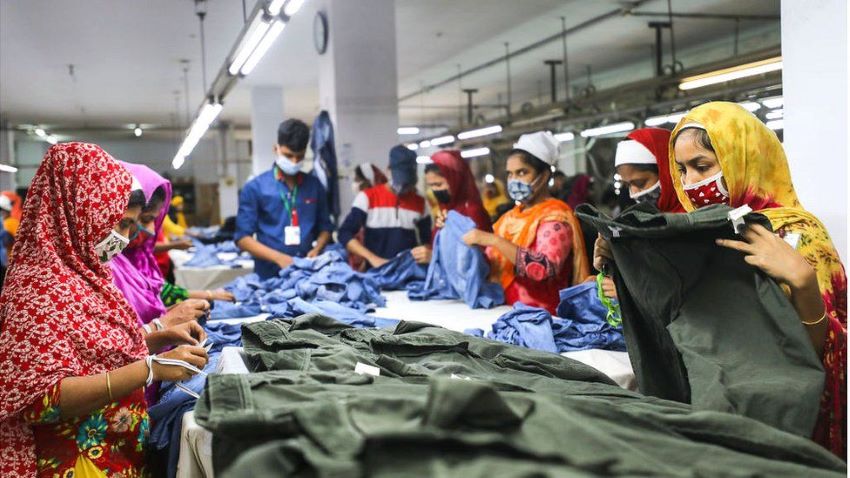
Nine small and medium-sized garment factories are in big trouble as German retailer Colloseum has refused to pay them on the pretext of being hit by the coronavirus pandemic, says a Daily Star report. The company bought T-shirts, polo shirts and sweaters worth $15 lakh from the Bangladeshi suppliers between December last year and February this year through its Hong Kong vendor. Some of these suppliers are: Kappa Fashion Wear, Base Fashion Wear, Dynasty Sweater (BD), Bakhrabad Knitting Industries, Anzir Apparels, IRIS Fashions, Gramtech Knit Dyeing & Garment Industries Ltd, Seo Wan Bangladesh and Disney Sweater.
These suppliers have served Colloseum with a legal notice. However, the retailer is still not ready to pay, and purchases goods from Bangladesh in another name, several suppliers say. Kappa Fashions has been supplying T-shirts and polo shirts to the retailer for the last five years. The company exports $10 million worth of garment items every year and 5 per cent of the consignment goes to the stores of Colloseum.
Another supplier Md Ehterab Hossain sold $5.66 lakh worth of t-shirts and polo shirts, the highest amount among the nine suppliers. A consignment involving $96,000 was brought back from the Chattogram port's store after paying Tk 2 lakh in demurrage in the last moment.
Mohammad Hatem, Vice-President, BGMEA said the association has received complaints against Colloseum from its members. KI Hossain, president of the Bangladesh Garment Buying House Association, added many buying houses are facing the challenge of non-payment. He advised brands and retailers to honor their purchase orders.
Transparency helps brands win consumer trust: Lenzing survey
Lenzing’s new consumer survey, highlights the importance of transparency in helping brands win consumer trust and confidence titled ‘Global Consumer Perception Survey on Sustainable Raw Materials in Fashion and Home Textiles,’ the study was conducted in partnership with Wakefield Research, a market research firm, and surveyed 9,000 respondents between 18 to 64 years of age from nine countries including China, Japan, Korea, India, Indonesia, Turkey, Germany, the UK and the US in early 2020.
The study states, 83 to 82 per cent respondents consider brands transparent about their ingredients and the origin of raw materials as being trustworthy. Around 82 per cent respondents consider brands transparent about production processes, sustainable practices and the origin of their raw materials as trustworthy. They believe proper knowledge of raw materials used in their clothing and home textile products helps build consumer confidence. They also believe a brand’s environmental impact is important for consumers while deciding to make a purchase.
Eighty six per cent respondents believe purchasing clothes made from sustainable raw materials is a key component of living a more sustainable lifestyle, and they frequently purchase products from brands that are committed to using sustainable raw materials or recycled materials in their products. Majority of respondents learn about sustainability by researching about the production process of products before purchasing. Around 88 per cent of respondents agreed to reading handtags before buying their products with respondents being willing to pay 40 per cent more for sustainable clothing or home textile products.
Polish textile industry more resilient than in 2009: Euler Hermes
Analysts at Euler Hermes opine the Polish textile industry is more resilient and competitive than in 2009, which makes it a better candidate to return to normalcy. Comprising 25,000 companies, the Polish textile sector employs 1,45,000 people. Despite significant signs of recovery, sales in the Polish textile sector from January to May, fell by 15 per cent year on year.
According to Euler Hermes, the unprecedented disruption of trade, manufacturing and retail activities, with ensuing severe economic crisis, will lead to a 19 per cent decline in European textiles and clothing falling in 2020, with a 9 percent decline in GDP in euro area countries. Turnover in 2021 is expected to rebound by 15 per cent, but it will return to pre-crisis levels in 2023. By the end of 2021, EU employment industry will see a 8 percent job cut with 6 percent of companies disappearing. The share of SMEs in the total turnover of the textile industry is twice the average of the European manufacturing sector, which makes the industry more sensitive to the current situation.
Xinjiang labor issues need stricter laws, greater collaboration with suppliers
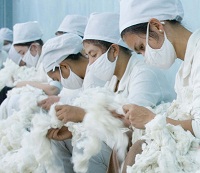 Wang Wenbin, China’s foreign minister has accused the US of restricting China’s development by withholding five import orders under the pretext of human rights. US Customs and Border Protection recently released five orders withholding the import of cotton and other goods produced in Xinjiang on allegations of human rights abuses and forced labor in the region, informs a Vogue Business report. Based on Section 307 of the Tariff Act of 1930, these orders prohibit the import of goods produced under forced labor conditions.
A broader ban on Xinjiang products
Xingjiang produces almost 85 per cent of China cotton, which is converted into clothes in either Chinese or other Asian garment manufacturing factories. However, lack of transparency makes it tough to track the origin of these garments. Most often products labeled made in countries like Bangladesh, Vietnam, the Philippines and Cambodia may contain cotton produced in Xinjiang, says Sheng Lu, Associate Professor-Department of Fashion and Apparel Studies, University of Delaware.
Hence, the US’ ban on a Chinese cotton producer, two apparel factories and one vocational skills education and training centre would have little effect as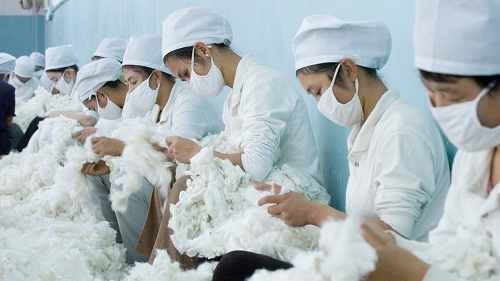 US needs to ban all cotton, yarn and textiles produced in Xinjiang, besides banning apparels made with cotton produced in this region. For this, US companies would have to investigate suppliers across the value chain to ensure products have no connection with Xinjiang cotton. Such a ban would encourage companies to change their modus operandi, points out Di Fan, Assistant Professor, Hong Kong Polytechnic University. Experts say, there is greater need for reassessing fashion, and engaging with other suppliers.
New law to prohibit forced labor
Most often, companies are unaware of the activities of lower-rung suppliers involving smaller subcontractors. As per 2020 Fashion Industry Benchmarking Study, only 85 per cent of US companies track their first and second-tier suppliers, while 25 per cent do not know their third and fourth-tier suppliers. To make these European companies legally responsible for implementing due diligence across their supply chain, the European Union plans to introduce a new law that would make it mandatory for these companies to act against forced labor.
Working as a non-tariff trade barrier, this ban would lead to significant glitches across the supply chain as non-complying products would be detained by customs. Companies relying on global supply chains would consequently have to diversify their supply chain to countries like Vietnam, Pakistan or India and possibly repatriate raw cotton supply to the US.
To implement mandatory due diligence, companies would have to routinely engage with their suppliers, assess their operations and invest in training, auditing and reform, says Tara Van Ho, Co-Director, Essex Business and Human Rights Project at the University of Essex. To stop the violation of human rights, these companies may have to also abandon their business in the region. As per Gearoid O Cuin, this would help them, and China resolve labor issues.
Government in crosshairs as Reliance-PTA battle over MEG dumping
 The government is caught in a battle between India’s largest mono ethylene glycol (MEG) producer Reliance Industries and purified terephthalic acid (PTA) Users Association-a body of end-users of PTA and MEG. As per a request by Reliance Industries, the government initiated a process to impose ‘anti-dumping’ duties on MEG imports. However, this move is being vehemently opposed by the Association, say reports.
This current situation is similar to 2014 when the government had imposed anti-dumping duties on PTA imports. This too faced bitter opposition from user industry’s representatives in various chambers of commerce and lobby groups. However, the government had stuck with its decision benefiting Reliance Industries. Now, the government has withdrawn these benefits. It has also initiated a similar process to impose an anti-dumping duty on import of mono ethylene glycol (MEG).
Huge impact on jobs
The PTA Users’ Association, a body of end-users of PTA and MEG, has opposed the government’s move. The association has warned the Ministry of Textiles it to could lead to a loss of over 40,000 jobs for small and medium manufacturers of polyester fiber, yarn and fabric.
The Association says, India’s MEG imports have fallen drastically since 2016, as has its import-share as domestic producers have expanded their production capacities. Yet, domestic MEG producers are unable to meet total demand and have to import MEG to a large extent. In 2018-19, India imported 80,000 tons of MEG and 85,000 tons in 2019-20. Now the Association expects imports to touch 87,000 tons in current fiscal and 75,000 tonne in 2021-22.
PTA Users’ Association argues, COVID-19 has devastated 40,000-45,000 small and medium polyester fiber, polyester yarn and polyester fabric manufacturers in the country. Anti-dumping duties may further impact their viability by increasing raw material prices. An anti-dumping duty of over and above the basic 5 per cent customs duty, may cause an acute of shortage of MEG in India, says the association. It may compel domestic MEG producers to increase prices forcing end-users to buy this key raw material at higher prices and incur further losses. The association has urged the Ministry of Textiles to persuade the DGTR, Ministry of Commerce & Industry as well as the Ministry of Finance to terminate the ongoing anti-dumping investigation against imports of MEG.
The battle continues
In a petition filed before the Gujarat High Court on August 13, RIL challenged the government’s decision. The petition was jointly filed by RIL, which produces 70 per cent of the country’s domestic PTA, along with MCPI, the Kolkata-based manufacturer of 21 per cent of PTA output, and the Chemicals and Petrochemicals Manufacturers’ Association. The petition describes the government’s decision as illegal, arbitrary and in gross violation of the principles of natural justice.
The petition argues PTA is important for the survival of domestic industry and the government should initiate an investigation in accordance with the Customs Act and anti-dumping rules. Meanwhile Nirmala Sitharaman, Union Finance Minister had announced a decision to abolish anti-dumping duties on imports of PTA from China, Taiwan, Malaysia, Indonesia, Iran, South Korea, and Thailand. The PTA Users’ Association plans to soon file an intervention application in the case.