FW
39th Milano Unica records 18 % rise in exhibitors
Being held from July 09-11at the Fiera Milano Rho, the 39th edition of Milano Unica recorded 18 per cent more exhibitors compared to the July 2023 edition, and 22 per cent more compared to the pre-COVID-19 July 2019 edition.
This year, the event hosts a total of 700 exhibitors, including 569 participating in the three main exhibitions - Ideabiella, Moda In, and Shirt Avenue - while the rest are divided between the Special Areas and the Korea and Japan Observatories.
All Italian textile districts are fully represented, reflecting both the number of participating companies and the comprehensive range of offerings. The growing number of exhibitors necessitated a 23 per cent increase in the exhibition area, prompting a move to exhibition halls 1-3, 2-4.
The event’s expanded scope has drawn significant attention from both international and domestic buyers, who are keen to explore collections characterised by quality, creativity, sustainability, and innovation. This surge in participation underscores Milano Unica’s critical role as a partner for textile and accessories manufacturers focused on high-end products, especially during challenging times for the industry.
Despite ongoing negative trends in production and trade, with the first quarter of 2024 showing a general decline in domestic production and international trade, the event remains a beacon of hope. While most segments of the textile industry experienced double-digit reductions in exports and imports, exports to China and Hong Kong offered some mitigation, confirming their status as key markets for Made-in-Italy products.
Simone Canclini, President, Milano Unica, highlights, the tradeshow’s signifance as one of the most important international events for high-quality fabrics and accessories. Despite current challenges, the event’s focus on quality, innovation, and sustainability reaffirms its position as a pivotal event for the sector, he adds.
The three-day event showcases creative and innovative proposals for the Fall-Winter 2025/2026 season, highlighting European and Italian excellence. Special areas, particularly the TendenzeSostenibilità Area and the Innovation Area, emphasise Milano Unica’s commitment to sustainability and innovation.
The MU Family project presents creative concepts through a storytelling approach that combines traditional manufacturing with modern technology, reflecting contemporary values like environmental respect and cross-generational style sharing.
New to this edition are MarediModa, previewing Summer 2026 collections, and Velvet Mi Amor by Stefano and CorinnaChiassai, celebrating the innovation of velvet through an artistic installation that merges fashion, music, and art.
Massimo Mosiello, General Manager, Milano Unica, emphasises the importance of strategic international collaborations in achieving the event’s success and maintaining its status as a reference point for textile and accessory excellence.
New technique to convert old fabrics into reusable molecules unveiled
Researchers at the University of Delaware have unveiled a chemical processing technique to convert old fabrics into reusable molecules. As detailed in a recent Science Advances paper, this method offers a promising solution to the fashion industry's mounting waste crisis.
In 2018, the EPA estimated that textile waste in the United States reached 17 million tons, comprising 5.8 per cent of total municipal solid waste (MSW).
Although many textiles are reused, they are not included in generation estimates and eventually end up in the MSW stream. The recycling rate for all textiles was 14.7 per cent, with only 2.5 million tons recycled. Specifically, the recycling rate for clothing and footwear was 13 per cent, and for items like sheets and pillowcases, it was 15.8 per cent.
Additionally, 3.2 million tons of textiles were incinerated, representing 9.3 per cent of MSW combusted with energy recovery, while landfills received 11.3 million tons of textile MSW, making up 7.7 per cent of all MSW landfilled.
Textile recycling faces significant challenges due to the complex nature of fabrics, which often combine materials like cotton with synthetic fibers such as polyester.
Less than 1 per cent of textiles are currently recycled, with a substantial portion ending up incinerated or in landfills,” notes Dionisios Vlachos, Co-author, University of Delaware. This contributes significantly to environmental pollution, including microplastic contamination in oceans, he adds.
The research team turned to chemical recycling as a viable solution. Using microwave-assisted glycolysis, they successfully broke down synthetic components of fabrics into reusable building blocks.
This process involves applying heat and a catalyst to dismantle polymer chains, converting them into smaller, manageable units. The technique achieved remarkable results, with up to 90 per cent of polyester fabrics converted into BHET molecules, essential for producing new polyester textiles. Notably, this process did not affect cotton fibers, allowing for the simultaneous recovery of cotton in polyester-cotton blends.
The researchers optimised the process to operate within 15 minutes, significantly improving efficiency and cost-effectiveness. The method proved effective across various fabric compositions, including blends with polyester, cotton, nylon, and spandex.
With continued refinement and scaling, this chemical processing technique holds the potential to drastically increase global textile recycling rates, mitigate environmental impacts, and foster a more circular economy, affirms Vlachos.
CITI, TTF sign MoU to enhance cooperation in textile and clothing industry
The Confederation of Indian Textile Industry (CITI) and the Taiwan Textile Federation (TTF) have signed a Memorandum of Understanding (MOU) to enhance cooperation and foster exchanges in the textile and clothing industries.
Formalised by RakeshMehra, Chairman, CITI, and James Kuo, Chairman, TTF, this landmark agreement marks a pivotal moment in bilateral textile relations.
Effective immediately, the MOU commits CITI and TTF to actively promote business activities in trade, investment, technology cooperation, and other services related to textile and clothing.
Besides it also aims to provide platforms for constructive dialogue among their members to stimulate collaboration, organiseseminars, exhibitions, conferences, engage with policymakers, delegations, and trade promotion agencies, enhance technological assistance, training, and capacity-building initiatives, facilitate the exchange of information on policies and industry activities, disseminate information on trade and investment opportunities to foster greater economic synergy and advocate for initiatives that promote ease of doing business in both countries.
RakeshMehra, Chairman, CITI, states, this partnership with TTF represents a significant step towards strengthening ties between the' textile industries of the two nations. By fostering collaboration in trade, technology, and policy, it aims to drive sustainable growth and innovation across the sector.
This MOU underscores a mutual commitment to nurturing long-term, mutually beneficial partnerships and advancing the competitiveness of the Indian and Taiwanese textile sectors on the global stage.
Nam Dinh Authority plans $9 million yarn productionplant in Nghia Hung
TThe Nam Định Industrial Zones Authority in Vietnam plans to develop a yarn production and textile dyeing plant at the Rong Dong Textile Industrial Park in the Nghia Hung district.
To be developed by Jinnor (Hong Kong), the new plant will entail an investment of $9 million. With construction set to begin in Q1 2025, the plant is expected to be operational by October 2025. It will produce nearly 50 million sq m of fabric annually.
Headquartered in Hong Kong, Jinnor (Hong Kong) boasts over 30 years of experience in textile production and fabric trading, supplying numerous renowned brands across 19 countries and territories worldwide.
Nam Định currently hosts 170 foreign-invested projects with a combined registered capital of $4.1 billion.The province remains committed to attracting further investment, with a focus on foreign investment. It aims to concentrate its efforts on accelerating administrative reforms, simplifying procedures, upgrading infrastructure, and enhancing the quality of human resources.
SM Denim Mills bags two new patents for sustainability and innovation
Leading Pakistani denim mill, SM Denim Mills has been awarded with two new patents for its sustainability and innovation.
The first of these is for the revolutionary textile dyeing methodIndiCan that dramatically reduces water and energy consumption. Utlisingcatonic and anionic polymersiation techniques to enhance dye fixation, improve colorfastness and save water upto 71.9 per cent, IndiCan marks a paradigm shift in the dyeing of cotton yarn fibers. The process also reduces energy consumption by approximately 70 per cent.
IndiCan employs ‘super green compounds’ to prepare cotton fibers for superior dye absorption, ensuring long-lasting color retention and minimal color bleeding. A protective secondary coat enhances the durability and resistance of dyed fibers to wash-off and fading.
According to SM Denim Mills, this patent is a significant sustainable milestone for the Karachi-based mill as the IndiCan process not only revolutionises textile dyeing but also aligns with the company goal to reduce environmental impact, says Asif Merchant, CEO, SM Denim Mills.
The second patent awarded to SM Denim Mills is for an innovative method to create abstract patterns in woven fabrics. This process employs air jet looms with a newly invented shedding mechanism to produce intricate patterns akin to dobby structures. This technology enables SM Denim to offer clients a greater variety of patterns and improved fabric quality. The resulting fabrics boast superior softness and stretchability, and the method enhances production efficiency by reducing setup time.
Expressing his excitement over the patent, Merchant says, it will enable the company to offer clients fabrics with unmatched quality and distinctiveness.
Reduction in cash incentives to impact T&A sector in Bangladesh: Finance Ministry
The Bangladesh government’s decision to reduce cash incentives for exports across 43 products by 50 per cent will significantly impact the garments and textiles industry as it receives 65 per cent of these incentives, as per the Finance Ministry. This policy shift is part of a broader strategy to recalibrate the country's export incentive framework in preparation for LDC graduation in 2026.
Historically, the textile and garment industry has benefited from substantial government support to enhance its global competitiveness. However, the new policy reduces the special incentive rate for the readymade garment sector from 0.5 per cent to 0.3 per cent, as outlined in a central bank circular issued on June 30. This adjustment takes effect from July 1, 2024, and remains valid until June 30, 2025. The incentive for crust leather is the only one to see an increase, rising from 0 per cent to 6 per cent.
Expressing concern regarding the move, Mohammad Hatem, Executive President, BKMEA, highlightsthe increase in costs due to higher gas and electricity prices, rising workers' wages, and elevated interest rates on bank loans have already strained the industry. The government should reduce the incentives in 2025 or 2-2026, he suggests.
Faruque Hassan, former President, Bangladesh Garment Manufacturers and Exporters Association (BGMEA), points out, many orders were taken based on the previous incentive rate, leading to financial losses under the new policy. Industry leaders argue that sudden reductions without alternative support measures will make it challenging for the sector to survive. They urge the government to provide policy benefits similar to those in India, China, and Vietnam to maintain competitiveness.
Professor MustafizurRahman, Fellow, Centre for Policy Dialogue, adds, exporters have benefited significantly from the devaluation of the taka against the dollar, with the exchange rate increasing from Tk86 to Tk118 per dollar. Despite this, traders face rising costs, with loan interest rates climbing from 9 per cent to 14 per cent over the past year. Rahmanemphasises on the need for alternative support measures if subsidies are reduced, including mitigating high transportation costs and ensuring hassle-free government services for exporters.
Archroma unveils portable Color Atlas for textile industry
Archroma, a leader in sustainable specialty chemicals, introduces portable versions of its Color Atlas by Archromacolor catalogue, aimed at streamlining textile and fashion industry workflows with convenient color comparison tools.
The Color Atlas by Archroma Mini Flex and Mini Palette editions offer textile color swatches in portable formats, ideal for designers working in various settings. Traditional physical color libraries are often bulky, making color matching a challenge. These new editions provide a practical solution for on-the-go color selection and comparison, ensuring accuracy despite the limitations of digital displays.
The Mini Flex edition features textile color chips for quick color comparison, while the Mini Palette edition allows users to insert individual color chips into plastic palette sheets, offering ease of use and portability. Both formats include 5,760 unique colors4,320 cotton and 1,440 polyesteravailable as Engineered Color Standards. These standards provide dyeing recipes, eco-compliance information, and technical support.
Since 2016, the Color Atlas by Archroma has been a source of inspiration and a tool for ensuring color accuracy. According to Chris Hipps, Global Director of ArchromaColor Management, as the textile and fashion industry adapts to digital and physical demands, the new Mini Flex and Mini Palette editions facilitate faster and smarter workflows for brands, designers, and mills globally.
These innovative tools set a new standard for efficiency in color selection and comparison, empowering industry professionals to work seamlessly wherever they are.
Rapper Pusha T to be Louis Vuitton’s new brand ambassador
Louis Vuitton has roped in rapper Pusha T as its newest brand ambassador. This collaboration reunites Pusha T with his longtime associate, Pharrell Williams, Creative Director-Menswear..This collaboration between Pusha T and Williams dates back to the late 1990s when Pusha T debuted with Clipse under the production of The Neptunes, Williams' production duo.
Since joining Louis Vuitton, Williams has roped in numerous stars as the brand’s ambassadors. He featured Pusha T in his first show last June on the Pont Neufbridge in Paris. Pusha T also walked the runway in Vuitton's western-themed Fall 2024 show in January and attended the Spring 2025 show at UNESCO headquarters last month as a front-row guest.
At Louis Vuitton, Pusha T joins an impressive lineup of brand ambassadors, including K-pop stars J-Hope from BTS, Felix of Stray Kids, Got7’s BamBam and Jackson Wang, as well as athletes Victor Wembanyama and Carlos Alcaraz.
Consolidation and sustainability mark the way forward for Italian fashion industry

The fashion industry is in a whirlwind of consolidation. From luxury giants to high-street favorites, brands are merging, acquiring, and forming strategic partnerships at an unprecedented rate. This trend reflects a dynamic shift in the fashion landscape, driven numerous factors. For example, in August 2023, Tapestry, Inc. (owner of Coach, Kate Spade, and Stuart Weitzman) acquired Capri Holdings Limited (Versace, Jimmy Choo, and Michael Kors) for a staggering $8.5 billion. This deal, the biggest in fashion for 2023, aimed to create a powerhouse with a diversified brand portfolio and global reach, leveraging Tapestry's data analytics and direct-to-consumer expertise.
What's driving the dealmaking?
"A Running Timeline of Fashion Funding M&A Deals" by The Fashion Law attributes this trend to a number of factors. Firstly, the rise of e-commerce giants like Alibaba and Farfetch is pushing established brands to adapt and expand their online presence. Secondly, consumer preferences are shifting towards a more diverse and sustainable fashion landscape. M&A allows brands to access new customer segments and resources to cater to these evolving demands.
A prominent example is LVMH's acquisition of Tiffany & Co. in 2020 for a record-breaking $15.6 billion. This strategic move bolstered LVMH's position in the lucrative jewelry sector and further solidified its dominance in the luxury goods market.
The recent investment by G-III Apparel Group (G-III) in the All We Wear Group (AWWG) exemplifies the trend towards strategic partnerships. G-III, known for its portfolio of licensed brands like Calvin Klein and Tommy Hilfiger, acquired a significant stake in AWWG, a leading activewear and loungewear company, in 2023 [press release from G-III Apparel Group]. This move allows G-III to tap into the booming athleisure market and diversify its offerings to cater to a growing consumer segment. This M&A trend of reflects a dynamic shift in the fashion landscape, driven by numerous factors.
Evolving consumer landscape: Today's shoppers crave convenience, omnichannel experiences, and sustainable practices. Mergers allow brands to combine resources, cater to diverse customer segments, and build robust online presences.
Digital transformation: The rise of e-commerce necessitates a strong digital infrastructure. Acquisitions like Farfetch's strategic partnership with Richemont (owner of Cartier) in 2023 bolster online capabilities and tap into new markets.
Heightened competition: Fast fashion giants like Shein's IPO filing in 2023 and their acquisition of Missguided highlight the pressure to stay competitive. Mergers create economies of scale, allowing brands to compete more effectively.
Market diversification: Acquiring complementary brands allows companies to expand their reach and cater to new customer demographics.
Resource sharing: Mergers can pool resources, from manufacturing facilities to marketing teams, leading to cost efficiencies and stronger brand development.
Innovation & growth: Combining talent and expertise can foster innovation in design, technology, and sustainability practices, propelling future growth.
The bottomline is the M&A wave in the fashion industry signifies a period of strategic consolidation. As brands adapt to the evolving market dynamics, these collaborations offer the potential for growth, innovation, and a more competitive landscape for fashion globally. As Barbara Kennedy, a fashion industry analyst explains M&A offer a strategic path for fashion brands to navigate the ever-changing industry landscape. By combining resources and expertise, companies can build resilience, drive innovation, and stay ahead of the curve.
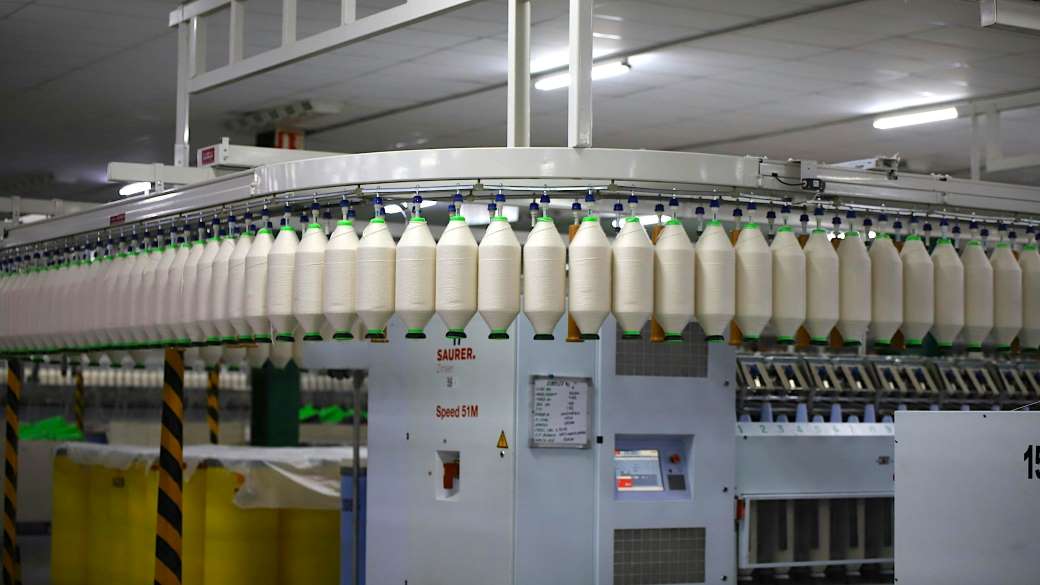
Surya Spinners installs RieterUNIblendA 81 precision blender
Operator of two spinning mills in Vellakovil, South India, Surya Spinners, has installed a RieterUNIblendA 81 precision blender at its mills.
Established in 2010, Surya Spinners specialises in producing recycled rotor yarns ranging from Ne 6 to Ne 40, utilised in knitted and woven garments. The recycled fibers are pre-opened with an in-house tearing unit, contributing to the company’s annual production capacity of 7,500 tons.
Previously, Surya could not maintain consistent blend quality due to its manual mixing process, which involved 70 per cent recycled cotton and 30 per cent polyester. This method was prone to human error and struggled to meet future requirements for producing different blends simultaneously.
However, the company has now streamlined this process with the fully automated UNIblendA 81 from Rieter, ensuring consistent blend quality before the fibers are fed to a bale press and prepared for the spinning mills. With precise blending within a 1 per cent tolerance, Surya Spinners anticipates doubling its production and achieving significant energy savings.
The installation of UNIblendA 81 has eliminated the need for manual intervention and ensuring consistent blend results day after day, says ThiyagarajanKuppusamy, Director, Surya Spinners. This is helping the company solidify its position as a formidable player in South India’s recycled yarn manufacturing business, he adds.