FW
Back Bay India supplies 1 million garment pieces for the Paris Olympics games
Tirrppur-based garment manufacturer Back Bay India has supplied nearly 1 million garment pieces for the upcoming Paris Olympics from June 26,
The apparel products supplied by the company will be sold at the stadia and other official retail outlets, with a small quantity supplied to volunteers. The company will also supply its garments for the Paralympic Games. Around €2 billion of these garment pieces will also be sold bythe International Olympics Committee through its official channels.
Contract for the supply of these garment pieces was awarded by the French company Cotton Division. In 2023, Back Bay also supplied products for the Rugby World Cup in France. The contract was awarded through the IOC’s official licensing program.
According to the organisers, official licensed products in all categories — apparel and accessories, gifts and novelties, toys and games, publishing, lottery, stamps and coins, luggage and travel items, stationery, school supplies, etc will be made available through official retail channels.
Around 10,000 references of these officially licensed products featuring the Paris 2024 colors will be developed by roughly 60 companies, both French and international.
GTRI proposes measures to revitalise garment exports from India
A prominent think-tank, Global Trade Research Initiative (GTRI) has proposed a series of measures to revitalise India's garment export sector in response to the country's declining market share in global garment trade and lagging performance compared to competitors.
A few of the key recommendations from GTRI include the temporary suspension of quality control orders (QCO) on polyester and viscose staple fiber, expansion and relaxation of criteria in the textile production linked incentive (PLI) scheme, an overhaul of Directorate of Foreign Trade (DGFT) and Customs procedures, and addressing monopolistic practices of domestic suppliers.
The think tank identifies complex procedures, import restrictions, and domestic vested interests as major obstacles to export growth. Difficulty in sourcing quality raw fabric, particularly synthetic fabricis highlighted as a significant challenge for exporters.
In 2023, India's garment exports lagged significantly behind competitors such as China, Vietnam, and Bangladesh at $14.5 billion. According to Ajay Shrivastava, Co-founder, GTRI, this demonstrated the significant gap between India and its competitors.
The report shows, as against a growth of 69.3 per cent by Bangladesh and 81.6 per cent by Vietnam, India’s garment exports grew by only 4.6 per cent from 2013 to 2023. Consequently, India's global market share has been on a decline since 2015, with knitted apparel dropping from 3.85 percent to 3.10 percent and non-knitted apparel from 4.6 percent to 3.7 percent.
GTRI argues, quality control orders have undermined the competitiveness of India's man-made fiber (MMF) supply chain by limiting access to affordable and specialised raw materials. The report also criticises the Bureau of Indian Standards for delays in registering foreign suppliers, forcing exporters to rely on domestic monopolies at higher prices. Unlike their counterparts in Bangladesh and Vietnam, Indian exporters face daily struggles in accessing quality imported fabrics.
Further complicating the situation are high import duties and complex DGFT that require meticulous accounting for imported fabrics. The report also notes a concerning trend where garment imports to India rose by 47.9 percent between 2018 and 2023, while textile imports increased by 20.86 percent during the same period.
Karl Mayer's Max Glass Ecorevolutionizes composite textile production
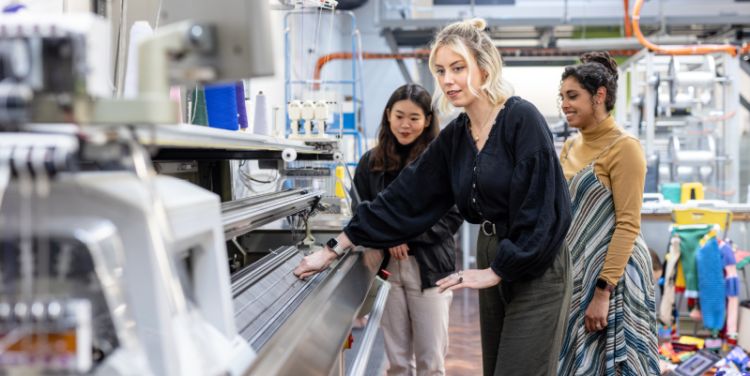
Karl Mayer's Technical Textiles Business Unit has launched the Max Glass Eco, a machine designed for the cost-effective production of glass fiber reinforcement textiles, particularly non-crimp fabrics used in the wind power sector. This new model offers remarkable efficiency with a maximum speed of 1,800 RPM and an impressive output of up to 410 meters per hour at a 101-inch working width.
Since its debut at JEC World in March, the Max Glass Eco has garnered substantial interest, leading to several purchase agreements. Machines are heading to India, with numerous units already ordered by Chinese clients. The demonstration models at Karl Mayer's customer centers in Changzhou and Chemnitz have been sold, though the machine at their Saxony facility remains available for processing trials and performance tests until September.
Eastern Europe has also shown strong interest. At Techtextil 2024 in Frankfurt, Karl Mayer's Sales Manager Ralf Schramm noted a flurry of discussions, including specific purchase requests from Rymatex, a Polish composite solutions manufacturer.
Beth Dufresne from Owens Corning praises the Max Glass Eco, highlighting its integration of proven solutions from Karl Mayer's multiaxial machines. As an early adopter, Owens Corning values the machine's advanced features, underscoring its appeal in the composites industry.
Global cotton trade to expand to 12.4 million tons by 2033: Report
Global cotton trade is anticipated to expand at a steady rate of 2.1 per cent per annum (p.a.) to 12.4 million tons by 2033, according to a report by the Organisation for Economic Cooperation and Development (OECD) and Food and Agriculture Organisation (FAO) of the United Nations.
Titled, 'OECD-FAO Agricultural Outlook 2024-2033,' the report reflects substantial increases in mill use of cotton in Asian countries, particularly Vietnam and Bangladesh, which rely almost entirely on cotton imports to support their burgeoning textiles sectors.
It further highlights, stagnant production growth rate in China will drive an increase in lint imports over the next decade. This will fulfill the demand of local mills and replenish state reserves. By 2033, raw cotton imports are projected to rise by 0.7 per cent p.a to reach 2.8 million tons. However, this growth would be modest compared to the over 3 per cent growth projected for Vietnam and Bangladesh.
The United States will maintain its position as the world’s largest cotton exporter throughout the outlook period. US exports are projected to hold a 31 per cent share of world cotton trade by 2033, translating to approximately 3.9 million tons.
Brazil’s cotton exports are also expected to grow robustly over the next decade, solidifying the country’s position as the second-largest exporter by 2033. Sub-Saharan Africa will follow, accounting for around 16 per cent of global cotton exports. Exports from this region are projected to continue growing at about 0.7 per cent p.a., with South and Southeast Asia being the primary export destinations.
The report further projects, international cotton prices in real terms will trend slightly downward in the medium term. This price trend will be influenced by competition from man-made fibers and changes in consumer preferences. Relative price competitiveness between these two types of fibers will not change drastically over the projection period, the report adds.
Italian textile machinery orders drop 17% in Q2 - ACIMIT
Italian textile machinery manufacturers saw a decline in orders during the second quarter of 2024 compared to the same period last year. The drop, attributed to a cautious global market, was particularly pronounced in foreign markets, which account for a significant share (86 per cent) of total orders.
The ACIMIT index, a measure of order intake, fell by 17 per cent to 49.8 points (base 2021=100). This decrease was driven entirely by a 22 per cent decline in foreign orders, with the index for those markets reaching 48.8 points.
However, a bright spot emerged in the domestic market. Italian orders saw a 25 per cent increase compared to Q2 2023, with the index reaching 57.3 points. This suggests a potential rebound within Italy.
Despite the overall decline, order backlogs remain healthy, providing Italian manufacturers with 4.3 months of assured production. Additionally, capacity utilization is expected to rise from 61 per cent in the first half of 2024 to 64 per cent in the latter half.
ACIMIT President Marco Salvade attributed the slowdown in foreign markets to global geopolitical uncertainty. This trend is further confirmed by declining Italian textile machinery exports (excluding China and Egypt) in the first quarter of 2024.
S&P Global becomes ITMF Corporate Member
S&P Global has joined the International Textile Manufacturers Federation (ITMF) as a corporate member. The move, following the merger of IHS Markit with S&P Global in March 2022, enhances S&P Global Commodity Insights’ extensive coverage, which spans chemicals, oil and gas, power, metals, agriculture, and shipping.
ITMF’s Director General, Christian Schindler, expressed pleasure at the partnership, highlighting the mutual benefits of collaboration within the textile industry’s value chain.
Tatiana Bondar, Associate Director at S&P Global, emphasized the strategic advantage of joining ITMF. She noted that access to ITMF’s reports, statistics, and surveys will deepen S&P Global’s understanding of the fiber and textile industry.
Participation in ITMF’s exclusive activities, such as annual conferences and specialized workshops, will provide valuable insights and enhance S&P Global's market proximity. Bondar believes this integration will allow S&P Global’s fibers team, present across EMEA, Asia, and America, to offer significant value to ITMF and its members.
This partnership underscores the importance of being embedded within the industry to access crucial information and expertise, facilitating better service and informed decision-making.
Textile industry seeks new policies to promote growth in Budget 2024-25
With Finance Minister NirmalaSitharaman set to unveil the Union Budget for fiscal 2024-25 soon, various sectors within the textile industry hope for policies addressing their specific needs and promoting overall growth.
The luxury fashion sector seeks reforms to enhance global competitiveness. PremDewan, Head-Retail, Corneliani, OSL Luxury Collections, highlights key expectations including duty structure reduction, GST simplification, customer-friendly policies, and retail infrastructure development.
He recommends a reduction in the import duties to international standards and simplification of compliance standards for products like shoes and leather. Additionally, Dewan advocates for a re-evaluation of PAN and Aadhaar requirements for high-value purchases to encourage domestic spending. He believes increased investments in retail infrastructure will position India as a premier shopping destination, boosting both the luxury industry and the broader economy.
K KLalpuria, CEO and Executive Director, Indo Count Industries, anticipates a budget emphasising textile manufacturing. He hopes for measures to promote infrastructure development, sustainability, and supportive policies within the industry. Such initiatives will help India become a global leader in textile manufacturing, fostering innovation and competitive advantage, he says.
Harsh Saraf, Founder and Director, SuperSox, seeks new policies to integrate knitting, processing, and garmenting industries while also modernising them. He supports the continuation of the 15 per cent concessional tax rate for new manufacturing firms to boost investor confidence and support the ‘Make in India’ initiative. Saraf also stresses on the importance to improve labor laws for the expansion of production facilities. Further, he also calls for increased support in innovation and R&D to create environment-friendly processes and superior products.
Domestic cotton spinning sector to grow by 6% in FY25: ICRA
The domestic cotton spinning sector is set to rebound in FY25 with an anticipated growth of 6-8 percent, driven by modest increases in realisation and a 4-6 percent rise in volume, as per a report by ICRA. This marks a recovery after nearly two years of decline due to falling yarn prices and muted domestic demand.
Over two-thirds of all cotton yarn produced is used domestically, with recovering downstream industries such as home textiles and ready-made clothing beginning to show signs of revival. After a growth spurt on a reduced base in FY24, exports are expected to normalise in FY25. Although global demand remains sluggish, a shift in sourcing preferences away from other countries will mitigate the impact on exports.
K Srikumar, Senior Vice President and Co-Group Head, Corporate Sector Ratings, ICRA, notes, gross contribution margins for spinners, which contracted sharply by approximately 20 percent Y-o-Y in FY24 amid weak domestic demand, recovered by an estimated 5 percent in Q1 FY25. This recovery trend is likely to continue throughout FY25. Consequently, operating profit margins are expected to expand by 100-150 basis points, supported by scale benefits and cost-saving measures undertaken by industry players.
The past two years saw a dramatic decline in domestic cotton prices, which peaked in H1 FY23 at a lifetime high of Rs 284 per kg. With a recovery in demand and an anticipated decrease in the area planted to cotton, average prices, which fell by about 26 percent Y-o-Y in FY24 due to a decline in world prices and weak demand from end-user groups, are expected to rise slightly in the near future.
ICRA alaoexpects a slight increase in capital expenditure announcements in FY25, driven by the need to modernise machinery, demand from the China Plus One strategy, and strengthening domestic demand from downstream garment companies.
Capitalise on FTA to expand apparel market in Japan, urges AEPC
To expand their market in Japan, the domestic apparel industry needs to capitalise on the free trade agreement (FTA) between the two countries, states Apparel Export Promotion Council (AEPC). The Council leads a delegation featuring over 2,000 exhibitors at the India Tex Trend Fair (ITTF) in Tokyo from July 23-25, 2024.
The fair features prominent Indian exhibitors from across the country displaying a diverse range of readymade garments (RMG) across various categories, including summer and winter collections, notes SudhirSekhri, Chairman, AEPC. Japanese brands, including Sumitomo Corporation, MUJI, Toyoshima, Marubeni, Mitsubishi, Koyo Trading, United Arrows, and MYK Fashion will also participate in the trade fair.
With Indian apparel having duty-free access to Japan under the Indo-Japan trade agreement, compared to a 9 per cent duty for Turkey and 9.5 per cent for China, Indian readymade garment manufacturers and exporters will benefit from participating in this fair, Sekriemphasises
A robust Indian garment industry, with a complete value chain and unique offerings, provides substantial scope for Japanese trading companies to source from India. Additionally, there are stronger opportunities for trade diversion as China's share in this market continues to decline. Known for their flexibility, Indian suppliers can cater to both small, customised orders and large-scale orders, he adds.
Vardhman Textiles announces Rs 2,000 crore expansion plan
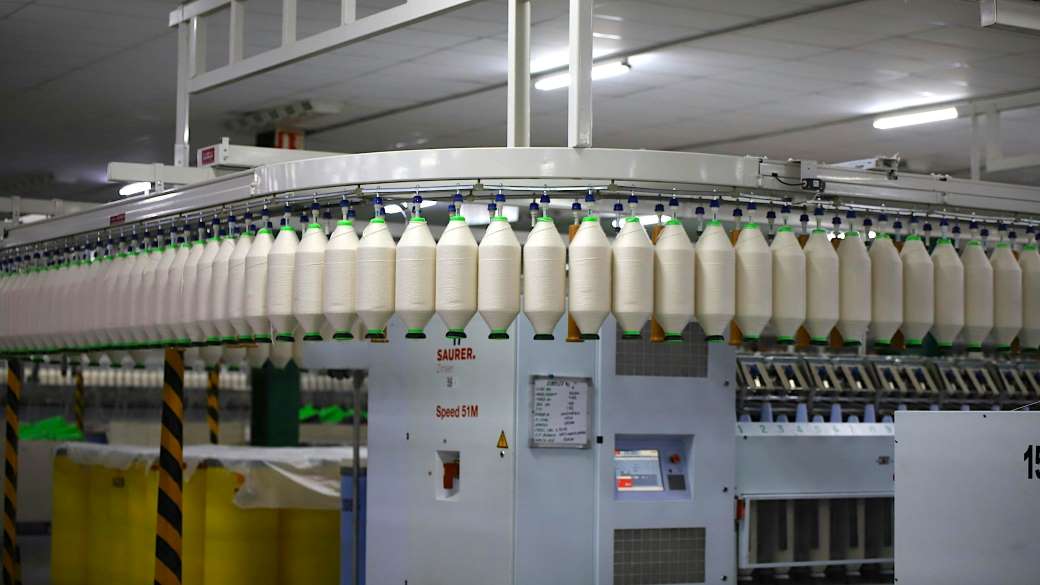
Vardhman Textiles has outlined an expansion plan worth Rs 2,000 crore. The plan includes execution of Rs 1,000-crore expansion and modernisation projects for the spinning division.
For this division, Vardhaman Textiles plans to launch new an open-end project to add approximately 35,000 spindles at a project cost of around Rs. 300 crore. The company also plans toreplace 60,000 existing spindles with 77,000 new spindles, resulting in a net addition of 17,000 spindles. These projects will be completed by May 2025.
The company also plans to enhance its fabric manufacturing capacity by undertaking two major initiatives: routine modernisation and debottlenecking, and a new project focused on manmade fiber-based fabrics, with an initial investment of approximately Rs. 300 crore, to be completed by 2025.
Additionally, Vardhman Textiles plans to increase the consumption of the green power. Currently, green energy accounts for only 2.5-3 per cent of the company’s total power usage. It now plans to boost this to 25-30 per cent through significant investments in solar and wind energy. This green power initiative aligns with global sustainability trends and is both commercially viable and environmentally responsible.
The Rs 2,000 crore investment by Vardhman Textiles is driven by several strategic considerations. The ‘China Plus One’ trend, where global brands diversify their supply chains by sourcing from countries other than China, has created a favorable environment for Indian textile companies. Additionally, recent government policy changes, such as the introduction of the RoDTEP scheme, have enhanced the feasibility and competitiveness of using imported cotton in production.
Vardhman Textiles is also making a significant investment in technical textiles manufacturing, starting with an initial capacity of 15 lakh meters per month. The first phase of this project will focus on producing 70-80 per cent polyester and 20-30 per cent nylon textiles for applications such as sportswear, activewear, industrial uses, and defense materials. This strategy move will involve an investment of Rs320-330 crores for its first phase.
Leveraging existing relationships with clients like Columbia and Decathlon, Vardhman aims to diversify its customer base to include new markets and industries. The company is optimistic about the synergies with current customers and potential for expansion, with plans for a second phase contingent on the success of the initial setup.