FW
Intertextile Shenzhen 2026: Synchronizing AI and circularity in textile production
As the global fashion industry grapples with the dual imperatives of digitalization and environmental stewardship, the upcoming Intertextile Shenzhen Apparel Fabrics exhibition -scheduled for June 9–11, 2026 - is positioning itself as a central hub for technological convergence. Industry leaders are moving beyond conceptual sustainability, focusing instead on applied artificial intelligence to optimize the textile supply chain. By integrating sophisticated data analytics into fabric manufacturing and sourcing, exhibitors are demonstrating how automated systems can drastically reduce material waste while refining production lead times in an increasingly volatile global market.
Cultivating next-generation production ecosystems
The fair’s new ‘Future Horizons Forum’ and ‘Innovation Studio’ underscore a strategic shift toward knowledge-led manufacturing. These platforms facilitate critical dialogues between academic institutions and commercial stakeholders, exploring how AI can manage complex logistics, stock optimization, and real-time sustainability tracking. In a representative case study, emerging collaborations within the Greater Bay Area are showcasing how AI-driven predictive modeling enables manufacturers to align output precisely with demand, thereby mitigating the overproduction cycles that have historically plagued the sector. As exhibitors from across 11 nations converge in Shenzhen, the emphasis is clearly on actionable technology - ranging from waterless digital printing processes to advanced fiber transformation techniques - that empowers brands to meet stringent regulatory requirements while maintaining commercial viability in a competitive, high-frequency retail landscape.
A vital trade platform
Intertextile Shenzhen serves as a vital trade platform for the global textile value chain, connecting fiber, fabric, and accessory suppliers with international garment manufacturers. It highlights innovative manufacturing solutions, sustainable material sourcing, and digital textile technologies, with a strong emphasis on integrating regional expertise to foster cross-border industry collaboration.
Authentic Brands Group secures Lee in strategic $1 billion denim acquisition
In a major consolidation within the apparel sector, Authentic Brands Group (Authentic) has entered into a definitive agreement to acquire the legendary denim label Lee from Kontoor Brands. Valued at up to $1 billion, this transaction marks a transformative moment for both organizations. The deal structure includes an upfront payment of $750 million, with an additional $250 million earn-out provision contingent upon the brand’s future performance metrics under its new stewardship. This acquisition aligns with Authentic’s aggressive strategy of scaling heritage brands through its signature licensing-heavy operational model.
Strategic divestiture to fuel core growth
For Kontoor Brands, the divestiture is a calculated maneuver to sharpen its operational focus. By offloading the Lee business, Kontoor aims to reallocate capital and management resources toward its higher-growth assets, specifically the Wrangler and Helly Hansen labels. Scott Baxter, President, CEO, and Chairman, Kontoor Brands, emphasized, the move is designed to ‘unlock investment capacity’ and create long-term shareholder value by concentrating on segments with stronger growth profiles. Following the announcement, the market responded favorably, with Kontoor shares rising 1 per cent in premarket trading. As Authentic prepares to integrate Lee into its global platform - which manages over $38 billion in systemwide retail sales - the industry anticipates a shift in Lee’s distribution strategy, potentially moving toward a broader, partner-led retail network to revitalize the brand’s presence in competitive mid-tier markets.
The Kontoor-Lee transition
Kontoor Brands is a prominent global apparel company focusing on denim, outdoor, and workwear. The divestiture of Lee, a heritage brand dating back over a century, enables Kontoor to streamline its portfolio. The company now intends to prioritize the expansion of Wrangler and Helly Hansen across international retail markets.
India’s 45°C economy is reshaping apparel retail and consumer spending
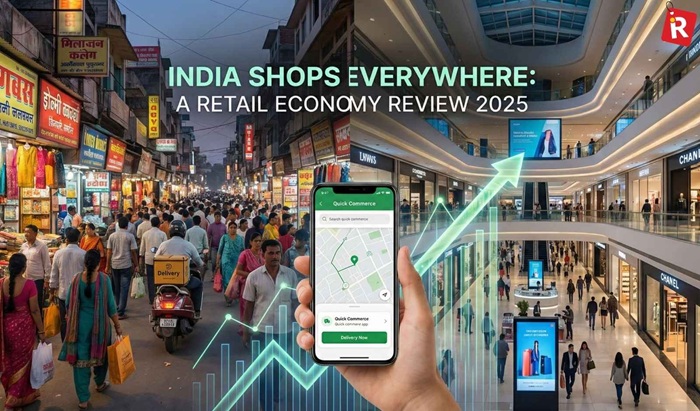
The intensifying heatwaves sweeping across the Indian subcontinent are no longer mere meteorological anomalies; they have become the primary engineers of the country’s seasonal retail strategy. With over 100 cities recording record-breaking temperatures frequently exceeding 45°C, the apparel industry is witnessing a forced evolution in fiber selection and fabric engineering. This increase in heat-stress consumption is leading to a reorganization of the textile value chain, as brands move away from traditional year-round heavy synthetic blends toward high-performance, breathable alternatives. Studies show the demand for summer-centric textiles has grown its retail window by nearly 20 per cent, as the cooling economy dictates the flow of inventory from spinning mills to storefronts.
GSM’s downward pressure
As thermal comfort becomes the non-negotiable metric for the Indian consumer, textile manufacturers are aggressively reducing the Grams per Square Meter (GSM) of their core fabric offerings. The current market shift favors ultra-lightweight constructions that facilitate maximum airflow without sacrificing opacity. This technical transition is particularly visible in the retail segment, where value fashion giants are swapping out standard 180 GSM cottons for 120-140 GSM variants.
This isn't just a stylistic preference but a commercial necessity to ensure product sell-through during extended heat cycles. Breathability is now the baseline for transaction, say sourcing heads. If a garment doesn't offer immediate thermal relief at the trial room stage, it remains on the rack, regardless of the price point. Recent industry findings suggest that for every 1-degree Celsius rise in average seasonal temperature, there is a corresponding 3 per cent increase in the sell-through of garments categorized under lightweight or ultra-breathable classifications.
Natural fiber renaissance and cellulose disruption
The premium on comfort is leading to a resurgence in natural staples like linen and high-grade cotton, while simultaneously accelerating the adoption of man-made cellulosic fibers (MMCF). Market data shows an increase in the consumption of Tencel, Modal, and Viscose, which offer superior moisture management compared to traditional polyester.
Table: India’s fabric market cooling index
|
Fiber property |
Moisture regain (%) |
Thermal comfort rating |
Domestic growth index |
|
Linen |
12.00% |
Excellent |
High (+15%) |
|
Lyocell (MMCF) |
13.00% |
High |
Rapid (+18%) |
|
Cotton |
8.50% |
Moderate-High |
Stable (+10%) |
|
Polyester |
0.40% |
Low |
Declining (Summer) |
Chemical processing units are reporting a 30 per cent rise in orders for moisture-wicking and cool-touch treatments that were previously reserved for high-end activewear. These technologies are now being democratized, appearing in everyday office wear and school uniforms. By treating traditional yarns with phase-change materials (PCMs), manufacturers are creating fabrics that actively manage skin temperature, providing a critical competitive edge in a market where the sun has become the most influential trendsetter.
Changing supply chain and color choices
While the demand for cooling textiles presents a massive opportunity, it brings several operational hurdles, particularly in raw material price volatility. The reliance on high-quality long-staple cotton and specialized cooling yarns puts pressure on margins, especially as energy costs for textile processing rise alongside the temperature. Also, the shift in color palettes, moving away from heat-absorbing dark tones to thermal-reflective pastels requires dye houses to rework their chemical inventories and wastewater management protocols.
Retailers are now forced to adopt more agile inventory models, as localized heat spikes can trigger sudden surges in demand for specific silhouettes like oversized linens and loose-knit essentials. Analytical reports indicate that inventory turnover for cool-palette apparel whites, soft blues, and mint greens is currently 1.5x faster than traditional dark navies and blacks during the March–June window.
A prominent regional retailer in North India serves as a primary example of this strategic realignment. By analyzing local weather forecasts alongside real-time sales data, the brand shifted 70 per cent of its mid-summer inventory to 100 per cent cotton and linen-blends two weeks ahead of the projected heatwave peak. By eliminating heavy polyester linings and opting for air-mesh pocketing in trousers, the brand saw a 25 per cent year-on-year increase in footfall during May. This tactical shift highlights a broader industry truth: in the new climate reality, the most successful fashion players will be those who treat meteorological data as the ultimate sourcing brief.
FY26 Textile Scorecard: Integration, specialization are winning the margin battle
As the curtains close on FY2025-26, India’s textile industry is revealing a sharp divide. On one side stand integrated and innovation-led companies that have insulated themselves from raw material shocks through specialization, branding, and technical capabilities. On the other are commodity-driven spinning businesses grappling with shrinking margins, volatile cotton prices, and weakening global yarn demand.
The year was marked by persistent cost pressures, unstable export markets, and elevated financing expenses. Yet beneath the turbulence, the final quarter showed signs of operational recovery as domestic demand improved and global logistics bottlenecks eased gradually. India’s textile exports grew 2.1 per cent to Rs 3.16 lakh crore during the year, with man-made fibers (MMF) outperforming traditional cotton categories through a 3.6 per cent increase.
The difference in corporate performance suggests that the industry is no longer rewarding scale alone. Instead, profits are increasingly being determined by supply-chain control, product specialization, and exposure to higher-value categories such as technical textiles, athleisure, and sustainable home furnishings.
Table: Financial insights (FY2025-26)
|
Company |
Revenue (FY26) |
EBITDA margin |
PAT (FY26) |
Status |
Strategic shift |
|
Vardhman Textiles |
Rs9,869 cr |
12.0% |
Rs 753 cr |
Resilient |
High pivot to Technical Textiles & MMF. |
|
Welspun Living |
Rs 9,650 cr* |
14.20% |
Rs 680 cr* |
Leader |
Global "China+1" beneficiary; Home Textile dominance. |
|
Arvind Limited |
Rs 8,150 cr* |
11.50% |
Rs 395 cr* |
Steady |
Advanced Material Division (AMD) expansion. |
|
KPR Mill |
Rs 5,850 cr* |
20.30% |
Rs 910 cr* |
Outperformer |
Vertical integration; Athleisure & Garmenting focus. |
|
RSWM Ltd |
Rs 4,554 cr |
7.10% |
Rs 52 cr |
Turnaround |
Disciplined cost management; shift to value-added yarn. |
|
Siyaram Silk Mills |
Rs 3,920 cr* |
7.50% |
Rs 225 cr* |
Neutral |
Navigating softer export orders via brand equity. |
|
Nahar Spinning |
Rs 2,301 cr (9M) |
8.0% (Est) |
(Rs 1.59 cr) Loss |
Struggling |
Commodity yarn exposure; high power/fuel costs. |
|
Sutlej Textiles |
Rs 2,800 cr* |
6.50% |
(Rs 18.18 cr) Q4 Loss |
Under Pressure |
Margin squeeze from high cotton vs low yarn prices. |
Figures marked with an asterisk are projected estimates based on Q4 FY26 trajectories and analyst consensus.
The margin leaders pull away
Among the sector’s strongest performers, KPR Mill emerged as a clear benchmark for operational efficiency. At a time when several standalone mills were squeezed by raw material volatility, KPR sustained operating margins above 20 percent in Q4.
Its vertically integrated business model spanning spinning, knitting, dyeing, and garmenting allowed the company to capture value across the production chain while reducing dependence on external suppliers. The company’s growing exposure to athleisure and performance wear also proved strategically important, as these categories continue to command stronger margins and steadier demand than basic apparel exports.
Welspun Living reinforced a similar trend in the home textiles segment. Benefiting from the global China+1 sourcing shift, the company strengthened its position as a preferred supplier to major US retailers. Strong order inflows and sustained export demand kept revenue momentum intact despite broader industry uncertainty.
More importantly, Welspun’s investments in sustainability and textile recycling are beginning to translate into advantages. As international retailers tighten ESG sourcing standards, suppliers with circular manufacturing capabilities are increasingly securing long-term contracts and premium positioning within global supply chains.
Technical textiles gain weight
One of the clearest themes emerging from FY26 was the growing importance of value-added and technical textile segments.
Vardhman Textiles continued its transition beyond conventional spinning by increasing its focus on MMF and technical fabrics. This diversification helped cushion the impact of fluctuations in cotton pricing and strengthened the company’s resilience in export markets increasingly shifting toward synthetic and blended materials.
Arvind Ltd is undergoing an even more pronounced transformation. Historically associated with denim manufacturing, the company is steadily repositioning itself as an advanced materials player. Its Advanced Material Division (AMD), which manufactures high-performance industrial and technical fabrics, has become one of its strongest margin contributors.
The strategy reflects a larger shift underway in Indian textiles. Rather than competing solely on low-cost manufacturing, leading firms are embedding themselves deeper into specialized global supply chains that offer higher profitability and lower exposure to cyclical fashion demand.
Turnaround stories signal a new discipline
RSWM delivered one of the year’s most notable turnarounds, moving back into profitability despite reporting a decline in revenue. The company posted a Rs 52 crore profit for the year after implementing aggressive cost rationalization measures and reducing long-term debt exposure.
Its sharper focus on specialty yarn categories, including mélange and synthetic blends, also helped improve margins. The performance highlights how selective product migration even within traditional spinning businesses can materially improve profitability when paired with disciplined financial management.
Siyaram Silk Mills adopted a different strategy. Rather than pursuing aggressive expansion, the company leaned on its established retail and fabric brand presence to navigate weaker export conditions. While concerns around US tariff uncertainty weighed on sentiment earlier in 2026, Siyaram maintained relative stability compared to pure-play spinning firms suffering deeper realization pressures.
Commodity mills face pressure
The weakest performances came from companies heavily dependent on commodity yarn manufacturing.
Sutlej Textiles reported a Q4 loss of Rs 18.18 crore as high domestic cotton prices collided with depressed international yarn realizations. The mismatch between rising input costs and weak export pricing created a severe input-output squeeze, leaving little room for margin recovery.
Nahar Spinning faced similar challenges, compounded by higher energy and fuel costs. The company’s continued dependence on commodity yarn markets left it exposed to aggressive pricing competition from Bangladesh and Vietnam, where lower operating costs have intensified pressure on Indian exporters.
The struggles of these companies underline a broader reality now reshaping the industry: scale without differentiation is becoming increasingly unsustainable.
A new textile order emerges
FY2025-26 may ultimately be remembered as the year India’s textile sector decisively split into two distinct models. Commodity-led businesses tied to volatile cotton cycles and low-margin exports are finding survival increasingly difficult. In contrast, companies focused on integration, branding, technical textiles, sustainability, and specialized manufacturing are steadily widening their competitive advantage.
The market’s message has become unmistakable. Investors and global buyers are rewarding businesses that control larger portions of the value chain or operate in differentiated categories with pricing power. Whether through technical fabrics, recycled fibers, athleisure, or branded home textiles, the next phase of growth in India’s textile industry appears likely to belong to companies that can move beyond commodity manufacturing and position themselves as innovation-led supply chain partners.
Textile expansion amid market headwinds
Siyaram Silk Mills has underscored the resilience of the domestic textile market in its FY ’26 performance report. While many export-oriented players in the Indian textile sector have faced significant contraction due to elevated US tariff barriers and cooling demand from European markets, Siyaram’s focus on the domestic consumer has shielded it from total volatility. The company reported a 16 per cent rise in total income to Rs 2,653 crore, maintaining a steady EBITDA margin of 15.6 per cent. This domestic-centric model has served as a buffer, with the company leveraging the growth in wedding and festive spending to offset the broader headwinds currently compressing the Indian textile and apparel (T&A) sector.
Balancing retail growth and capital efficiency
The company’s strategic shift toward a stronger retail footprint remains a central pillar of its long-term growth. By the close of the fiscal year, Siyaram had scaled its operations to 44 dedicated stores, specifically 27 Zecode outlets and 17 Devo stores. This expansion into branded apparel segments - which now represent 15 per cent of its revenue compared to the 80 per cent contribution from fabric - demonstrates a pivot toward higher-margin consumer-facing channels. Management has outlined an ambitious roadmap for the current year, targeting a total network of 70 stores. This transition is critical as the company seeks to mitigate the impact of rising inventory and debtor levels, which grew by 25 per cent this year, largely tied to these store-opening cycles.
Navigating macro-economic volatility
Despite the operational success, the market remains cautious. The share price has corrected by nearly 33 per cent from its 52-week peak, reflecting investor apprehension regarding sector-wide challenges. Exporters continue to grapple with a dual crisis: the erosion of price competitiveness due to US tariffs and the suspension of preferential tariffs in EU markets for 2026–2028. For Siyaram, the path forward involves balancing its successful domestic textile narrative with capital discipline. As industry analysts note, the ability to maintain profitability despite raw material price volatility and the current inflationary environment will define the sector's performance in the coming quarters.
Siyaram Silk Mills is a prominent Indian manufacturer specializing in high-fashion blended suiting, shirting, and readymade apparel. Primarily focused on the domestic market, the company operates an extensive retail network under brands like Zecode and Devo. It maintains a strong financial outlook through strategic retail expansion and premium product diversification.
SACIN initiates regional shift toward circular textiles
The Society for Asian Circular Innovation Network (SACIN) has officially commenced operations with a strategic focus on transforming the textile and apparel sector - the backbone of regional exports. By prioritizing circularity, the organization aims to move the industry beyond superficial compliance toward a robust, resource-efficient model. Priti Chakraborty, Founder President, emphasized the network’s mandate is to foster regional collaboration, research, and policy advocacy, positioning Asia as a global leader in sustainable manufacturing. This comes at a critical juncture where outdated production models are increasingly undermining the competitiveness of Asian exporters in the European and North American markets.
Strategic roadmap for industrial transformation
To drive systemic change, SACIN has announced a series of high-impact initiatives, including an Asian Sustainability Data and AI Portal and a Circular Tech and Innovation Marketplace. These platforms are designed to bridge the knowledge gap by providing manufacturers with the data required to optimize raw material usage and minimize industrial waste. The organization plans to implement a four-pillar approach - encompassing research, policy support, collaborative networking, and certification - to help regional factories transition toward sustainable practices. Industry stakeholders believe this structured framework will be essential for manufacturers looking to attract green investment and meet the stringent environmental standards now mandatory for international trade.
SACIN and Asian circular innovation
The Society for Asian Circular Innovation Network (SACIN) is a research think tank based in Dhaka, dedicated to advancing circular economy solutions across Asia. Initially focused on the textile and apparel industry, the organization aims to scale sustainable innovation through policy engagement, data-driven research, and cross-border regional collaboration.
Madewell accelerates brick-and mortar strategy with new openings
The denim-centric apparel retailer under the J Crew Group, Madewell is advancing its physical presence with the announcement of three new store locations scheduled for opening across May and June 2026. The expansion includes a debut in Sag Harbor, New York, followed by dual-concept storefronts in Greenwich, Connecticut, and Bend, Oregon. These new locations will feature a diversified inventory, incorporating both men’s and women’s collections in a single retail environment. This strategic move marks a measured approach to physical growth, as the company seeks to strengthen its omnichannel presence while maintaining the brand identity that has historically centered on premium denim and high-quality lifestyle staples.
Optimizing store formats for regional engagement
The upcoming openings reflect a broader shift in Madewell’s retail strategy, which increasingly emphasizes high-visibility locations and community-integrated shopping experiences. By deploying dual-concept stores, the brand is streamlining its operational model to cater to a broader consumer demographic, effectively utilizing store space to cross-sell its lifestyle assortment alongside its core denim offerings. Industry observers note that this expansion is designed to drive footfall in key suburban and destination markets, providing a physical touchpoint that complements the brand’s robust e-commerce and marketplace channels. As the company refines its store fleet, these additions serve as test cases for optimizing in-store services such as tailoring and embroidery, which remain central to its personalized consumer experience.
A premier denim specialist
Established in 2006 as an offshoot of the J Crew Group, Madewell specializes in premium denim, apparel, and lifestyle accessories. Primarily targeting Millennials and Gen Z, the brand maintains a core focus on sustainable production and high-quality staples. It currently operates approximately 156 stores across the United States.
Nonwovens sector accelerates shift toward circularity and technical performance
The recently concluded Index 26 exhibition at Palexpo signaled a definitive maturation of the global nonwovens sector, moving beyond basic disposables toward high-performance, sustainable applications.
Amidst fluctuating geopolitical landscapes and budgetary constraints, the assembly of 625 exhibitors and over 11,000 visitors underscored the critical importance of localized innovation in a globalized supply chain. Industry leaders increasingly view carbon footprint reduction not merely as a regulatory requirement but as a fundamental performance indicator. Manufacturers are aggressively replacing traditional, complex multi-layer structures with mono-material designs, facilitating easier recycling and circularity. This shift is exemplified by the adoption of advanced fiber-production technologies that achieve significantly finer diameters, optimizing material usage without compromising structural integrity.
Technical excellence beyond regulatory mandates
Beyond environmental initiatives, the industry is recalibrating its technical standards to meet evolving safety and performance demands. A notable trend at the event was the widespread introduction of high-performance protective textiles engineered without PFAS, reflecting a proactive stance on health and safety compliance. Companies are securing a distinct competitive edge by surpassing minimum regulatory requirements through agile engineering, noted Pieter Meijer, Chairman, Index Advisory Board. As the sector integrates automated machinery with smarter chemical applications, the focus remains on enhancing manufacturing throughput while minimizing environmental impact, establishing a robust framework for long-term growth and technical differentiation in the global textile market.
A leading global association for nonwovens
Serving as the leading global association for the nonwovens and related industries, Edana facilitates research, advocacy, and industry-wide events. The organization focuses on sustainable growth across hygiene, filtration, and medical textiles. With a strong financial outlook buoyed by technical demand, the sector continues to prioritize research-led expansion through 2029.
Italian textile engineering drives Egypt’s industrial modernization
The conclusion of a two-day industrial workshop in Cairo on May 6, 2026, marks a significant milestone in the deepening synergy between Italian machinery manufacturers and the Egyptian apparel sector. With Italian exports of textile machinery to Egypt reaching €72 million in 2025, the North African nation has solidified its position as the primary African market for high-end Italian engineering.
Facilitated by the Italian Trade Agency (ICE) and ACIMIT, this engagement underscores a strategic shift toward high-tech production. Egyptian manufacturers are increasingly prioritizing advanced machinery for spinning, weaving, and finishing to meet the stringent sustainability and quality demands of global export markets, particularly the European Union.
Catalyzing sustainable growth
Marco Salvadè, President, ACIMIT, emphasized, the robust turnout of 23 Italian firms and over 120 local operators signals a transition toward long-term industrial collaboration. Beyond mere equipment sales, the focus remains on essential technology transfer and specialized workforce training, which are critical for upgrading local facilities. This initiative serves as a foundational component for Italy’s broader promotional strategy ahead of ITMA Hannover 2027. By integrating intelligent, efficient technologies, Egyptian firms are better positioned to tackle production hurdles and enhance their footprint in the competitive global textile landscape, transforming the country into a modernized industrial hub.
Promoting innovation and sustainability
The Association of Italian Textile Machinery Manufacturers (ACIMIT) serves as the primary trade body for approximately 300 Italian firms. Founded in 1945, the organization promotes a sector that generates €1.9 billion in annual production. With an export-oriented model that accounts for 86 per cent of its output, ACIMIT champions innovation, sustainability, and quality.
Inditex accelerates growth through strategic tech and diversification
Formerly recognized as the Calzedonia Group, Italian textile and apparel conglomerate Oniverse, has announced a significant manufacturing expansion into Egypt. The company intends to establish two specialized production facilities, marking a notable step in its strategy to boost supply chain resilience and global export capacity. By leveraging Egypt's private free zone regime, Oniverse aims to create an integrated manufacturing ecosystem capable of overseeing the entire production lifecycle, from initial yarn processing to the assembly of finished garments. According to the Egyptian General Authority for Investment and Free Zones (GAFI), this project is slated to commence operations by the end of 2027 and is projected to generate over 3,000 direct employment opportunities.
Leveraging regional industrial incentives
The decision to utilize Egypt’s free zone framework offers the group critical operational advantages, including streamlined customs procedures, tax exemptions, and unrestricted profit repatriation. Francesco Ruvolo, Director - Production Operations at Oniverse, met with Mohamed Awad, Executive Chairman, GAFI to confirm, the entirety of the production output from these new units will be designated for international markets. This expansion aligns with Egypt’s broader national agenda to increase textile and apparel exports significantly, targeting a growth from $2.8 billion in 2024 to $11.5 billion by 2030. For the global fashion sector, this move underscores a broader industry trend where major apparel brands are increasingly securing geographically diverse manufacturing hubs to navigate global supply chain pressures and maintain price competitiveness.
Prominent global fashion retailer
Oniverse is a prominent global fashion retailer specializing in hosiery, beachwear, and apparel, with brands including Calzedonia, Intimissimi, and Falconeri. Founded in 1986, the group operates approximately 5,700 retail stores across 57 countries. Employing over 45,000 people, it maintains a robust financial profile with annual revenues reaching €3.5 billion in 2024.