FW
MAS Holdings 'Femography: Revolutionizing feminine health, empowering women globally"
Femography, the FemTech branch of MAS Holdings, South Asia's largest apparel tech company, is redefining feminine health on a global scale. Overcoming historical neglect, limited innovation, and insufficient research, Femography emerged in 2014 as a game-changer committed to empowering women. Addressing key issues like period poverty, menstrual and pelvic floor health, maternal and baby care, and menopause challenges, Femography combines innovation, sustainability, and education.
With a consumer-centric approach, Femography's diverse offerings include reusable period underwear, discreet incontinence wear, and groundbreakingAntiflush™ menopause clothing, all geared towards boosting confidence and comfort. Notably, Femography's emphasis on sustainability resonates deeply, as disposable sanitary products contribute to overwhelming pollution and waste. By providing long-lasting alternatives, Femography aims to minimize environmental impact.
Championing safety and compliance, Femography adheres to strict quality standards and contributes to industry regulations. Through global collaborations, the company advocates for reusable solutions and spreads awareness about the environmental toll of disposables.
Femography's journey isn't just about clothing—it signifies innovation, inclusivity, and transformation. Supported by MAS Holdings and Sri Lanka's apparel industry, Femography is driving a healthier, more sustainable future for women worldwide. It stands as an inspiring beacon, encouraging women to embrace their well-being with confidence, empowerment, and eco-consciousness.
Teejay Lanka navigates Q1 challenges with strong balance sheet
Teejay Lanka PLC has embarked on the fiscal year 2023-24 with resilience, securing a robust balance sheet even amidst a challenging first quarter. Despite a significant decline in earnings, the company closed the quarter with a substantial cash reserve of Rs 9.6 billion.
Sri Lanka's foremost multinational textile manufacturer reported revenue of Rs 14 billion for the quarter ending June 30, marking a 41% reduction compared to the same period last year. Despite this, Teejay Lanka demonstrated its strength by posting a gross profit of Rs 283 million, showcasing its adaptability in volatile industries. However, the gross profit margin contracted to 2%, down from 6.9% in the previous quarter.
The company attributed the downturn to multiple factors, including sales drop, currency appreciation, fluctuating raw material costs, capacity underutilization, and inventory-related expenses. Teejay Lanka, however, reported a positive sign – reduced inventory levels during the quarter, in line with the overall supply chain adjustment.
Teejay Lanka's leadership expressed confidence in its resilience and recovery strategies. Chairman Mr.AjitGunewardene affirmed the deployment of necessary resources and the implementation of innovative long-term strategies to navigate market dynamics.
CEO Mr.Pubudu De Silva outlined the group's priorities for the future, including digitalization, a robust ESG framework, cost reduction, new product development, enhanced synthetic capacity, and empowering human capital.
Notably, Teejay Lanka holds a stake in the US Cotton Trust Protocol, and its ownership structure includes significant backing from Brandix Lanka and Pacific Textiles of Hong Kong.
India's cotton yarn exports face steep decline in 2023
Demand Shortage Emerges
India's cotton yarn exports have sharply declined from January to May 2023, highlighting a significant demand shortage. During this period, there was a staggering 32% drop in exports compared to the previous year.
Revenue Plunge
The Ministry of Commerce and Industry, India, revealed that the country's cotton yarn exports generated a revenue of $1.32 billion in this timeframe, a substantial decrease from the $1.95 billion generated in the same period the year before.
Glimmers of Recovery in May
May 2023 offered a glimmer of hope, with a 12.73% boost in cotton yarn exports, amounting to $268 million, compared to the previous year.
Shifts in Export Destinations
Bangladesh, traditionally India's primary cotton yarn export destination, experienced a striking 60.42% decline, reaching $364.44 million. Conversely, the Chinese market exhibited a remarkable recovery, surging by 174.90% to $229.65 million.
Varied Export Performance
Among other destinations, cotton yarn shipments to Egypt, Portugal, and Peru plummeted by 26.40%, 3.42%, and 25.36% respectively, on a year-on-year basis.
Uncertain Road Ahead
While May 2023 showcased signs of improvement, the sustainability of this positive trend remains uncertain. This uncertainty has left India's cotton yarn exporters in a state of apprehension, unsure of what the upcoming months might hold.
Devan unveils breakthrough R-Vital NTL: Redefining textile durability and functionality
Devan, a division of Pulcra Chemicals, has unveiled a game-changing milestone with their R-Vital NTL technology, introducing a remarkable durability of 50 washes. This bio-based and biodegradable well-being technology is poised to revolutionize the textile sector.
R-Vital NTL empowers textile manufacturers to enhance fabrics with a versatile array of micro-encapsulated active ingredients. This innovative functional finish adds value to textiles, enabling manufacturers to craft distinctive products that set them apart in the market.
At its core, micro-encapsulation ensures gradual release of active components from textiles onto the skin. Friction during usage triggers the microcapsules to burst, releasing their benefits progressively. This ensures a continuous and gradual infusion of actives.
The natural range encompasses five specialized products, each with distinct attributes: Aloe vera for skin-smoothing, avocado seed oil for moisturization, CBD for relaxation, multivitamins for various benefits, and vitamin E for free-radical protection.
Devan's groundbreaking achievement with R-Vital NTL underscores their commitment to innovation in specialty chemicals. This advancement promises to reshape the textile landscape, elevating industry-wide fabric quality to unprecedented heights.
Nylon 6 vs. 66: Polyamides with Different Properties
Global market for Nylon-6 and Nylon-66 will experience a Compound Annual Growth Rate (CAGR) of 4.6% spanning from 2023 to 2033 reaching a value of US$ 37,868.1 million from US$ 24,225.2 million, as per Future Market Insights. The Asia Pacific region is anticipated to emerge as the primary market for these polyamides, followed by North America and Europe.
Nylon-6 and Nylon-66 belong to the category of polyamides, yet they exhibit distinct characteristics and find diverse applications. Nylon-6 originates from caprolactam, while Nylon-66 is manufactured using adipic acid and hexamethylenediamine.
These unique compositions lead to divergent qualities that suit specific uses. Nylon-6 boasts heightened strength and rigidity compared to Nylon-66. This makes it the preferred option for tasks demanding robustness and stiffness, such as gear systems, bearings, and structural elements.
On the other hand, Nylon-66 showcases superior resistance to heat and chemicals, rendering it more suitable for situations involving exposure to these challenging conditions, including automotive components, electrical parts, and household appliances.
This expansion is propelled by the escalating demand for these polymers across a spectrum of applications such as automotive manufacturing, textiles, and the field of electronics.
Bangladesh to receive duty-free export boost
Bangladesh is set to receive duty-free export privileges for 92% of its tariff line products, including readymade garments (RMG), in the UK market after graduating from the least developed country (LDC) status in 2026.
The UK has committed to providing these favorable export conditions for a three-year period after LDC graduation, but Bangladesh has proposed that the UK extend the GSP benefits for an additional six years.
The UK delegation has said that they will discuss the matter on their side.
Bangladesh's exports of goods to the UK, which is the country's third-largest export destination, reached a peak of $5.3 billion in fiscal year 2022-23. This is up from $4.8 billion in the previous fiscal year and double the figure from a decade ago when it stood at $2.7 billion.
The duty-free export privileges are expected to have a significant positive impact on Bangladesh's economy, creating jobs and boosting trade and investment with the UK.
Indorama Ventures expands Brazilian PET recycling facility with IFC's 'Blue Loan
Indorama Ventures, a major global producer of recycled PET resin, has successfully expanded its recycling facility in Juiz de Fora, Brazil, with support from the International Finance Corporation (IFC), a member of the World Bank, through a 'Blue Loan'. This enhancement raises the facility's PET production capacity from 9,000 to 25,000 tons annually, using post-consumer recycled material. This step aligns with Indorama Ventures' Vision 2030 initiative, aiming to create a more sustainable global presence and invest $1.5 billion to upscale recycling capacity to 50 billion PET bottles each year by 2025.
PET is a widely used plastic found in water and soda bottles, with Indorama Ventures being a leading recycled PET resin provider for beverage bottles. A $20 million investment has been directed towards optimizing the Brazil facility's processes and acquiring innovative equipment, including label-removing washing machines. These advancements significantly reduce water consumption by 70 percent.
Notably, the IFC granted a $300 million Blue Loan in November 2020 to Indorama Ventures, targeting increased recycling capacity and reduction of plastic waste in countries like Thailand, Indonesia, Philippines, India, and Brazil, all facing plastic waste challenges. Blue Loan funds are dedicated to ocean-friendly projects promoting economic growth, livelihoods, and ocean ecosystem health. Between 2018 and 2022, Indorama Ventures has secured $2.4 billion in sustainable financing for its environmental projects.
DK Agarwal, Deputy Group CEO of Indorama Ventures, expressed appreciation for IFC's support, reinforcing Brazil's sustainability leadership and acknowledging the potential of their recycling efforts. Carlos Leiria Pinto, IFC Country Manager in Brazil, praised the partnership's commitment to combating marine plastic pollution through this innovative blue loan.
US children's apparel imports from Asia see significant decline in 2023
Between January and May 2023, the United States observed a significant drop in children's apparel imports, marking a notable shift in trade dynamics with key Asian suppliers.
According to the Office of Textiles and Apparel (OTEXA), the USA's import of kidswear totalled $664.60 million during the initial five months of 2023. In contrast, the same period in the previous year saw imports amounting to $1.15 billion, reflecting a substantial decline of 42.12%.
China maintains its influence in the US kidswear market, remaining a primary supplier despite the overall reduction. This decline, while considerable, aligns with expectations given the intricate global trade landscape and the rise of alternate markets.
China's kidswear exports to the US totalled $151 million, indicating a decrease of 40.33%. Both India and Bangladesh also faced challenges, experiencing notable drops in their respective kidswear exports to the US.
India witnessed a decline of 44.19% with a value of $110.81 million, while Bangladesh experienced a 35.19% decrease with exports valued at $82 million.
Similarly, Vietnam encountered a 43.90% reduction in kidswear exports to the US, which totaled $95.97 million from January to May 2023.
It's crucial to recognize that shifts in import values are influenced by a myriad of factors including consumer preferences, economic conditions, and evolving trade policies. As the year unfolds, the kidswear industry will likely adjust and transform, introducing fresh opportunities and obstacles for all stakeholders involved.
Bangladesh achieves 200 LEED Green Factories milestone for sustainable industry
Bangladesh celebrates a significant stride towards sustainable industrialization with the certification of its 200th LEED Green Factory by the U.S. Green Building Council (USGBC). This achievement underscores the nation's unwavering dedication to environmental stewardship, economic advancement, and global competitiveness.
The LEED (Leadership in Energy and Environmental Design) certification, an internationally acclaimed symbol of sustainable building excellence, underscores the meticulous fusion of cutting-edge technologies and eco-conscious practices in these certified green factories. These factories prioritize resource efficiency, environmental preservation, and worker well-being, as highlighted by Faruque Hassan, President of BGMEA.
Faruque happily shared, "Bangladesh proudly houses 200 LEED-certified RMG factories, including 73 Platinum, 113 Gold, 10 Silver, and 4 certified factories, with 13 of the world's top 15 LEED green factories located here."
In 2022, 30 garment factories secured LEED certification, including 15 Platinum and 15 Gold, and in the current year, 18 factories gained LEED certification—13 Platinum and 5 Gold. "Our aim is to set a new record for factory certifications in a single year, with around 500 factories awaiting USGBC certification," Faruque added optimistically.
To earn this certification, factories adhere to stringent standards for carbon emissions, energy and water consumption, waste management, and indoor environmental quality, under the vigilant eye of USGBC. The accomplishment of 200 USGBC-certified LEED Green Factories mirrors Bangladesh's commitment to a greener, more prosperous future.
BGMEA's President extended congratulations to fellow industry entrepreneurs, praising their dedication to a resilient and sustainable industry. "This achievement demonstrates Bangladesh's determination to craft a sustainable and vibrant industry amidst challenges. As the nation confronts modern challenges, its unity in pursuing a greener and more prosperous future remains resolute," he affirmed.
Optima 3D transforms weaving at University of Maine
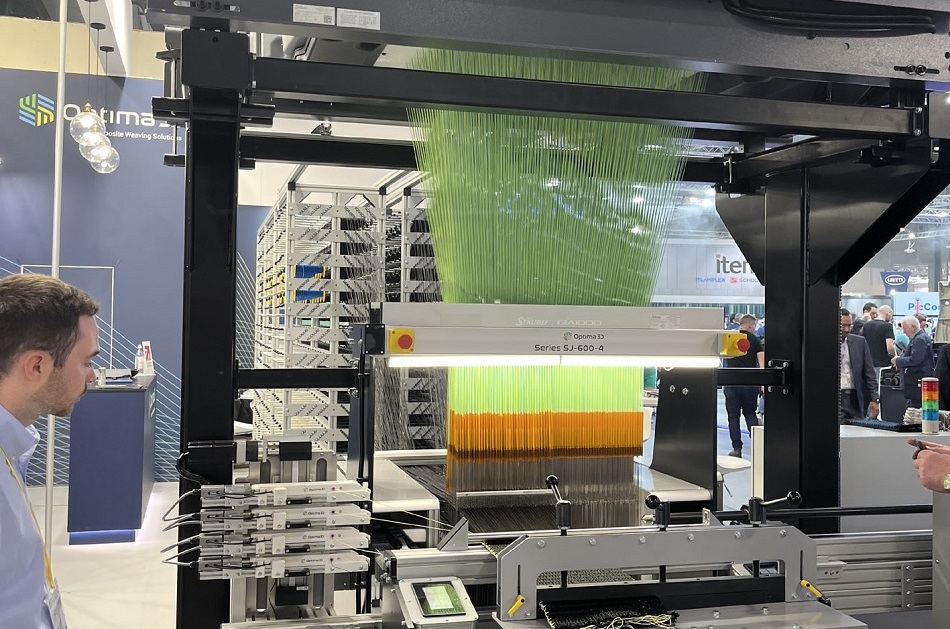
Following a triumphant showing at ITMA 2023 in Milan, Optima 3D, a UK-based pioneer, is poised to introduce its cutting-edge weaving technology to the USA. The renowned University of Maine's Advanced Structures and Composites Center (ASCC) eagerly awaits installation.
A Technological Marvel Unveiled
Optima's game-changing 3D weaving system boasts a Series 600 shuttle weaving machine, seamlessly integrated with a Stäubli SX jacquard featuring 2,688 hooks. Complementing this setup is Optima's compact warp delivery creel, alongside a pirn winder for shuttle bobbins and a spool winder for creel spools.
Whispers of Ingenuity Amidst Demonstrations
During the clamorous demonstrations at ITMA 2023, where safety dictated polyester substitution for carbon fiber yarns, Optima's system stood out as the quietest. This tranquility belied its impressive operation, captivating the weaving industry's major players.
Versatility Redefined
Optima's looms transcend conventional weaving with their digital control systems, enabling swift parameter changes and innovative shuttle functionality. Managing Director Steve Cooper emphasizes their focus: "Our goal was to craft a superior 3D weaving machine, delivering tangible customer advantages. It's about transforming costly fibers like carbon into essential composites."
ASCC's Vision for the Future
Professor James Stahl, an engineer at ASCC, envisions the new Optima 3D weaving system as a cornerstone for their upcoming textile lab. The technology's design flexibility, facilitated by the shuttle-based weft insertion, will elevate fabrics for soft and hard composite structures.
A Legacy of Innovation
ASCC's pioneering spirit is well-established, underscored by Guinness World Records for their feats in 3D printing. This includes the world's largest prototype polymer 3D printer, a substantial 3D-printed object, and a sizeable 3D-printed boat. Their recent project, BioHome3D, a 182-square-meter 3D-printed house fashioned from sustainable materials, continues to exemplify their dedication to innovation.
Optima's Leap Toward First Principles
Jason Kent, CEO of the British Textile Machinery Association, lauds Optima's revolutionary approach, stating, "Optima's 3D system rekindles the essence of weaving, reflecting true innovation in design and process. Its contributions to ASCC's forward-looking sustainable projects stand as a testament to UK innovation."