


FW
CENTRESTAGE: Asia's Premier Fashion Extravaganza
Asia's renowned fashion event, CENTRESTAGE, will take place from September 6 to 9 at the Hong Kong Convention and Exhibition Centre. The four-day extravaganza will showcase runway shows, presentations, and discussions on fashion trends and sustainability, spotlighting cutting-edge designs and concepts.
With the theme "Radiant Wellness," CENTRESTAGE aligns with the growing public focus on health. Over 210 brands from 18 regions will participate, offering an exclusive preview for fashion buyers on the first two days, followed by public access for the remaining two days.
The opening gala, CENTRESTAGE ELITES, will unveil Wilson Choi's acclaimed collection alongside FETICO's debut by Emi Funayama. The Hong Kong Ballet will also present local fashion brands' collections, integrating dance and style.
The event will host Brand Collections' Shows and Designers' Collection Shows, highlighting established Hong Kong brands and diverse fashion designers. The Hong Kong Kids Fashion Show promises excitement for fashion-loving parents.
Esteemed institutions such as Hong Kong Polytechnic University and Fashion Farm Foundation will present innovative creations, while first-time participants from Indonesia, Macau, Japan, and South Korea bring vibrant designs. Sustainable fashion leaders like DETERMINANT and The Billie will shine, accompanied by seminars and the Redress Design Award 2023.
Novetex Textiles and Redress will discuss sustainability, while the Hong Kong Research Institute of Textiles and Apparel's forum explores interdisciplinary innovation. Attendees can engage in discussions on fashion, makeup, skincare, and digital fashion developments.
Local emerging designers remain in the spotlight with the FASHIONALLY Collection #21, alongside FASHIONALLY presentations and competitions like Thread of Creativity and Hong Kong Young Fashion Designers' Contest. The event concludes with a fusion of digital fashion and AI concepts.
EU reviews Myanmar's human rights
The European Union is currently reviewing the state of human and labor rights in Myanmar, a move that could lead to the withdrawal of trade privileges granted to the country.
The EU's "Everything But Arms" (EBA) initiative eliminates tariffs and quotas for imports of various goods from 47 of the world's least developed countries, including Myanmar. However, the EU has said it will closely monitor the situation in Myanmar and could withdraw the trade privileges if the human rights and labor rights situation does not improve.
The move comes after major European brands, such as H&M and Inditex, announced they would halt sourcing from Myanmar due to concerns about the country's human rights record.
The military junta that took power in Myanmar in February 2021 has been accused of widespread human rights abuses, including the killing of civilians and the arbitrary detention of political opponents.
The EU's decision to review Myanmar's trade privileges is a significant step and could have a major impact on the country's economy. The garment industry is a major employer in Myanmar, and the withdrawal of trade privileges could lead to job losses and economic hardship.
The EU has said that it is committed to supporting Myanmar's transition to democracy, but it has also made clear that it will not tolerate human rights abuses. The review of Myanmar's trade privileges is a way for the EU to send a message to the military junta that it must respect human rights if it wants to continue to benefit from trade with the bloc.
H&M to Resume Operations in Ukraine in November
Swedish fashion retailer H&M announced on Thursday that it plans to reopen most of its stores in Ukraine starting in November. The company had temporarily closed its stores in Ukraine in February 2022 following the Russian invasion.
H&M said it is closely monitoring the security situation in Ukraine and will reopen its stores only when it is safe to do so. The company also said it is considering divesting its Russian operations.
H&M has eight stores in Ukraine. The company employs around 6,000 people in the country.
Bangladesh to benefit from GPT+
Canada has extended its General Preferential Tariff (GPT) scheme, which provides duty-free market access to developing countries.
The new version of the scheme, called GPT+, will align the program with the ongoing trade dynamics, sustainability priorities, and the economic context of the beneficiary countries. Bangladesh has been a beneficiary of the GPT scheme since 2003 and is expected to benefit from GPT+.
Canada Extends GPT Scheme to 2034, Bangladesh to Benefit from GPT+; Bangladesh is one of the major markets for Canada's apparel. In the fiscal year 2022-23, Bangladesh's apparel exports to Canada reached US$1.55 billion, which was a 16.55% increase from the previous year.
With the introduction of GPT+, Bangladesh should aim to further penetrate the Canadian market by focusing on high-growth sectors such as sustainable apparel and by improving the quality and compliance of its products.
Key points:
• Canada has extended its GPT scheme to 2034.
• The new scheme, called GPT+, will align the program with the ongoing trade dynamics, sustainability priorities, and the economic context of the beneficiary countries.
• Bangladesh has been a beneficiary of the GPT scheme since 2003 and is expected to benefit from GPT+.
• Bangladesh is one of the major markets for Canada's apparel and should aim to further penetrate the Canadian market with the introduction of GPT+.
Guess Inc. reports growth in Second Quarter
Guess Inc., the U.S. fashion brand headquartered in Los Angeles, announced that its net revenues for the second quarter reached $664.5 million, marking a 3% rise. This growth was primarily driven by surging revenues in the Asia and Europe sectors, although it was partially offset by a decline in the Americas region.
The company disclosed that its European revenues surged by 9% in U.S. dollars during this quarter. Notably, retail comparable sales, which include both in-store and online sales, experienced an impressive 11% boost in this region.
Meanwhile, Asia witnessed a substantial 19% increase in revenues in U.S. dollars, accompanied by a 2% rise in retail comparable sales.
However, the Americas region faced challenges, with retail revenues declining by 8% in U.S. dollars and retail comparable sales decreasing by 6%. Furthermore, Americas' wholesale revenues dropped by 13%. On a positive note, licensing revenues demonstrated a notable 13% increase over the three-month period.
The company's financial report for the second quarter, which concluded on July 29, showed net earnings of $39 million. This represented a significant 63% surge compared to the same period in the previous year, where net earnings were $24 million.
The Americas retail business displayed an improved performance in comparison to the previous quarter, attributed to enhanced customer conversion rates in stores. As a result, the company achieved an operating profit of $65 million, corresponding to an operating margin of 9.7% for the period, which outperformed expectations.
However, despite the upswing in second-quarter sales, Guess did not achieve an overall increase in total revenues and profits for the first half of the year.
In the six months culminating on July 29, the company's net earnings totaled $27.2 million, signifying a 15% reduction from the $31.9 million earned during the same period the previous year.
Additionally, revenues experienced a slight decline, from $1.24 billion to $1.23 billion.
Women’s active wear promotes body negativity: Study
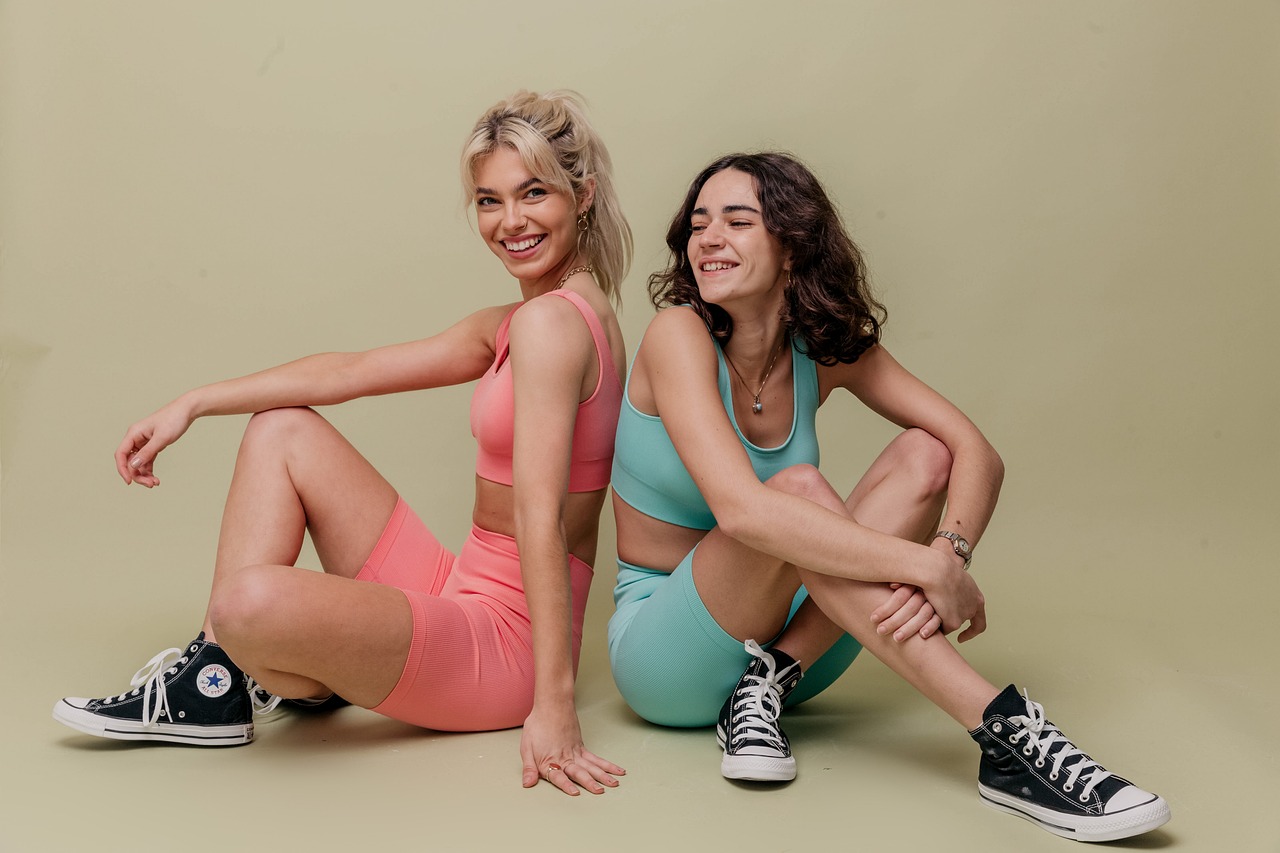
The women’s active wear promotional segment seems to be doing more harm than good with most women experiencing negative body image as they compare their own body shapes with fit and toned models in tight-fitting clothing on these websites. Most images are far from realistic as these photo-shopped body-focused marketing is used to attract attention and promote their products, ignoring the fact that women experience lower self-esteem and body shaming.
Among many recent studies on women's body shaming and negative image, two studies by Australia-based Edith Cowan University (ECU), led by psychology researcher Ross Hollett, have shown the use of svelte and sexually attractive figures is greatly affecting women’s self-esteem. The athleisure apparel segment that has grown in leaps and bounds after pandemic years and expected to be worth more than $548 billion globally by 2024, is a lucrative one and retailers are only concerned about making profits while they can.
Innovative eye-tracking experiment by new ECU study
The eye-opening 'Gaze behavior’ study by Hollet, published in the International Journal of Consumer Studies used an innovative eye-tracking experiment to gauge website clothing shopping for active and athleisure wear and its psychological outcomes on women. The laboratory sessions of online women shoppers showed that most spend around 90–100 minutes per week browsing for clothes online and with well-being being top of mind, activewear is one of the most popular clothing categories.
Along with body image and self-esteem being monitored using a combination of self-report and reaction time that measures the high-tech eye-tracking technology is used to gauge their eye gaze behavior towards a new set of well-toned female models. Both these ECU studies showcased real women with normal average figures felt a sense of body-shaming and lower self-esteem in comparison to these unrealistic models when browsing an activewear website. However other websites such as casual clothing, homewares or accessories were far more relatable without creating a negative body image.
Need for rethink on ad campaigns
Some activewear brands such as Gymshark’s shoot in London recently are facing backlash and frustration from women, as almost all of the seven models pictured in colourful outfits, were an unrealistic standard and a far cry from what an average women’s body type is. These ads do not take the larger women into their product portfolio and are not a true representation of what gym clothes would look like on an average woman, who spends her hard-earned money on buying these clothes. The marketing and promotional strategies need to be changed in order to cash in on the women's active wear market globally, which was estimated to be $119,078 million in 2017, and is now expected to reach $216,868 million by 2025, registering a CAGR of 7.7 per cent.
With comfort and fitness taking precedence over Covid years, the athleisure and active wear segments have become extremely high-tech with water resistance features, bi-stretchable function, and anti-bacterial fabrics. It is now usually the apparel segment of choice in dress-down work days, streetwear, and other outings, with casual wear coming a close second.
Although North America dominates the market, the Asia-Pacific is showing growth too at a CAGR of 9.6 per cent, in terms of value. The polyester segment with its durability and flexibility factors is dominating the global women's activewear market. Women dominate the global apparel markets and it is time that active wear brands understand what they want instead of promoting unrealistic model figures, if they want to keep the profits coming in.
Plus size women's clothing market to grow at 4.3% CAGR
The global plus size women's clothing market is projected to grow at a compound annual growth rate (CAGR) of 4.3% from 2023 to 2031. This growth is being driven by a number of factors, including the increasing number of overweight and obese women, the growing demand for fashionable plus size clothing, and the increasing availability of plus size clothing online.
The market is segmented by product type, age group, distribution channel, and region. The innerwear segment is expected to grow at the fastest CAGR during the forecast period, as there is a growing demand for comfortable and stylish innerwear for plus size women.
The 25-45 years age group is the largest market segment, and is expected to maintain its dominance during the forecast period. Online channels are expected to be the fastest-growing distribution channel, as they offer a wider range of plus size clothing and convenient shopping options.
The Asia Pacific region is the largest market for plus size women's clothing, and is expected to maintain its dominance during the forecast period. This is due to the growing middle class in the region and the increasing awareness of fashion among plus size women. Europe and North America are also expected to experience significant growth in the market.
Some of the major players in the plus size women's clothing market include Ralph Lauren Corporation, Hennes & Mauritz AB, Hanes Brand Inc., Philips Van Heusen Corporation, Asos Curve, Carmakoma, Mango Brand, Forever 21, Adrianna Papell, Eloquii, Torrid, Evans, Old Navy Plus, Monif C., American Rag, Ashley Stewart, City Chic, Fashion to Figure, Lucky Brand Plus, Lane Bryant, Pure Energy, and many others.
Pet apparel market to reach $8.738 Bn by 2033
The global pet apparel market is expected to reach US$8.738 billion by 2033, growing at a CAGR of 5.5% from 2023 to 2033. The market is driven by the increasing adoption of pets, particularly among millennials and Gen Z, and the growing demand for fashionable and comfortable pet clothing.
The report by Future Market Insights (FMI) also found that the shirts and tops category is expected to hold a significant share of the market, followed by jackets and sweaters. The dog segment is also expected to dominate the market, with the increasing demand for dog supplies and necessities such as toys, clothes, and other items.
In terms of sales channels, online retailing is expected to dominate the market, with the growing popularity of e-commerce platforms. Pet specialty stores are also expected to have a significant market share.
The report also highlights some of the key trends in the pet apparel market, such as the increasing demand for sustainable pet clothing and the growing popularity of pet-based community festivals.
Global brands ignored human rights obligations after Türkiye earthquake
A white paper by the Worker Rights Consortium (WRC) examines how 16 global brands handled their human rights obligations after the devastating earthquake in Türkiye.
The paper found that most of the brands extended deadlines on clothing orders in production at the time of the quake, but half of the brands did not keep to original payment schedules. This meant that suppliers forced to deliver late were also paid late, exacerbating their financial situation.
Only six of the 16 brands cited any form of assistance to suppliers, such as low-interest loans or grants. And this self-reporting may overstate the brands' generosity: less than 2% of suppliers responding to a survey by Turkish researchers reported that their customers "supported workers and producers after the quake."
As a result of the brands' inaction, nearly half of the suppliers in the survey said they could not pay workers in full in the weeks after the quake. A third said they were forced to put workers on unpaid leave. And not all brands extended deadlines: 35% of suppliers said they were forced to stick to original delivery schedules.
The white paper identifies Marks & Spencer and C&A as the only two brands surveyed that reported acting responsibly both with respect to order delays and aid to suppliers. Among the worst performers are Boohoo, H&M, and s.Oliver.
The WRC white paper analyzed responses to a recent questionnaire to brands from the Business and Human Rights Resource Center, additional information provided by brands to the WRC, and the results of a new survey of 202 garment and textile producers in the earthquake-hit zone. The supplier survey was conducted by the Middle Eastern Technical University's Dr.DeryaGöçer and Dr.ŞerifOnurBahçecik.
Göçer and Bahçecik write: "The brands working with producers of this region have failed to demonstrate their declared responsibility and solidarity in the aftermath of a major earthquake."
Scott Nova, Executive Director of the WRC, said: "While many leading apparel brands extended delivery deadlines, they could have and should have done much more. With a few notable exceptions, the world's apparel brands looked at the calamity in their Turkish supply chains and basically decided to abandon workers to their fate."
Disposable protective apparel market size to reach US$3.475.9 Mn by 2033
The disposable protective apparel market is estimated by Future Market Insightsto grow at a CAGR of 4.1% during the forecast period, 2023-2033. The market is likely to be valued at US$2,325.7 million in 2023 and is anticipated to reach US$3,475.9 million by 2033.
The growth of the disposable protective apparel market is driven by the increasing demand for safety and protection from hazardous chemicals, microorganisms, and other contaminants in various industries such as healthcare, manufacturing, construction, and oil & gas.
The market is also expected to benefit from the rising awareness about the importance of personal protective equipment (PPE) among workers and employers. Additionally, the increasing government regulations on the use of PPE in various industries is also expected to boost the growth of the market.
The key players in the disposable protective apparel market include Lakeland Industries, Inc., 3M, Kimberly-Clark Corporation, DuPont, and Honeywell International Inc. These players are focusing on product innovation and expansion in new markets to gain a competitive edge in the market.
The disposable protective apparel market is expected to grow at a steady pace during the forecast period. The increasing demand for safety and protection from hazardous chemicals, microorganisms, and other contaminants in various industries is the major driver of the market growth.











