FW
BGMEA Meets IMF to Discuss Post-LDC Graduation Challenges
The Bangladesh Garment Manufacturers and Exporters Association (BGMEA) met with a team from the International Monetary Fund (IMF) on October 15 to discuss the RMG sector and post-LDC graduation challenges. The meeting focused on the current state of the RMG industry, the global trade landscape, and their implications for Bangladesh's export performance.
BGMEA President Faruque Hassan shared the Sustainability Strategic Vision 2030 with the IMF team, which is a roadmap for the sustainable development of the RMG industry in Bangladesh. He also highlighted Bangladesh's achievements in environmental sustainability and expressed his commitment to pursue further excellence.
The IMF team appreciated BGMEA's efforts and initiatives and expressed their interest to continue their engagement with BGMEA in the future.
FiltXPO 2023: A Showcase of Filtration and Separation Solutions
FiltXPO, the only event focused on filtration and separation products and processes, was held in Chicago, IL from October 10-12, 2023. It was organized by INDA, the Association of the Nonwoven Fabrics Industry, and the Waterloo Filtration Institute.
The event attracted C-suite leaders and product developers from various sectors and regions. They explored the latest innovations and trends in filter media technologies, filtration machinery and equipment, clean air solutions, standards and testing, and industry challenges and opportunities.
The event also featured a two-day Filter Media Course, led by experts from NC State University, that provided a comprehensive overview of nonwovens and their applications in air, liquid, and aerosol filtration. The next edition of FiltXPO and the Filter Media Course will be held in Miami Beach, FL from April 29-May 1, 2025.
Good Fashion Fund Drives Sustainable Fashion in Asia
Good Fashion Fund, a sister company of Fashion For Good, is a collaboration between Laudes Foundation, The Mills Fabrica, and FOUNT. It provides long-term USD loans, technical expertise, and environmental and social support to manufacturers in Asia, primarily India and Bangladesh.
Good Fashion Fund invests in impactful equipment that fosters economic growth and promotes sustainable fashion practices. The fund has recently partnered with Sri Kannapiran Mills Limited (SKML), a leading Indian producer of cotton yarn and sustainable denim fabrics. Through a 2.5 million US dollar investment, they will support SKML in replacing and expanding key sustainable equipment across three of their factories. This partnership will enable SKML to meet manufacturing demands, scale its sustainability approach, and enhance its competitiveness in the global supply chain.
This collaboration exemplifies Good Fashion Fund's commitment to addressing sustainability challenges in the industry. Good Fashion Fund is proud to support SKML as they pioneer sustainable practices in denim manufacturing.
NCTO calls on U.S. industry to act swiftly against China's forced labor surge
The National Council of Textile Organizations (NCTO) has issued a stark warning to Congress and the administration, calling for urgent and robust measures to address the surge of imports tainted by forced labor, narcotics, and counterfeits originating from China.
NCTO President and CEO Kim Glas delivered this message during her testimony at a congressional hearing on "Exploitation and Enforcement: Evaluating the Department of Homeland Security's Efforts to Counter Uyghur Forced Labor."
Glas highlighted the influx of Chinese cotton products produced under abhorrent conditions, particularly in Xinjiang, flooding global markets and indirectly making their way to the United States.
This has led to forced labor textiles infiltrating American supply chains, causing textile plants to idle and workers to lose their jobs, while some companies have shuttered entirely.
The urgency of the matter lies in the fact that Congress is failing to stop forced labor trade, despite the enactment of the Uyghur Forced Labor Prevention Act. Glas also pointed to the misuse of the de minimis provision in trade law, allowing illicit goods to enter the U.S. unchecked.
She stressed the need for immediate action, including closing the de minimis loophole, increasing customs enforcement, expanding the UFLPA Entity List, and enhancing penalties and inspections to combat this alarming trend.
NCTO urged Congress and the administration to take swift and decisive action to extinguish this economic, health, and human rights crisis, protecting American companies and workers from exploitation while preserving the nation's manufacturing base.
China’s strangle-hold on global supply chain difficult to delink: Report
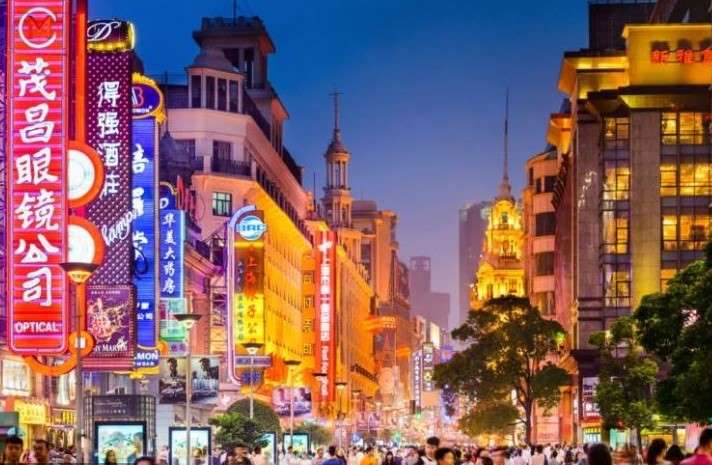
The US, the UK and the EU are continuing with their rhetoric about decreasing dependency on China but the ground reality is on the contrary as the Chinese footprint is spread far, wide and deep – from basic items to high-level industrial equipment. The three huge consumer markets may speak from the moral high ground of Western democracies but insiders know well that developing other supply sources that are as resourceful as China is going to be a long-haul, hoping that India, Mexico, Brazil and South Africa could be brought forward as the diverse basket of options the US, the UK and the EU need.
In a series titled ‘Worlds Apart: Risks and opportunities as deglobalization looms’, RBC Wealth Management has paid particular attention to this situation as it explores the trend away from globalization and its ramifications for investors, economies, and financial markets.
China’s sophisticated production makes it aleader
For a start, there are quite a few points which make China’s case as the global king of production irrefutable. More often than not and much to the displeasure of the US, China has proven its ability to overcome the impact of technological restrictions in the past and its massive manufacturing scale and well-established supply chains are laying the foundation for future technological innovation. It is already a well-known fact that China is shifting away from low-end, labour-intensive component manufacturing to higher-tech, full-spectrum product manufacturing.
According to the report, the high complexity of global supply chains, combined with the extensive scale of China’s industrial sector and manufacturing competencies, makes it undesirable and unrealistic for many multinational companies to make a complete break with China anytime soon. Additionally, this break-up could lead to multinational brands finding themselves in a precarious position as the country’s domestic consumer population is just too large to ignore. China has migrated from low-cost manufacturing to one that increasingly focuses on innovation and complex manufacturing techniques. China will maintain its manufacturing dominance while at the same time make inroads into emerging and strategic fields such as electric vehicles, telecommunications, bioengineering, artificial intelligence, and other areas.
In recent years, the West has started implementing restrictions on China’s access to critical technologies, such as AI, quantum computing, and advanced semiconductors, raising concerns about the country’s ability to move further up the supply chain and achieve its stated “technological self-reliance” goals. However, the resourcefulness of the Chinese has not prevented their progress in these areas at all.
Western on-shoring and friend-shoring isn’t ready to deliver
The Chinese approach to the pandemic was indeed a stringent one and hurt supply chains like never before, leading to many importers seeking to not only diversify their points of sourcing but also set up manufacturing in locations closer home and in regions that are on friendly terms with importing countries. For the US, the opportunity lay in cost-efficient Mexico and the cluster of Central American countries – however, whilst Mexico being a North American country has the basic infrastructure and cheap talent pool in place, it cannot deal with even 15 per cent of the Chinese capacity and that too with huge production line investments.
The Central American countries are a no-go as they are in continuous socio-political conflicts, have huge illegal and criminal bases that can jeopardize operations and supplies and most importantly have no skilled labour or infrastructure worthy of complimenting Mexico’s production capabilities. In The EU, Turkey has always been a viable option and now that the nation is undergoing economic downturns regularly, it does not guarantee a stable environment for a steady supply and the East European countries that don’t fall within the EU are not ideal places to develop as friend-shoring hubs.
As things are, trade relations with China will continue and a slowdown will take decades to achieve.
H&M issues EUR 500M green bond, attracts strong investor interest
H&M Group has successfully issued a EUR 500 million green bond with an 8-year maturity, signaling a significant move towards sustainable finance. This green bond attracted immense interest, being oversubscribed by over 3.5 times, from a diverse group of international institutional investors.
The funds raised through this issuance will be dedicated to projects falling within five distinct categories, as outlined in the Sustainable Finance Framework introduced on September 1, 2023. These categories include Circular Economy, Green Buildings, Renewable Energy, Energy Efficiency, and Sustainable Water Management & Wastewater Management.
H&M Group's Chief Financial Officer, Adam Karlsson, expressed satisfaction with the strong demand for their inaugural green bond, emphasizing its role in extending the company's debt maturity profile.
Moreover, this move reinforces the group's commitment to leading the fashion industry towards circularity and a net-zero climate impact. It is also noteworthy that H&M Group's investor base has broadened to include prominent green investors, reflecting the company's commitment to sustainability.
The bond will be listed on Euronext Dublin, with support from financial institutions such as BNP Paribas, ING, J.P. Morgan, SEB, and UniCredit, while ING played a pivotal role as an advisor for the Sustainable Finance Framework.
Fashion for Good and Spring Lane Capital Team Up
Fashion for Good and Spring Lane Capital have teamed up to help unlock the capital needed to scale sustainable innovation in the textile industry. Their new report, “The Great Unlock: Closing the innovation commercialisation gap through project finance solutions”, reviews the different types of capital available to close the funding gap within the commercialisation stage.
The report discusses the benefits, requirements, and opportunities related to project finance as a funding solution in this space, and highlights the roles that various stakeholders would need to play in order to bring this to life.
The report aims to enhance innovators’ understanding of relevant industry stakeholders and ultimately assists in further enabling the scaling of much-needed innovation.
Project Finance as a Solution
The bulk of the funding needed will come from debt financing, with project finance serving as a key solution due to the strong focus on risk mitigation and allocation, which the structured nature of such funding provides.
Project finance is a specialized type of financing in which the project's assets and cash flows serve as collateral for the loans used to finance the project. Project finance distinguishes itself by mitigating risks, bolstering credit ratings, and allowing for greater borrowing capacity based solely on the project's viability. It thereby offers a lifeline to innovators who may lack creditworthiness in traditional financing channels.
Project finance is particularly beneficial for new technologies because it allows them to scale effectively and faster compared to traditional funding channels. Project finance also gives access to broader debt capital markets and offers longer repayment periods compared to corporate finance, making it more attractive for technology development.
DTG Dhaka Exhibition 2024
From February 1 to 4, 2024, the Bangabandhu International Conference Center (BICC) in Dhaka will host the DTG Dhaka International Textile and Garment Machinery Exhibition. This event will showcase the latest technologies and innovations in the textile and garment industry, with participation from both local Bangladeshi and international companies.
The exhibition will cover a wide range of products and services, such as:
Apparel manufacturing machinery
Home textiles
Machinery for the textile industry
The exhibition will offer a unique opportunity for attendees to discover the newest products and services from leading companies, network with potential customers and suppliers, and learn about the latest trends and developments in the textile and garment sector.
This event is of great significance for the Bangladeshi textile and garment industry, as it expects to attract over 10,000 visitors from Bangladesh and around the world. It provides an excellent platform for companies to display their products and services to a global audience.
The DTG Dhaka International Textile and Garment Machinery Exhibition will feature presentations from both local and international companies, who are ready to share their most recent products and services. This gives a great opportunity for businesses in the textile and garment industry to gain insights into current trends and developments, build relationships with potential partners, and grow their businesses.
Indian Textile Exports: Scenario
Indian textile exports are expected to grow by 10% in the financial year 2024, driven by strong demand from the US and European markets, according to a report by Crisil Research. The report also predicts that the Indian textile sector will have a compound annual growth rate (CAGR) of 10-12% in the next five years.
The growth in textile exports is attributed to a number of factors, including the recovery in the global economy, the rising demand for Indian textiles in developed markets, and the government's initiatives to boost the textile sector.
The US and Europe are the two largest markets for Indian textiles, accounting for over 50% of total exports. The demand for Indian textiles in these markets is expected to remain strong in the coming years, driven by factors such as the growing population, rising disposable incomes, and the increasing popularity of Indian culture and fashion.
The Indian government has also taken a number of steps to boost the textile sector, including the launch of the National Technical Textile Mission (NTTM) to promote the production and use of technical textiles, and the announcement of incentives for the textile sector under the Production Linked Incentive (PLI) scheme.
The growth in textile exports is expected to have a positive impact on the Indian economy, as it will create jobs and generate foreign exchange. The growth is also expected to benefit the Indian textile industry, as it will lead to increased investment and innovation.
Overall, the outlook for the Indian textile sector is positive. The sector is expected to grow significantly in the coming years, driven by strong demand from domestic and international markets, government support, and technological innovation.
JFW JAPAN CREATION (JFW-JC) 2024
To Showcase Upcoming Textiles in Tokyo
The Textile Division of the Japan Fashion Week Organization (JFW) will host the JFW JAPAN CREATION (JFW-JC) 2024 event from October 31 to November 1 at the Tokyo International Forum. The event will be held concurrently with Premium Textile Japan 2024AW and is expected to welcome 271 exhibitors.
In addition to the related Pigskin Fashion Show, the JFW-JC will also feature an expanded What's Next program, which was launched at the PTJ 2024 Spring/Summer show in May to promote the charm and appeal of upcoming textiles. The theme of the JFW Textile Trends is Time to Pass On To the Future.
The JFW-JC is a key event for the Japanese textile industry, providing a platform for exhibitors to showcase their latest products and innovations to domestic and international buyers. The event also features a variety of seminars and workshops on the latest trends and technologies in the textile industry.
The What's Next program is a new initiative that aims to highlight the next generation of textile designers and their work. The program features a curated selection of textiles from emerging designers, as well as a series of talks and events that explore the future of the textile industry.
The JFW-JC is a must-attend event for anyone interested in the Japanese textile industry. The event offers a unique opportunity to see the latest trends and innovations in the industry, as well as to network with leading textile designers and buyers.