


FW
Cambodia's garment and travel exports slump 15% amid global economic slowdown
Cambodia's garment, footwear, and travel product exports suffered a 15% decline, falling from $11.7 billion to $9.9 billion in the first 11 months of 2023.
Apparel and textiles recorded $7.22 billion, down 14.8%, with footwear dropping 23% to $1.21 billion and travel goods decreasing by 9.8% to $1.47 billion.
The European Union, the United States, Canada, and Britain, key buyers of these products, contributed to the decline due to a global economic slowdown, particularly in the EU, said Ministry of Commerce’s Secretary of State Penn Sovicheat.
The sector, with 1,300 factories employing 840,000 workers, predominantly female, is crucial for Cambodia's foreign exchange earnings.
AEPC's 44th AGM unveils strategies for apparel industry growth
The 44th Annual General Meeting (AGM) of the Apparel Export Promotion Council (AEPC) unfolded crucial insights into the challenges and triumphs of the Indian apparel industry. Despite global uncertainties marked by two wars and inflationary pressures, AEPC remains optimistic about India's apparel exports, showcasing resilience amid adversity.
Chairman Naren Goenka announced that Indian apparel exports demonstrated a remarkable growth of 30.35% in 2021-22 and 1.10% in 2022-23, defying the pandemic-induced stagnation in global demand. AEPC is now steering the industry towards ambitious goals, aiming to elevate India's apparel exports from the current $16-17 billion to $40 billion by 2030.
To achieve this target, AEPC outlined strategic initiatives:
1. Establishing an in-house Market Intelligence Cell.
2. Reinforcing traditional exports of cotton through initiatives like promoting Kasturi cotton.
3. Guiding the industry towards technical textiles, MMF, and new product categories.
4. Diversifying markets beyond EU and USA, with a focus on emerging markets in FTA countries, Australia, UAE, Latin America, and Africa.
5. Emphasizing Environmental, Social, and Governance (ESG) compliance and sustainability through the "Certificate Program on Sustainability."
6. Advocating for increased Foreign Direct Investment (FDI) in the garment sector to enhance competitiveness.
Chairman Goenka also urged the extension of the ROSCTL scheme, highlighting its crucial role in planning business consistently amidst challenging market sentiments. The AGM concluded with gratitude towards government support and a commitment to foster strategic partnerships for sustainable growth.
Intertextile Apparel's SS 2025 trends embrace TURBULENCE
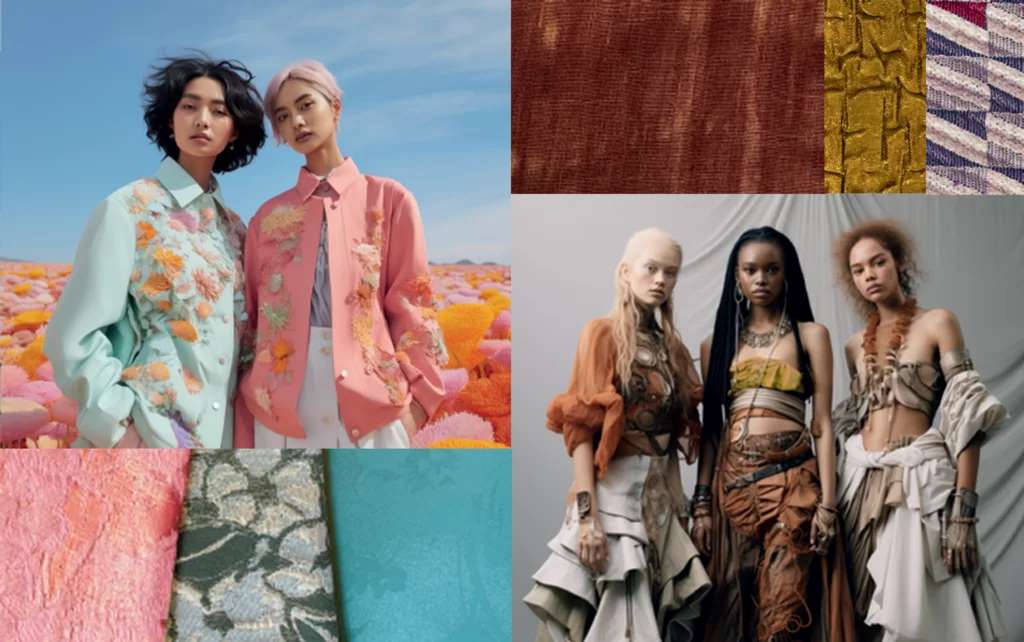
Embark on a journey through the dynamic world of fashion as TURBULENCE sets the tone for Intertextile Shanghai Apparel Fabrics – Spring Edition 2024. From March 6 to 8, the Trend Forum in Hall 5.1 at the National Exhibition and Convention Center (Shanghai) will showcase four trends—Grace, Immersive, Switch, and Voices—curated by the visionary DONEGER | TOBE from New York. Experience the unfolding of a complex and vibrant future in apparel trends.
In the ever-evolving landscape of fashion, a global committee of trend forecasters, including representatives from Elementi Moda in Milan, NellyRodi Agency in Paris, and Sachiko Inoue in Tokyo, has once again united to unveil the Spring-Summer 2025 trends. These trends, born from a tumultuous world, blend self-indulgence and self-expression, encapsulating the positivity and sensibility necessary to navigate the world's turbulence.
Ecological consciousness and everyday influencers shaping fashion
Fashion's trajectory is being reshaped by a dual force—ecological consciousness and the rise of everyday influencers. The committee identifies four distinct trends: Grace, Immersive, Switch, and Voices. Though interconnected by shared disorder, each trend manifests unique aspects that mirror the changing ethos of the industry.
Grace: A quiet luxury lifestyle
Harmony in simplicity. The Grace trend champions enduring luxury through the celebration of peace, love, joy, and respect. Utilizing ornamental delicacy, gentle colors, and high-quality materials, this trend promises a lasting sense of tranquility.
A silver-tinged color palette, featuring elegant hues and tender blooms, adorns gracefully wrought fabrics. Unprocessed toiles, irregular slubs, subtle shiny satin, featherweight jacquards, and printed sheer fabrics blend seamlessly to create an atmosphere of refined serenity.
Immersive: comfort and minimalist expression
Comfort in every detail. Immersive embraces comfort and a minimalist style, demanding attention with powerful, graphic, festive mixes that inspire a positive spirit of collaboration through fashion.
Cosmic and oceanic blues meet tropical dusk in a vibrant contrast. Fabrics range from the functional elegance of robbed stretch jersey and Sea Island cotton to the festivity of decorative embroidery and fluid viscose jersey, promoting a relaxed yet expressive style.
Switch: DIY high-tech experiments
Expressive experimentation. Switch heralds a new dimension of part DIY and part high-tech fashion, encouraging wearers to express their personal style through experimental twists on everyday situations.
Recycled polyester and polyamide, cotton satin, glazed poplin, multicolor deckchair stripes, and dotted variations converge in a vibrant palette of joyful pastels and energetic brights, aligning with the theme of joyful pleasures and fantasy experiences.
Voices: Dazzling freedom and new age fashion
Contrasting, dazzling freedom. Voices envisions a future of instinctive New Age fashion—an ode to Earth that combines raw character, positivity, and improvisation.
Exuberant tones and tinted darks in textural compositions define the color palette. Fabrics range from crackled crêpe and various organic fibers exuding ornamental rusticity to decorative and baroque elements featuring rich velvety surfaces and artistic patterns.
The unified textile value chain under one roof
As the apparel fair coincides with Intertextile Shanghai Home Textiles – Spring Edition, Yarn Expo Spring, CHIC, and PH Value, the entire textile value chain converges under one roof, creating an extended platform for invaluable business networking opportunities.
In this dynamic landscape where fashion and ecological consciousness intertwine, the SS 2025 trends offer a glimpse into a future where self-indulgence meets mindful expression, mirroring the resilience needed to weather the world's turbulence.
Global textile industry faces crisis: ITMF calls for urgent policy reforms

The international textile landscape has been in the throes of an unparalleled and prolonged downturn since the latter half of 2022. Despite an initial surge in demand post-COVID lockdowns, the global textile industry now faces significant challenges. In a recent press release, Dr. K. V. Srinivasan, the newly elected President of the International Textile Manufacturers Federation (ITMF), highlighted the multifaceted factors contributing to this downturn.
Weakening demand, inflation, and geopolitical tensions take a toll
According to the ITMF's Global Textile Industry Survey conducted in November 2023, weakening demand, inflation, geopolitical tensions, raw material price volatility, energy cost hikes, labor shortages, and rising interest rates collectively spell out the major causes of the industry's slump. Notably, 76% of respondents pointed to weakening demand as the primary culprit.
Cancellations and outlook
Approximately 44% of survey participants reported order cancellations in the past four months, with 5% experiencing major cancellations exceeding 30%. Looking ahead, 44% anticipate a more favorable business situation in the next six months, reflecting a cautious optimism that surpasses the sentiment in September.
India's textile industry bears the brunt
Dr. Srinivasan emphasized the detrimental impact on India's textiles and clothing sector, attributing it to challenges in raw material supply, soaring power costs, and policy shortcomings. Urgent corrective measures were urged, including the elimination of the 11% import duty on cotton, addressing Quality Control Order (QCO) issues, and resolving pricing concerns related to key materials.
Policy reforms urged for industry revival
Addressing the Indian government, Dr. Srinivasan urged a halt to short-sighted policies affecting raw materials, power, labor, and new investments until industry revival. Financial relief measures such as a one-year loan moratorium, conversion of short-term loans into long-term options, and increased working capital were suggested to prevent textile units from becoming non-performing assets and safeguard jobs.
Competitiveness and global strategies
Despite being the second-largest global raw material manufacturer, India's textile exports remain stagnant at USD 35 billion. Dr. Srinivasan recommended a holistic approach, emphasizing the need for appropriate policy measures to enhance global competitiveness and capitalize on the China+1 policy.
In the face of unprecedented challenges, the textile industry awaits decisive action from governments and stakeholders to navigate the current storm and revive its global standing.
Pakistan garment sector struggles from rising gas prices and loss of subsidies
A key contributor to the country's exports and GDP, Pakistan’s garment sector is currently struggling with rising gas prices and the removal of energy subsidies under the International Monetary Fund (IMF) program.
As per a report by Pakistan Credit Rating Agency (PACRA), the recent gas tariff hike of November 2023, which increased the cost of gas to $10.3 per million British thermal units (MMBTU), is likely to impact the sector's margins and competitiveness.
The garment sector, which includes textiles, clothing and leather products, contributed 3.0 per cent to Pakistan’s GDP in FY 2023, increasing by 8per cent Y-o-Y to Rs2.6 trillion.
However, textile exports, which accounted for 59 per cent of the country's total exports, declined by 14.6 per cent in FY 2023, due to supply chain disruptions caused by import restrictions imposed by the central bank and flash floods in August 2022. Textile imports also declined by 21.8 per cent, as the central bank restricted the import of raw materials and machinery to conserve foreign exchange reserves.
The garment sector is dominated by 59 organised composite units, with 32 listed on the Pakistan Stock Exchange (PSX), PACRA said.
The rating agency said the sector's margins were expected to remain rangebound, owing to domestic factors such as higher expected cotton production in fiscal year 2024, stable interest rates and consistent demand, both locally and globally, with global economic activity expected to rebound.
CCI’s cotton procurement rises to 55,000 bales
Increased cotton arrivals in the spot markets of Madhya Pradesh and amid lower prices, has led to an increase in Cotton Corporation of India’s (CCI) procurement to 55,000 bales (1 bale is 170 kg) at the government fixed minimum support price (MSP).
Currently medium staple cotton is being sold at a MSP of Rs 6,620 per quintal while long staple cotton is being sold at MSP of Rs 7,020 per quintal.
Daily 40,000 quintals of cotton arrives at the spot markets of MP. Over 60 per cent of this is procured by CCI. The nodal agency purchases raw cotton from farmers after checking the moisture content in the produce and other quality parameters.
CCI has set up 21 procurement centres in MP. Most of these centres were set up in Nimar and Malwa region like Khargone, Khandwa, Kukshi, Dhamnod and other trading centres.
CCI gives the procured produce to the contracted ginning units for processing in every state.
Loungewear to gender-neutral clothing, global fashion navigates a tangled 2023
As 2023 draws to a close, the global fashion industry presents a tapestry woven with contrasting threads. While glimmers of recovery and innovation shine through, the year has been marked by uncertainty, economic anxieties, and the ever-present shadow of climate concerns. Let's unravel the key trends that shaped global fashion in this tumultuous year:
 Comfort Reigns Supreme
The pandemic's lingering influence, coupled with rising inflation, saw consumers prioritize comfort and practicality over fleeting trends. Loungewear, athleisure, and oversized silhouettes dominated wardrobes, with brands like Lululemon and Uniqlo experiencing significant growth. Comfort wasn't just about casual dressing, though. Tailoring saw a resurgence, with a focus on comfortable yet stylish work-from-home attire.
Sustainability Takes Center Stage
Consumers became increasingly conscious of the environmental and ethical impact of their clothing choices. Sustainable brands like Patagonia and Veja flourished, while established players like H&M and Zara ramped up their sustainability efforts. Upcycling, recycled materials, and ethical sourcing became buzzwords, pushing the industry towards a more responsible future.
The Digital Push Persists
E-commerce continued its relentless march, further fueled by pandemic restrictions and convenience-seeking consumers. Brands embraced omnichannel strategies, seamlessly blending online and offline experiences. Social media remained a powerful tool for marketing and trendsetting, with platforms like TikTok and Instagram influencing purchasing decisions.
 Diversity and Inclusion Gain Momentum
The conversation around diversity and inclusion in fashion gained much-needed traction. Body positivity campaigns, gender-neutral collections, and increased representation of marginalized communities became commonplace. Brands like Chromat and Gypsy Sport championed inclusivity, paving the way for a more diverse and representative fashion
Challenges and the Road Ahead
Despite the promising trends, the industry faced significant challenges. Inflation and supply chain disruptions led to rising costs and production delays. The war in Ukraine further exacerbated these issues, casting a shadow over global trade and economic stability.
Looking ahead, the future of fashion remains uncertain. However, brands that can adapt to changing consumer preferences, embrace sustainability, and prioritize ethical practices will be best positioned to thrive. Embracing technology, fostering inclusivity, and offering value beyond just trends will be key to navigating the tangled threads of the global fashion landscape in the years to come.
Carrington Textiles launches new stretch fabric ranges
Carrington Textiles has introduced three new stretch fabric ranges–‘Tahoe’, ‘Lugano,’ and ‘Meteo.’
Designed for shirts and workwear applications, the ‘Tahoe’, range offers 20 per cent stretch, thanks to the inclusion of 4 per cent EOL fibers by ‘Xlance’. The fabric is made from a combination of polyester, recycled polyester, and cotton, aligning with the Better Cotton initiative.
Ideal for making trousers and jackets, the ‘Lugano’, range offers 2-way stretch, durability, and comfort as it is incorporated with ‘Lycra T400’ eco made elastomultiester, a fibre that provides this textile with a durable stretch that withstands the rigors of repeated industrial laundering and maintains consistency of fit, aesthetic and performance over time and recycled polyester.
Suitable for applications across sectors including railways, the ‘Meteor’, range offers the heaviest fabric in Carrington Textiles' new workwear range.
Carrington Textiles has also expanded its flame-retardant range with the introduction of ‘Flametougher 290AS Flex’ and ‘Flameflex 300AS.’ Featuring EOL fibers, these fabrics offer comfort and safety.
The ‘Flametougher 290AS Flex ‘ range is ideal for workers in high-risk industries, while ‘Flameflex 300AS’ combines full certification for flame retardancy with the comfort and durability of a stretch product. Carrington Textiles has also relaunched ‘Flameban 240’, offering a range of colors ideal for workwear applications. The company has also expanded the color range of its ‘Balance Range’ of sustainable fabrics, enhancing the aesthetics and versatility of their product offerings.
RoSCTL extension has become a necessity: AEPC
Current global economic uncertainties have made the extension of the RoSCTL scheme for three more years, a dire necessity; says Naren Goenka, President, AEPC.
According to Goenka, in order to boost exports to $40 billion by 2030, the industry needs to focus on innovation and faster clearances. It also needs to expand market and product basket, adopt cluster-based model, bring in investments and enhance branding efforts, he adds.
Goenka also urges the industry to focus on harnessing the potential of e- commerce segment and Free Trade Agreements (FTAs), practise sustainability, and responsible business practices.
The RoSCTL scheme was approved in 2021to provide garment exporters a rebate on central and state taxes on their outward shipments till March 2024. Under the RoSCTL scheme, the maximum rate of rebate for apparel is 6.05 per cent, while for made-ups this is up to 8.2 per cent. Garments and made-ups segments such as home textiles products are covered under the scheme. Global economic uncertainties are increasing due to Russia-Ukraine and Israel-Hamas conflicts. Attacks on ships at the Red Sea are also impacting smooth supply of goods across countries.
Circular Library project launches in the United States
An initiative by the Korean sustainable store, the Circular Library project was launched in the American market, with sustainable fashion brands Le Cashmere and Re Code.
Embodying the principles of circularity and sustainability, Circular Library offers upcycled workshops, musical experiences, inspiring art installations, and narratives that champion sustainability.
The store acts as a communal store for local artist exhibitions, workshops and yearly gatherings on sustainability and fashion, says Brandon Yu, Head, Circular Library project.
The store’s launched with Cashmere, a brand renowned for ethically sourcing naturally shed sheep hair. Showcasing a unique array of clothing items—jackets, sweaters, bags, tops, bottoms, dresses, skirts, etc, the Re Code store was filled with installations showcasing sustainability, like oval-shaped décor from unused airbags and fabrics repurposed from backpacks.











