FW
Trade dispute may benefit Asia
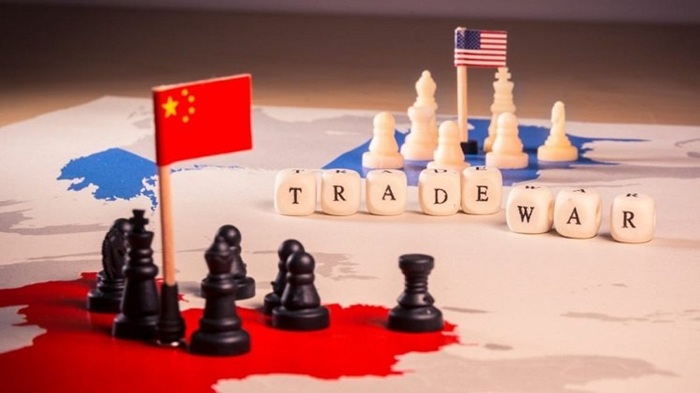
Trade tensions between China and the US are expected to reap benefits for Southeast Asia. Tariffs would inevitably mean that manufacturers, already accustomed to selling goods on the international market, will likely move to greener pastures like Cambodia, Myanmar, Laos, Bhutan and Bangladesh, among others.
As a result, these countries will finally be able to diversify trade, improve the quality of life of their citizens, introduce new skills to the labor force and eventually move beyond just being the rice fields and bread baskets of the rest of the region.
Chinese bicycle manufacturers are shifting their plants to Vietnam, where improved bilateral relations with the US have resulted in a free-trade agreement between the two nations. Similarly, garment manufacturers like Gap, Levi’s and Zara have set up contingency plans which would allow them to move manufacturing to Bangladesh in the event their products are targeted by stricter trade regulations.
Malaysia, which hosts over 800 auto component manufacturers on its shores, will also certainly benefit from the Chinese and American firms’ demands for such products.
Asia’s GDP is expected to grow by 5.4 per cent this year, while North America and Western Europe’s GDP will grow by only 2.2 per cent and 1.7 per cent respectively.
Redress invites applications for sustainable fashion design competition
Redress is the world’s largest sustainable fashion design competition. With a focus on emerging designers the search is now on to find the next big talent who has the ability to impress the judges and the commercial flair to inspire a new wave of conscious consumers. With support from two new headline sponsors the competition will also accept applications from menswear designers for the first time since its launch in 2011.
Emerging designers worldwide with less than three years’ industry experience are eligible to apply until the closing date on March 14, 2019. The winning designer will create a sustainable collection for retail.
Redress’ mission is to promote sustainable fashion and catalyse positive change in China’s powerful fashion industry. This is the ninth cycle of the Redress Design Award. The current fashion system is incredibly wasteful. Less than one per cent of the material used to produce clothing is recycled into new clothing. Fashion is currently the fourth largest emitter of carbon dioxide. Fashion’s direct link to waste, pollution and climate change is undisputed.
The 2018 cycle of the Redress Design Award attracted entries from 55 countries, and with 110 university partners worldwide the competition continues to blaze a trail for sustainable fashion.
Malaysia emerges major textile source at the Heimtextil Trade Fair
Hopes of reviving the industry in Malaysia – and other Southeast Asian suppliers of home-textiles and other textile products – were visible at Frankfurt’s just-concluded four-day Heimtextil Trade Fair, the world’s largest event for home textiles and accessories. Fernex Sdn Bhd’s received many solid business enquiries from both existing and potential new buyers from around the world, including the US.
Nature World Manufacturing Sdn Bhd, which manufactures home textile products, also received numerous enquiries.The buyers showed a keen interest in its bio-active Energy-based products.
Organised by Messe Frankfurt, the Heimtextil show from January 7 to 10 boasted of 3,025 exhibitors from 65 countries. The textile exhibition saw participation from Asean exhibitors, including eight exhibitors from Indonesia, three from Malaysia, three from Thailand and eight from Vietnam. China and India had 559 and 394 exhibitors respectively, surpassing the host country Germany at 301.
According to the Malaysian trade commissioner in Frankfurt, Malaysia’s total exports of textiles, apparel and footwear amounted RM13.69 billion in the January-November 2018 period. The US is the biggest market for such products, accounting for RM 1.78 billion (13 per cent) of total exports.
Myanmar officials urge EU to reconsider GSP withdrawal
Myanmar officials and businesses have requested the EU to reconsider its decision of potential withdrawal of its generalised scheme of preferences (GSP) from the country due to the fear of negative impacts on the nation’s growth and the grass root population over.
Aung Naing Oo, Director General at the Directorate of Investment and Company Administration says, EU’s decision could have a big impact on Myanmar’s reforms and growth momentum, as thousands of workers would lose their jobs if factories close and foreign businesses leave. The official requested the bloc to reconsider its planned punishment on Myanmar for alleged human right violations in three of the nation’s states where ethnic people reside.
EU Commissioner for Trade Cecilia Malmstrom announced a plan to consider a temporary GSP withdrawal, due to the findings. Zaw Min Win, President of the Union of Myanmar Federation of Chamber of Commerce and Industry, reiterated the importance of trade preference to local businesses to export their goods to European countries.
Khine Khine Nwe, Joint Secretary General of UMFCCI and General Secretary of Myanmar Garments Manufacturers Association, went to the EU office in Brussels recently to request the bloc maintain its trade privileges for Myanmar. She held discussions with EU authorities, including director generals for trade and employment.
Maung Maung, President of the Confederation of Trade Unions Myanmar, said more than one million workers from garment and fishery industries could be affected if the EU decides to revoke the trade preference.
Italy to host children’s show Pitti Bimbo
Pitti Bimbo will be held in Italy from January 17 to 19, 2019. This is a trade show dedicated to children. The program will see 553 brands, of which 60 per cent are international.
Among the brands that will exhibit at the show, around 40 are from France, including Bonton, Arsène et les Pipelettes, Tartine et Chocolat, Bleu comme Gris, luxury baby shoe brand Jolee Môme and Yves Salomon Enfant.
Pitti Bimbo expects around 10,000 visitors. One new addition for the upcoming season is the launch of KidsLabs, a partnership with museums that will offer children a chance to participate in workshops with the Science and Technology Foundation.
From January 19, the website e-Pitti.com allow users to browse collections shown at the trade show for eight weeks which will comprise 370 brands and around 2,000 products. For the previous edition of the trade show, around 38 per cent of buyers who used the e-Pitti site chose to only visit the show online.
A space dedicated to licensed products will also be part of the trade show as the Bologna Licensing Trade Fair and the Bologna Children’s Book Fair which will feature around 20 franchises including National Geographic, Miffy, and Pokemon.
Cordura develops innovative and durable fabric solutions
Cordura works at developing fabrics that are not only creative from a technical standpoint but that elicit an emotional connection between the end-user and the final product. A brand belonging to Invista, Cordura builds durable bonds with its supply chain partners and remains dedicated to developing innovative, on-trend, durable fabric solutions.
Gravitas represents the desire to get far more out of outdoor gear. It spotlights durable lightweight fabrics that deliver the high-tenacity appeal, enhancement and protection of their heavier predecessors, but with new dynamics. Cordura 4ever knit fabric is made with 100 per cent synthetic yarns. This soft, yet strong, technical mid-layer fabric delivers long-lasting durable performance and power for technical hoodies for running, climbing, hiking and other active outdoor applications.
Cordura 4ever Nyco knit fabric aims at providing a traditional, natural look with enhanced abrasion resistance and is made from an intimate blend of Invista T420 nylon 6,6 with cotton.
Disruption, a nod to fundamental forms of the past, is enhanced with a rebellious streak and avant-garde twist. Cordura TrueLock fabric is a durable, sustainable option for bags, packs and accessories. The process of color encapsulation used in Cordura TrueLock fiber offers several environmental benefits, such as reduced water and energy consumption, and reduced dye and chemical use in textile processing.
Garment Show of India to be held in Delhi in June 2019
The next edition of the Garment Show of India will be held in Delhi in June 2019. The show will be spread across 55,000 sq. ft. at the newly built Hall A4a at New Delhi’s Pragati Maidan venue. It will provide networking opportunities for the domestic garment industry and welcomes garment retailers, wholesalers, manufacturers, traders, distributors, e-commerce businesses, brands, and agents among other industry professionals.
Organised by Saint Events, the trade show will give free entry to all visitors. A specialised app has also been created and is available for free download to help visitors network and get the best out of the event before and after. The event is reported to have been attended by over 8,000 visitors and over 100 exhibitors in its 2017 edition.
On January 3, the show launched its new website and announced the list of exhibitors. Brands and businesses to exhibit at the upcoming edition include: Global Textiles India, Coco Girl, in-Just, GOB, Jaguwar, Fit It, Modco, Perfect Sourcing, Mittal Clothing, Western Girl, and Real Cotton among others.
General Index for textile, apparel imports and exports in November 2018 increases by 0.5 per cent
As per CITI import and exports of textile and apparels for December 2018, the general index for the month of November 2018 increased by 0.5 per cent as compared to November 2017. The cumulative growth for the period from April –November 2018 stood at 5.0 per cent against the corresponding period last year.
Growth in textiles segment in November 2018, excluding apparels, declined 4.8 per cent, while that of apparels increased 22 per cent, over the same period last year. The textiles sectors witnessed a cumulative growth of 2.5 per cent during April- November 2018 for textiles was up by (+) 2.5 per cent while wearing apparel increased 8.4 per cent over the same period previous year.
J Crew and Cotton Inc team up to recycle denim for home insulation
J Crew has partnered with Cotton Incorporated on a program that recycles denim into affordable home insulation. All consumers have to do is contribute a pair of previously owned denim apparel to Blue Jeans Go Green, a denim recycling program run by Cotton Incorporated, at a participating J Crew location.
With every donation comes a discount shoppers can use on brand new denim—and J Crew’s touting its new Eco Jeans Collection as an option. The retailer’s Eco Jeans are specially engineered for reduced environmental footprint thanks to water-saving cotton-dyeing technology and a manufacturing process fueled by renewable energy.
As for where the denim ends up after consumers drop off their well-worn pairs for new, sustainable versions, Cotton Incorporated handles that side of the transaction. Blue Jeans Go Green has produced four million square feet of insulation to date.
An entire home can be insulated with just 2000 pairs of recycled jeans. The UltraTouch Denim insulation is environmentally safe and itch-free, unlike fiberglass insulation, which benefits workers building the houses. It showcases extraordinary thermal performance and 30 per cent better sound absorption than fiberglass. It also features a mold and mildew inhibitor to keep the insulation viable for a long time.
Brexit uncertainty envelops UK fashion
The UK is due to leave the EU on March 29, 2019, with or without a deal. But the uncertainty that has hung over the UK economy since the country voted to leave the European Union in a referendum two-and-a-half years ago and now after its rejection in the British Parliament continues.
The uncertainty comes at a tough time for the UK’s retail sector. It’s already contending with higher prices because of the dampening impact of Brexit uncertainty on the value of the pound, as well as the broader challenges facing the global retail market.
The industry has suffered through a mixed holiday season, with online competition continuing to challenge traditional retailers, but even hot internet-based companies have struggled in the UK. The fashion sector, which relies heavily on imported materials and international talent, is particularly vulnerable to Brexit-related headwinds. The UK fashion establishment has opposed the country’s separation from the EU.
For the industry, the main areas of concern are the impact leaving the European Union could have on trade, investment and access to skilled international workers. The worst scenario for the fashion industry would be that the UK crashes out of the European Union with no deal at all. That would likely mean sharply higher import costs and could potentially lead to labor shortages and goods stuck outside ports of entry on both sides of the border, as freedom of movement and trade guaranteed by EU membership could be abruptly suspended.