FW
India still skewed toward natural fibers
Fiber consumption in India is skewed toward natural fibers, especially cotton.
But globally manmade fibers have a 70 per cent share in total fiber consumption while natural fibers constitute only 30 per cent.
So it is important for India to focus on manmade textiles along with cotton textiles.
The downstream industries in India’s manmade fiber textile value chain, spinning and weaving, the largest employment generators in the entire value chain, are facing acute stress due to high prices of domestic staple fiber. This affects the export competitiveness of the domestic downstream manmade fiber textile industry and also makes the industry venerable to imports of value added manmade fiber products.
Anti-dumping duties at the beginning of the textile manufacturing chain have hurt the downstream industry. Presently, the anti-dumping duty on PTA is Rs 4 to Rs 6 per kg and on viscose staple fiber, the anti-dumping duty is Rs 12 per kg. India has huge and efficient capacities in the manufacturing of polyester staple fiber and also viscose staple fiber.
Imports of manmade staple fiber in 2017-18 were less than 15 per cent of the total manmade staple fiber consumption in India.
Since GST, Indian imports of yarn, fabrics and garments have increased substantially.
Indian exporters fear losing GSP post new ecom rules
The US may withdraw GSP for India as it is unhappy with the recent tightening of foreign direct investment rules on e-commerce. India is the largest beneficiary of the United States’ GSP scheme, which is devised to promote exports from developing countries and which allows duty-free access to about 3,500 products.
Indian exporters are apprehensive of losing their competitive edge in the US market, especially in labor-intensive products if the facility is withdrawn. Exporters want some alternative schemes from India in case the benefits are revoked. One proposal is that in case GSP benefits are withdrawn, losses to exporters could be offset by giving some additional incentives to certain labor-intensive sectors.
Continuation of GSP benefits is expected to boost competitiveness of American manufacturers too by lowering their costs. About two thirds of US imports under GSP are raw materials, components, or machinery and equipment used for manufacturing goods for domestic consumption or for exports. Out of India’s total exports worth $49 billion to the US in 2017, exports worth $5.7 billion benefited from GSP.
Last year the US started a review process for India, Indonesia and Kazakhstan on the basis of complaints made by the US dairy industry and the medical equipment industry against perceived trade barriers.
Hong Kong’s Epic Group to set up garment manufacturing unit in Ranchi
Hong Kong-headquartered, garment manufacturing multinational conglomerate, Epic Group, will invest $20 million to set up its first manufacturing unit in Ranchi. The investment will be made in the initial two years to set up the manufacturing facility, machinery and training the workforce.
The company will initially produce 15 million units of garments in the unit. The group's clients include big retailers like Walmart, JC Penney, Kohl's, Levi's, Uniqlo, H&M, Tesco, Sainsbury's to name a few. The company currently has manufacturing units in Bangladesh, Vietnam, Ethiopia, and Jordan. Around 70 per cent of the company's revenue comes from the US while the remaining comes from markets in Europe, Japan, China, and others. The company currently ships its products to 47 countries.
Eurovet Group to join develoPPP.de program with sequagGMBH
Eurovet Group will join the develoPPP.de programme of the German Federal Ministry for Economic Cooperation and Development (BMZ), in partnership with sequa gGmbH. Under this partnership, Eurovet will initiate different activities to promote sustainable and circular lingerie manufacturers from Indonesia besides contributing to the development of the Indonesian lingerie industry through awareness creation, capacity building, knowledge transfer, practical implementations and the Interfilière Hong Kong trade fair.
As a part of this project, Eurovet, in partnership with the international sustainability consultancy suPPPort will assist four selected textile and lingerie supply manufacturers in improving their sustainability strategies according to international markets, enhancing their environmental impact through systematic solid waste and chemical management as well as workers health and safety training.
Bangladesh exports to India increases despite duty hike, labour unrest
After the Indian government increased duties on textile products to check cheap imports from China, apparel imports from Bangladesh has more than doubled. Despite a spate of labor unrest in Bangladesh, apparel exports from that country to India grew 143 per cent between July and December to $270 million from $166 million in the same month last year, as per the data from Bangladesh Export Promotion Bureau. Value of knitwear exports rose 107 per cent and woven garment exports by 161 per cent.
The government had doubled the duties to 20 per cent for over 300 textile products, ranging from fibre to apparels, in August, mainly to check rising imports of cheaper products from China. Imports started increasing after the implementation of GST. The effective duty rates came down as the countervailing duty of 12 per cent was done away with post-GST. In FY18, India’s textile imports jumped 16 per cent to a record $7 billion and of this around $3 billion came from China.
The rise of eco-friendly and durable fast fashion in India
"A Nielsen study conducted eight years ago showed that Indian consumers are becoming increasingly conscious of environment-friendly fashion practices. Groups like the Worker Diaries, that advocate the welfare of workers in the region and Fashion Revolution India, which pushes for sustainable and ethical practices in fashion, are making ethical and sustainable issues more visible."
 A Nielsen study conducted eight years ago showed that Indian consumers are becoming increasingly conscious of environment-friendly fashion practices. Groups like the Worker Diaries, that advocate the welfare of workers in the region and Fashion Revolution India, which pushes for sustainable and ethical practices in fashion, are making ethical and sustainable issues more visible.
India has doubled its commitment to reduce carbon emissions. The country is committed to absorb 2.5 to 3 billion tons of CO2 through planting trees, thus achieving 40 per cent renewable energy by 2030 besides reducing the intensity of greenhouse gas emissions based on its GDP by a third below its 2005 levels. A recent United Nations report shows, India is on track to meet the first two of these goals ahead of this deadline, reflecting the government’s dedication to averting a climate disaster.
On a per capita basis, India is still 128th in terms of emissions. As its economy grows, more people will have access to goods that contribute to the world’s pollution, including fashion. As the number of consumers grows, it’s arguably a critical time to introduce eco-friendly products.
As fashion’s biggest European and American brands enter the Indian market, sustainable selling makes good business sense.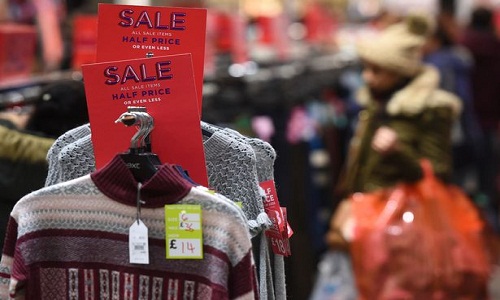 This is a part of the reason why global giants are pitching themselves to Indians as eco-friendly brands. It’s become clear that to truly tackle the looming threat of climate change brands need to rethink not only what they are selling to customers but also how much.
Innovative approach to reduce environmental footprint
American denim brand Levi’s has been trying to lower its environmental footprint by reducing carbon emissions and using lasers to finish jeans instead of chemicals. Levi’s broadcasts messages about its sustainability goals, its plans to reduce carbon emissions across its offices, retail stores, and distribution network by using 100 per cent renewable sources in its own facilities by 2025, or its new technique for finishing jeans that aims to save 50 billion liters of water by 2020. H&M, plans to use entirely recycled or sustainably sourced materials by 2030, and totally offset its carbon footprint by 2040. A part of this approach is to respond to customer demand and sell more products to eco-conscious Indians. The brand aims to source all its cotton sustainably which will help farmers reduce environmental stress by 2020.
The science of fabric recycling is still in its infancy. Organisations including the H&M Foundation are developing technologies that separate fibers used in fabric blends. But H&M is already collecting clothes from customers to be recycled. In 2017, the company collected 17,771 tons of textiles. It has recycling bins set up at all 40 Indian stores.
Focus on durability increases
As per Ellen MacArthur Foundation, the number of times a clothing is worn before it gets chucked out has declined by 36 per cent since 2000, with many consumers discarding garments after just seven to ten wears. And in that same period, the number of units of clothes sold annually has doubled from 50 billion units to 100 billion units.
Rather than selling more sustainable clothes, a truly earth-changing solution would be to encourage consumers to buy fewer, more durable products. Brands like Patagonia mend customer’s well-worn garments to extend their life. Eileen Fisher eschews fashion trends to encourage customers to wear the same outfits season after season. While these brands haven’t grown as fast as their more popular fast fashion counterparts, they are both successful, profitable businesses.
Global giants thus have a chance to rewrite the book on fast fashion. Instead of idealising newness they could adopt a more effective approach by focusing on quality, durability, and classic looks.
US apparel exports from Bangladesh increase by 2.3 per cent last fiscal
US remained the biggest market for Bangladesh apparel exports in the last fiscal. During the period, products worth $5.98 billion were exported – which is over 16 per cent of the total export of Bangladesh. Export earning was 2.3 per cent higher compared to the $5.84 billion exported during 2016-17.
The main exported item was woven garments worth $3.97 billion, followed by knitwear products at $1.37 billion, home textiles $180 million, and caps $126 million. US procured over 25 per cent of Bangladesh’s woven products, 9 per cent of knitwear and 18 per cent of home textiles products.
Until January 2019, apparel exports to US rolled in $3.59 billion, marking a 18.8 per cent gain over last year’s $3 billion. During July-January 2018, trade of knitwear fetched over $896 million. Trade in woven was over $2.7 billion.
Pressure on Bangladesh to extend Accord tenure
European brands, global rights groups and a group of 190 global investors want Bangladesh to give Accord an extension. They feel terminating Accord’s work will benefit no one -- brands, garment makers or workers –and that a premature closure of Accord’s operations in Bangladesh would be detrimental to the health and safety of garment workers and to brands that depend on a secure and safe workforce.
Bangladesh’s inspection bodies are not yet seen to have the capacity to oversee around 1600 Accord-covered factories. Also, a viable alternative to worker safety training and a worker complaint mechanism offered by Accord is nowhere in sight. In such a situation, it is feared, brands would lose suppliers, factories would lose buyers, workers would lose jobs and factories would become more unsafe.
As a legally-binding agreement between brands and trade unions, Accord's mandate remains valid until 2021 and signatory brands cannot withdraw from the program before having fulfilled all their obligations. Accord was allowed a six-month extension until November 30, after its tenure expired in May last. The issue of Accord's extension remains under judicial consideration. There is no transparency and no verifiable assurance that the level of factory safety achieved by Accord will be maintained.
India: Weavers in the Northeast get passbooks
Yarn passbooks have been distributed among weavers in Arunachal Pradesh, Assam, Mizoram and Manipur. This makes yarn available at subsidised rates. In several districts, the coverage has been almost 100 per cent. Marketing events organised in these districts generated substantial sales for artisans and weavers.
Weavers and artisans have also been enrolled under the social security insurance scheme. Centers of excellence, comprising 55 display outlets, have been set up in Varanasi for the sale of products which are G.I. tagged. Tufting frames and carpet looms have been provided to carpet weavers of Bhadohi in Uttar Pradesh.
Prominent garmenting companies of India have agreed to placing orders with clusters of weavers through the handloom verticals of these companies. Weavers are being provided facilities like tool kits and yarn at subsidised rates to cut down the cost of production and enhance their income. The Promotion Council for Handlooms and Handicrafts has signed MoUs with weavers’ societies and artisans for promoting exports through design and skill enhancement and such other interventions.
Weavers’ service centers have been designated as supervising agencies for effective coordination with banks, district administrations and weavers. Three-fourths of the cost of education for girls and children belonging to the SC, ST and BPL categories will be funded.
Pakistan may continue importing cotton from India despite losing MFN status
India’s withdrawal of Most Favored Nation to Pakistan and the 200 per cent hike on imported goods has put an end to import of cement from Pakistan. But ginned cotton and cotton yarn exports to Pakistan may remain impervious to the current turmoil. A shortage in domestic output and the favorable cotton market provided by India will keep Pakistan a key buyer of Indian cotton.
Pakistan’s cotton industry requires raw material from India. India is the most accessible and price-lucrative market for Pakistan. Pakistan is expected to import around a million bales of cotton from India in the current financial year. The possibility of a reciprocal hike in duty by Pakistan on the purchase of cotton from India is ruled out. Pakistan faces a shortage in domestic output of the natural fiber and the growth of its textile industry will be hampered.
Cotton exports to Pakistan are expected to continue even in the event of an increase in duty as the consignments would be routed via ports in Dubai and Singapore. Cotton purchases by Pakistan have grown in recent years due to the growth of the local textile industry and the price advantage due to proximity with India.