


FW
Fashion merges with tech in smart watch segment
Fashion brands are key players in the smart watch or fitness strap market. Wearable tech is increasingly claiming its place in fashion. This can be seen in smart fabrics, models wearing Google Glass on the runway, or models wearing the next generation of payment-enabled dresses on the catwalk.
Technology is getting faster and smaller, speaking to consumers seeking minimalist and seamless, but well-designed options. Technology and fashion brands are working together to end consumer confusion over whether devices are fashion accessories, tech hardware or fitness tools.
For technology providers, the challenge is making processes as smooth and unobtrusive as possible to empower fashion brands to design wearables that first and foremost look like high-end accessories.
One of the first companies to enter this area was Sony with its smart watch strap, which is designed to make everyday activities easier to do by incorporating contactless payment, advanced fitness tracking and direct link-ups for phone notifications – all into a luxury timepiece design.
More people are wearing smart clothing to the gym. The materials that make up smart fabrics can range from high-grade polymers for maximum comfort to threads equipped with tiny sensors that respond to stimuli and perform a specific function.
Apparel brands turn to sustainable cotton
More and more apparel brands are sourcing 100 per cent sustainable cotton. Sustainable sources of cotton include organic, BCI cotton, Cotton made in Africa (CmiA) and Fairtrade, among a number of other niche initiatives. At present, 19 per cent of the world’s cotton is sustainable. By 2025, more than 50 per cent of the world’s cotton is expected to be converted to more sustainable growing methods.
There is growing recognition of the enormous social and environmental impact of the global fashion industry. By working collaboratively the sector hopes to scale rapidly solutions that are good for farmers, the environment and consumers alike. The tide is turning on traditional supply chains, with demands for greater transparency generating a change from transactional relationships to transformational partnerships.
But for sustainable cotton to become standard business practice, the amount of sustainable cotton grown and bought must increase significantly. There is real demand for a more sustainable approach to cotton production that reduces the environmental and social costs.
Greater transparency across the supply chain and stronger, more strategic relationships between supply chain partners will be critical to the much needed widespread adoption of sustainable farming practices around the world.
Eastman joins circular economy with Class
Eastman has partnered with C.L.A.S.S. (Creativity Lifestyle And Sustainable Synergy), based in Italy, to support the fashion industry’s shift toward a circular economy. Eastman, a specialty materials provider, is the maker of the sustainably sourced cellulosic yarn Naia.
With Naia, Eastman integrates sustainability and fashion in a way that supports the circular economy by providing designers with a viable eco-conscious choice of material. Class empowers global partners to take steps toward a circular economy.
Eastman demonstrated its dedication to sustainability by showcasing the sustainable production process of Naia – from responsibly sourced wood to end of life. Naia is made with wood sourced from sustainably managed pine and eucalyptus plantations and forests and has recently been certified as biodegradable in freshwater.
In developing Naia, Eastman takes into account the entire lifecycle, from responsible sourcing to end-of-life disposal. The yarn is produced in a closed-loop production process where safe solvents and water are recycled and reused, ensuring a low tree-to-yarn carbon and water footprint.
Naia has a smaller environmental impact than fibers such as generic modal, triacetate and viscose. Naia is a best-in-class example of responsible innovation, because it is sustainably sourced and has inherent luster and a silky hand that create comfortable, luxurious fabrics.
African countries create a free trade area AfCFTA, will boost textiles sector
Pan-African Fashion Initiative is a platform for stakeholder engagement, dialogue, strategy and policies to advance the African fashion industry within the context of the African Continental Free Trade Area (AfCFTA). AfCFTA aims at removing trade barriers between African nations and thus expanding intra-Africa trade. Intra-African imports and exports currently account for just 15 per cent of all trade on the continent.
Many of the 44 AfCFTA signatories are garment-producing countries such as Egypt, Ethiopia, Kenya, Lesotho, Madagascar, Mauritius, Morocco, South Africa and Tunisia. Nineteen countries have so far ratified AfCFTA out of the 22 needed for the agreement to come into force.
Demand for African textiles and garments is increasing globally, and African patterns are gaining international recognition as fashionable and iconic pieces, with international fashion houses now integrating more and more African influences in their latest collections. Fashion is also an unique opportunity for African countries to tell their own stories and collectively project their continental identity.
The value of the global fashion industry, in which 90 per cent of the businesses are small and medium-sized enterprises, is around $2.4 trillion, with an annual growth of 5.5 per cent. Africa accounts for less than five per cent of this value, while Asia and the US share 80 per cent of the market.
Accord issue unresolved
Accord’s future in Bangladesh remains unclear. Founded in 2013 following the Rana Plaza factory accident, Accord is a legally-binding pact which aims at improving the safety of textile factories, and is currently signed by around 200 fashion companies producing clothing in Bangladesh.
The court hearing on the future of the organization has been deferred till April 7. Till then, Accord may continue with its inspections. Fashion companies, non-governmental organizations and, most recently, investors have spoken out in favor of Accord’s remaining in the country. Bangladesh and the country’s textile federation are insisting on a fixed date when Accord has to hand over its mandate to the national regulator, the Remediation Coordination Cell. But Accord and its supporters insist that its inspection duties shouldn’t be handed over until the regulator is in a position to do the work.
Accord and the government of Bangladesh have not been able to agree on a date to pass on inspection obligations. Accord’s five-year-term to remediate Bangladesh’s apparel factories ended in November 30. But apparel industry leaders are unwilling to let it stay on in Bangladesh any longer. They say Accord has forced many of them to undergo expensive remediation work, but even after such expensive remediation work, buyers, though they are happy with the compliance work, are not paying a fair sum to enable factories to recover their costs.
Fashion industry adopts a three-fold approach to sustainability
"Textile dyeing is the second-largest polluter of clean water globally. Polyester microfibres add to the ever-growing volumes of plastic in the environment. As most garments are non-biodegradable, they present serious threats to our oceans and wastelands. Growing cotton increases the impact of toxic chemicals in agriculture. In the past 20 years, consumer purchases have increased by 60 per cent. And almost 80 per cent of these discarded textiles end up at landfills. Only 20 per cent of clothing globally is reused or recycled, and less than 1 per cent collected clothing is recycled."
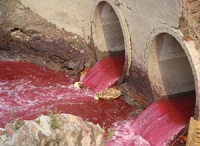 For a long time it’s been difficult to find synergies between the fashion industry and international development arena. While one is focused on trendsetting and design the other emphasises on poverty alleviation, peace and security. More recently however, there has been visible collaboration on the sustainability agenda.
Need to tackle unequal distribution of commodities
Textile dyeing is the second-largest polluter of clean water globally. Polyester microfibres add to the ever-growing volumes of plastic in the environment. As most garments are non-biodegradable, they present serious threats to our oceans and wastelands. Growing cotton increases the impact of toxic chemicals in agriculture. In the past 20 years, consumer purchases have increased by 60 per cent. And almost 80 per cent of these discarded textiles end up at landfills. Only 20 per cent of clothing globally is reused or recycled, and less than 1 per cent collected clothing is recycled. The fashion industry needs to be more mindful of diminishing natural resources, environmental pollution and the exploitation of nature, people and animals. It needs to tackle unequal distribution of commodities.
Brands adopt ethical fashion
Ethical fashion encompasses a broader and more rigorous set of criteria for meeting sustainable standards. Ethical fashion brands adhere to human rights and embrace International Labour Organization (ILO) standards, fair compensation to workers, and healthy, safe working environments, and reject sweatshops, child labour and slavery.
In addition, ethical fashion takes fair treatment of animals into consideration. After much criticism from environmental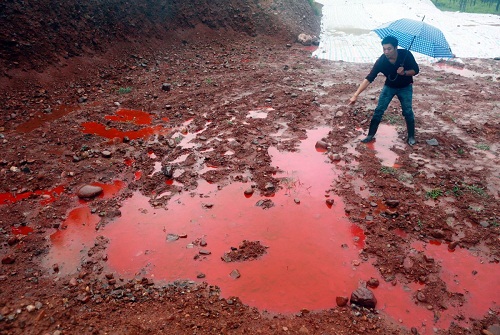 groups, big fashion houses like LVMH, Furla and Michael Kors have substituted fur and leather with alternative animal-friendly materials. Stella McCartney, an industry leader, has shown commitment to disruptive fashion innovation. Her brand has shifted to ‘vegan fashion’, using fungi instead of leather, and replacing silk with yeast proteins.
Transparency to change fashion business
Consumers are demanding transparency in policies, supply chains, business models, and labor and environmental practices from brands. This will not only lead to more accountability but ultimately change the way the fashion business is conducted.
As Thomson Reuters Environmental, Social, Governance (ESG) data shows, sustainability practices of many fashion houses are not on par. Burberry’s latest annual financial report states that “the cost of finished goods physically destroyed in the year was £28.6 million.” The brand admitted destroying raw materials in order to fight counterfeit goods and probably also to avoid having their products end up in a discount pile, which would tarnish the brand’s image of exclusivity.
Circular design approach to restore sustainability
To make fashion sustainable, brands should move away from the linear system of production, to a circular approach focused on restorative, reformative and transformative design. Fashion houses have been opting for cradle-to-cradle (C2C) initiatives to close the product lifecycle loop for sustainability. Recently, Adidas partnered with Parley to create shoes using ocean waste from beaches. Due to the products’ overwhelming success, companies have decided to ramp up their eco-friendly collaboration with a long-term sustainability framework.
While the fashion industry has been talking about transparency, ethical standards and reducing environmental degradation, it is yet to take concrete action on it. To remain avant-garde, fashion houses need to think beyond the next season and participate in the sustainable fashion revolution.
UK pushes for recycled fibers
Clothing companies in the UK that design products with lower environmental impacts may be rewarded. And those don't use recycled fabrics could be taxed more. The tax on virgin plastics, due to come into force in 2022, may be extended to synthetic textile products to encourage the use of recycled fibers.
Since the voluntary approach to improving sustainability has not really worked, retailers with more than a certain turnover may be made to comply with environmental targets. Companies will be required to perform due diligence checks across their supply chains to ensure their products are made without child or forced labor.
Consumption of new clothing in the UK is estimated to be higher than in any other European country. But this comes with a huge social and environmental price tag: carbon emissions, water use, chemical and plastic pollution. Consumers in the UK get rid of over a million tons of clothes every year.
To end the era of throwaway fashion companies that offer sustainable designs and repair services may be offered incentives. However, these ideas may not be easy to implement in practice. One issue is whether recycled fabrics would work and who would wear them. Will consumers like recycled fabrics in their clothing?
India to hold bilateral discussions with China for RCEP
Facing pressure to finalise its market opening commitments under the Regional Comprehensive Economic Partnership (RCEP) pact, India will hold intense bilateral discussions with China on the sidelines of the ongoing round in Bali to narrow differences on import duty cuts and the implementation period that both seek under the trade pact.
RCEP, being negotiated between India, China, the 10-member ASEAN, Japan, South Korea, Australia and New Zealand, can potentially result in the largest free trade bloc in the world covering about 3.5 billion people and 30 per cent of the world’s GDP. Apart from goods, the areas being negotiated include services, investments, intellectual property and government procurement. India has been holding discussions with China since January to come to an understanding on the level of import duty cuts it can promise but differences remain. New Delhi has tried to argue that it will not be possible for it to offer tariff elimination on more that 72 per cent of the traded items as apart from agriculture there were a lot of sensitive industrial goods that needed some protection.
New khadi schemes in the offing
The Khadi Gramodyog Vikas Yojana will be extended for a year. This is expected to benefit over 50 villages. A new scheme Rozgar Yukt Gaon has been introduced. The aim is to create entrepreneurs in the khadi sector thereby generating employment opportunities for thousands of new artisans.
Rozgar Yukt Gaon will be rolled out in 50 villages by providing 10,000 charkhas, 2000 looms and 100 warping units to khadi artisans, and would create direct employment for 250 artisans per village. The total capital investment per village is estimated at Rs 72 lakh as the subsidy and Rs 1.64 crore in working capital from the business partner. Advanced skill development programs will be conducted through existing centers of excellence.
Four design houses will be set up across the country with an investment of Rs 5 crores each to create modern designs and ethnic wear with regional variations.
Khadi sales in 2018 jumped 32 per cent, lifted by the increase in fabric production by at least 40 per cent. The Khadi and Village Industries Commission (KVIC) plans to take khadi to the global markets. In 2018 KVIC managed to exhibit khadi products in over ten countries by displaying to the world the most niche products.
Barcelona to host Itma in June
Itma will be held in Spain from June 20 to 26, 2019. The event will showcase fibers, yarns and fabrics as well as the latest technologies for the entire textile and garment manufacturing value chain.
More than 1,600 exhibitors are expected to fill the gross exhibition area of 2,20,000 sq mts. Some 120,000 visitors are expected from 147 countries. Exhibitor categories showing the largest growth include garment making and printing and inks sectors. A number of first-time exhibitors will demonstrate their robotic, vision system and artificial intelligence solutions; and the number of exhibitors showcasing their technologies in the printing and inks sector has grown 30 per cent since Itma 2015.
The official Itma app is new for 2019. The app, which may be downloaded free of charge from the Apple App Store or Google Play, offers key information on the exhibition to help attendees plan their visit. Maps and searchable exhibitor lists, as well as general show information, are all available in the app.
With the Innovation Lab, another new feature, Itma hopes to better drive industry focus on the message of technological innovation and cultivating an inventive spirit and encourage greater participation by introducing new components, such as the video showcase, to highlight exhibitors’ innovation.











