


FW
US retailers survive on discounts
Many fashion retailers in the US seem to be permanently on discount. Among the forces that have contributed to this state of affairs is a fundamental shift in the relationship between supply and demand, spurred by the spread of e-commerce, social media, and the new shopper behavior they’ve encouraged.
The issue of endless discounting is a big one for brands. It cost them some $300 billion last year. It squeezes their margins, and over time, chips away at their cachet. In the past, fashion was largely a supply-led market, meaning, brands and retailers put the products they wanted into stores, on schedules they chose. Consumers then bought up what was available at the shops they had access to.
But then the internet came along. Consumers today can shop anywhere. A steady stream of images and products in their social feeds drives a ravenous desire for new products. Demand, not supply, has become the controlling force.
This change has put brands in the position of always trying to keep up with an appetite for newness, but many still haven’t figured out how to do it efficiently. Often the long lead times of their supply chains mean they still have to produce huge amounts of clothing months in advance to fill their shops, leaving them guessing far ahead of time what shoppers will want, and not always accurately. They can get stuck with large and costly amounts of overstock.
Tirupur wants IGST exemption extended beyond March ’19
Exporters in Tirupur want the Centre to extend integrated goods and services tax (IGST) exemption period for import of capital goods under Export Promotion Capital Goods (EPCG) scheme beyond March 31, 2019, for another two years.They want the exemption for import of inputs under the advance authorisation scheme too.
Post GST rollout, exporters have sought the exemption. Considering the needs of the sector, the centre had been extending the exemption term, phase-wise (for six months’ period each), since July 1, 2017. The current phase ends on March 31, 2019.
The garment sector in Tirupur, comprising mostly of medium and small units, is upgrading operations to improve the quality of garments and increase productivity, in keeping with the growing demands of buyers. Several units in Tirupur are increasingly expressing concerns over the imposition of IGST beyond March 2019 as they fear the tax amount paid for importing capital goods would not be adjusted. The units are confused whether to place orders with machinery suppliers by presuming that the exemption period would continue beyond March 2019 or to wait for further clarification.
Tirupur, India’s leading knitwear exporter contributes around 50 per cent of the country’s knitwear exports. Around 20,000 production units – including micro, small and medium scale enterprises – function in Tirupur, employing nearly seven lakh people directly.
The wide appeal of Roica stretch
Key and influencing brands are using Roica premium stretch fabrics. Aeance was created as a brand that merges ready-to-wear with technical apparel. The brand’s values are timeless minimalism, substance and understated luxury. Aeance is committed to creating garments with the least possible impact on the environment and has set up a supply chain focusing on eco-sustainability and ethical responsibility.
Daquini founded in 2012 helps women bridge the gap between how they feel and how they think they look when they are working out. The brand’s first choice in fabrics is Sofileta with its luxurious technical fabrics with Roica V550 premium stretch.
Erin Snow creates chemically safe, circularly designed, socially fair luxury performance apparel. The Teri pant is Erin Snow’s most innovative and highly anticipated pant to date. Teri is made from the finest bluesign approved Schoeller four-way stretch fabric containing Roica V550 premium stretch sustainable fiber. The pant is insulated with PrimaLoft Gold Luxe and repels water and dirt without PFCs, thanks to Schoeller’s ecorepel bio finishing while giving maximum freedom of movement.
Sita provides women with an all-new luxury concept of timeless foundational apparel. The newly-created made in Italy Sitatech fabric takes on instant appeal with nanotechnology fibers and Roica CF, a yarn with an active smart odor neutralizer property.
Upcoming Spinexpo to showcase latest innovations
Spinexpo will be held in China from March 5 to 7, 2019. This is a trade fair dedicated to promoting innovation in the yarn, fiber and knitwear industry. It will feature spring/summer 2020 trends and new ideas. One focus will be on the newest innovations influencing yarns and textiles from the fields of technology and the medical industry.
Studio Eva X Carola has created new innovations taking a closer look at three different product applications: apparel, industrial and medical. For example, using elements from the medical and surgical fields means it is possible to create products with anti-bacterial, non-toxic and hypo-allergenic properties with an overall aim to reframe imagination by healing, shielding and conserving the body. As a protective function, textiles require physical strength, durability, while being lightweight and adaptable. For different end uses, and by combining several machinery, yarns and industry applications, a series of materials can be created aimed at giving these benefits.
At the September 2018 show exhibitors brought creativity and increasingly interesting fashion projects to the exhibition and helped to enhance it aesthetically. The exhibition attracted 8,677 Chinese visitors and a total of 1,645 visitors from outside China. The atmosphere at this edition was positive, despite the current market uncertainties.
Copenhagen Fashion Summit event in May lines up big names
Copenhagen Fashion Summit, to be held on May 15 to 16, 2019, has lined up influential names for the program as speakers. Baptiste Carriere-Pradal, the vice president of Sustainable Apparel Coalition, drives and organises widespread change in the apparel industry. Cyrill Gutsch, founder of Parley for the Oceans, is renowned for creating greater awareness of the fragility of the oceans and implementing strategies that can end their destruction.
Katharine Hamnett, a leading designer and activist, is famous for her political T-shirts and her ethical and sustainable business philosophy. Marion Hume, international fashion editor from the Australian Financial Review, is known for drawing attention to the need for fashion to be ethical. Steven Kolb, president and CEO of the Council of Fashion Designers of America, is a leading voice on shaping the global fashion industry. Michael Preysman, founder and CEO of Everlane, is a leader in the transparent retail space sharing the true cost and mark-up of each product.
Jennifer Silberman, vice president of corporate responsibility for Target, is a leading voice on corporate responsibility with more than 20 years’ experience working on economic development, sustainability, human rights, and women’s empowerment. Michael Wang, co-founder and COO, Ycloset, spearheads the largest fashion rental platform in Asia.
Comprehensive product zones at Intertextile Shanghai
Intertextile Shanghai Apparel Fabrics will be held March 12 to 14, 2019. Over 3,000 exhibitors from more than 20 countries and regions will display a huge range of textile product categories, from fashion to technical innovation. Comprehensive product zones will reflect demand for different products such as sustainable solutions, functional fabrics, digital printing, accessories and denim that never goes out of style. With the added element of the fringe program, which will include seminars held by exhibitors, the fair offers a versatile experience for visitors with opportunities to learn more about the latest industry opinions and regulations.
Functional Lab will continue to bring fresh innovation to the fair, with new sourcing options including Nano Mintex Technology, which will display functional yarns and fabrics with thermal insulations, and Paradise Textiles, which will show synthetic, natural and functional knit fabrics. The digital printing zone will include onsite demonstrations of direct-to-garment digital inkjet printing solutions from leading exhibitors. Beyond Denim will house over 110 domestic and overseas exhibitors. Denim International will offer garment production and denim wash expertise, and Jomu Textiles from Vietnam will provide made-to-order denim and greige woven fabrics.
The fair will be held concurrently with Intertextile Shanghai Home Textiles, Yarn Expo Spring, PH Value and Chic.
Edouard Macquin is new president of US Lectra.
He will continue to develop Lectra’s fashion, furniture and automotive leadership across North and South America. He has the ability to execute on an entire range of technological solutions and consistently delivers on strategic objectives.
Lectra is a leader in integrated technology solutions dedicated to industries using fabrics, technical textiles and composites. Edouard joined Lectra in 1987 and over his 32-year career with the company has established an unbroken track record of success in France, Italy, the US and Brazil. In 2000, he was appointed director of Lectra Brazil and solidified the company’s position there as an industry standard-bearer. In 2011, Edouard Macquin took the lead as Lectra’s global chief sales officer and in 2014 became a member of Lectra’s executive committee. His successful sales approach, along with his ability to understand the ground-level innovations that impact global corporate success, helped Lectra surpass its executive objectives.
Since establishing operations in the US in 1982, Lectra has become a strategic partner for fashion, furniture and automotive companies, offering exclusive, integrated technology that can flexibly and profitably meet the rapidly shifting demands of the consumer economy, including the increasing need for customization. At the vanguard of Industry 4.0, Lectra helps customers succeed in the digital age.
South African brand Sappi joins SAC
Sappi has joined the Sustainable Apparel Coalition (SAC). Sappi will use the group’s sustainability measurement suite of tools, the Higg Index, to drive environmental and social responsibility throughout its supply chain.
SAC has more than 240 global brands, retailers, and manufacturers as members, as well as government, non-profit environmental organizations, and academic institutions, which are collectively committed to improving supply chain sustainability in the apparel, footwear, and textile industry.
Sappi, based in South Africa, provides dissolving wood pulp, paper (specialty, packaging and graphic), paper pulp, and biomaterial products and related services and innovations. These products serve the fashion, FMCG and industrial sectors. Sappi has manufacturing facilities on three continents, in nine countries and customers in over 150 countries worldwide.
In its relationship with the SAC, Sappi will contribute both data and resources to support the Higg Index, which measures sustainability performance and drives supply chain transparency and decision-making to improve efficiency and sustainability impact. Higg is an indicator-based suite of tools that enables suppliers, manufacturers, brands, and retailers to evaluate materials, products, facilities, and processes based on environmental performance, social labor practices, and product design choices.
Sappi’s overall objective is to expand and enhance value streams to create sustainable products based on a renewable natural resource—wood fiber.
Time for the emergence of the all-inclusive size range
"This relegation of sizes like plus and petite to specialty retailers springs from royal courts that dictated fashion based on the preferences of the king and the nobility got their garments made to order. Common people, made their own clothes, with lesser fabrics available to them. However, the industrial revolution changed the fashion culture with streetwear emerging as the most preferred trend."
 NPD Group's Consumer Tracking Service study shows, US teens who purchased plus-size clothing increased 34 per cent in 2015, compared to 19 per cent in 2012. Around two-thirds of US women consider themselves to be a special size defined as plus, petite, junior or tall. Out of these, one-third women identify themselves as being plus-size.
Streetwear emerges the new trend
This relegation of sizes like plus and petite to specialty retailers springs from royal courts that dictated fashion based on the preferences of the king and the nobility got their garments made to order. Common people, made their own clothes, with lesser fabrics available to them. However, the industrial revolution changed the fashion culture with streetwear emerging as the most preferred trend. It also changed conventional standards of beauty as women like Beyonce and Taylor Swift were accepted more for their talent than beauty. Lack of size standards, however, continues to isolate women that don’t fit into the industry's loosely established ranges.
The social media helped these plus size women put forth their demand for stylish apparel. Women beyond sizes 0 to 12, in age groups 15 to 65 are demanding stylish apparels that actually fit them. Although the millennials and Gen Z are at the forefront of this movement, ripples can be seen throughout the female population.
The new normal
Earlier merchandise for plus sizes was mostly relegated to dark corners of the store or had to be made on special orders. To make things worse, marketing plus-size clothing suggested shoppers wanted to hide their bodies or have an unsophisticated outlook. However, Alexandra Waldman, Founder and Chief Creative Officer of Universal Standard changed this trend by treating inclusive sizing as the new normal. The brand, since 2015, has been creating thoughtful, mindful design that allows apparel to be coveted.
Inadequate infrastructure makes business difficult
In the past, brands like J. Crew cited expense along with manufacture and design glitches as reasons for their limited sizing options. Although appearing to be fake, these production challenges are real. There is currently no infrastructure available for a truly size-inclusive brand for sizes ranging from 00 to 40. If these brands increase their sizes, it impacts their inventory costs and stock-outs, constrains floor space besides adding to complexity in SKUs, manufacturing instruments and logistics.
Consultation rather than shopping
To tackle this issue, retailers are resorting to customisation. However, they are also trying to maintain their production costs by creating an 'endless aisle'. Here, women can design clothes digitally and get them delivered at their homes, making the experience more of a fashion consultation
Online brands are spearheading this shift, but they face some obstacles. Universal Standard, Curvy Sense and online brand Showpo had to employ more models, human and otherwise, use more fabric for some items without charging more, grade patterns as sizes go up or down the scale and find factories that understand their needs.
Offering only a narrow size range is slowly becoming indefensible. It is now time for designers and retailers to work for all women. Any brand that decides to design for women of only a certain size is unacceptable as dressing is a basic right that all women need to enjoy.
KARL MAYER:A new machine is shaping the standard sector
The new TM WEFT for the standard segment is complementing the WEFTTRONIC® II HKS for the premium segment
KARL MAYER is transferring its successful two product line strategy to its Technical Textiles Business Unit and is supplementing its premium weft-insertion machine with a standard model. In addition to the WEFTTRONIC® II HKS, there will also be a TM WEFT in future. This new warp knitting machine with weft-insertion facility bears all the hallmarks of the high-end version in terms of its quality and reliability, but its optimised cost:benefit ratio targets a different market.
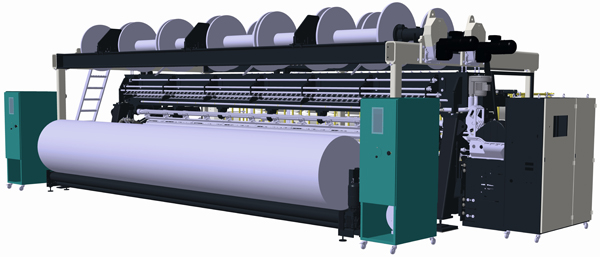
The TM WEFT
The right machine for every market segment
This new machine is a machine from Asia for Asia. “Our target market is China and the mid-range segment in particular”, explains Hagen Lotzmann, the Sales Manager of KARL MAYER Technische Textilien GmbH. To score points here, the TM WEFT delivers a 50% higher cost:benefit ratio than the WEFTTRONIC® II HKS. The considerable increase in speed has been achieved by completely redeveloping the machine and modifying the production logistics. The engineering know-how and the core areas of expertise for the TM WEFT are being provided by locations in Germany, and all the other work is being done by KARL MAYER (CHINA). This has led to the exceptional quality and operating reliability typical of all KARL MAYER’s machines, and also delivers an attractive performance package for producers of standard goods for the interlining market. With its fine gauge, the WEFTTRONIC? II HKS is still the number one machine for producing fine interlinings and high-quality automotive textiles, for use in e.g. sun protection.
Customised technical features
The TM WEFT is available in a gauge of E 24 and a working width of 247", which can be reduced by 62". Its features include two stitch-forming ground guide bars, the KAMCOS® 2 Single Speed and integrated Laserstop facility for the early detection of yarn breakages. Up to 24 wefts can be inserted at the same time during production. The yarn is delivered from a creel with yarn storage feeders. An electronically controlled, 4-roller system is responsible for fabric take-down, and the fabric is wound by stand-alone batching unit no. 64. It has friction drive, with control in line with the stitches.
An eagerly anticipated sales release
The TM WEFT was announced at ITMA ASIA + CITME 2018 in Shanghai and proved to be a hot topic of conversation. “Our customers are extremely interested in our new weft-insertion warp knitting machine, and are already looking forward to the official market release,” says Hagen Lotzmann. This sales expert is expecting that the first orders for this standard model, with its excellent cost:benefit ratio, will be placed this year. The sales release is scheduled for the second half of January 2019. An in-house show will also be held in January at KARL MAYER (CHINA) in Changzhou, where the TM WEFT will be demonstrating its features.











