


FW
Ryan Stanley bags AATCC Future Leaders Award
The AATCC Future Leaders Award was presented to Ryan Stanley on April 11, 2019 at the International Conference held in Fort Worth, TX, USA. The Future Leaders Award recognises promising young professionals in the fields of textiles, apparel, and related material sciences. These award recipients are determined by each AATCC Interest Group.
The award includes a framed certificate signed by the AATCC president and the Interest Group (IG) chairs and a special pin. Stanley has been a member of AATCC since 2011. He is senior director of color at PVH Corp. in New York, USA. Prior to this, he served as exploratory colorist with Under Armour. Stanley held numerous roles in color management for Archroma/Clariant from 2004-2014, including marketing and formulations manager and production manager.
Stanley attended the University of North Carolina—Charlotte, In North Carolina, USA. He has been a voting member on the AATCC Color Measurement Test Method Committee since 2011. He currently serves a member of the Fashion Institute of Technology Advisory Board.
Secondhand clothes become fashionable in the US market
Not so long ago, buying secondhand clothes was considered low-class. These were bought in either charity shops of thrift stores at reduced prices. However, things changed with the resale market for secondhand fashion in the United States growing 21 times faster than retail sales of new clothing over the past three years. The market is currently worth $24 billion and expected to reach $51 billion by the middle of the next decade.
 Not so long ago, buying secondhand clothes was considered low-class. These were bought in either charity shops of thrift stores at reduced prices. However, things changed with the resale market for secondhand fashion in the United States growing 21 times faster than retail sales of new clothing over the past three years. The market is currently worth $24 billion and expected to reach $51 billion by the middle of the next decade.
Gen Z consumers to drive most growth
Neil Saunders, GlobalData Managing Director & Lead Market Analyst for fashion resale website thredUP’s 2019 Resale Report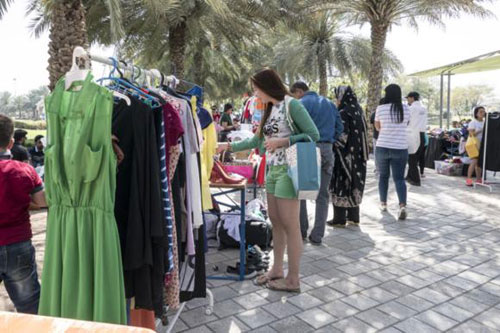 expects this growth to continue as the market meets its consumers’ preferences for variety, value, and sustainability. As per the research, a consistent proportion of shoppers buy secondhand clothes at all price levels. In the luxury retail segment, around 26 per cent buy resale items, in the mid-market around 25 per cent opt for second-hand clothes while at the discount end 22 per cent consumers buy second-hand clothes.
Millennials are most likely to buy second-hand clothes, followed by boomers – with 33 per cent and 31 per cent respectively buying secondhand. On the other hand, only 16 per cent of Gen Z and 20 per cent of Gen X consumers prefer buying second-hand clothes.
But it’s the Gen Z which is expected to drive the most growth. One in three people aged 18-24 are forecast to buy secondhand items this year, making them the resale world’s biggest fans.
E-commerce boom fuels interest
The growing interest in secondhand is being driven the e-commerce boom which allows people to buy and sell second hands at the click of a button. This phenomenon has also given rise to a new niche of micro-retailers that deal exclusively on the internet. These retailers not only sell items they own, but also buying them from other sources like eBay, Houzz and Etsy.
Another factor driving growth is the rise of the conscious consumer. As per ThredUP, around 72 per cent consumers are more likely to buy from environmentally friendly sources. However, as sustainable fashion is expensive, the secondhand sector offers them purchase of eco-friendly products at affordable rates. Known to be one of the biggest polluting industries, the fashion sector not only consumes vast amounts of resources but also generates around 20 per cent of the world’s wastewater. The sector is expected to be responsible for 25 per cent of the global carbon budget by 2050.
New strategies to survive the retail revolution
An industry suffering at the hands of the secondhand sector is the retail sector. As shoppers now prefer to buy online, at a time and in a place that suits them, stores are witnessing declining footfall. These retailers now need to formulate new strategies to survive in the competitive market. This however, might not be overtly difficult as 87 per cent of senior retail executives in the thredUP research expressed their desire to be involved in reselling secondhand fashion by 2020.
Berlin Conference initiates dialogue between sustainable textile innovators
The Fashionsustain Berlin conference, to be held in Frankfurt am Main, brings together pioneers of sustainable textile innovations to initiate a dialogue between them. The conference combines the creative thinking of its birthplace with an international speaker line-up. The first keynote “Sustainable innovation –a matter of survival” will be by Micke Magnusson, founder of the Swedish start-up we are Spindye, and serves as a wake-up call for the industry.
The round table will focus on the influence of trends on new business practices: “Trendsetting change makers – Is fashion leading the way for sustainable innovation?” The panel will be moderated by Max Gilgenmann, Content Director of Neonyt.
The panel titled “Synthetic change makers – What does the future of man-made fibres look like?” will explore alternative fibre production and recycling methods. Taking part in the discussion panel will be industry pioneers such as Austrian fibre manufacturer Lenzing, British recycling company Perpetual Global, Swiss specialty chemicals company Clariant and Thai chemical company Indorama.
Fibre producer Lenzing, knitting machine manufacturer Santoni and producer of footwear components Procalçado S.A. will present the innovation roadshow entitled “The future of eco-conscious footwear manufacturing”, supported by Messe Frankfurt’s Texpertise Network. It will present the sustainable production process of a shoe, showing how a sustainability transformation of the fashion and textile industry can already become a reality today. The panel will be moderated by Marte Hentschel, founder of Sourcebook, the B2B network for the fashion industry.
Fashion Resolution to organise Big Clothes Swap on April 25, 2019
Luxembourg group Fashion Revolution will organise a number of events in the next few weeks. The organisation's Fashion Revolution Week will be held from April 22-28, 2019. It will also host the Big Clothes Swap at De Gudde Wellen on April 25, 2019.
Fashion Revolution believes that the only way to transform the industry is to collaborate with everyone involved in producing, selling, and consuming fashion. Calling upon Marie Kondo's famous decluttering method, the organisation describes its clothes swap event as a perfect opportunity to let your neglected clothes spark joy in someone else's wardrobe (and vice versa).
A particular issue that arises when it comes to attempting to act more sustainably and ethically in purchasing clothing is disposing unwanted clothes. Clothes swapping events provide people with the opportunity to get rid of their own clothing and acquire new clothes without directly contributing to the vicious cycle of fast fashion. Consumers donate items they no longer want and in return can take the same amount of items that others have donated free of charge.
The event mainly focuses on men and women's clothing. As all leftover clothes are donated to the Red Cross Luxembourg the next day, anybody hoping to simply donate clothes instead of swap can bring a bag to put to the side for the Red Cross.
Walmart sets sourcing goals
US retail giant Walmart aims at reducing the environmental impact of the textiles and clothing it sells. This includes new goals for sourcing cotton and polyester, a more responsible use of chemicals with a goal of reducing the discharge of priority chemicals from the manufacturing process by 2025. But the main commitment is to source only from suppliers that use the Higg Index Facility Environmental Module (FEM) for products sold in the US.
Walmart was a founder member of the Sustainability Consortium in 2009. Walmart is working with suppliers to improve sustainability across the textile value chain. After a few years operating relatively under the radar when it comes to sustainability in its textile supply chains, Walmart will now turn its attention to three key areas of its textile supply chain in order to improve its overall environmental credentials. Walmart will source 100 per cent more sustainable cotton for products sold in the US, which includes cotton grown in the US, organic, or cotton from other third-party certified unnamed sources. Walmart will also source 50 per cent recycled polyester fibers for its private brand textiles by 2025. The retailer intends to leverage third-party certifications such as Oeko-Tex Standard 100, which tests products for chemical residues on product.
UK wool producers invited for competition
British Wool has launched a competition, called Golden Fleece, designed to showcase the exceptional quality of British wool. Farmers registered with British Wool can enter the competition via British Wool’s network of eleven grading depots. All producers marketing their wool through British Wool are invited to enter. The objective is to highlight the difference that fleece presentation can make in terms of increasing the value of producers’ wool. Qualifying fleece competitions will also be held at 18 agricultural shows across the UK during 2019. Judging for the 2019 Golden Fleece competition will take place across two stages with the eight finalists invited to a presentation ceremony in December.
British Wool collects, grades, sells and promotes wool produced in Britain to international wool textile industry for use in flooring, furnishings and apparel. It is owned by 40,000 sheep farmers in the UK.
This is an important competition for both British Wool and its producers with entries being received the length and breadth of the country. Producers in England are being encouraged to enter their fleeces and showcase the exceptional high quality of British wool. To take home the title of British Wool National Golden Fleece Champion really is the ultimate accolade of superb quality wool for wool producers across the UK.
US, India to host conference to boost mutual textile industry
A one-day conference in Mumbai on April 24, 2019 by the Indo-American Chamber of Commerce, is aimed at creating, developing and sustaining bilateral partnerships in textiles between the US and India. The one-day conference ‘America First and Make in India: Together Achieving $100 billion Trade in Textiles’ will be co-hosted by the US Commercial Service, US Consulate, in Mumbai. The conference will promote joint investments and support favorable trade partnerships. The event will bring together thought leaders, policy makers, textile stalwarts, and academicians to deliberate and create a road map to deepen trade and investments between nations as well as creating a textile ethos and ambience. The objectives of the conference include developing sustainable bilateral trade partnerships between India and US in textiles, identifying key sectors in Indo-American textiles, policy support in making the textile industry competitive, understanding global scenarios and its legalities along with cross border investment opportunities and future trends in the Indo-American textile trade.
Indian companies have been invited to learn and collaborate with US companies and participate in US textile manufacturing opportunities. The Indian textile industry exhibits the rich cultural heritage of India and is now with its newer modern manufacturing systems achieving a wider variety of fabrics, techniques and innovation in producing qualitative textiles. India’s competitive advantage in fiber to fabric, along with its many textile clusters, is seen as being in a position to meet the ever-growing demands of the American textile industry.
Trade between Vietnam and Czech Republic up 16 per cent
Total import-export revenue between Vietnam and Czech Republic was up 16 per cent in 2018 compared to 2017. Two-way trade revenue between the two countries expanded at 10 per cent over recent years.
The Czech Republic is currently a large trading partner of Vietnam in Eastern Europe. Import-export revenue between the two countries has always maintained growth despite economic difficulties in the EU over the past few years. In the first quarter of 2019, total import-export revenue between Vietnam and Czech was down 12 per cent. Of which, Vietnam’s exports to Czech was up 2.4 per cent while Czech’s exports to Vietnam were down 27.6 per cent.
Vietnam’s exports to the Czech Republic include footwear, apparel, seafood, consumer goods, computers and parts, mobile phones, and others. The two sides wish to continue to strengthen diplomatic and economic cooperation for the mutual benefit of both countries. The Czech Republic has put Vietnam on the list of 12 key markets given priority in foreign trade under the Czech international trade strategy for 2012-2020. Vietnam is the only representative from Asean named on the list. One way Vietnamese enterprises hope to promote exports to the Czech Republic is by participating in supply chains of large retail systems in the host country in addition to boosting direct sales to importers and distributors.
Demand for polyester on the rise globally
Polyester has brought about significant changes in how apparel products are made, priced, and distributed. Innovated in 1941, polyester has gone on to dominate the fabric market and has overtaken all other clothing materials, including cotton. It is expected to sell at almost twice the volume of cotton by 2020. Cotton is subjected to natural forces and intense labor requirements. As a result, its availability and production costs fluctuate continuously. Polyester, on the other hand, is a byproduct of petroleum and is entirely manmade, which makes its production more predictable both in terms of availability and cost.
China accounts for 69 per cent of all polyester fiber production globally, and if India and Southeast Asia are added to the equation, these three regions represent 86 per cent of global polyester production.
Producers of active performance sportswear, like those manufacturing cycle, run and ski wear, use polyester as their primary and preferred material for fabrication. One of the main reasons behind the high use of polyester in sportswear is due to sublimation printing. It is the most popular printing technique used by many brands, designers and customers. It’s less messy and easy to transfer. The look and hand feel are much better than any other printing technique out in the market.
Pakistan: Texpo 2019 wraps up orders worth $600 million
As per Federal Commerce Secretary Ahmed Nawaz Sukhera, Pakistan’s biggest textile exhibition, Texpo 2019, attracted $600 million trade through export orders by foreign buyers. Around 363 foreign buyers from more than 50 countries placed orders at the event. Trade agreements worth $600 million were signed and the process is likely to continue. Foreign buyers inked 10 memorandums of understanding (MoUs) with local export houses, besides visiting field and industrial units in Lahore, Sialkot and Faisalabad.
More than 5,000 business-to-business (B2B) meetings were held on the sidelines of Texpo 2019, which are likely to boost the country’s textile and its related exports. Delegations from various countries including Russia, Bahrain, USA, China, Japan, UK, Germany, Saudi Arabia, Czechoslovakia, Nigeria, France, Netherlands and Spain actively took part in the event.
Around 231 exhibitors including new entrants from across Pakistan displayed their products with leading fashion designers and textile houses and retail brands also showcasing their latest collections. Texpo 2019 also featured a Trade Envoys’ Conference on the last day where the stakeholders from the industry and the government exchanged their opinions. The TDAP also organised a two-day seminar, attended by leading exporters from various sectors.











