


FW
IFC funds Vietnam’s apparel segment growth
The International Finance Corporation (IFC) has been helping Vietnam enhance sustainable growth of the apparel sector. IFC aims at empowering garment and textile units in the country to upgrade their machinery and equipment so as to make them save more energy and become more sustainable. IFC has been proactive in granting companies access to finance through its client banks. IFC now works with 70 factories that supply to big retailers and apparel firms like VF, Target, Puma, New Balance, and Adidas, among several others. Vietnamese factories have been helped to invest in resource efficiency measures and programs that has helped them save in water, energy and chemical operating costs.
IFC has over 60 years of experience in unlocking private investment and also creating markets and opportunities where they are most required. Since 1956, IFC, a member of the World Bank Group, has financed businesses in developing nations.
Unparalleled growth, over the last few years, has made Vietnam one of the top five textile exporters in the world. With Vietnam’s increasing participation in trade agreements, including the Trans-Pacific Partnership and the EU free trade agreement, the textile sector is poised for faster growth, creating increased demand for sustainable energy and water use practices.
Texworld USA to host Fashionsustain
Texworld USA will be held from July 22 to 24, 2019. The trade show has put the spotlight on sustainability and is continuing its commitment to eco-friendly products and practices by integrating the theme throughout the event. To propel sustainability movement forward, the show will welcome Fashionsustain. The content is designed to inspire industry insiders to shift the paradigm around how clothes are sourced and made, lessening apparel’s global impact on carbon emissions, water use and chemical pollution. Fashionsustain will host a compelling lineup of dynamic speakers, each providing solution-oriented insights on how the industry can collaborate and innovate.
The event combines ideas with action and sustainable fashion. Leaders come together to discuss better ways of working, with both emerging and established sustainable brands showcasing new ideas. Texworld USA will make buying responsible textiles easy by creating a designated trend space for eco-friendly suppliers and indicating likeminded exhibitors with a leaf icon on signage and in the visitor guide. The programming will center around initiatives like upcycling, circularity and material innovations. Attendees will be provided the opportunity to learn from and connect with service providers related to recycling solutions, business development and trend forecasting. The show has cut back on unnecessary printed materials, reduced the amount of carpeting it uses and upcycled banners from previous events into show bags.
Germany hosts IAF event
An International Apparel Forum (IAF) event was held in Germany, May 13 and 14, 2019. The event provided a strong dose of technological awareness and plenty of networking allowing IAF members to return home to share with their colleagues, clients and members new ideas, insights and contacts.
It brought together influential apparel industry representatives from over 15 countries from Asia, Europe and the Americas. A conference focused on the application of new technologies in the apparel supply chain. The audience was treated to a hands-on presentation of very accessible technologies to enhance garment factory productivity and flexibility. There were demonstrations on how the industry is being disrupted, with examples of large online platforms being able to invest right across the supply chain, shoes that are not sold as products, but as services i.e. the promise of improving running performance and an example from the car industry where an electric car is now actually being built by a university.
IAF is the only global federation representing apparel associations from 60 countries representing over 1,50,000 companies. IAF has been developed to deliver a unique forum for credit professionals from the international apparel sectors. The aim is to equip members with the practical strategies they need to meet the challenges of a changing business environment and add value to their roles.
China can retaliate with the exchange rate
The exchange rate is one of the most powerful weapons China has in the trade war with the US. A weaker yuan would support China’s exporters. While China’s importers would be worse off, the benefits outweigh the costs because China is a net exporter. A depreciated renminbi could rattle global markets and, consequently, pressure the US to switch tack.
If China really wants to up the pressure, targeting the operations of US businesses is a reasonable strategy. In the US, lobbying groups and business organizations do carry a certain amount of influence. China can also subject US companies operating within China to arbitrary audits, stricter regulations, or slow approvals of the necessary permits and licenses. Another possibility is dumping US Treasuries. China holds roughly a trillion dollars worth of US treasury bonds. Dumping US bonds could push US interest rates up and disrupt the economy. China may also consider an out-and-out US boycott. The US was the ninth most popular destination for Chinese tourists during this year, down from fifth last year. So the US needs to be very careful if it wants to attract affluent travelers.
Meanwhile, the US has ratcheted up pressure on Chinese telecom equipment giant Huawei and Chinese importers cancelled a major order of US pork.
Accord factories make good progress in Bangladesh
Factories in Bangladesh inspected under Accord have made overall 90 per cent progress in fixing fire, electrical and structural safety faults. Accord is a platform of European buyers and retailers. Some 1120 out of 1610 Accord-listed readymade garment factories in Bangladesh are behind schedule in remediating safety hazards. Accord says about 50 per cent of factories still lack adequate fire detection and alarm systems. Accord has covered 1674 readymade garment factories. 0f these 1610 are inspected and 64 others have been listed for inspection. Out of 1674 factories, 1403 are active, 59 factories are inactive and 212 factories are no-brand. The platform has found discrepancies in building plans and drawings in nearly 22 per cent of the factories and a lack of fire separation in hazardous areas in 16 per cent of the factories.
To support factories, Accord arranged a remediation fund and a total of 141 remediation finance requests have so far been received from the factories, of which 52 have been resolved. After the Rana Plaza building collapse in April 2013 that killed more than 1100 people, mostly garment workers, EU retailers formed the Accord, undertaking a five-year plan, which set time frames and accountability for inspections and training and worker empowerment programs.
AI to help brands maximise their denim assortment
"With denim becoming the hottest selling product, brands like Levi’s and Madewell reported strong sales in the past quarter. Proving its sustainability over time, the global denim jeans market is predicted to reach $57.6bn by 2023. Edited, the most strategic tool for retail teams worldwide, uses AI and data to future retail trends. This price and discount over time tool helps brands to smarten up their denim assortment by understanding pricing trajectory across time, spotting the ramping up of cooling off of denim trends and anaylsing discount periods over time to detect the health of your category vs. competitors."
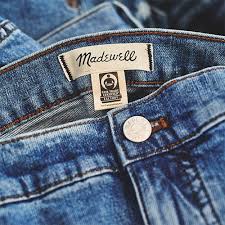 With denim becoming the hottest selling product, brands like Levi’s and Madewell reported strong sales in the past quarter. Proving its sustainability over time, the global denim jeans market is predicted to reach $57.6bn by 2023. Edited, the most strategic tool for retail teams worldwide, uses AI and data to future retail trends. This price and discount over time tool helps brands to smarten up their denim assortment by understanding pricing trajectory across time, spotting the ramping up of cooling off of denim trends and anaylsing discount periods over time to detect the health of your category vs. competitors.
Evaluating price shifts on a monthly basis
Using Edited’s price over time analysis, brands can evaluate the price average price shifts in the US market on a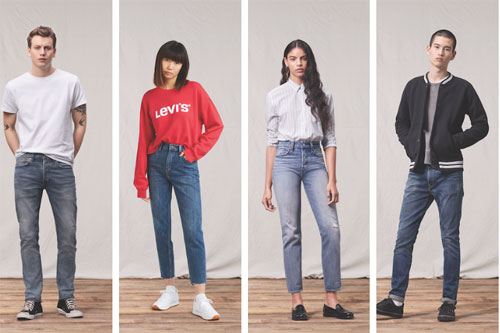 monthly basis. They can also compare the actual price of the product at that time for H&M and Zara and notice how their pricing strategy shifts throughout the year. On average, H&M jeans are priced lower and remain consistent. Zara’s are more expensive, yet drop to meet H&M prices at distinct sale periods.
Different prices for different fashions styles
There are many other factors that determine the pricing strategies of brands. One big factor is difference between core and fashion styles. For instance, hi-end retailers have different pricing strategies for skinny jeans and chic high-rise culottes. Tracking the price consistency of these jean styles will brands drive margins for core items as well as justify the rising or declining of trends. When a trend is starting to boom or die out. Despite low demand, some brands still focus on skinny jeans. They are creating evergreen skinny jeans in core colors that are always replenished and available at a consistent price since the past two years.
AI to reduce human intervention, lead times
Analysing the pricing strategy of these jeans over time is important to understand how mature a trend is. Brands can eliminate manual work through the adoption of AI into their processes. They will realise that the prices for these fashion-forward items start to rise as a trend becomes popular and retailers start to capitalise. AI would enable brands to spot these spikes and invest accordingly reduce their lead times. For instance, prices for denim boilersuits, which currently dominate the mass, are fluctuating and have been on a rise since April 2019.
Seasonal price fluctuations
As noted by Edited, seasonality plays a huge part in determining the price of a trend-led product. White or neutral denims are priced on the higher side. Prices also fluctuate according to the season. While they are at higher prices during the summer, their prices decline as soon as the temperature drops. Prices are flattening for corduroy as retailers prefer lighter fabrics for their summer ranges. Analysing these pricing peaks and troughs can help brands delivering the right products at the right time.
Measuring discount health
Edited’s discount over time tool measures the discounts given by brands on their product categories and compares it YoY. Denim shorts, for example, experience their deepest discounts in January for both the UK and US. On comparing the discounts given on prices for denim shorts in January 2019 vs 2018, brands can notice that the UK market deepened its discount level by 12 per cent YoY while the US increased by 5.2 per cent.
Gokaldas Exports reports Rs 330.05 crore net sales in Q4 FY 18-19
Gokaldas Exports reported net sales of Rs 330.05 crore in its fourth quarter ending March 31, 2019 as compared to Rs 275.58 crore during quarter ended December 31, 2018. The company posted net profit of Rs.11.32 crore for the same period ended as against Rs 8.69 crore for the period ended December 31, 2018. The company reported EPS of Rs.2.50 for the period as compared to Rs.2 for the period ended December 31, 2018.
The company reported net sales of Rs. 1,196.19 crore during the 12 months period ended March 31, 2019 as compared to Rs.1078.85 crore during the 12 months period ended March 31, 2018. It posted net profit of Rs.25.57 crore for the 12 months period as against net loss of Rs. (31) crore posted the previous year. Its EPS for the period was reported at Rs.5.92 as compared to Rs.8.87 reported for the previous year.
US eliminates GSP benefits to Turkey
US President Donald Trump in his recent proclamation terminated Turkey as a beneficiary nation under Generalised System of Preferences (GSP). Largest and oldest US trade preference programme, GSP is designed to promote economic development by allowing duty-free entry for thousands of products from designated beneficiary countries. The termination of Turkey, a NATO ally, became effective from May 17, 2019. Trump also removed the exemption for Turkey from application of the safeguard measures on CSPV products and large residential washers is removed.
The United States had designated Turkey as a GSP beneficiary developing country in 1975. This had helped the country achieve a higher level of economic development including an increase in its Gross National Income (GNI) per capita, decline in poverty rates and export diversification. The GSP program allows certain products to enter the United States duty-free if beneficiary developing countries meet the eligibility criteria established by the Congress. GSP criteria include, among others, respecting arbitral awards in favor of United States citizens or corporations, combating child labor, respecting internationally recognized worker rights, providing adequate and effective intellectual property protection, and providing the US with equitable and reasonable market access. Countries can also be graduated from the GSP program depending on factors related to economic development.
Weak fabric base hampers Lankan exporters
The absence of a strong fabric base is hampering exporters in Sri Lanka from manufacturing a large volume of apparels for export to the EU under GSP Plus due to their inability to meet the country of origin rules.
In 2018, Sri Lanka exported apparels to EU at a year-on-year growth of 3.9 per cent, whereas it was a much impressive 5.7 per cent to the US. Sri Lanka, together with Indonesia, has submitted a joint application to EU seeking permission to use fabrics from Indonesia to make apparels in Sri Lanka. Similarly, the country is talking to South Korea as well to buy fabrics from them.
The EU is Sri Lanka’s second largest trading partner, next to India. With GSP Plus, Sri Lanka’s exports to the EU have increased 18 per cent. Sri Lanka’s apparel exports account for 60 per cent of the country’s exports to the EU. In June 2017 the country regained GSP Plus from the EU. The facility was reinstated following Sri Lanka’s positive steps towards restoring human rights in the country. It took one-and-a-half months for the ratification of the agreement with the EU for the market expansion to commence in earnest. The expansion fructified in the month of July. From July 2017 Sri Lanka’s export figures grew 10.34 per cent year-on-year.
Textile staples growing at four per cent
The global textile staples market is growing at 4.9 per cent. It is majorly driven by growing application of technical textiles in large sectors such as construction and automotives. In emerging countries, rising disposable income is significantly boosting market growth. China and India are making significant contributions to the market. North America is in the second spot and accounts for a sizeable share of the market.
Based on natural fiber textile staples, cotton is accounting for the largest share of the market. Retailers are labeling their products as being environmentally friendly to gain a competitive advantage in the market. Polyester is the most preferred type of synthetic fiber for textile staples.
In developed regions such as North America and Europe, manufacturers of textiles are shifting their focus from commodity goods to value-added products. Therefore manufacturing of generic textile products as compared to niche technical textile products is expected to slow down in the near future. Key players in the market are laying emphases on R&D activities to enhance wearability of e-textiles and fabrics that enable digital constituents and electronics to be embedded in them. Indorama, Reliance and Woolmark are some of the leading companies operating in the global textile staples market.











