


FW
Kitex Garments aims for Rs 2,000 crore turnovers by 2025
As a part of its Vision 2025, Kerala-based Kitex Garments, the third-largest infant garment brand in the world, plans to increase its turnover from the current Rs 650 crore to Rs 2,000 crore. As a first step towards achieving this goal, the company plans to invest around Rs 900 crore into the manufacturing and sale of new products in the infant apparel category, which includes products like socks for children, baby diapers and baby wet wipes.
The company also aims to expand its knitting and processing capacity to 100 tonnes each. It also aims to strengthen the vertical integration of its manufacturing value chain with the setting up of a cotton spinning mill for yarn production with a capacity of 100 tonnes per day. Plans are also afoot to set up a manufacturing facility for ancillary materials such as trims & packages, which include cartons, tapes, paper tags, labels, hangers, and woven tags, etc.
At present, the company can manufacture 432,000 infant wear articles every day and its total textile capacity is around 50 tonne.
Cotton Incorporated develops performance technologies
Designers and manufacturers who want inspiration and direction regarding technical cotton fabrics can turn to Cotton Incorporated’s Fabricast. This series of cotton and cotton-rich fabrics highlights new and interesting yarns, unique weaving and knitting constructions, dyeing and finishing techniques, and fabric performance technologies. The Fabricast collection highlights cotton materials that work in a variety of categories, from outerwear to shirtings to active wear. The diamond matelasse is a quilted, cotton-rich woven that offers weather-shield properties. A subtly iridescent surface gives it style appeal, while Storm Cotton technology keeps it water resistant, making it a great option for outdoor jackets with the natural feel of cotton. And a single-knit, 100 per cent jacquard features a ruffling blister effect, which provides excellent insulative qualities due to the densely constructed ruffles. Another piece from the Fabricast entry is the satin fabric that is 98 per cent cotton with two per cent stretch.
Cotton Incorporated has developed several other technologies that enhance cotton’s natural performance features. TransDry maintains cotton’s comfort and softness while adding moisture management, making it ideal for cotton active wear. Another popular choice for active wear is Wicking Windows. This unique performance technology transfers moisture away from the skin and to the outside of the fabric, making for a drier, more comfortable experience for the wearer.
Zara’s sustainability moves positive but needs indepth approach
"Making sustainability its immediate goal, fast fashion giant Inditex the makers of Zara pledged to only use organic, sustainable and recycled materials like cotton, linen and polyester in all its eight brand’s collections by 2025. The latest fast fashion brand to join the sustainability bandwagon, Zara was influenced by 81 per cent response to a global survey that urged fast fashion companies to help improve the environment."
 Making sustainability its immediate goal, fast fashion giant Inditex the makers of Zara pledged to only use organic, sustainable and recycled materials like cotton, linen and polyester in all its eight brand’s collections by 2025. The latest fast fashion brand to join the sustainability bandwagon, Zara was influenced by 81 per cent response to a global survey that urged fast fashion companies to help improve the environment. A report by Lyst indicates online searches for sustainable fashion terms such as ‘ethical brands’ and ‘econyl’ have increased 66 per cent. The adoption of sustainable denim has been hailed by 187 per cent of social media bloggers.
Sustainability becomes a global focus
Sustainability has become a global focus. As the UNEnvironment Programme notes, the financial decline of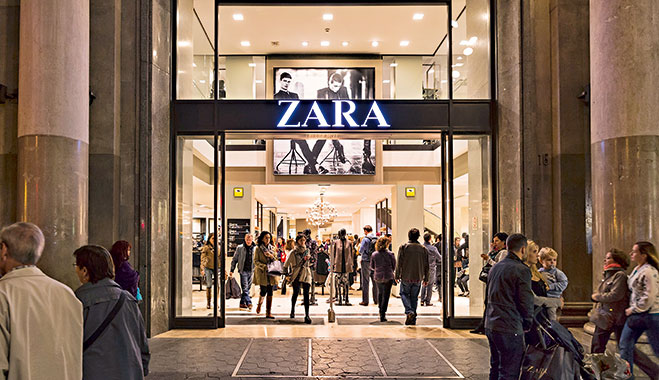 fast fashion giants is already underway with brands like TopShop closing stores, ASOS reporting 87 per cent profit plunge and Forever 21 being on the verge of total bankruptcy.
Zara’s claims therefore, call for further query. Experts have raised doubts over how a company that produces 500 new designs a week and 20,000 a year could ever really become sustainable. Especially considering that trend-focused clothing, the focus of Zara’s business model that brings around $20 billion in annual sales, has an incredibly short shelf life.
Other details to be considered
Though Michael Stanley-Jones, co-secretary of the UN Alliance for Sustainable Fashion views Zara’s claims as achievable as he believes many brands don’t realise their significance. For example, though the company aims to go green with its energy supply, it first needs to consider a number of other details such as water pollution from the fabric dyeing and micro fiber shedding into the ocean from synthetic material, complicate the process of making a fabric sustainable.
However, Zara’s announcement indicates the larger industry is indeed taking notice of these issues. As around 80 per cent of employees in the fashion and textile industry are women, there is a strong evidence of sub-minimum-wage employment and child labor in the sector. This makes it difficult for consumers to determine what the promising announcements from fast fashion brands actually mean in practice.
Growing demand for second-hand clothes
Lauren Singer, environmental activist, Trash Is for Tossers and founder of Package Free Shopin Brooklyn, New York, encourages those interested in sustainable fashion to turn to secondhand purchases. With the Gen Z already shifting towards second-hand clothing these clothes are likely to overtake clothes made by fast-fashion brands in the near future.
Though Zara’s announcement has created a ripple effect within the fast fashion industry, it fails to address the ultimate issues of the rate of consumption. The announcement provides industry leaders with an opportunity to shift to new technology and search. However, leaders believe as long as the current fashion business model exists, Zara’s sustainability announcement should be taken with a pinch of salt rather than interpreting them as the new fashion trend.
T&A apparel exports increase by 1.22% in July 2019
The CITI analysis of the quick estimates of T&A exports for July 2019 indicates that these exports increased by 1.22 per cent to US$2,893.66 million in July 2019 as against US$2858.66 million in July 2018. However, exports of cotton yarn and fabrics during the year declined by 9.98 per cent and 10.54 per cent to US$824.41 million and US$ 3,7399 million respectively on Year-On-Year and cumulative basis.
This change in the trends of exports of apparel and cotton yarn/ fabrics is mainly due to the Scheme “Rebate of State and Central Taxes and Levies (RoSCTL)” announced by the Government of India in March 2019 for the Apparel and Made-ups. RoSCTL scheme has been introduced to provide reimbursement of Central and State Taxes to make sure that taxes are not exported along with the products.
CITI has now made an earnest appeal to the Government of India to extend the benefits of RoSCTL scheme to the yarn and fabric segments to help the textile Industry to boost up its export competitiveness in the international markets to achieve higher growth trajectory and generate more employment opportunities to the masses, especially youths and women workforce.
Intertextile Shanghai in September
Intertextile Shanghai Apparel Fabrics will be held from September 25 to 27, 2019. High-end Chinese designers can get fabrics with high-quality materials and designs. Salon Europe will gather a comprehensive range of over 140 exhibitors from Austria, Belgium, France, Germany, Italy, the Netherlands, Spain, Switzerland, Turkey, the UK and more, while focused product zones include Premium Wool Zone and Verve for Design. Premium Wool Zone will feature some of the world’s finest wool suppliers from Europe as well as other countries and regions. The zone will feature over 20 suppliers from France, Italy, Hong Kong, Peru and the UK. As demand for luxury wool continues to grow in China and worldwide, thanks to its long-lasting quality, and fine appearance and feel, future prospects look good for this product zone. Verve for Design will feature original prints from over 25 design studios. The demand for original prints in China is huge because the market is always looking for something different. A lot of design studios exclusively exhibit at Intertextile.
With a huge domestic population, and a rising level of high income households who associate European brands with quality, the Chinese market offers potential for overseas brands to forge lucrative partnerships with Chinese trade buyers.
UK extends sustainable clothing action plan
UK has extended the sustainable clothing action plan (Scap). It is set to end next year but the new version is expected to involve more retailers and take steps towards developing industry-wide systems to recycle and reuse textiles and fibers.
Scap’s retail signatories including Next, M&S, Primark and Asos have committed to reducing their water use, carbon footprint and waste sent to landfill by 15 per cent by 2020. Primark is experimenting with clothing recycling bins at its new store and has pledged to introduce a full scheme this year. It has also launched sustainable cotton jeans and eco-friendly glitter. H&M is aiming at having 100 per cent recycled or sustainably sourced materials by 2030, up from 57 per cent now. It is also testing out a free mending service.
The spotlight is shining on the fashion industry. Most big retailers now agree they have to adapt to survive. The planet doesn’t have the resources available to facilitate the linear production model that the vast majority of the fashion industry operates on and therefore systemic change is the only option. There has been a significant change in people’s attitudes toward sustainability and fashion. Consumers want more action and greater transparency from brands.
Shanghai to host Spinexpo this September
Spinexpo will be held in China, September 3 to 5, 2019. The flagship event for spinners and knitwear manufacturers is aimed at knitwear brands, flat-bed and circular knit manufacturers, weavers, sporting goods manufacturers, hand-knitting wool distributors and all yarn and knitwear users. Exhibitors showcase technically innovative collections each season, thanks to a partnership between machine manufacturers, spinners and knitwear and sporting goods manufacturers. This edition will explore the topic of disruption: recycling colors and stitches. The focus will be on a mix of different styles inspired by a modern-day rural nomadism, a hodgepodge of combinations, multicultural details and different forms, a desire for daily protection that allows us to live our day-to-day lives.
Some themes are new optical designs of fragmented and complex checks patterns on knits and wovens, rhythmic contrasts and disorderly and energetic, decorative and extravagant transformations that create a contemporary and experimental mood in color and fiber combinations that are unusual, retro-modern, inspired by rituals from elsewhere. The focus is on color and visual effects using high-quality wools that can be felted and brushed. Brushed mohair and felted wools mixed with low melt nylon and polyester suggest new uses for these traditional fabrics.
Indorama Ventures acquires Sinterama
Indorama Ventures will buy Italy-based Sinterama. With this acquisition, Indorama can make use of the knowledge Sinterama has accumulated over time. This will provide Indorama comprehensive and innovative solutions for automotive and home applications to better serve customers and meet customers’ needs in future. Sinterama brings along a very experienced team of highly respected professionals who together with Indorama’s management make a formidable combination of managerial excellence. Sinterama’s network of strategically located facilities can enable Indorama to provide the best-in-class offerings for customers and meet the needs and exceed the expectations of customers on a truly global scale. The combination seals twenty years of collaboration and is expected to lead to the establishment of a global leader in high added value polyester yarns and applications. The acquisition comprises five production sites in Italy, Brazil, China and Bulgaria. The transaction is expected to be completed in the third quarter 2019.
Sinterama, based in Italy, is a polyester automotive interiors and high performance colored yarns manufacturer. The company is vertically integrated from chips to yarns and offers a vast range of colored polyester yarns for automotive, furnishing, apparel and technical applications. Sinterama is the industry partner of choice for high-value filament yarns. Indorama Ventures is a global leader in the polyester business.
Indian yarn mills runnig below capacity
India’s yarn exports have fallen. One reason is the higher cost of raw materials. Mills are running at below their capacity to match the demand and supply, which in turn is increasing the manufacturing cost.
The textile value chain, particularly the cotton-based manufacturing value chain, has slowed down resulting in a stagnancy or drop in domestic consumption. Prices of cotton in India are higher compared to international markets due to higher level of minimum selling price. Second, high fluctuation in prices along with the tight liquidity situation in the market is resulting in slow buying of yarn and fabrics. If the situation continues, there may be a need for converting short-term loans in the textile manufacturing sector to long-term loans.
To give a boost to the cotton value chain, a switch to direct benefit transfer to farmers in the upcoming season instead of an artificially higher level of MSP will help. Also steps on a war footing to increase cotton yields are necessary. Secondly, apparel makers should take advantage of the ongoing US-China trade war and focus on exporting more to the US market. If the situation does not improve, banks should be directed to reschedule loans given to the textile manufacturing sector.
Asos asks suppliers for price cuts
Following the investments Asos made in logistics, sustainability and marketing, the marketplace has asked its suppliers for price cuts. Among the recent investments the marketplace has made is the development of logistics platforms in the United States and Germany.
The multi-brand store is seeing positive momentum in customer engagement with visits up 16 per cent year-on-year. The company is making good progress in improving customer engagement, but embedding the change from the major overhaul of infrastructure and technology in its US and European warehouses has taken longer than anticipated, impacting its stock availability, sales and cost base in these regions. The move to a multi-site logistics infrastructure will enable it to offer customers across the world its market-leading proposition, facilitate its future growth as well as lead to longer-term efficiency benefits.
Asos is spending on new technologies, like artificial intelligence, new marketing strategies, technology platforms and infrastructure, and focusing on growth in the US. Current areas of focus include reducing prices and refocusing the marketing strategy. Unlike a lot of other fast-fashion companies, Asos has its marketplace, third-party brands, its own products, it has beauty. The brand has diversified its offerings, unlike a lot of other fast fashion brands that have just focused on cheap items and breadth of assortment with private-label goods.











