


FW
Multinationals gear up to tackle labor exploitation in sourcing factories
"Although shares of Fast Retailing, the Japanese company behind clothing brand Uniqlo, surged more than 75 per cent over the past year due to its steady expansion in overseas and endorsement deals with tennis star Roger Federer and golfer Adam Scott, around 2,000 of its Indonesian laborers were laid off with unpaid wages and no severance payments by its vendor. Their employer, who went bankrupt in 2015, has been accused of labor violations that included unpaid overtime and union busting."
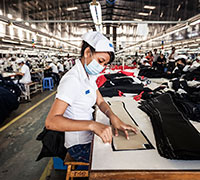 Although shares of Fast Retailing, the Japanese company behind clothing brand Uniqlo, surged more than 75 per cent over the past year due to its steady expansion in overseas and endorsement deals with tennis star Roger Federer and golfer Adam Scott, around 2,000 of its Indonesian laborers were laid off with unpaid wages and no severance payments by its vendor. Their employer, who went bankrupt in 2015, has been accused of labor violations that included unpaid overtime and union busting. These workers then demanded $5.5 million of back wages and severance payments from Uniqlo (Fast Retailing) which was rejected, as the brand claimed that it was under no legal obligation to fulfill these demands.
Recently, due to increased pressure from workers, unions and other organisations that support them, multinational companies have been reimbursing laborers for unpaid wages. However, this is not the only issue that laborers face. They are also troubled by the intricate imperialist relations that characterise the capitalist world economy.
Reorganisation of work augments labor exploitation
As per unit labor costs data, countries like China, India and Indonesia, which have the highest global labor-value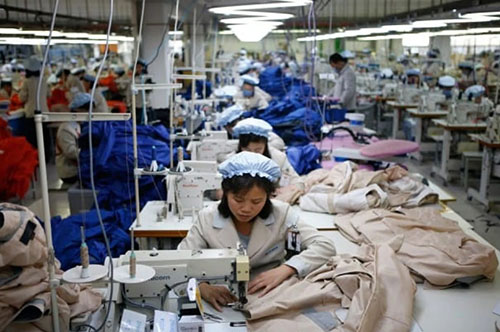 chain, also have very low unit labor costs. This is also true for Southern countries like Mexico, which has experienced a sharp decline in unit labor costs relative to the United States within the 1995-2014 period. These countries not only have high productivity rates but also low wages which results in higher profit margins with the additional value generated often credited to production in the countries in which these multinationals are headquartered.
These global labor-value chains largely benefit the multinationals that control them through subcontracting. Any misconduct is therefore, attributed entirely to the subcontractors though these mega-corporations are majorly responsible for the exploitation of these workers. Multinationals often place strict conditions and unreasonable demands on their suppliers which lead to the reorganisation of work in their factories leading to more exploitation of workers.
Ways MNCs can control supply chains
A large part of this fault also lies with suppliers who regard their multinational clients as highly prestigious. Therefore, they willingly submit to the unreasonable demands of multinationals even though it often leads to difficulties in production processes. Most demands are delivered through the imposition of systemic rationaliaation and flexible production that began in the 1970s and are continuously maintained by new information technologies, aiming at establishing production, administration, and distribution processes.
For example, the imposition of delivery on demand by multinationals compels suppliers to implement a buffering policy which makes it imperative for these suppliers to get their finished goods ready and store them in warehouses, to be sent only when their multinational customers need them.
This reorganisation of intensifies the exploitation of workers by forcing them to increase their productivity while stalling wages. To counter this, multinationals should ensure that their suppliers comply with national regulations limiting overtime by monitoring them through third party organisations that audit the suppliers and issue standardization certificates. They should also encourage suppliers to increase strict, direct control of labor on the factory floors, as well as apply an incentive system and a specific measurement of individual or group performance that would reward “productive” workers and punish those who fail to achieve production targets.
The intricate global value chain is a system of balls and chains in which the Northern capital is in a commanding position. This phenomenon indicates a new phase of imperialism, used by capital and its state instruments to propose a new set of demands from brands through which they can control their production systems.
Zara launches a line from denim waste
Zara has launched a denim line ‘Denim from Denim’, created from cotton extracted from other used jeans. This is the first collection of the brand using denim waste. Also Zara will start retailing Zara Home, though this fusion will not mean the closure of all Zara Home independent stores. In the last couple of months, the home line has added elements like sunglasses and phone cases, and reinforced its garment offer, limited up until now to sleepwear. Zara Home was the chain with the best performance in 2016.
Zara's growth is flagging because of heightened competition, which is forcing the company to lower prices of clothes and footwear and to put more apparel on sale. Growth in online sales is also chipping away at profitability, because it is more expensive to ship internet orders. Inditex, based in Spain, owns Zara and seven other brands such as Massimo Dutti and Bershka. The biggest contribution to Inditex’s revenue comes from Zara. This year Inditex has launched a new decorating service for restaurants, hotels and companies. Competitors have been unable to fully replicate Inditex's business model, which takes clothes from design to rack in weeks. However the crucial profitability metric has fallen somewhat in recent years.
Zimbabwe revises clothing rebates
Zimbabwe is plugging loopholes in the grant of rebates to clothing manufacturers. Some players in the garment making sector have been found to abuse the facility over the past six years, which has led to revenue losses and distortion of both national and regional value chains and of linkages through various malpractices. These include disposal of fabrics intended for value addition on the domestic market, transfer pricing, under-invoicing and incorrect declarations to evade local taxes while taking advantage of preferential trade agreements to realise huge profits in regional markets.
The rebate was aimed at reviving the clothing value chain and was initially granted on select imported fabrics for use in the manufacture clothe g for a period of one year. Materials eligible for the rebate are from manmade yarn and include denim, cotton sewing thread, woven fabrics of polyester staple fibers, chenille fabrics, tulles and other net fabrics. The fabrics are kept in bonded warehouses from where they are withdrawn under supervision. However companies make withdrawals misrepresenting the amount of material they need to make apparel.
Some players in import material that is locally available and later produce garments for the international market, a development that threatens to destroy downstream players such as cotton farmers, ginners, spinners and weavers.
India monitors imports from Bangladesh
Cheap imports from other countries are coming to India via Bangladesh. Now checks are being done to ensure only Bangladesh origin imports enter Indi. Origin certificates issued for such consignments by Bangladesh trade bodies will be carefully examined. India offers duty concessions to Bangladesh under a free trade pact. A close watch will be kept on garment imports under the South Asian Free Trade Area agreement entering the country via Bangladesh. Such imports using the FTA route without any value addition don’t just defeat the whole objective of the agreement but also hurt the Make in India initiative.
The South Asian Free Trade Agreement mandates 30 per cent local value addition in least developed countries for import by other nations. Local value addition norms are incorporated in the trade pacts to not just protect the importing partner but also to ensure contribution to the exporting partner’s economy and local job creation through stringent value addition criterion.
A show-cause notice was issued in early August to Future Enterprises on 83 garment consignments, allegedly imported from third countries and routed via Bangladesh to take advantage of zero import duty. The fear is that the route could be abused by other importers.
Canadian show fetches orders for Bangladesh
Bangladesh readymade garment manufacturers received a good number of orders at Apparel Textile Sourcing Canada, August 19 to 21, 2019. A total of 10 fabric, garment and home textile manufacturers from Bangladesh took part in the trade show. For enlarging the trade volume in the Canadian market, Bangladesh showcased its products especially leather and diversified jute products. One company, Hand Touch, displayed embroidered handmade fashionable garments which attracted buyers. The company made some good contacts which will be soon turned into visible export orders.
Bangladesh’s textile products enjoy duty-free access to Canada. If the trade facilities offered by Canada remain unchanged, Bangladesh’s exports to Canada will reach $3 billion by 2021. Bangladesh has set a target of doing $50 billion in overseas sales by the end of 2021 and Canada is going to be a key garment export destination. Bangladesh and Canada may form a blue ribbon panel to explore possibilities of expanding trade and investment. The signing of a bilateral investment treaty between the two countries would go a long way toward increasing foreign direct investment from Canada to Bangladesh.
Canada is a country of some 37 million people, with French and English as official languages. It is a leading as well as growing trading partner of Bangladesh, providing export opportunities.
British firms in Bangladesh want parity with domestic RMG makers
The UK wants Bangladesh to take measures for ensuring a level playing field for both export processing zone factories and local producing units. Currently, Bangladesh apparel exporters enjoy a four per cent cash incentive against exports to non-traditional export destinations i.e. countries outside the EU, the US and Canada. Currently, four readymade garment sectors receive export incentives at four per cent. But foreign-owned clothing factories operating inside export processing zones are not eligible to enjoy such incentives. This is felt to be unfair since foreign firms operating in the readymade garment sector feel they contribute to job creation, skills training and tax revenues. So the UK wants such incentives to be provided for export processing zone factories too.
Bangladesh is planning to introduce a rebate of one per cent on all readymade garment exports. However, only Type C companies (100 per cent Bangladesh owned and resident in Bangladesh) within the export processing zones are entitled to get this incentive. British companies are upset the proposed one per cent export rebate in the current budget will exclude them.
This fiscal Bangladesh’s export earnings from the UK grew 4.51 per cent against an 11.76 per cent growth last fiscal year.
Japanese designers redefining the way world look at fashion
Japanese designers are redefining the concept of fashion. In 2012, Yoshikazu Yamagata held fashion shows without clothes. This was meant as a blow to the idea that the world revolves around a designer’s clothes and instead focus on a world that incidentally includes fashion. This marks a cultural shift that reflects that only a handful of people actually wear haute couture gowns that are currently regarded as real fashion. Isetan Shinjuku’s petite section is holding an event aimed at women 150 centimeters tall and below. The highlight of the Isetan line-up is a seven-way dress that can be styled seven different ways and acknowledges the differences in dressing the shorter woman’s body. Ikebukuro Seibu makes washable period-proof underwear. The intent is to change the view of menstruation and the use of disposable sanitary products.
Brands are increasingly relying on external creative forces to make something new. Artists are a welcome guest in the designer’s world. Michael Kors’ bags sport Masami Yanagida illustrations. With the fashion industry’s relentless use of collaborations to court attention, designers are being asked to bring someone else’s world to life rather than their own. Issues like inclusivity and social change have started to fall into the hands of brands with real consciences.
Sportswear brands leave China as global brands shift sourcing
A quarter of Chinese production capacity used by global sportswear brands is lying idle. International brands are shifting sourcing overseas, which results in unoccupied production capacity. The protracted trade war with the US is pushing the biggest sports labels out of the Asian nation’s factories.
The idle capacity in a country that’s long been the workshop to the world underscores the blow of the trade war to Chinese manufacturers, who are also grappling with an economy that’s expanding at its slowest pace in three decades. There are growing signs that the global supply chain that’s been in place for decades -- and powered by China’s economic rise -- is being permanently transformed. The world’s largest supplier of consumer goods, Li & Fung, is helping its clients, which include the biggest retailers in the world, move sourcing away from China to other regions. For instance, it assisted one American retailer reduce its reliance on China from 70 per cent to 20 per cent within two years.
However, for China’s industry of sportswear exports, the growing local market can partially make up for waning foreign demand. By shifting to made-in-China and sold-in-China, factories can shorten production cycles and that could be good for them.
Europe’s top zipper brand comes to India
Euro A Zipper is coming to India through an agreement with Kolkata-based Bagaria Trading. With this agreement, the zipper brand forays into the rapidly-growing Indian market with an intent to seize a sizeable chunk of the leather and leather apparel segment. Through this partnership Bagaria aims at introducing international standards in the use of zippers in leather and apparel industries. The partnership is also expected to create an immediate upside for West Bengal’s economy, allow for specific skill development and expertise and in turn create employment in the region. Bagaria Trading will have the sole right of Euro A Zipper’s pan-India franchise and will be responsible for sourcing all Euro A Zipper’s OBO brand products from the company’s manufacturing facilities in China and Bangladesh and handle the entire marketing, sales and distribution in India. Euro A Zipper wants to eventually set up distribution centers in India. Bagaria Trading will be in charge of the entire logistics. Euro A Zipper and Bagaria Trading also plan to set up an assembly plant in the next two years.
If everything works out as planned, and once Euro A Zipper has established its presence properly in India, it may look to extend its partnership to penetrate the domestic markets of neighboring countries like Bangladesh, Sri Lanka and Nepal.
India launches measures for small units
The government has announced measures to infuse confidence in small and medium units in the garment hub and for boosting industrial demand. Banks will come out with an improved and transparent OTS policy to benefit medium and small units and retail borrowers in settling their overdues and will pass on the rate cuts through MCLR reduction to benefit all borrowers. This will be a great relief to the financially stressed Tirupur knitwear garment exporting units in the small and medium sector.
As for NPA classification norms, the industry has appealed to a revert to the Two Quarter Past Due concept of 180 days instead of the 90 days prevailing now in the case of small and medium units as it will provide some breathing time for the units to recover and recoup. The opinion is that an enough and adequate monitoring mechanism may be implemented even if the overdue crosses 90 days to avoid any siphoning off such as happens in many big corporate cases. The industry requests for restructuring two times to have a leverage, after considering the seasonal nature of the business.
The rebate on state and central taxes and levies was announced on March 7, 2019, for the garment sector to reimburse the embedded taxes and levies not covered under GST.











