FW
US leather revenue down 12 per cent
Revenue from the leather and hide market in the US fell 12.1 per cent last year compared to the previous year. The pace of growth appeared the most rapid in 2015 when the market value increased by 0.6 per cent against the previous year. However, from 2014 to 2018, demand remained at a lower figure. Leather and hide exports from the US in 2018 were flat with the previous year.
The main destinations for leather and hide exports from the US are: Italy, China and Vietnam. And these combined account for 84 per cent of total exports. Vietnam recorded the highest growth rate of exports of the top countries over the last five years, while the other leaders experienced a decline.
Leather and hide imports into the US in 2018 increased 16 per cent and have increased at an average annual rate of 10.7 per cent over a five-year period. Brazil is the largest supplier of leather and hide to the US, comprising 38 per cent of total US leather and hide imports. The second position in the ranking is occupied by Italy, with an 18 per cent share of imports. Leather imports into the US are likely to see steady growth in the near future.
Texworld Denim Paris to open next week
Texworld Denim Paris will be held September 16 to September 19, 2019. Among the participants are Bhaskar Industries, from India, with a vertically integrated mill and an annual production capacity of 44 million meters, which is actively engaged in reducing, reusing and recycling in its production; Chittagong Denim Mills, from Bangladesh, focused on using innovative processes, technologies and machines while being responsive to their customer’s requirements and anticipating changes in market trends; and Mekotex, based in Pakistan, a manufacturer and exporter of denim and other cotton fabrics, having s a fully integrated vertical unit with its own in-house spinning, denim preparatory, weaving, denim finishing and power generation. The company is GOTS certified, BSCI, Oeko-Tex 100, Oeko-Tex STEP. A new exhibitor is the TM Group, a Franco-Chinese company specializing in fashion and renowned for its denim and garment dye collections, basic pieces sublimated by varied finishes and perfectly adapted to market trends: buttoned, zipped, belted, studded with embroidered stones, sewn or inlaid, added leather.
Texworld Denim Paris offers an expanded international range of denim textiles and denim clothing manufacturers, allows retail chains and designer labels to find inspiration for additions to their collections and identifies suppliers for materials, expertise or finished products.
PRGMEA holds workshop on sustainable fashion in Pakistan
A PRGMEA workshop and seminar on sustainable fashion was held in Pakistan, recently. The aim of the workshop was to create awareness about sustainable and ethical fashion among apparel designers and manufacturers and the wider fashion ecosystem in Pakistan. It was a step by PRGMEA to explain and promote the importance of a sustainable apparel industry.
PRGMEA’s work in this area goes further because the seminar and workshop also acted as a prepping session for designers wishing to participate in the PRGMEA-IAF Global Fashion Awards. This competition is aimed at educating young fashion designers about sustainable design techniques. The competition will challenge young designers from Pakistan to put their creative powers to the test by proving their ability to transform textile waste into wearable, appealing and commercially viable products.
PRGMEA is IAF’s Pakistan member and co-host of the 35th IAF World Fashion Convention. Through this workshop and the PRGMEA-IAF Global Fashion Awards, the Pakistan apparel industry demonstrates its industry’s commitment to investments in sustainability and education as major drivers of industry growth. IAF firmly believes that sustainability is- and will be in the foreseeable future- one of the crucial elements to keep the industry strong and appealing. The IAF also strongly believes in the power of education.
Kingpins holds 4th edition of China road show
The 4th edition of Kingpins China City Tour was held in Guangzhou (September 4) and Hangzhou (September 6). The road show was launched in 2016.
Both events were well attended. Each city hosted the around 40 exhibitors including Chinese as well as international companies. While last year’s edition was somewhat slow, this season brought a good number of visitors. There was the right mix of visitors including representatives of Chinese denim brands as well as the China-based sourcing teams of international companies such as H&M or Bestseller. The Hangzhou event showcased a new denim consumer event, KP2C, a denim festival, which featured several denim brands and designers, installations, workshops, and indigo-themed entertainment such as bull riding and a square dance performance. Chinese youngsters have a rising interest in cool, modern denim looks that have developed in the last decade.
Chinese mills and manufacturers see a wider prospect in participating in Kingpins. They want to become more well-known, especially in Europe, and show that denim from China has a really good quality and is far better than what buyers think. The mills have high production levels and rank high in terms of sustainability too.
German fashion companies urged to adopt safeguards
NGOs and trade unions in Germany have launched a campaign to propose a bill that would ensure companies put in place human rights safeguards in their supply chains. A German law would be vital to regulating company behavior in Germany and protecting rights in the supply chains of one of the world’s largest export economies. It could prove a positive influence across the European Union. Germany will have the EU presidency in the second half of 2020 and will be in a great position to help pave the way for EU-wide mandatory due diligence, ensuring strong, rights-respecting business practices in many more countries.
Knowing where products are made is key to stopping human rights abuses in the global supply chain. Human rights and environmental tragedies continue to surface in the global supply chains of German companies.
Fashion sales in Germany fell 1.9 per cent in July 2019 compared to the previous month. Germany is the biggest fashion market in Europe but the country is expected to enter a recession in the third quarter of the year. Fashion consumption in Europe has slowed down. Apparel, footwear and accessories markets weakened in the past few months while the ghost of recession is again haunting Europe.
Fall in China’s H1 apparel and textile exports to the US
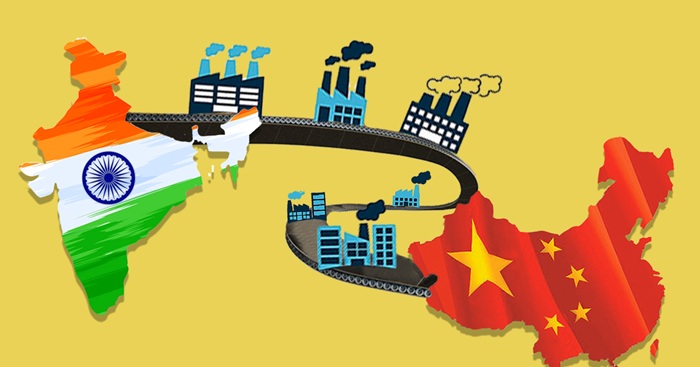
From January to June 2019, China’s exports of textiles and garments to the United States were down 0.66 per cent year-on-year. Exports of China’s textiles to the United States were down 2.24 per cent year-on-year. Apparel exports to the US increased 0.11 per cent. Although the trade friction between China and the United States has escalated since May this year, the most important export market for China’s textiles and garments is still the United States.
From January to June this year, Chinese exports of textiles and garments to Japan declined 4.65 per cent year-on-year. Growth rate of garment exports to Japan fell by 6.11 per cent. China’s share of the imports of textiles and garments by Japan has dropped from 65 per cent in 2015 to 55 per cent in the first half of 2019.
But China’s exports of textiles and garments to Africa grew rapidly, achieving a year-on-year increase of 5.24 per cent. Especially this is true of textile exports to Africa, which increased by 10.06 per cent year-on-year. Exports of textiles to countries along the Belt and Road route were up 3.23 per cent year-on-year. Obviously the diversification of the Chinese textile industry’s export market is yielding results.
Fiber counterfeiting harms brand image
Companies face significant risk to brand reputation and unexpected product recall costs due to fiber counterfeiting. Many top apparel brands have set 100 per cent sustainable fiber goals to be achieved within the next three to five years, says TextileGenesis. However, for the majority of apparel brands, supply chain transparency is limited to Tier I or II suppliers. Only 10 of the top 250 apparel brands can identify Tier IV and Tier V fiber suppliers for their apparel collections.
The question is whether sustainable fibers targets can be reached in the absence of transparency up to the origin of the fiber itself. No credible sustainability journey or goal is possible without underpinning it with transparency. Transparency also reduces the business and compliance risks related to counterfeiting of sustainable fibers. Up to 30 per cent of sustainable fibers in the apparel supply chain can be counterfeited (at fiber, yarn or fabric stage).
Although the transparency debate has primarily focused on compliance, risk elimination and supporting sustainability initiatives, it can also positively contribute to business in terms of price premium and consumer loyalty. Consumers are willing to reward brands with a higher premium when they demonstrate fair and sustainable supply chains.
Ethiopia to host ITME Africa in February 2020
ITME Africa 2020 will be held in Ethiopia from February 14 to 16, 2020. The exhibition is expected to focus on business opportunities in the textile sector across the whole of Africa, thereby creating new market opportunities for the textile and textile engineering industries. It is expected to attract 220 exhibitors with country pavilions from India, China, Italy, Switzerland, Turkey and participation from additional countries including South Africa, United Kingdom, Austria, Belgium, Egypt, Ethiopia and Ghana. Other activities planned concurrently during the exhibition are business to business meetings, technical and investment seminars and a business financial solution seminar.
ITME Africa 2020 is deemed to be more than a routine exhibition. It proposes to bring to the table complete solutions to textile industry development on the continent through affordable technology, international exposure and skill development through seminars and conferences, confluence of business houses, investment opportunities, joint ventures, access to finance and networking platforms with technocrats and educational institutes. Overall, it is expected to pave the way for a wave of knowledge, progress, growth and prosperity.
Meanwhile Ghana has invited Indian firms to collaborate with its textile companies and take advantage of the numerous program introduced by Ghana to industrialise the country.
China’s Dalian garment fair gets positive response from industry
The Dalian garment and textile fair was held in China from September 7 to 9, 2019. It attracted over 800 enterprises from countries like the US, Denmark, Canada and Japan. This high-level fair saw both purchase agents and buyers interact especially at the matchmaking conference between domestic and overseas purchasing agents and exhibitors.
This fair in the Dalian region of China has strengthened exchanges and cooperation with other countries in the field of textiles and apparel over the past 30 years, promoting the upgrading and development of China's textile and apparel industry and building a platform for foreign economic and trade cooperation. In recent years, Dalian’s textile and apparel enterprises have made outstanding achievements in high-end customization, intelligent manufacturing, e-commerce, overseas cooperation and responsible development. It has become an important channel for domestic enterprises and brands to enter the world as well as an important window for international brands to connect with the northeast Asian market.
China is the world’s largest garment and textile production country as well as the largest garment and textile trade country. In 2018, China’s textile and garment exports were up 3.7 per cent year-on-year and imports were up 6.4 per cent year-on-year.
British Fashion Council launches Institute of Positive Fashion
The British Fashion Council (BFC) plans to launch the Institute of Positive Fashion (IPF) to create an industry blueprint by bringing together expertise from different areas to help brands in the industry navigate an often confusing to understand topic and kick-start a much-need comprehensive step-change. Informed by research, expert opinion, industry insights and the significant industry experience of individual businesses and organisations, the power of collective effort will amplify independent activity.
The IPF will galvanise opinion and industry best practice across the fashion industry. It will accelerate progress made in all areas of sustainability that will be impactful and lasting, by creating educational programmes and campaigns aimed at both industry and the public. The aim being to catalyse and expedite change. The IPF ambition has been pushed forward by the Positive Fashion Committee since early 2019. The next quarter will see further development of the programme, that will build on the existing resources of the Positive Fashion Committee.
The BFC takes its role in shaping a truly sustainable industry for future generations seriously. As we build momentum we encourage and welcome participation and invite all parties to register their interest with us – This email address is being protected from spambots. You need JavaScript enabled to view it.
To coincide with London Fashion Week, DHL, in association with the BFC, have commissioned a White Paper highlighting the importance of sustainability in the fashion industry. The paper provides businesses with easy to follow recommendations ensuring positive fashion remains at the heart of the industry. The White Paper will be launched on the British Fashion Council’s website on Friday 13th September.