


FW
Eurojersey launches new Sensitive Fabrics
Eurojersey has launched its new A/W 2020-21 ready-to-wear collection of Sensitive® Fabrics at the Premiere Vision exhibition. These fabrics feature versatile and multi-purpose prints designed for a contemporary lifestyle. Their impeccable fit is guaranteed by their innovative technical features. Ideally applied in the apparel industry, these fabrics have an across-the-board relevance and can interpret a wardrobe of multifunctional garments; from on-trend moods to urban-chic styles, more formal outfits for business occasions or feminine looks.
Rich in identity and glamour, these fabrics draw inspiration from the pared-down buildings of avant-garde architecture or the romanticism of a bohemian lifestyle, to translate it into a more contemporary and high-tech version. Their geometric motifs are offset by animalier prints or houndstooth weaves transferred with a perfectly defined rendering. Hyper-realistic patterns are impressed onto their ultra-flat surface with 3D-effect photographic precision, thanks to the company’s digital printing.
Cifra launches new concept garments in two top industry fairs
Cifra, a leading producer of Warp Knit Seamless (WKS ™), will present its new concept garments at the Functional Fabric Fair in Portland and Performance Days in Munich. These garments have been created in the name of uniqueness and sustainability with their exclusive, internationally patented technology. In short, these outdoor, hybrid, activewear and athleisure prototypes possess the highest in technological and stylistic qualities.
Cifra, which has always been actively involved in favor of environmental sustainability, is today considered an absolute point of reference in responsible production. On the one hand, there is the Zero Waste commitment and on the other, the Green Attitude project which has to do with the introduction of eco-sustainable and regenerated yarns such as Econyl® by Aquafil, QNova® by Fulgar, Starlight® by Radici, Amni Soul Eco® by Fulgar, Eco Smart® by Roica, and Sensil® Ecocare by Nilit Fibers.
Among the most recent in textile innovations, Warp Knit Seamless® undoubtedly ranks among the most significant and far-reaching. It has to do with a new way of imagining seamless, both in terms of manufacturing technology and in terms of the final product, compared to traditional garments which are made on circular or rectilinear machines.
8th edition of Barcelona Fashion Summit next February
The eight edition of the Barcelona Fashion Summit will be held from February 6, 2020. The event, in its latest edition will feature over 850 executives in the Palau de Congressos in Barcelona.
Organised annually by Modaes.es and the support of the Consorci de Comerç, Artesania i Moda de Catalunya (Ccam), the Barcelona Fashion Summit aims to value the importance of the fashion business in the country and create an environment of knowledge around the biggest challenges of the sector.
Every year, the event focuses in a theme of interest for the industry, in 2014, keys of the fashion leadership, in 2016 the digitalisation challenge, in 2016 vectors of growth, in 2017 generational relieve and in 2018 a reset call was made.
The title for the last event was: Fashion year 0: keys to reinvent the fashion business and had the presence of executives of retailers like Inditex, Desigual or Pepe Jeans, experts from DDB or EY, etc
20th Textech Bangladesh International Expo features over 1,300 exhibitors
The four-day 20th Textech Bangladesh International Expo that kicked off in Dhaka showcasing textile and apparel products of more than 1,300 manufacturers around the globe. Manufacturers from around 25 countries including China, India, Germany, the UK, the USA, Taiwan, Japan, Turkey, Italy and Sri Lanka are showcasing their products. They are displaying different type of yarns, fabrics, computer jacquard elastic belt, buttons, trims, accessories, chemical, dyes, machinery including Bow machine and other related products and services. According to them, this expo will help both the parties to cut cost, build contact and increase profit.
The Bangladesh textile and apparel export industry has been a key part of the country’s economy over the past few decades. The current export value of the industry stands at around US$ 31 billion per year. This is projected to grow to US$ 50 billion by 2021.
PG Denim launches new concepts for S/S 2021 season
PG Denim, the designer project by Paolo Gnutti, is presenting new concepts developed for the S/S 2021 season at the Munich Fabric Start exhibition, being held from September 03-05, 2019(Munich, 3-5 September 2019). The company is focusing on circularity, seen from a dual perspective: the product with the no longer traditional alternation of seasons, and a sustainability oriented approach.
The collections by PG Denim are a ‘mix of products without seasonality.’ Their focal points are innovation alongside the concept behind the initial idea, as opposed to just the season. These collections have been designed starting form macro-trends and present fabrics for garments that are easy to wear and suitable for both warm and cold temperatures. The lines for the previous season are thus reintroduced and restyled playing with weights and sizes, within a range where flock meets ultra-light fabric bases, or where vinyl is combined with typically summer weights which shift the fabric towards the world of “paper” with crispy touches, resulting in extraordinarily lightweight and strong items at the same time. Also, the Garage Denim theme has been upgraded with fluid and smoothed touched for garments which are easy to wear and have a strong personality.
The PG Denim season has also partnered with The Denim Window project, which has resulted in a limited series of Creative Capsule collections, derived from the idea of bringing together companies which had already worked or were working together, trying to highlight – through small capsule collections – the best of what had already been produced by traditional businesses. This has resulted in three trailblazing capsules, two of which designed in partnership by PG Denim and companies the likes of M&J Group, Cadica and Greenwear.
Italian womenswear brand awarded with PEF certificate
Italian womenswear brand Chiara Boni La Petite Robe has received the Product Environmental Footprint (PEF) certificate for its completely local supply chain, high quality and authentic sustainable approach.
The brand uses Sensitive® Fabrics to create around 80 per cent of its collection mostly comprising dresses. Breathable, shape-retaining, stretchable in all directions, wrinkle free and long lasting, these fabrics are exclusively crafted for the eight iconic pieces selected for the PEF measuring procedure. These eight pieces are the most recognisable essentials of Chiara Boni La Petite Robe signature offerings that include formal dresses, gowns, jumpsuits and separates.
These ‘Measuring for a Sustainable Future’ pieces are identified by a customised handtag and three PEF indicators, which are essential for the calculation of the ecological footprint.
Brands in China facing tough competition on digital platforms
"The Chinese fast fashion market has been in doldrums since the last two years with overseas brands struggling with declining profits. Brands like H&M and Forever 21 have been rolling back planned expansions as the recent annual report of H&M reveals. The brand’s net sales have declined from 7 per cent in 2016 to 3 per cent in 2017 and the brand was also forced to scale back on its physical expansion. In the first half of 2019, it closed two more stores. British fashion retailer Topshop exited the Mainland China market last November by pulling out all its products from Tmall."
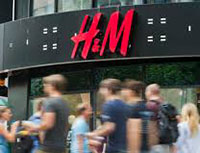 The Chinese fast fashion market has been in doldrums since the last two years with overseas brands struggling with declining profits. Brands like H&M and Forever 21 have been rolling back planned expansions as the recent annual report of H&M reveals. The brand’s net sales have declined from 7 per cent in 2016 to 3 per cent in 2017 and the brand was also forced to scale back on its physical expansion. In the first half of 2019, it closed two more stores. British fashion retailer Topshop exited the Mainland China market last November by pulling out all its products from Tmall. Forever 21 has also shut its online presence besides closing all stores, thus completely backing out of the country.
Though many overseas fast fashion brands had entered the Chinese market quite enthusiastically, they faced a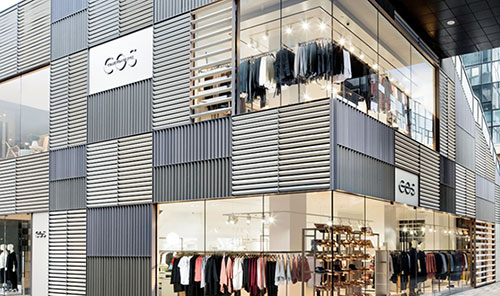 tough time competing with local online retailers on websites like Tmall and Taobao. The tastes of Chinese consumers also shifted towards more elevated options, which hurt the operations of many fast fashion startups.
Growing middle class offers huge opportunity
According to McKinsey & Company, the growing middle class will constitute around 75 per cent of Chinese urban consumersby 2022. This offers a huge opportunity to many fast fashion brands targeting the middle-end market, However, it is essential for these brands to understand the segmentation within this demographic to ensure the success of their initiatives. Constituting seasoned shoppers having a long-standing relationship with online retailers like Tmall and Taobao, these consumers are in search of new options not available online. On the other hand, local customers are losing interest in fast fashion due to the bad quality and noncompetitive prices offered by these brands.
High-end fast fashion brands, planning to enter the Chinese market, now have to choose between digital and brick-and-mortar operations. For example, & Other Stories opened its first sales platform on Tmall unlike its sister brand COS which opted for a physical store instead. This saves the brand a considerable amount of money as against building and operating physical stores. The platform charges a deposit of around $14,000 (100,000 RMB) for a flagship store, an annual service fee of $8,362 (60,000 RMB), and a commission of 3 to 5 percent.
Digital market influenced by past customer experiences
However, a digital-only strategy requires an extremely strong product, since the overseas brands have to compete with a wide range of offerings online. The digital market in China is being continuously influenced by a variety of similar options suggested by Taobao, as well as product reviews from previous customers. This makes it extremely difficult for newer players to enter the market. Premium fast fashion brands tend to stand out from the competition thanks to higher quality and elevated product design, but these brands still need to find alternative channels where they can communicate their identities to Chinese consumers.
It is easier for brands to build their physical presence once they establish themselves online as their online operations enable them to interact with consumers even further. For instance, “COS Fitting Room” has been commended by Chinese customers on the much-hyped social app and e-commerce platform Little Red Book for its minimal interior design, attractive lighting, and ample space, positioning the brand as more luxury than fast fashion. This invaluable in-store shopping experience reaffirms COS’ philosophy of timelessness while also impressing customers.
Having already established its presence in the European and North American markets, & Other Stories has now entered China. Though the brand’s price and positioning match well with China’s market gap, it faces many challenges from domestic fast fashion brands and the growing demands of Chinese customers. Whether the brand can deliver advanced products and unique experiences needs to be seen as what the emerging middle-class consumer looking for is a high-end experience whether in terms of a digital or in-store experience.
Shandong Ruyi Group signs the Fashion Pact
China’s Shandong Ruyi Group has signed the newly created Fashion Pact with more than 30 other global fashion and textile firms, as the group formed to promote sustainable socio-economic development, and foster a better relationship between the fashion industry and the environment.
The Fashion Pact focuses on three primary areas of earth protection. The first includes stopping global warming by creating an action plan for zero greenhouse gas emissions by 2050, in order to keep global warming below a 1.5°C pathway between now and 2100.
Second, the pact plans to restore biodiversity, by restoring natural ecosystems and protect species. The third goal is to protect the ocean by removing the fashion industry’s usage of single-use plastics.
The other Fashion Pact companies are: Bestseller, Burberry, Capri Holdings, Carrefour, Chanel, Ermegenildo Zegna, Everybody & Everyone, Fashion3, Fung Group, Galeries Lafayette, Gap Inc., Giorgio Armani, H&M Group, Karl Lagerfeld, Kering, La Redoute, Matchesfashion.com, Moncler, Nike, Nordstrom, Puma, Ralph Lauren, Salvatore Ferragamo, Tapestry, Selfridges Group, and Stella McCartney.
Gap between MCX and physical price for cotton widens
Also though the overall physical market sentiment for cotton remained weak, MCX future for current month tried to support the physical market price. However, the physical market did not follow MCX with 1:1, so MCX & physical price spread widened. In market, traders raised a question on MCX spot prices as well, asking to justify, the spot pries taken by MCX trade. These prices are much higher than the spot price given by local regional bodies, which was main cause to take MCX upside without aggressive demand in physical market. Weak rupee too played an important role to support flat cotton prices in India otherwise prices could get lower from here. ICE is trading in narrow range from last two weeks, which has potential to go further lower after announcement of duties on each other in US-China trade war.
Due to satisfying monsoons, Indians expect a bumper cotton crop with better yield this year. Recently Indian monsoon covered well all across cotton growing regions in India, this rainfall was most required for standing crop which gave a boost to the crop, as of now crop condition is reported very good, except few small regions affected with diseases in Maharashtra.
As cotton arrivals are shortly expected from northern India, mills have enough stock for coming days and are not in hurry to buy immediate cotton from the current crop.
US consumer spending up in July
Consumer spending on clothing and footwear rose 0.6 per cent in the US in July. Clothing and accessories store sales were up 0.8 per cent on a month-over-month basis.
July’s strong results are consistent with a confident consumer. Households are in good shape with spending and that should continue as long as the labor market remains healthy. However, the impact of volatile financial markets and increased trade tensions in recent weeks may put a wind of caution in consumer spending in 2019.
Within goods, recreational goods and vehicles were the leading contributor to the increase. Within services, the largest contributor to the increase was spending for household electricity and gas. Disposable personal income , a key indicator for consumer spending, increased 0.3 per cent in the month. Real disposable personal income was up only 0.1 per cent in July, as inflation creeps back into the economy. The core consumer price inflation is expected to rise to 2.1 per cent by 2021. The rise in personal income reflects increases in compensation of employees and social benefits that were partially offset by a decrease in personal interest income. The personal saving rate–personal saving as a percentage of disposable personal income--was 7.7 per cent in July.











