FW
Zara makes a splash online
Besides boosting its online sales, Zara has been updating physical shops to integrate digital technology. The brand launched online sales in Brazil, Indonesia, Serbia, Morocco, Egypt, Saudi Arabia, Lebanon, Israel, Bahrain, Oman, Kuwait, Qatar, Jordan, and the United Arab Emirates. Plans are to go online in Colombia, Ukraine, South Africa, and the Philippines.
Despite becoming one of the world’s most successful fashion brands by being faster and more responsive to shoppers than most of its competitors, Zara finally launched e-commerce only in 2010. The brand has been under pressure to innovate as customers change how they shop and a crop of ultra fast, online competitors rises up.
Sales at Inditex, Zara’s parent, grew seven per cent in the six months through July, a rebound from the three per cent it recorded during the same period last year, at the time marking Inditex’s slowest sales growth in more than a decade. Inditex’s margins, which indicate profitability, are dragging lately. But sales at stores and on e-commerce operating at least a year grew five per cent with positive like-for-like growth across all geographical areas, across all concepts and in both physical stores and online. Net income also grew ten per cent.
Coats launches FlameProTM Splash Protect
Coats, the world’s leading industrial thread company, is launching a new product targeting the personal protection sector called FlameProTM Splash Protect. The flame and heat resistant protective fabric is engineered to be lightweight, soft and flexible while maintaining durability for long lasting wear. It is being showcased at this week’s National Safety Council (NSC) Congress & Expo in San Diego, California, US.
Coats FlamePro Splash Protect is specifically designed to incorporate thermal resistance and metal-shedding properties which protect against radian heat, flame, metal molten splash and other smelting hazards. The satin feel of the fabric gives it softness and comfort yet it can also withstand molten aluminium at a temperature of up to 760 degrees Celsius. It is anticipated main uses would be by aluminium, iron and steel manufacturers as well as foundries.
China dominates world cotton fabric market with production and exports
"A new report ‘Asia – Woven Fabrics Of Cotton – Market Analysis, Forecast, Size, Trends and Insights’, reveals revenues of the cotton fabric market in Asia increased by a meager 2 per cent to reach $43.9 billion in 2018. Though the overall consumption of cotton fabric in China witnessed a steady decline during 2010 -2019, the country remains the largest cotton fabric consumer in Asia, accounting for 32 per cent of total consumption. China’s consumption exceeds almost twice that of the region’s second-largest consumer, Bangladesh which consumed 869 million sq. mt. of fabric; Turkey emerged third globally with consumption of 819 million sq. mt."
 A new report ‘Asia – Woven Fabrics Of Cotton – Market Analysis, Forecast, Size, Trends and Insights’, reveals revenues of the cotton fabric market in Asia increased by a meager 2 per cent to reach $43.9 billion in 2018. Though the overall consumption of cotton fabric in China witnessed a steady decline during 2010 -2019, the country remains the largest cotton fabric consumer in Asia, accounting for 32 per cent of total consumption. China’s consumption exceeds almost twice that of the region’s second-largest consumer, Bangladesh which consumed 869 million sq. mt. of fabric; Turkey emerged third globally with consumption of 819 million sq. mt.
In terms of growth in value, China topped the list by selling cotton fabrics worth $13 billion in 2018. On the other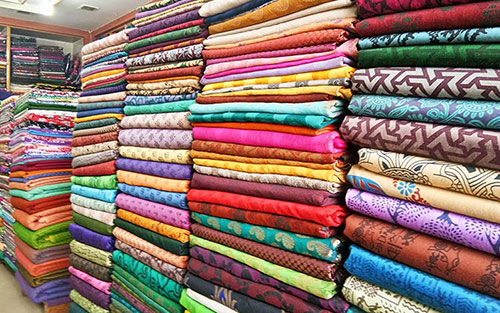 hand, India sold fabrics worth $9.7 billion while Bangladesh sold cotton fabrics worth $4.9 billion. These two countries held a combined 63 per cent share of the total market. The countries with the highest levels of cotton fabric per capita consumption in 2018 included: Turkey (9,988 sq. mt. per 1,000 persons), Bangladesh (5,219 sq. mt. per 1000 persons) and Vietnam (2,483 sq. mt. per 1000 persons).
China remains top cotton producer
Over the period under review, cotton fabric production continues to indicate a mild decrease. The most prominent rate of growth was recorded in 2015 with an increase of 5.9 per cent year-to-year. Cotton fabric production attained its peak level at $59.6 billion in 2008; however, from 2009 to 2018, production failed to regain momentum. In 2018, production of woven cotton fabrics in Asia was 6.2 billion sq. mt, declining -4.2 per cent against the previous year. In value terms, cotton fabric production stood at $46.9 billion in 2018 estimated in export prices.
China remained the largest cotton fabric producing country in Asia, accounting for 50 per cent of total production. It was followed by Turkey with a production of 833 million sq. mt. The third position in this ranking was occupied by India which produced 792 million sq. mt.of cotton fabric.
Exports remain flat
Exports of cotton fabrics indicated a relatively flat trend pattern from 2010-2018. The total exports of woven fabrics of cotton in 2018 totaled 2.2 billion sq. mt, leveling off at the previous year. China was the major exporter with 56 per cent of the total exports. It was distantly followed by Pakistan with exports of 422 million sq. mt, India with exports of 118 million sq. mt. and Turkey with exports 109 million sq. mt. Together, these three countries generated a 29 per cent share of total exports.
Import of cotton woven fabrics in Asia increased 4.9 per cent in 2018 with the region importing approximately 2.1 billion sq. mt. of fabrics against the previous year. The total volume of imports increased at an average annual rate of +2.1 per cent over the period from 2007 to 2018 with the pace of growth being most pronounced in 2017 when imports increased by 42 per cent year-to-year.
Bangladesh was the topmost importer of cotton woven fabrics in Asia, with volume of imports reaching 873 million sq. mt, nearly 42 per cent of the total imports in 2018. Vietnam followed with 12 per cent share of total imports, China, Hong Kong SAR, Indonesia, Cambodia and Turkey made up the list.
Ashwin Chandran elected new chairman of SIMA
At the 60th general meeting of the Southern India Mills Association (SIMA), Ashwin Chandran was elected as the new chairman for 2019-2020. Speaking on the occasion, P Nataraj, Ex-Chairman, noted that the textile sector was facing a crisis due to the volatility in cotton prices and currency values, steep fall in exports, piling-up of stocks, production cut, severe liquidity crunch, significant increase in cheaper imports of MMF spun yarns, synthetic fabrics and ready-made garments huge arrears of government dues. To deal with this, SIMA has requested the Government to take appropriate remedial policy measures, clear all the dues on a fast track and extend the rebate on the state and central tax and levy benefits to all manufactured textile goods across the value chain.
Nataraj further said the total production of yarn during 2018-19 increased by 3.2 per cent to 5,862 million kg and on three months up to June stood at 1,591 million kg. Export of cotton yarn declined by over 35 per cent during the first quarter of the current fiscal to 57 million kg.
US leather revenue down 12 per cent
Revenue from the leather and hide market in the US fell 12.1 per cent last year compared to the previous year. The pace of growth appeared the most rapid in 2015 when the market value increased by 0.6 per cent against the previous year. However, from 2014 to 2018, demand remained at a lower figure. Leather and hide exports from the US in 2018 were flat with the previous year.
The main destinations for leather and hide exports from the US are: Italy, China and Vietnam. And these combined account for 84 per cent of total exports. Vietnam recorded the highest growth rate of exports of the top countries over the last five years, while the other leaders experienced a decline.
Leather and hide imports into the US in 2018 increased 16 per cent and have increased at an average annual rate of 10.7 per cent over a five-year period. Brazil is the largest supplier of leather and hide to the US, comprising 38 per cent of total US leather and hide imports. The second position in the ranking is occupied by Italy, with an 18 per cent share of imports. Leather imports into the US are likely to see steady growth in the near future.
Texworld Denim Paris to open next week
Texworld Denim Paris will be held September 16 to September 19, 2019. Among the participants are Bhaskar Industries, from India, with a vertically integrated mill and an annual production capacity of 44 million meters, which is actively engaged in reducing, reusing and recycling in its production; Chittagong Denim Mills, from Bangladesh, focused on using innovative processes, technologies and machines while being responsive to their customer’s requirements and anticipating changes in market trends; and Mekotex, based in Pakistan, a manufacturer and exporter of denim and other cotton fabrics, having s a fully integrated vertical unit with its own in-house spinning, denim preparatory, weaving, denim finishing and power generation. The company is GOTS certified, BSCI, Oeko-Tex 100, Oeko-Tex STEP. A new exhibitor is the TM Group, a Franco-Chinese company specializing in fashion and renowned for its denim and garment dye collections, basic pieces sublimated by varied finishes and perfectly adapted to market trends: buttoned, zipped, belted, studded with embroidered stones, sewn or inlaid, added leather.
Texworld Denim Paris offers an expanded international range of denim textiles and denim clothing manufacturers, allows retail chains and designer labels to find inspiration for additions to their collections and identifies suppliers for materials, expertise or finished products.
PRGMEA holds workshop on sustainable fashion in Pakistan
A PRGMEA workshop and seminar on sustainable fashion was held in Pakistan, recently. The aim of the workshop was to create awareness about sustainable and ethical fashion among apparel designers and manufacturers and the wider fashion ecosystem in Pakistan. It was a step by PRGMEA to explain and promote the importance of a sustainable apparel industry.
PRGMEA’s work in this area goes further because the seminar and workshop also acted as a prepping session for designers wishing to participate in the PRGMEA-IAF Global Fashion Awards. This competition is aimed at educating young fashion designers about sustainable design techniques. The competition will challenge young designers from Pakistan to put their creative powers to the test by proving their ability to transform textile waste into wearable, appealing and commercially viable products.
PRGMEA is IAF’s Pakistan member and co-host of the 35th IAF World Fashion Convention. Through this workshop and the PRGMEA-IAF Global Fashion Awards, the Pakistan apparel industry demonstrates its industry’s commitment to investments in sustainability and education as major drivers of industry growth. IAF firmly believes that sustainability is- and will be in the foreseeable future- one of the crucial elements to keep the industry strong and appealing. The IAF also strongly believes in the power of education.
Kingpins holds 4th edition of China road show
The 4th edition of Kingpins China City Tour was held in Guangzhou (September 4) and Hangzhou (September 6). The road show was launched in 2016.
Both events were well attended. Each city hosted the around 40 exhibitors including Chinese as well as international companies. While last year’s edition was somewhat slow, this season brought a good number of visitors. There was the right mix of visitors including representatives of Chinese denim brands as well as the China-based sourcing teams of international companies such as H&M or Bestseller. The Hangzhou event showcased a new denim consumer event, KP2C, a denim festival, which featured several denim brands and designers, installations, workshops, and indigo-themed entertainment such as bull riding and a square dance performance. Chinese youngsters have a rising interest in cool, modern denim looks that have developed in the last decade.
Chinese mills and manufacturers see a wider prospect in participating in Kingpins. They want to become more well-known, especially in Europe, and show that denim from China has a really good quality and is far better than what buyers think. The mills have high production levels and rank high in terms of sustainability too.
German fashion companies urged to adopt safeguards
NGOs and trade unions in Germany have launched a campaign to propose a bill that would ensure companies put in place human rights safeguards in their supply chains. A German law would be vital to regulating company behavior in Germany and protecting rights in the supply chains of one of the world’s largest export economies. It could prove a positive influence across the European Union. Germany will have the EU presidency in the second half of 2020 and will be in a great position to help pave the way for EU-wide mandatory due diligence, ensuring strong, rights-respecting business practices in many more countries.
Knowing where products are made is key to stopping human rights abuses in the global supply chain. Human rights and environmental tragedies continue to surface in the global supply chains of German companies.
Fashion sales in Germany fell 1.9 per cent in July 2019 compared to the previous month. Germany is the biggest fashion market in Europe but the country is expected to enter a recession in the third quarter of the year. Fashion consumption in Europe has slowed down. Apparel, footwear and accessories markets weakened in the past few months while the ghost of recession is again haunting Europe.
Fall in China’s H1 apparel and textile exports to the US
From January to June 2019, China’s exports of textiles and garments to the United States were down 0.66 per cent year-on-year. Exports of China’s textiles to the United States were down 2.24 per cent year-on-year. Apparel exports to the US increased 0.11 per cent. Although the trade friction between China and the United States has escalated since May this year, the most important export market for China’s textiles and garments is still the United States.
From January to June this year, Chinese exports of textiles and garments to Japan declined 4.65 per cent year-on-year. Growth rate of garment exports to Japan fell by 6.11 per cent. China’s share of the imports of textiles and garments by Japan has dropped from 65 per cent in 2015 to 55 per cent in the first half of 2019.
But China’s exports of textiles and garments to Africa grew rapidly, achieving a year-on-year increase of 5.24 per cent. Especially this is true of textile exports to Africa, which increased by 10.06 per cent year-on-year. Exports of textiles to countries along the Belt and Road route were up 3.23 per cent year-on-year. Obviously the diversification of the Chinese textile industry’s export market is yielding results.