FW
India hopes US reinstates GSP
India wants the US to resume trade concessions under GSP.The US terminated India's designation as a beneficiary developing nation under GSP in June 2019. India calls the decision discriminatory, arbitrary, and detrimental to the development, finance and trade needs of India, which is a vast and diverse developing country with unique challenges. This is an US trade preference program and is designed to promote economic development by allowing duty-free entry for thousands of products from designated beneficiary countries.
India came under the GSP program in 1975. The program is limited to certain categories like apparel and footwear with the aim of alleviating poverty by promoting exports by poor craftspeople and artisans in those sectors. In retaliation for the US raising tariffs of steel and aluminium imports from India, India has threatened to increase duties on agricultural products like walnuts, apples and other fruits imported from the US. The US dairy industry says India’s sanitary and phytosanitary requirements are unscientific and so exporting to India is difficult. According to Indian laws imports should not come from cows that have been given cannibalised feed that includes offal or other meat products. India provides unimpeded market access to dairy products from all countries that meet the criteria.
Taiwan’s Eclat Textile to invest $170 million in Indonesia
Eclat Textile, one of the leading garment and fabric suppliers in Taiwan, is planning to invest $170 million in Indonesia. This will expand the manufacturer's global production map besides boosting its production capacity. The investment will be rolled out in three stages from October 2019. The investment in the first stage will involve construction of a garment factory to produce 1 million units per month. This will be completed by the end of 2020.
Tobe followed by the second stage, which will start in 2021 to build another garment plant, also with a monthly capacity of 1 million units. The investment in the third stage will involve the building of a weaving mill with a monthly capacity of one million kg.
The construction of the weaving mill is scheduled to start in two years, and before the work starts, the company will map out details about the investment through possible suppliers with the aim of setting up a comprehensive supply chain for its Indonesia plant during the two years.
Currently, Eclat has overseas production sites in Vietnam, Cambodia and Lesotho. The investment in Indonesia is expected to help the company diversify its risk.
India drags her feet on RCEP
India has reservations about the Regional Comprehensive Economic Partnership (RCEP) and is adamant about protecting its domestic industries.One is RCEP’s tariff requirements. RCEP proposes that 92 per cent of India’s traded items must have zero tariffs by the end of a 15-year period. But the main point of contention for India is the presence of China, with which it has a massive trade deficit. India is concerned that greater market access for China will harm its key manufacturing sectors like steel and textiles. India is also worried about giving greater market access to other non-FTA partners like Australia and New Zealand.
However,Asean countries are keen to have India as part of the partnership and have made India a concessional offer to open up about 83 per cent of its tariff lines instead. India is better off joining RCEP as it will face a marginal fall in real GDP growth if it does not join, while it stands to gain at least 0.06 percentage points of growth in 2020 if it does. The deal will undoubtedly be more strategically significant if it contains three of the world’s largest economies — China, Japan and India. Though India fears cheaper imports flooding its market, some key industries have much to gain from lower tariffs under RCEP.
Banana Republic to boost apparel sizes
Historically known as a skinny brand, Banana Republic plans to boost its size selection to 26 or larger. The brand currently stocks upto size 16 in stores and upto size 20 online for some articles of its clothing. Gap acquired the chain in 1983, just five years after the apparel brand's founding. Banana Republic started out as a safari-themed clothing retailer but Gap tweaked the brand to become more upscale and preppy.
The comparable sales of Banana Republic slumped by 3 per cent in the second quarter of 2019. To contain these declining the brand is shutting down all remaining Banana Republic stores in the United Kingdom. It also plans to spin off its Old Navy brand.
Benetton launches ecological line
United Colors of Benetton’s new collection showcases experimental textiles and ecological materials. The brand is creating a balance between its every-man and every-woman image while elevating its styling and innovation and combining ideas, fashion and styling while experimenting in new directions.
One is a trench coat made out of paper and recycled fibers and impermeable to rain. A papery cropped top paired with a white skirt that bears a devilish silhouette in the same material is another. Other pieces include a handkerchief skirt featuring a stylized postcard print on the front that can be worn with a flowing silhouette, or tied in the front or back for a straight look in two different prints. A check denim kilt with multi-color pleated inserts can be paired with a rainbow-striped knit top and striped color-sheer hosiery for her and multi-colored pockets on white garments for him.
The offerings mostly hew to a watery theme. There are neoprene rompers, tops and mini-dresses with oversized plastic zippers. Bold nautical looks have anchor motifs. There are also preppy outfits in clashing patterns of pink and green and a garden club series of striped embroidered eyelet layered with florals. Footwear includes platform sandals inspired by surfboards and sneakers with florals or streaks of color.
Lee launches Shape Illusions for women
This is a collection designed to celebrate the female figure, regardless of size. Leveraging the power of perception and best-in-class design, Shape Illusions uses strategically placed seams, shading and contouring to lift, lengthen, conceal and contour. It pairs the latest in design innovation and laser shading with Lee’s ability to craft apparel for the female body. With Shape Illusions, consumers now have access to premium finishing designed to enhance and flatter all figures. Each piece is designed with a 360° approach: precisely shaded and contoured using patterns created by nano laser technology and constructed with strategic seams, pocket placement, and draping fabrics. Shape Illusions has been patterned on a size 14 form. Every stitch in each top and bottom was evaluated to ensure it complemented the female shape. Women were asked to wear and test the line. It is an evolution in size inclusive fashion that celebrates all women.
Lee, based in the US, is an apparel brand known for its work wear and timeless style. The launch of Shape Illusions demonstrates Lee’s commitment to harnessing innovative technology to create products that feature trend-setting design and unsurpassed quality for all ages, body types and across multiple price points.
India’s textile industry suggests GST revision
The textile industry in India wants a cut in GST.It is felt a GST cut across the value chain from purified terephthalic acid (PTA), yarn and fabric to five per cent would enhance cash flow and reduce prices of synthetic yarn and fabric.
Currently, the cotton textile value chain — yarns, fabrics, apparel, and others — attracts a uniform GST rate of five per cent. Purified terephthalic acid, the key input in making polyester yarns and fabrics, attracts 18 per cent. And polyester yarn and fabric are taxed at 12 per cent and five per cent respectively. Because of the current inverted tax structure, the requirement of working capital for synthetic yarn goes up to the extent of six per cent due to higher GST incidence on raw material than finished products. In cotton fabric, there is no such inverted duty structure. When the cotton textile industry enjoys a five per cent GST, the industry feels the same should be applicable for synthetic textile players as well and that an uniform duty structure would help with long-term decision making on investment and competitiveness.
Synthetic fibers have grown by 5.9 per cent in the past decade. Polyester yarn is 78 per cent of the total volume of manmade fibers produced in India.
Indian cotton prices under pressure
Cotton prices are declining in India.The main reason is pressure from international cotton prices owing to higher production in some nations. However, with muted demand for yarn from China, Indian yarn manufacturers are suffering with idle capacities and production losses. While yarn manufacturers are facing headwinds on the export front, the poor offtake of yarn from the domestic fabric industry will ensure that the current sub-normal capacity utilisation levels continue. Yarn production is expected to fall by five per cent or eight per cent in fiscal 2019-20 owing to lower demand from China and volatility in cotton prices. Synthetic or manmade fiber has seen a stabilisation in prices with support from almost stable crude prices in the second quarter of this fiscal. Further, the improving spread with cotton has made manmade fiber a more lucrative sub-sector for the textile market. But cotton contributes over half of the raw material in India’s textile sector.
Readymade garment exports have started improving with the end of the first quarter and the beginning of the second quarter. With incentives, exports are benefitting up to five per cent. These incentives aim at helping India cope with Vietnam and Bangladesh that have improved their market share in the global textile industry.
Trade war, overproduction to impact cotton prices in 2019-20
"September 2019 report of Cotton Inc states the ongoing trade dispute between the US and China is likely to directly impact cotton prices as the tariffs imposed by China on the US cotton has led to a significant fall in the country’s exports. If China further persists in implementing the latest round of announced tariffs on Dec 15, it would increase its total tariffs on US cotton shipments to around 30 per cent."
 September 2019 report of Cotton Inc states the ongoing trade dispute between the US and China is likely to directly impact cotton prices as the tariffs imposed by China on the US cotton has led to a significant fall in the country’s exports. If China further persists in implementing the latest round of announced tariffs on Dec 15, it would increase its total tariffs on US cotton shipments to around 30 per cent.
In addition, the trade war has caused significant uncertainty across cotton supply chains. This is further postponing investments and placement of orders leading to a slower demand. Cotton benchmark prices were stable between August and the first half of September 2019. The spot prices of US Cotton averaged 55.97 cents per pound for the week ended Sept. 12, according to the US Department of Agriculture (USDA).
Stocks to increase to highest levels
Latest USDA report suggest, cotton’s global harvest forecast for 2019-20 has been to lowered to 124.9 million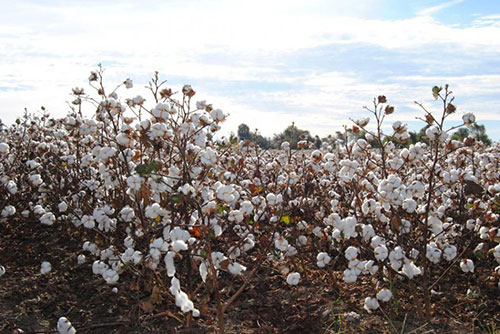 bales and the consumption forecast lowered to 121.7 million bales. This would further result in higher supply against potentially lower demand from slowing economies and trade turmoil, portending softer cotton prices. Cotton stocks are likely to increase by 1.3 billion bales from the last month to 50.0 million bales. If this occurs, it would represent the largest volume of cotton held outside China on record.
Cotton production to decline by 30 per cent
Cotton production in 2019-20 is likely to decline by 30 per cent to 1.4 million bales. The biggest declines will be witnessed in US, Australia, Burkina Faso, Mexico and Turkmenistan. However, production in India is likely to increase. Consumption is likely to decline in China, Bangladesh, Brazil, India, Thailand, Turkey, the US and Vietnam. India will be the largest importer of cotton during the period while imports by Vietnam, Pakistan, Thailand and Turkey are likely to decline. US, Brazil and Australia will be the biggest exporters of cotton while exports from India, Mexico and Burkina Faso will decline.
Woolmark partners Tmall for quality wool fibers
Woolmark has partnered Tmall to provide quality wool fibers and outstanding brands to the younger generation of Chinese consumers who are looking for high quality and environmentally conscious products.
The partnership has come about in response to the growing demand for high-quality products, innovative retail experiences and digital engagement. It enables Woolmark to showcase the characteristics of Australian Merino wool, highlighting its breathability, softness, easy-to-clean material and versatility. Tmall is a Chinese B2C e-commerce platform. Woolmark hopes through such collaborations to champion premium brands and emerging designers. At the same time, digitally savvy shoppers and leaders in China’s fashion industry can develop an appreciation for the superior quality and versatility of wool products.
Users can log into the Tmall website, or the mobile Taobao App homepage. Products recommended by Woolmark not only cater to consumers’ diverse fashion needs but also highlight the extraordinary quality of Australian Merino wool. In addition, the venue sets up a Woolmark wool encyclopedia sub-venue. Through the elaborate and easy-to-read tips and articles and exquisite graphic explanation, the encyclopedia renders consumers a better understanding of the superior performance of Australian Merino wool by tracing the wool fiber to its origin, explaining the meaning of the wool logo, and offering a variety of daily wool care methods.