


FW
Transparency gains ground as brands compelled to focus on worker well-being
 Even as the COVID-19 pandemic spread across the world, fast fashion brands including H&M and Zara kept their stores open for the majority of March. Retail workers in these stores were on the front line in the middle of growing confirmed numbers of cases.
Focus on workers’ health and safety
As Aja Barber, a writer and consultant focusing on fashion’s intersections with feminism, race, and colonization, action should be taken to support the health and safety of these workers. Aja aims to shed a light on the working conditions of retail through her Instagram account. This will force people to be more critical of the entire fast fashion system.
Replying to this criticism, H&M stated they had begun closing stores in the US prior to all their stores closing on March 1. The brand also provided employees with additional pay in response to the COVID-19 pandemic. However, the brand was forced to furlough some workforce in the US due to the negative impact the pandemic had on its business.
Order cancellation leads to layoffs
In addition to impacting retail workers, the pandemic has also impacted 40 million garment workers living in low-wage countries across Southeast Asia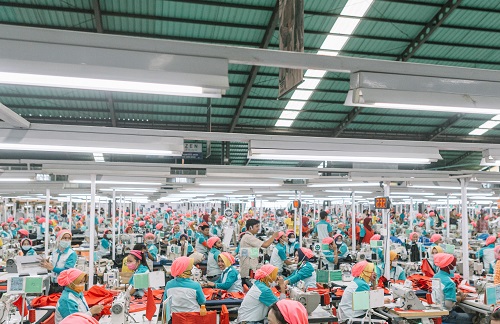 and Europe. As Bloomberg reports, cancelling of $1.5 billion worth orders by European companies has led to furlonging employees from about 1,089 garment factories in Bangladesh.
Many of them are women who are their family’s primary wage earner. A recent report by Worker Rights Consortium details that very few of these workers have ever been paid enough to accumulate any savings. These workers are now demanding a more equitable approach by fashion brands in sharing the financial burden of the crisis.
Over 1 million garment workers in Bangladesh have been fired or furloughed due to orders being cancelled, states a Penn State report. To deal with this, Fashion Revolution, global nonprofit calls for greater transparency in the industry, asking people to send an email to their favorite brands and demand they pay for orders already placed.
Fair treatment for supply chain workers
Barber points out, supply chain workers should be considered as employees of the companies they produce for instead of being contracted through third parties. Céline Semaan, Executive Director of Slow Factory Foundation, also views the recent treatment of retail workers as a curtain that has been lifted. This pandemic is putting the entire fashion industry on hold while placing an incredible amount of economic pressure on ethical brands and independent designers.
While most stores are closed, online shopping continues with employees for fast fashion giants like ASOS currently working at its warehouse in Grimethorpe, Barnsley. Also brands such as Everlane closed its retail stores indefinitely. This compelled it to lay off 290 employees, 14 per cent of whom were on customer experience team. They were offered two week severance while the brand was able to transition 20 customer experience team members into full time roles with benefits.
Putting workers before profit
The economic ashes of the Coronavirus outbreak will be a call for brands to put workers before profit. For the fashion industry, this would mean an industry overhaul. As Ngozi Okaro, Executive Director, Custom Collaborative, a New York nonprofit helping women in low-income and immigrant communities to develop careers in sustainable fashion views, the only way we can have sustainable fashion is if we pay sustainable wages for workers.
To this Aja adds, priortising labor rights will be responsibility of the fashion industry in future. Brands that don't will no longer be able to survive in the market.
India’s Cotton Textiles Export Promotion Council seeks interest-free loan
The Cotton Textiles Export Promotion Council (CTEPC) has urged the government to provide interest-free working capital loan to export-oriented textile companies to tide over the current unprecedented situation due to the pandemic. According to the council, while overseas buyers are cancelling orders on a large scale, they are not even making payments for shipments already made.
Exporters have closed down their production facilities due to the lockdown announced by the government. Textile exporting companies are facing severe financial constraints with many finding it difficult to even pay salaries and wages to the workers during the lockdown period as per government directives, he said.
Further, there is uncertainty as to when the situation will be back to normal, he added. Exporters are looking forward to a financial package from the government so that they could sustain. Most exporters have entered into forward contracts with banks and now they are unable to surrender the committed forex under these contracts due to delay in receiving payments.
As a result, exporters have to face huge losses as they are forced to either cancel or roll over the forward contract which involves penalty and other charges. Texprocil has suggested that banks should waive off penalty charges on cancellation and roll over of forward contracts entered into with bankers by the exporters.
Tapestry to extend store closures for two weeks
Tapestry will extend store closures in North America and Europe for an additional two weeks through April 24, in light of continued efforts to slow the transmission of COVID-19. While essentially all company stores in China have re-opened -- across its three brands Coach, Kate Spade and Stuart Weitzman - over the past weeks, Tapestry has been forced to close many other stores in the Asia-Pacific region including all stores in Malaysia, Singapore, Australia, New Zealand and most recently, in some prefectures in Japan.
Likewise, most of the company’s global distribution centers continue to operate, with only one in Malaysia and a third-party facility in New Jersey temporarily closed. As previously announced, employees at closed locations will continue to receive pay and benefits over this period. The company will continue to reassess store closure decisions on a bi-weekly basis and will not reopen stores until safe to do so.
PETA acquires shares in 20 luxury businesses
With the ongoing COVID-19 pandemic and its resulting impact on the fashion and retail industry, People for the Ethical Treatment of Animals (PETA) has taken the opportunity to acquire a considerable number of shares in major fashion brands. PETA, whose efforts are directed towards protecting and safeguarding animal rights, announced that it has bought shares in around 20 businesses including French luxury giant Kering, Burberry, Ralph Lauren and Guess.
The aim behind this exercise is “to push fashion brands to stop using wool, mohair and cashmere,” the NGO said in a statement. According to the association itself, it frequently buys the minimum number of shares required to enable it to take part in a fashion companies’ decision-making meetings to allow it to influence business decisions and strategies from the inside.
The results of these meetings have also been quite impactful – for instance, after acquiring shares in Prada and Hermès, PETA’s USA branch took advantage of Farfetch’s initial public offering in 2018 to invest in the luxury e-commerce business in order to push it “to abandon fur”.
PETA has denounced the use of mohair and cashmere via surveys carried out by the association in South Africa, China and Mongolia. These surveys brought to light the cruel treatment inflicted on goats and sheep by producers while being shorn or taken to the slaughterhouse. PETA is also a shareholder in companies like: Urban Outfitters, Under Armour, Deckers Outdoor Corporation (Ugg’s parent company) and Capri Holdings, which includes brands Michael Kors, Jimmy Choo and Versace.
Inditex ramps up operations in Spain
Inditex SA’s main import and export airport hub in Spain is ramping-up operations as business in Asia read China, picks up. The retailer uses the airport as a base to import textile products and export apparel. Under Inditex’s unique distribution model, the vast majority of its apparel manufactured outside Spain has to be sent to the country and then exported to stores around the world.
The company has been able to continue certain operations in Spain in spite of a government order to place non-essential economic activity on standstill. With the slowdown in Spain and other countries, Inditex has re-assigned the majority of its space in the airport as a base of imports of medical goods.
The Zaragoza airport is one of Spain’s three largest cargo airports, and had the second highest cargo traffic in February, before the Coronavirus crisis hit the country in full.
Wazir Advisors forecasts 45 per cent decline in EU apparel consumption
A forecast by management consulting company Wazir Advisors, which focuses specifically on the apparel sector, predicts a decline in apparel consumption in 2020 of 45 percent in the EU and 40 percent in the US, which could lead to a reduction by $300 billion
Wazir Advisors’ states EU and the US Apparel consumption’ states will reduce by $300 bn. Covid-19 will impact European and the US apparel market with the current lockdown likely to continue until mid-July because new cases are expected to peak by late April/mid-May. This would imply a total three to four months closure for almost all the brick-and-mortar fashion stores across the US and Europe.
Even if online retail remains the only way to buy clothes for a few months, apparel purchasing will be delayed. The report gives various reasons for this: On the one hand, consumers are currently primarily buying groceries, medicines and other staples. There is no urgency to replenish clothes, especially because the options to go out are limited with schools, offices, restaurants, gyms, etc. still being closed). On the other hand, consumers have limited product options and potentially long delivery times.
India’s commerce department relaxes deadlines for MEIS, RoSCTL
To offer relief to businesses and individuals affected by the COVID-19 pandemic, India’s department of commerce introduced several relaxations and an extension in deadlines with regard to compliances mandated under its schemes and activities, including the Merchandise Exports from India Scheme (MEIS) and the Rebate of State and Central Taxes and Levies (RoSCTL).
The Foreign Trade Policy (FTP) 2015-2020 and Handbook of Procedures (HBP), which were valid till March 31, have been extended by a year. Export obligation periods have been extended for expired or due to expire advance authorizations and Export Promotion of Capital Goods (EPCG) scheme authorizations.
The last date for filing MEIS claims is one year from the Let Export Order (LEO) date of each Shipping Bill, and another 2 years beyond that with imposition of a late cut. The last date of filing MEIS claims without late cut for all Shipping Bills for which the initial one-year period expired / will be expiring on or after 1st Feb 2020 and on or before 31st May 2020, has been extended by 3 months beyond the expiry date of the initial one-year period.
For developers of special economic zone (SEZ) units, various relaxations have been allowed. The Export Credit Guarantee Corporation Ltd. (ECGC) and the Director General of Trade Remedies (DGTR) have also offered several relaxations.
Inditex resumes work at reduced capacity
Employees at global fashion giant Inditex's 10 logistics centers in Spain – from where it sends garments to its stores worldwide – returned to work recently but only to less than half their normal levels of activity. Meanwhile, just three of Inditex's 13 Spanish factories are back at work, making medical supplies like scrubs to help fight Spain's Coronavirus crisis, with no garments being made for now for brands like Zara and Bershka.
Spain recently loosened the terms of a strict lockdown, brought into force to halt the spread of one of the deadliest outbreaks of the virus worldwide, allowing nonessential workers to return to their jobs after a two-week hiatus. Staff at the Inditex logistics centers returned to work but at reduced schedules – either working half days or just two or three shifts a week – to reduce contact between employees, a union representative and a worker said.
Rather than entering the facilities all at once, shift workers had staggered entries and exits and wore masks and gloves while maintaining 2-meter distances from colleagues. Just 15 per cent of normal activity was maintained at one of Inditex's 13 Spanish sewing factories, one worker said, focused on maintenance of machines rather than production of clothes.
DPIIT seeks permission for operation MSMEs during lockdown extension
Department for Promotion of Industry and Internal Trade (DPIIT has sent a letter to home secretary proposing that if the on-going lockdown is extended beyond April 15, those companies and MSMEs with export commitments be allowed to operate with minimal manpower and necessary movement of material.
It also suggested that 16 sectors, which includes telecom equipment, gems & jewellery, steel and ferrous alloy, automotive units, defence manufacturing and all units in Special Economic Zones (SEZs) and Export Oriented Units (EOUs), be allowed to operate adhering to safety, sanitisation and distancing norms.
FIEO had earlier warned that with cancellation of over 50 per cent of export orders in the last few weeks due to coronavirus disruptions worldwide there was a chance that there could be 15 million job losses in export units. India’s goods exports declined 1.5 per cent to $292.91 billion in April-February 2020 compared to last year. Exports increased marginally in February 2020, but are expected to fall in March 2020 because of the breakdown in production, supply and payments.
COVID-19 magnifies risks of forced labor and modern slavery
The COVID-19 pandemic will magnify systemic inequality that results in forced labor and modern slavery, the World Economic Forum (WEF) warned. More than 40 million people are estimated to be trapped in conditions of modern slavery, including 24.9 million in forced labor and 15.4 million in forced marriage, according to the International Labour Organization (ILO), a United Nations agency. One in four of them are children. Women and girls, who account for 99 percent of victims in the commercial sex industry and 58 percent in other sectors, are also “disproportionately affected” by forced labor.
With the Coronavirus crisis worsening living situations for months to come, those same people are now at even greater risk, the WEF said. Not only do they lack access to adequate healthcare, but their already restricted movements are further hamstrung by border closures and travel disruptions. Worse, they’re susceptible to stigmatization and discrimination by nativist rhetoric and politics.
Even migrant workers who wish to return home are unlikely to be able to do so safely for a long time. While countries such as Australia have proposed extensions for seasonal worker visas, such overtures are few and far between. Demand for labor—forced or otherwise—is also expected to ebb as the infection tightens its grip on markets, placing those already at high risk of exploitation even deeper in harm’s way
At the same time, risk of enslavement will surge, the WEF said. As the economic fallout from the pandemic continues to batter livelihoods, there will be an increased supply of workers vulnerable to exploitation due to poverty. The ILO estimates that COVID-19 could gut 25 million jobs and send global economies into a freefall if governments do not take adequate action.











