FW
Revenues of Salvatore Ferragamo decline
As of 31 March 2020 the Salvatore Ferragamo Group reported total revenues of 222 million euros a decline of 30.1 per cent at current exchange rates againts 317 million Euros recorded in 1Q 2019.
The group registered a solid performance in January in all its main markets, that increasingly deteriorated in February and March, first in China and Asia and progressively also in Europe, in America and in the rest of the world, following the rapid diffusion of the pandemic caused by a novel coronavirus, known as Covid-19. The consequent decisions taken by the National governments regarding prohibitions and lock-downs of the commercial activities and of the international traffic, brought to the closure of the majority of the Group's store network in those countries and to a significant reduction in traffic in the remaining
As of 31 March 2020, the group's retail network counted on a total of 652 points of sales, including 391 Directly Operated Stores (DOS) and 261 Third Party Operated Stores (TPOS) in the Wholesale and Travel Retail channel, as well as the presence in Department Stores and high-level multi-brand Specialty Stores.
In 1Q 2020 the retail distribution channel, negatively impacted by the progressive closure of the majority of the distribution network in February and March and by the significant lack of traffic in the remaining stores, posted consolidated Revenues dow
The Wholesale channel registered a decrease in revenues of 32 per cent (-34.8 per cent at constant exchange rates2) againts1Q 2019, also penalised by the cancellation of orders, mainly in the Travel retail channel, and further disadvantaged by the comparison with 1Q 2019 that had benefitted from the recouped
The Asia Pacific area is confirmed as the Group's top market in terms of revenues, decreasing by 43.per cent (-43.8 per cent at constant exchange rates2) vs. 1Q 2019. In 1Q 2020 the retail channel in China reported revenues down 39.9 per cent. (-39.0 per cent at constant exchange rates2).
EMEA posted a decrease in revenues of 26.0 per cent (-26.3 per cent at constant exchange rates2) vs. 1Q 2019.
North America in 1Q 2020 recorded revenues down by 18.5 per cent (-24.7 per cent at constant exchange rates2)
Demand for textiles and apparels in USA plunges
According to latest data by the CCF Group, United States has become the hardest hit and global economic activities have been greatly affected. US textile and apparel imports reached 4.19 billion sq mt in March, declining by 12.6 per cent year-on-year; the volume from China was 940 million sq mt, declining by 38.7 per cent year-on-year.
Textile and apparel imports by USA have been showing negative growth for six consecutive months, and declined more quickly; the volume from China saw faster speed than the total, a negative growth for seven consecutive months. April import demand will be weaker. In terms of import value, it declined faster year-on-year. In the first quarter, the cumulative US textile and apparel imports were 14.66 billion sq mt, declining by 10.9 per cent year-on-year; the volume from China was 5.18 billion sq mt, declining by 26.2 per cent year-on-year.
In March, the cumulative US textile and apparel imports were 6.88 billion sq mt, declining by 14.6 per cent year-on-year; the volume from China was 0.92 billion square meters, down by 49.6 per cent year-on-year. In the first quarter, the cumulative US textile and apparel imports were 23.63 billion sq mt, declining by 11.8 per cent year-on-year; the volume from China was 5.1billion sq mt, down 39 per cent year-on-year. From the share, both the volume and value of US textile and apparel imported from China declined significantly in March.
The volume and value of US textile and apparel imported from China in Mar fell to 22.4 per cent and 13.4 per cent of the total textile and apparel imports respectively, 30.1 per cent and 25 per cent lower than that in August of last year mainly due to the epidemic.
Kraig Biocraft Laboratories to shift production to Vietnam
Kraig Biocraft Laboratories is preparing to transfer production back to Prodigy Textiles, its Vietnamese subsidiary. During the COVID-19 lockdown, when the company opted to furlough its non-essential staff, the company shifted its spider silk production operations focus to its US research facility. The company is now ready to transition the majority of its production back to Vietnam as soon as the silkworm rearing cycle allows.
During this pandemic, the company has continued to advance and strengthen its production operations. Through vigorous testing of its Dragon Silk™ and Monster Silk® lines, the company identified its best performing and hardy silkworms ideally suited for large scale production. This milestone is the result of a dedicated effort by its US staff, going far beyond standard material performance testing. This first production cycle of 2020, at the company’s Vietnam factory, will utilize these top performing transgenics, forming a solid foundation for the continued 2020 production scale up.
The company anticipates rapid scale up of its recombinant spider silk and will use this year’s first production run to ship materials are dedicated to fulfill an outstanding order, by one of the company development partners. The following production runs will be to address fiber requests made by additional potential development partners and to grow the breeding population.
Chennai-based startup Muse Wearables develops new coating textiles machine
Muse Wearables, an Indian startup in Chennai is developing a new coating textiles machine with antimicrobial agents for use in personal protective equipment (PPE). The pilot machine can currently coat up to 100 metres of certain fabrics within a few minutes.
The start-up is backed by the Indian Institute of Technology (IIT) Madras. The group’s current efforts are on scalability for coating textiles with nanoparticles-based antimicrobial agents that can inactivate the human coronavirus upon contact. These coatings are said to be effective up to 60 wash cycles and would be primarily used to manufacture N95 masks, surgical masks, PPE and food packaging bags.
Currently, cotton, polyester and cotton-polyester can be coated; the startup expects to test more fabrics soon. Muse Wearables is also said to be partnering with a mask manufacturing company to launch five-layered antiviral N95 masks.
Abercrombie & Fitch Co partners thredUP
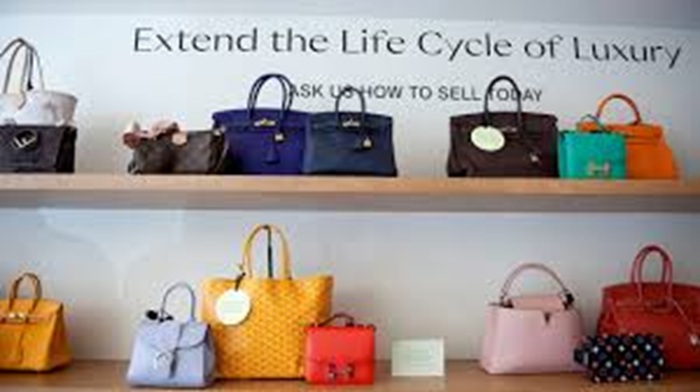
Abercrombie & Fitch Co, a global specialty retailer of apparel and accessories has partnered thredUP, the world’s largest fashion resale marketplace. This partnership allows customers to send in their clothing for gift cards to be redeemed at Abercrombie & Fitch, abercrombie kids, Hollister and Gilly Hicks. A&F Co is thredUP’s latest Resale-as-a-Service (RAAS) cleanout distribution partner.
A&F Co customers in the US can now request a thredUP clean out kit or download a prepaid shipping label at www.thredup.com /Abercrombie or www.thredup.com /hollister to send any brand of like-new women’s or children’s clothing to thredUP. Once the garments are received and processed by thredUP, customers will earn Abercrombie & Fitch or Hollister gift cards — ultimately gaining credit for future purchases while keeping clothes out of landfills.
A&F Co’s partnership with thredUP also supports the retailer’s commitment to the United Nations Global Compact (UNGC), the world’s largest corporate citizenship and sustainability initiative. A&F Co joined the UNGC in 2019, and recently submitted its first annual communication on progress towards its long-term social and environmental sustainability goals. The thredUP collaboration aligns with numbers 12 and 17 of the UN’s Sustainable Development Goals, which encourage responsible consumption and production and building partnerships that support the goals, respectively.
FICCI seeks Rs 4.5 lakh crore fiscal support
The Federation of Indian Chambers of Commerce and Industry (FICCI), in a letter to finance minister Nirmala Sitharaman has, sought an additional fiscal support of Rs 4.5 lakh crore from a quick release of Rs 2.5 lakh crore stuck in refunds and other government payments. According to FICCI, there is also a need to create a self-sufficiency fund for innovation, construction and manufacturing clusters to make use of the emerging opportunities in the wake of disruption in the global supply chain. The fund can be provided in tranches in the medium term, she said.
The problem being faced is largely that of liquidity and additional fiscal support is required for vulnerable communities over and above the sum provided for in the Garib Kalyan Yojana announced earlier
Fiscal support is also needed for micro, small and medium enterprises (MSMEs) to help them get back on track, she was quoted as saying by a news agency.
Besides, funds are needed for upgradation of healthcare infrastructure to effectively deal with the current situation and for support to sectors like aviation and tourism that have been hit hard due to the lockdown.
The fiscal support sought includes a ‘small amount’ of Rs 10,000 crore towards proposed COVID-19 liquidity bridge required to give comfort to banks to restructure or provide additional loans to large companies whose balance sheets have been impaired due to the virus outbreak.
Designers, fashion CEOs and retailers root for sustainable operations
A group of fashion CEOs, retailers and designers, including luminaries lie as Dries Van Noten, Tory Burch and Craig Green, have called for greater efforts to encourage sustainability in an open letter to the industry. The group noted the current environment presents an opportunity for a fundamental and welcome change that will simplify their businesses, making them more environmentally and socially sustainable and ultimately align them more closely with customers’ needs.
The group emerged from a series of Zoom conferences this month, uniting a surprisingly broad array of figures including fashion forward designers, dynamic executives, influential big boutique owners and even online retailers. The first of their two key demands included adjusting the seasonality and flow of both women’s wear and menswear goods, starting with the Autumn/Winter 2020 season besides maintaining a more balanced flow of deliveries through the season to provide newness but also time for products to create desire.
Another of their goal is to greatly reduce the bane of all designer houses, discounts, in order to allow more full-price selling. This fledgling fashion forum also calls for greater sustainability throughout the supply chain and a new sales calendar, which they claim would lead to less unnecessary product; less wasted fabrics and inventory, and less showrooms.
The letter is also signed by the likes of Joseph Altuzarra, Linda Fargo of Bergdorf Goodman, Erdem Moralioglu, Gabriella Hearst, Shelly Corkery of Brown Thomas, Marine Serre, Mary Katrantzou, Michael Kliger of Mytheresa, Pierre-Yves Roussel and Rodrigo Bazan of Thom Browne.
India to designate a 461,589-hectare land pool for factories leaving China
A Bloomsberg report says India plans to welcome factories leaving China by designating a 461,589-hectare land pool for manufacturers. The land, including existing industrial land in Tamil Nadu, could also include available land in special economic zones where infrastructure is already in place. The Central government is reportedly working with states to ease land acquisition impediments. Already, manufacturers from the US, China, Japan and South Korea have reportedly expressed interest in this investment.
India currently accounts for 7.5 per cent of US apparel and textiles imports, and its growth over the year to March was flat. The country ranks 63rd on World Bank’s Doing Business 2020 report for ease of conducting business. It ranks among the top 10 improving nations as far as starting a business and trading across borders is concerned.
On the other hand, China’s share of US apparel and textiles imports has fallen 39 per cent year over year. Now the country accounts for less than 31 per cent of the market, according to data from the US Office of Textiles and Apparel (OTEXA). Much like its non-China sourcing players, the country is suffering from order drought and ever-escalating tensions with the US, which could further complicate trade in the not-distant future.
H&M Group expands with new webstores across Europe
H&M Group is expanding into new European markets with its brands Cos, Weekday, Monki, & Other Stories and Arket adding new webstores in nine additional markets across the continent.
The new markets include Estonia, Latvia, Lithuania, Luxembourg and Croatia that will launch this week (on May 14). They’ll be followed by Greece, Romania, Bulgaria and Cyprus on May 20. Customers can sign up to get access and a special welcome offer, the day before the launch. If they subscribe on the website through the country selector page, they can get access to the VIP shopping day, taking place a day before the grand opening.
These new online markets are part of H&M Group’s ambition to make its brands available to more customers globally. The importance of online to the group was made very clear last week when its total sales fell 57 per cent from March 1, but online sales rose by 32 per cent during the period.
Trident Group hikes workers’ salaries by 38 per cent
Ludhiana-based textile giant Trident Group has decided to increase the wage of its 12,000 workers by 38 to 48 per cent. Workers under institutional level (IL-1), mainly operators getting Rs 18,000 per month, witnessed an increase of Rs 7,000 and will now get Rs 25,000 per month. Similarly, IL-2 (senior, skilled and experienced) operators and supervisors who were getting around Rs. 27,000 per month will now get Rs 40,000 per month. As per the company’s recent annual report in 2018-19, its manpower strength stood at 13,816 as compared to 12,579 in 2017-18.
As per sources, these hikes will be applied from June and are expected to be retained there for always. The objective of this move is to use at least 80 per cent capacity in the near future.
The company has received a huge order of towel and bed sheet from US-based retailer Target. It aims to do at least Rs 1,000 crore business with the Target. On the other hand, majority of the staff of the Group has also deducted 20 to 50 per cent salary of its mid to top-level management for the months of May and June.