


FW
Chic Shanghai held without international attendees
Chic Shanghai was held from September 23-25 on a smaller scale and without its international attendees. The three-day fair drew 43,986 visitors and was spread over 52,000 sq m. Although daily life in China has normalized after the pandemic, majority of Chinese suppliers are still facing rough times. One such supplier is Shanghai Langkun Textile Co which attended Chic Shanghai for the first time instead of international clothing shows.
Another attendee, Shanghai Langku has reported a major drop in orders since April while Mill de Lin, a linen specialist, would end the year flat compared to 2019 buoyed by local business.
Other than a domestic pivot, Chic also provided online ways to connect. In April, it created an online platform for the industry to use completely free of charge. The Chic mini-program was also utilized with this most recent fair with industry panels livestreamed and some transactions able to make use of 3-D digital sampling.
Burberry announces value for inaugural sustainability bond
Burberry Group has priced its inaugural ‘Sustainability Bond’. This is the first sustainability bond issued by the luxury fashion company and will introduce long-term financing into the company’s capital structure. The proceeds from the bond will be used to finance and/or refinance eligible sustainable projects as described by Burberry’s Sustainability Bond Framework.
The bond is expected to be rated Baa2 by Moody’s Investors Services, and will be issued pursuant to Burberry’s Sustainability Bond Framework. The bond will be guaranteed by the Burberry group entities which also guarantee the £300 million Revolving Credit Facility. The Bond will be offered to professional investors and eligible counterparties. Applications will be made for the admission of the bond to be listed on the Official List of the UK Listing Authority and to be traded on the Main Market of the London Stock Exchange.
Burberry has a conservative capital allocation policy. Following the COVID-19 outbreak, it drew down its £300 million Revolving Credit Facility (the ‘RCF drawings’) and issued £300 million of short-dated commercial paper under the Bank of England’s COVID Commercial Financing Facility with a maturity in March 2021.
COVID-19 to change apparel supply chains completely: Survey
A survey conducted by law firm Foley & Lardner LLP indicates, manufacturing executives expect the COVID-19 pandemic to change their supply chains completely. Titled, ‘Global Supply Chain Disruption and Future Strategies’, the survey draws on responses from nearly 150 manufacturing executives – majority of who are members of their company’s C-suite, and work in a wide array of industries.
Foley delves deeper into the issues highlighted in the survey in its newly published Accelerating Trends: Assessing the Supply Chain in a Post-Pandemic World report, which provides business insights and guidance for companies reviewing supply chain processes to mitigate risk, evaluating a shift in supply chains away from China, and using new technologies to improve efficiency.
The Foley reports also analyze the extent to which COVID-19 has accelerated the movement of production and sourcing away from China. Around 59 per cent reported either having already withdrawn operations, or are in the process of doing so, or are considering it. The Accelerating Trends report analyzes the key costs, benefits, and risks to consider in several regions that present alternatives to China. The survey findings state, the result of this analysis has increasingly led companies to move supply chains closer to home to either the US, Mexico or Canada.
The report identifies eight specific areas that are expected to see greater investments and provides guidance on how they stack up against each other in terms of resilience, cost, and maturity. In addition, survey respondents identified the top technologies they are considering as new tools or applications that improve supply chain visibility and tracking and operational analytics to better track business metrics and indicators.
Luxury brands double investments in China
With China being the only major economy expected to show growth this year, global luxury brands are depending on Chinese consumers for sales reports Reuters. Luxury brands are doubling investments in the Chinese market besides embracing e-commerce and pushing ahead with store openings. They are also holding lavish events to attract consumers. Louis Vuitton menswear designer Virgil Abloh held a Spring/Summer fashion show before a live audience in Shanghai last month. Prada also hosted private viewings of its new collection last week in Shanghai.
Prada’s China sales jumped 60 per cent in June and 66 per cent in July, while those of Louis Vuitton and Dior doubled in some weeks since March. The Chinese will account for around half of all global spending on high-end brands in 2020, a 37 per cent last year, says McKinsey & Company. However, total global luxury spending is expected to plunge by 35 per cent from last year’s $300 billion, according to consultancy Bain.
The Chinese government has long sought to bring some of the money splashed abroad by its citizens overseas back home. It cut import tariffs in 2018, enabling luxury brands to reduce their China prices, while this year in Hainan, it has expanded the amount of duty-free shopping allowed to 100,000 yuan ($14,650) from 30,000 yuan as well as the types and number of products allowed.
China skews younger with many luxury consumers between 25-35 years. Its innovative services like livestreaming enables luxury brands to more directly connect to shoppers.
India-Vietnam seminar highlights need for greater partnership
As per a Textile Focus report, a recent seminar hosted by the Vietnamese embassy highlighted the importance of enhanced partnership between Vietnam and India to boost Vietnam’s textile and clothing exports. The seminar was attended by 250 businesses, scientists and policy-makers.
Pham Sanh Chau, Ambassador of Vietnam in India, highlighted the changes in global geopolitical scenario. He also emphasized on the rivalry and competition between major powers, and security conflicts and disputes. He opined that the pandemic gives India and Vietnam an opportunity to foster and complement bilateral relations, thereby contributing to the recovery and enhancement of supply chains in key areas.
Ashok Juneja, President of the Textile Association (India), said India exports apparels worth $16 billion and textiles worth $22 billion while Vietnam exports apparels worth upto $31 billion and textiles worth $5 billion. This offers sufficient room for cooperation in both countries in this region. By exporting natural fibers like cotton, jute, silk and wool, to synthetic fibers, such as polyester and nylon, India can enhance its textile and garment industry in Vietnam, he added.
ATDC organizes 17th AGM, highlights its achievements for the year
 Dr A Sakthivel, Chairman, ATDC & AEPC presided over the 17th Annual General Meeting (AGM) of ATDC held on September 28, 2020. Organized via video-conferencing, the meeting was attended by over 70 leading industry members from across India. Among those present wertr: Usha Fabs, Jyoti Apparels, Monica Garments, Cheer Sagar, Goodwill Impex, Neetee Clothing, Trend Setters Intl, Madan Trading Co, SNQS Intl, PS Exports, KG Exports, Creative Garments, Twenty Second Miles, etc. These members assessed the Post COVID preparedness of ATDC and noted that training would commence from October 2020.
The members wanted steps to be taken for intensive training on productivity improvement and support for implementing ‘Apprenticeship’ scheme which has become mandatory now. Sakthivel informed about the recent steps taken in Tamil Nadu by ATDC alongwith AEPC in the World Bank Project ‘STRIVE’.
Rakesh Vaid, Vice-Chairman, ATDC spoke about the launch of ‘Pro-up’ or Professional Up-gradation programs for apparel exporters on-site basis for from 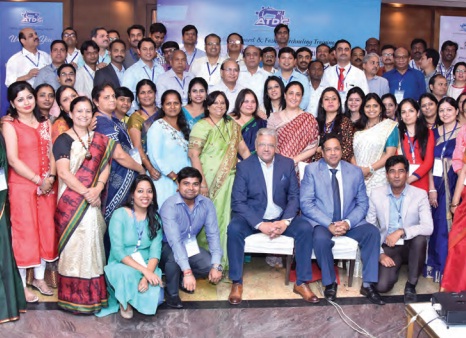 January, 2021. ATDC has been selected by the Delhi government through DSFDC for training 1,000 candidates in trade program i.e. AMT, FDT. Merchandiser – Products Supervisor, Pattern Maker, etc in five ATDC’s centers across Delhi. The courses commenced from September 21, 2020 at Dwarka, Okhla, Ayanagar, Dilshad Garden and Rohini.
ATDC also launched digital online courses for all verticals with about 1,200 students in AVI vertical, 600 students in BVoc and 670- 700 students in DDU-GKY and 2400 candidates in National Sponsorship Progam . NSDC has renewed ATDC’s membership as a non-funded partner and as of March, 2020, uploaded over 68,000 candidates through NSDC Portal becoming one of the biggest vocational training provider in the country.
The Ministry of Textiles has empanelled to provide ToT training under which 14 training programs have already been conducted under the SMARTH initiative of MOT, GOI. In addition, ATDC has trained 2025 trainers in 82 batches through AMH-SSC. During the previous Financial Year in 2019-20, ATDC had conducted the first award and degree distribution function on November 21, 2019 wherein, 187 BVoc students had received their degrees from Dr (Prof) Anil Sahasrabudhe, Chairman, AICTE.
During the year 2019-20, ATDC also emerged as the biggest training provider through CSR with support from GAP Inc, Groz Beckret, HCL, ONGC, RECL and many other corporates. ATDC has also completed Recognition of Prior Learning (RPL) of more than 22,955 candidates in 372 factories across India, probably the largest RPL implementing agency for Apparel Sector under NSDC.
Under Sakthivel’s leadership ATDC aims to join hands with AEPC for implementation of the World Bank supported ‘STRIVE’ Project for Industry Apprenticeship Initiative Cell and expand the work of Training of Trainers (ToT) through AMH-SSC. Another major feather in ATDC’s cap has been the GAP Inc’s PACE (Personal Advance and Career Enhancement) program having selected ATDC as an education and training partner for PACE since 2018. ATDC has trained over 8,000 candidates and 125 trainers under this program. For the current year GAP is extending freeship / scholarship for 232 girl students from disadvantaged sections of the society to pursue their studies.
ATDC is also rehabilitating migrant laborers. In UP, over 200 migrant laborers are being trained under RPL at ATDC Kanpur. ATDC expects to be sanctioned further RPL targets to be taken up in UP. ATDC is poised to play a significant role in the post COVID-era through digitalization of the courses and for generating new jobs in the industry Revolution 4.0 context by introducing new bouquet of courses relevant to the emerging challenges caused by the New Normal. The facilities extended by ATDC to society’s exporter members include:
10 per cent fee concession granted to the candidates being sponsored/ referred to ATDC in writing on letterhead by the esteemed members of ATDC (Garment Exporters) for training at ATDC centers under B Voc degree courses and 1 year AMT/FDT diploma courses.
20 per cent fee concession granted to the candidates being, sponsored referred to us in writing on letterhead by the esteemed members of ATDC garment exporters for training at ATDC centers under various short term courses / certificate courses.
• Mini textile abs for basic testing facility and training of technicians. Access to basic quality testing services in knits and woven segment to enable judicious purchase decisions in procurement of yarn and fabric through hard negotiations of price, based on quality parameters.
• • Resource & High Tech Centre Facility for advanced machines
• National Placement Cell to help in identifying skilled human resources
• ATDC-TOT academy (for providing training to trainers/professional of member companies)
• Exposure to latest technology and advanced training
• Circulation of ATDC E-News to the members
• ATDC pro-up Initiative
• On the requirement of garment industry ATDC is also setting up ‘ATDC-Smart Inside’ within Apparel Factories
• Designing and range development/fashion collection/sample development through Final Year B.Voc students at ‘Converge’ annual show of ATDC.
• ATDC Digital Learning Division and professional up-gradation center.
• ATDC portal and mobile app for providing online network of apparel value chain and services related with it.
• ATDC-KTM Centre of Excellence for providing technical support to Tirupur Knitwear Sector
• Conducting Recognition of Prior Learning Training (RPL) Programmes/TOT Training of Trainers. Gurpreet Kaur, Director (AA) & Secretary (BOG & AGM Matters), ATDC
COVID-19 exacerbates labor rights issues in India
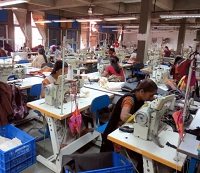 Worth over $2.4 trillion global apparel industry, in India the industry employs millions of workers. However, the industry is plagued by various labor rights issues further exacerbated by the pandemic. COVID-19 has impacted India’s garment exports leading to order cancellations, inventory buildups and slower realization of export receivables. It has also affected domestic consumption as new store openings have stopped while existing ones are facing an inventory build-up.
Apparel prices in the domestic market are being impacted as exporters continue to dump their inventory in the domestic market. This is also leading to reduced engagement of casual labor, factory closures and subsequent return of workers to their native places.
Factory closures lead to rising unemployment
Several workplaces across the country are closing down owing to public health concerns and social distancing measures. This has left millions of garment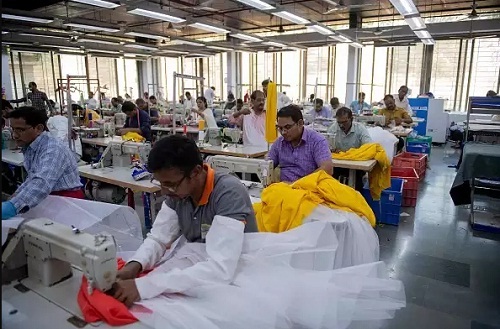 workers jobless. Garment factories in Tiruppur had shut down even before the lockdown as orders from western countries were being cancelled. Two nearby villages – Allapuram and Mannapalayam – suffered the most as all employment in both villages ceased completely.
Garment factories in Bengaluru, Karnataka are suffering due to rising labor protests. In the first week of September, workers employed Shahi Exports’ Unit 8 in Bengaluru refused to enter factory premises as the management had refused to provide transportation services. Most workers employed in the factory cannot afford travelling expenses. Factory management decided to discuss matters with union representatives of Karnataka Garment Workers Union (KGWU) and find an amicable solution.
Promote labor rights
Indeed, it is high time the industry helps garment producers organize themselves within cooperatives. This would enable them to not only access finance and technologies but also facilitates sharing of best practices, boosts productivity and profits, and reduces poverty.
The industry needs to make more efforts towards promoting labor rights and social security, improving health and sanitation, and promoting adequate standards of living. Government intervention in the form of financial assistance, and developmental and welfare schemes can also boost the sector’s growth.
The prevailing crisis has amply manifested the plight of garment workers. In such a situation, the government needs to initiate measures to protect their livelihoods by making various supportive arrangements. The government should ensure maintenance of minimum labor standards in factories. It should trace supply chains in detail and initiate measures to mitigate the exploitation of garment laborers.
As migrant workers return to work, Tiruppur units buzz with industrial activity
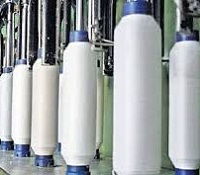 With many of migrant workers returning to the state, Tiruppur is again buzzing with industrial activity. Tamil Nadu was under a strict lockdown until September 7. Though visitors still require e-passes to enter the state, the government has eased restrictions for inter-district travel from September 1. Tamil Nadu has around six lakh power looms that employ around 10 lakh people directly, informs Velusamy, Secretary General, Tamil Nadu Powerloom Federation. Most of these laborers hail from the Southern districts of the state. They did not go back to their towns and villages during the lockdown.
Opening of transport aids laborers’ return
Laborers employed in Tiruppur have starting returning to the city. Some workers are arranging buses while some are availing of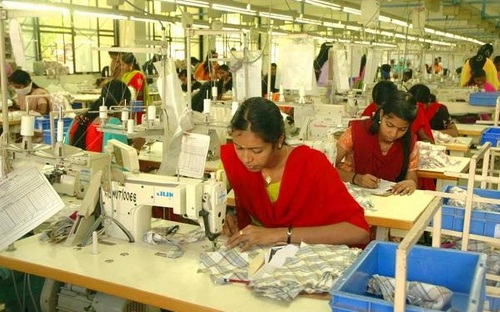 the transportation services arranged by their companies. More laborers are expected to return once railways open up, says Raja Shanmugam, President, Tiruppur Exporters Association (TEA). Tiruppur district authorities issued e-passes to 274 companies to bring migrant workers back to the district.
Like Tirrupur, workers employed in spinning mills in and around Coimbatore have also starting returning to work. These mills employ around two lakh workers, of which, over 50 per cent hail from other districts and states, says K Selvaraju, Secretary General, Southern India Mills Association (SIMA)
Orders expected to spurt up
The apparent lack of demand has prompted fears of job losses in the industry. Powerloom weavers in Palladam expect a huge revenue loss due to a decline in demand. Many units have allowed their laborers to go home and come back when demand returns. However, the knitwear industry expects a potential spike in orders as its busy season begins in September and lasts till April the next year. The industry expects huge diversion of orders from Vietnam, Bangladesh and Cambodia to Tiruppur
Bangladesh RMG manufacturers to foray into RMG
As the pandemic is expected to stay longer, suppliers in the Bangladesh readymade garment (RMG) industry now see a new prospect in PPEs, especially masks and gown. Public health experts recommend mask-wearing as a protective measure to prevent the spread of the deadly virus.
Many apparel manufacturers are now exporting face masks in bulk. But demand for gown from buyers has not seen an improvement.Industry insiders say that encouraged by higher demand for PPEs at home and abroad, many entrepreneurs are now making an investment on mask-production and added that the export amount of domestically produced PPEs will increase in the days to come. “New investment is also coming.”
Sources at the Bangladesh Garment Manufacturers and Exporters’ Association (BGMEA) said the export amount of masks increased by 883 percent to $ 2.69 crore between March and July this year from $ 27 lakh in the same period of last year.
According to the BGMEA’s data, in June this year, the number of masks in total exported to different countries stood at 1.9 crores which reached 1.24 crore in July recording a 1117 percent uptick in export compared to the same period in 2019.
NEO partners with Outfitter, Nike
NEO, an esports organization currently competing in EA Sports’ FIFA series, added Outfitter and Nike as collaborative apparel partners.
Outfitter initiated the collaboration between the three entities. In addition to the jerseys, which feature Nike branding across the 2020-21 FIFA esports season, Nike will also produce other NEO-branded products.
Outfitter is already partnered with another FIFA esports team, FOKUS CLAN, while Nike has existing esports collaborations with a number of teams including T1, SK Gaming, Vodafone Giants, and the Chinese League of Legends Pro League (LPL).
Over the weekend, NEO unveiled a new FIFA roster anchored by former world champion Spencer “Gorilla” Ealing and a new kit design, as well as a main partner in the form of paysafecard. NEO intends to expand into other esports in the future, as well.











