


FW
Cotton cultivation area in Turkey to decrease in 2020/21: USDA
The USDA Foreign Agricultural Service forecasts cotton cultivation area in Turkey to decrease to 350,000 hectares (ha) for the season 2020/21. The association also projects production to decline to 615,000 tonne compared to 740,000 tonne in 2019/20.
A major reason for this is the mandatory rotation rule of the Turkish Ministry of Agriculture and Forestry (MinAF) which forced some farmers not to plant cotton this season or they would not have been entitled to subsidies. Another reason was that the Government of Turkey (GoT)’s 0.80 TL/kg subsidy established in 2018/19 was not increased for 2019/20, despite high inflation and the Turkish Lira (TL) losing value against major currencies. Low yields, unattractive cotton prices, inflated costs, uncertainty created by Covid-19, and better returns from alternative crops in addition to not enough subsidies from GoT and the fourth-year rotation rule are the major reasons for the expected decrease in planting areas.
Since the weather conditions have been better compared to the last season during both planting and growth stages, the production reduction compared to last season is lower than the cut in the planting area. Market sources indicate that there is no major pest problem seen in the Southeast Region (GAP Region), which seemed to be a problem last season.
Better Cotton Initiative (BCI) production is continuing to increase year by year and Turkey is expected to produce about 94 thousand tonnes of BCI cotton in 2020/21 according to the Better Cotton Practices Association of Turkey (IPUD). Although COVID-19 brought some European ready-to-wear/fast-fashion/textile orders from China to Turkey in January and February 2020, increasing the production of garments, utilization rates in the textile/ready-to-wear apparel industry dropped to less than 50 percent for three to four months. The USDA Foreign Agricultural Service now estimates the domestic consumption of cotton to be 1.4 million tonne in 2019/20.
Bangladesh: The primary textile sector comes out RMG’s shadow
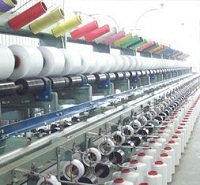 The primary textile sector is being hailed as the next big thing after readymade garments in Bangladesh. Though the sector had a dominating presence in the country’s manufacturing sector even earlier, its main role was relegated to meeting domestic demand under high protective tariffs and import quotas (pre-2000). As a result, products manufactured by this sector were not internationally competitive and exports were negligible or non-existent, reports Daily Star.
Entrepreneurial vision and new policies boost RMG
However, a confluence of entrepreneurial vision and evolution of contemporary policies changed all this in the 1990s. From a $624 million in FY 1990, RMG exports grew to $ 4.5 billion by FY 2000, registering a 600 percent rise in a decade. However, as RMG exports increased, intermediate inputs like yarn, fabrics and garment accessories had to be imported from countries like China, South Korea, India, and Pakistan. From $435 million in FY 1990 these imports grew to $3.2 billion in FY 2000. This stirred local textile industries to a massive business opportunity that was going waste.
Time benefits of local sourcing
To prevent this, the new generation of textile entrepreneurs started looking for new opportunities for domestic sourcing of raw materials and rising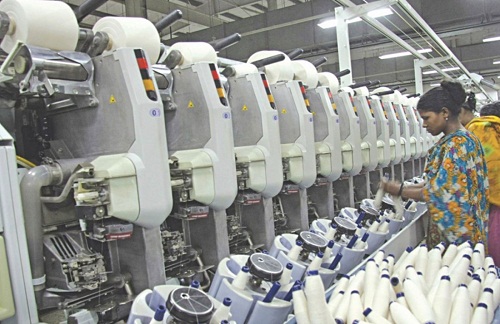 demand for textiles. The end of 1974 Multi-Fibre Arrangement (MFA) in 2005 created larger market opportunities. However, it also increased competition from well-heeled apparel producers. Bangladesh apparel factories began sourcing yarn from local suppliers. Local sourcing enabled them to avail intermediate inputs on time which drastically reduced their lead times.
Boost to backward industries spurs raw materials investments
In the mid-1990s a new generation of textile entrepreneurs emerged in Bangladesh which was ready to seize the opportunity created by the RMG industry. These entrepreneurs gave a boost to their investments in export-oriented textile projects aimed at producing yarn and fabrics. Easy availability of funds from banks, supportive taxes and government subsidies gave a boost to these backward linked industries including production of accessories like packaging, buttons, zippers, and labels.
Over the past three decades, the supply of intermediate inputs to RMG exporters has grown into a large industry in Bangladesh. The second major development after RMG, it is another popular way to describe the country’s industrial development.
As per BKMEA knitwear exporters source almost 80 per cent of their yarn requirement from local textile producers. Moreover the number of yarn manufacturing mills has doubled from 200 in 2000 to 433 in 2019 while spindle capacity has tripled to 13.5 billion kg of yarn. This growth is mainly attributed to the rapid expansion of knitwear exports from $1.5 billion in FY 2001 to $16.9 billion in FY 2019.
Production of denim fabrics in Bangladesh is an entirely export-oriented activity with 60 per cent of the annual denim requirement of 840 million yards supplied by 32 denim mills that have cropped up in the past 20 years. Other cotton-based fabrics and man-made fibre (MMF) production is also catching up to meet 40-45 per cent of demand coming from garment exporters, says BGMEA.
No longer a supporting industry
In the past 25 years, that Bangladesh textiles segment generated $21-plus billion industry that can no longer be relegated to just a sideshow to the $34 billion RMG. This is a result of introduction of new policies promoting backward linkage, says BTMA. This deemed export sector rolls everything including import substitution, export expansion, and export diversification into a single policy. These modern textiles are laser-focused on substituting massive amounts of imported yarn and fabrics. They are the embedded components of the final knit or woven garments that are deemed for exports
With the rise of RMG, embedment of principal inputs into non-RMG exports has also increased grown. The primary textile sector has become a predominant part of the textile industry. It can no longer be dismissed as non-competitive domestic industry
US amends rules under Textile Fiber Product Identification Act
The US Federal Trade Commission (FTC) amended the rules and regulations under the Textile Fiber Products Identification Act to incorporate the most recent ISO 2076 standard for generic fiber names. The rules become effective on November 5, 2020.
The Textile Fiber Products Identification Act (16 CFR 303) requires that certain textiles sold in the United States disclose the generic names and percentages by weight of the constituent fibers in the product, the manufacturer or marketer name, and the country where the product was processed or manufactured. The recent amendments incorporated the latest version of the relevant ISO standard, ISO 2076:2013(E), “Textiles – Man-made fibers – Generic names”. The aim of the amendments is to reduce compliance costs, increase flexibility for disclosing fiber information to consumers and to help manufacturers develop labeling that satisfies the requirements of multiple countries.
The updated ISO 2076:2013 standard added seven generic fiber names that were not defined in the 2010 standard and are now incorporated in the amendment of the Textile Rules.
Sri Lanka increases US apparel exports by 4% in August
In August ’20, Sri Lanka upped its apparel exports to the US by 4 per cent in volume terms and shipped 34.90 million SME of garments as compared to 33.56 million SME garments in the same month of 2019, reports Apparel Resources.
However, the values of shipment fell by 3.50 per cent to $143.08 million from August ’19 that indicates the prices are reducing in orders placed by the US buyers in 2020. Unit prices were $4.41 per SME in August ’19 which sharply declined to US $ 4.10 per SME in this year August.
Even in cumulative period January-August ’20, Sri Lanka’s unit prices have shrunk to $4.15 per SME from US $ 4.49 per SME a year earlier in the corresponding period.
It’s worth mentioning here that Sri Lanka shipped $945.47 million worth of garments to USA in first 8-month period of 2020, noting 22.91 per cent decline from a year earlier.
The share of MMF apparels was $522.16 million (down 14.53 per cent) in the total shipped values, while cotton apparel products contributed US $ 395.36 million (down 32.23 per cent) in January-August ’20 period.
State alliance urges brands, retailers to sign Tamil Nadu Declaration
The Tamil Nadu Alliance, a coalition of civil society networks working in the area of textiles in the State, has called upon textile brands and retailers to sign a declaration that will improve the working condition of laborers in textile mills in the State.
According to a press release, it called on brands and retailers to do more to abolish exploitative working conditions within textile mills in Tamil Nadu. International brands and retailers that source yarn and fabric from the textile units here should take steps to address “severe exploitation in their textile supply chain.
The Tamil Nadu Declaration, developed by the alliance, highlights the need for sustained action by brands and retailers to address exploitative practices in textile spinning mills.
It urged the retailers and brands to expand supply chain transparency to all textile manufacturing facilities, support the effective implementation of labor laws and protections in Tamil Nadu, adopt sustainable sourcing and purchasing models that promote decent working conditions throughout the supply chain, integrate worker-driven approaches to monitor compliance with labor standards and support the development of a collective grievance mechanism in the state.
FAIVM request government to initiate enquires on festive mega sales of two big e-tailers
As per an Economic Times report, national apex body of traders and retailers, Federation of All India Vyapar Mandal (FAIVM), has requested Union finance minister Nirmala Sitharaman and industry and commerce minister Piyush Goyal to initiate enquiries on some suspected aspects of festive mega sales announced by two big e-tailers.
In a letter jointly sent to the two Central ministers, FAIVM alleged that a hefty discount in the nature of predatory pricing; cash back by credit/debit card banks, and high rate of interest on EMIs offered for buyers are needed to be scrutinised thoroughly. FAIVM has further shown its concerns whether GST being collected by vendors is being properly deposited with the government as per norms as about 6.5 lakh new vendors have been added by e-commerce portals and about most of sales are happening in tier-III and rural areas where awareness on GST is not adequate.
VK Bansal, National General Secretary, FAIVM said that share of e-commerce is likely to double this festive season sales from 5 per cent to 10per cent. The gross merchandise value by e-commerce in this festive season is expected to touch $7 billion i.e. about Rs 50,000 crore. It indicates about 84 per cent increases over the last year’s festive sale.
About 50 million new shoppers are expected to be added in e-shoppers’ list, out of which about 50 per cent will join from tier-III cities and rural areas. On the other hand, e-commerce platforms have added about 6.5 lakh new vendors, mostly from Tier-II and Ttier-III cities.
Cambodia to sign RCEP in mid-November
The Cambodian commerce ministry recently revealed that the Regional Comprehensive Economic Partnership (RCEP) will be signed at the 4th RCEP Summit during the 37th ASEAN Summit in Vietnam in mid-November. The deal will open a wealth of new market opportunities for Cambodia to diversify its export portfolio and accelerate the inflow of regional investments.
RCEP is set to be the world’s largest free trade agreement (FTA), initially comprising 16 member countries and engaging more than 3.6 billion people, or 48.1 per cent of the world population.
Fifteen countries – with the notable exception of India which withdrew in November last year – will sign the deal. The members have not yet been able to respond to India’s concerns regarding its trade deficit with many of them, according to The Nation.
Besides the 10 ASEAN member states, the other five partners are China, Japan, South Korea, Australia and New Zealand.
Even without India, RCEP will cover more than 2.2 billion people, or 30 per cent of the world population, a total GDP of more than $25.6 trillion (29.3 per cent of world GDP) and trade value of more than $10.4 trillion (27.4 per cent of global trade).
The deal will re-orient the trade and investment landscape in the region, encourage commercial exchanges among members and serve as a vital driving engine for the manufacturing sector.
Formal suits take a backseat as demand for casualwear rises
 With most white-collar job workers locked away at home and fewer weddings and parties being organized, demand for suits and formal wear across the world has taken a beating. As per a Reuters report, in Australia, demand for wool has hit an all-time low, while in the US and Europe, formalwear retailers like Brooke Brothers, TM Lewin are closing stores with a dip in demand.
Stretch fabrics more in vogue
Growing emphasis on comfortable apparels has led farmers and mills across the world to opt for stretch fabrics, explains Silvio Botto Poala, Managing Director, Lanificio Botto Giuseppe, a wool mill in Italy. There is a 50 per cent decline in the prices of Australian fine wool in the last 18 months. In September, the benchmark price for merino wool fell to A$8.58 ($6.1) per kg from A$20.16 in early 2019. It has since partly recovered to just over A$10.
And as Andrew Blanch, Managing Director, New England Wool points out, many buyers now have excess wool supplies. They need to first get rid of this excess stock before they come back to the Australian market, he adds. China, the only wool buyer
China, is the only country currently purchasing wool though even its wool acquisition rate has reduced, Merino sheep farmers are storing wool in sheds or storage facilities; though some are selling in weak markets to stay financially afloat. A farmer in Australia’s New South Wales, Dave Young, has started selling lamb meat instead of wool. He currently has 4,500 sheep on his property. Wool mills’ sales fall by 25 percent
Due to a jump in food supplies Northern Italy, Botto Poala expects mill's sales to fall by 25 per cent from €63 million. More than 50 per cent of his mill's turnover comes from either specially treated wool or from wool combined with Lycra that makes it more stain and crease resistant. Some businesses are witnessing a 50 to 80 per cent plunge in sales, says Ettore Piacenza, General Manager, Fratelli Piacenza wool mill, a centuries-old family business with an annual turnover of €52 million.
Over the past few years, there has been a gradual shift towards casual wear. And COVID-19 has hastened this shift by boosting sales of comfort clothing and sportswear. According to Lyst, a global fashion search platform, Nike emerged the hottest brand in Q2 FY 2020 with Gap's Athleta named the best-performing fashion line in the three months to August 1. Suits are among the highest-discounted and lowest-selling items in France, Italy and Germany in September, says a data compiled by StyleSage, which combs prices on websites.
Wool retailers face an uncertain future
Collapse in demand for suits has led to many US retailers including Jos A Bank and J Crew, to file for bankruptcy over the summer. As per Coresight Research, many retailers face an uncertain future as around 25,000 stores are expected to close by the year end.
Since the end of lockdown, business has been extremely slow, says Jasper Littman, a tailor trained in Savile Row. Usually making about 200 suits in a year, he has made only 63 suits this year. Littman says, this year, customers are reluctant to risk riding the train to pick up even those suits that have already been made and having paid deposits for them.
Speed up FTAs to boost India’s global competitiveness, says SIMA chairman

SIMA’s newly elected chairman Ravisam, has urged the government to expedite the process of signing FTAs with new countries. He says, though most global brands and buyers prefer Indian textiles and clothing for their robust quality and other advantages, India has not been able to increase export orders due to the lower prices offered by countries like Bangladesh, Vietnam, Pakistan, Cambodia, Sri Lanka, African countries, etc. Also, the SAFTA agreement signed by India long ago allows Bangladesh and other countries to dump their garments in India at zero duty. Therefore, India needs to introduce the ‘Yarn and Fabric Forward Rule’ rather than value addition and Rule of Origin help us gain advantage, points out Ravisam.
India’s textile exports have suffered due to various tariff and non-tariff barriers, coupled with logistic and external trade policies like GST, opines Ravisam. On the other hand, with $30 billion exports, Vietnam has emerged as a leading exporter to countries like China, Korea, Japan and Taiwan. Vietnam is also world’s leading textile importers, having imported over $15 billion worth fabrics last year. However, India’s share in Vietnam’s imports is negligible. It imports yarns from India at 5 per cent duty while fabrics are imported at 5 per cent, 6 per cent and 12 per cent duties respectively. Hence, FTAs with EU, UK and Canada will ensure a level playing field for home textiles and garments, he adds.
High import duties make India’s textile exports uncompetitive
Currently, India’s exports to EU and UK at 9.6 per cent duty and to Canada at 15 per cent duty that makes them highly uncompetitive compared to countries offering zero export duties like Bangladesh, Vietnam, Cambodia, Sri Lanka and Pakistan. Therefore, Ravisam has urged the government to explore early harvesting program during pre-negotiations scoping phase of the Enhanced Trade Partnership for zero duty. India and UAE also plan to sign a FTA with the Gulf Cooperation Council countries, the second largest destination for India. To be concluded by March 2022, the CEPA agreement will create more opportunities for India.
Enhanced GST rates to surge garment prices
Racisam also emphasized the need to address duty inversion in certain segments. Being entirely seamless, the cotton value chain does not need to address any issues. However, the manmade fiber value faces duty inversion where fiber attracts 18 per cent while yarn attracts 12 per cent and fabrics and garments attract 5 per cent GST. The government’s decision to increase GST rates from 5 to 12 per cent for fabrics and garments priced below Rs 1,000 may increase the price of garments steeply. It may also have a serious impact on the handloom, powerlooom and other MSME sectors that currently form 85 per cent of India’s total textile production. Ravisam also recommends a 5 per cent GST on the entire MMF value chain. This would enable the government to refund accumulated ITC for the few fibre producers.
Duty exemption to boost cotton exports
He also urged the government to withdraw 10 per cent import duty on cotton, as the country imports only 11 to 15 lakh cotton bales against the total consumption of 330 lakh bales a year. India’s cotton imports mostly include the Extra Long Staple Fibre like American PIMA, Egyptian GIZA for producing value added products and supply to nominated business of global brand.
The total value of India’s cotton trade is Rs 75,000 crore including Rs 25,000 crores exports and provides jobs to over 12.5 lakh people he says Ravisam. Cotton prices in India during off season severely affected the MSME sector, he adds. The prices of Sankar-6 cotton price increased from Rs 41,600 - to Rs 54,500 and DCH price increased from Rs 53,000 to over Rs 1 lakh per candy. This has destroyed export commitments of fabrics, garments and made ups producers in the country. Hence, the government needs to exempt ELS cotton from import duty, he emphasizes.
Pakistan textile commodity exports increase by 2.92%
According to Pakistan Bureau of Statistics, Pakistan’s exports of textile commodities witnessed an increase of 2.92 per cent during the first quarter (Q1) of the current fiscal year as compared to the corresponding period of last year.
The textile exports from the country were recorded at $3469.585 million ($ 3.5 billion) in July-September (2020-21) against the exports of $3371.376 million ($3.4 billion) in July-September (2019-20), showing a growth of 2.92 per cent. The textile commodities that contributed in positive trade growth included knitwear, exports of which increased from $779.293 million last year to $860.758 million during the current year, showing growth of 10.46 per cent.
The textile commodities that contributed in positive trade growth included knitwear, exports of which increased from $779.293 million last year to $860.758 million during the current year, showing growth of 10.46 per cent.
Likewise, exports of bedwear increased by 8.40 per cent by growing from $601.024 to $651.487 while the exports of tents, canvas and tarplin grew by 78.71 per cent, from $15.771 to $28.184, the PBS data revealed. Exports of cotton cloth also decreased by 8.49 per cent, from $499.390 million to $457.060 million.











